
Gone but not forgotten: Community gathers to mark Red Dress Day
More than 100 people run and walk along the Cowichan River to support families of MMIWG2S+.
CONTENT WARNING: This story includes content regarding Canada’s ongoing genocidal epidemic of MMIWG2S+. Please look after your spirit and read with care.
Editor’s note: The Discourse uses quotation marks around the word “school,” because the Truth and Reconciliation Commission found residential “schools” were “an education system in name only for much of its existence.” The Indian Residential School Survivors Society crisis line is available any time at 1-800-721-0066. Please reach out if you need support.
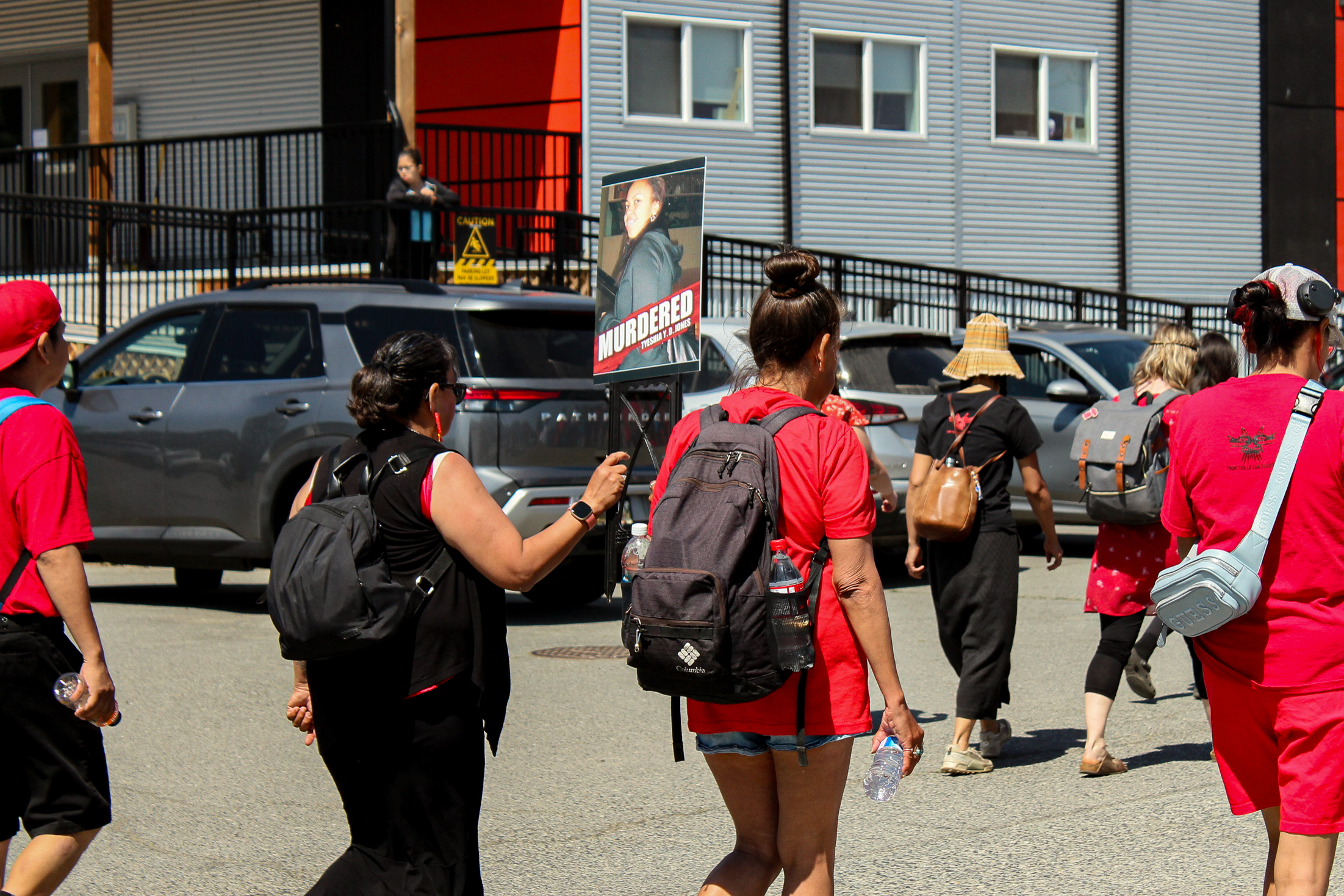
Not a cloud was in the sky on the morning of May 5 as crowds began to gather in front of the Si’em Lelum Gymnasium on River Road. Among the crowd were dozens of signs of missing and murdered Indigenous women, men, girls and 2SLGBTQQIA+ people (MMIWG2S+).
The growing collection of people were there on Quw’utsun Territory to mark Red Dress Day and take part in the third annual Gone But Not Forgotten Walk and Run.
This year, 20 community partners were also present at the event connecting families with services, said organizer LuuGakk’ (Liza Haldane).
“This is our third year of building community for this event and every year we have more people coming forward,” she said. “I am so honored and so grateful for all of the folks that have said, ‘we want to be there, what can we do?’”
LuuGakk’ is originally from the Nisga’a Nation but lives on Quw’utsun Territory. Her previous work with the Tears to Hope Society, an Indigenous-led organization that supports the families of missing and murdered loved ones, inspired her to create the Gone But Not Forgotten event.
She said events like this highlight the importance of the community coming together to support families living through the crisis, especially in the current climate of rising anti-indigenous sentiment in B.C.
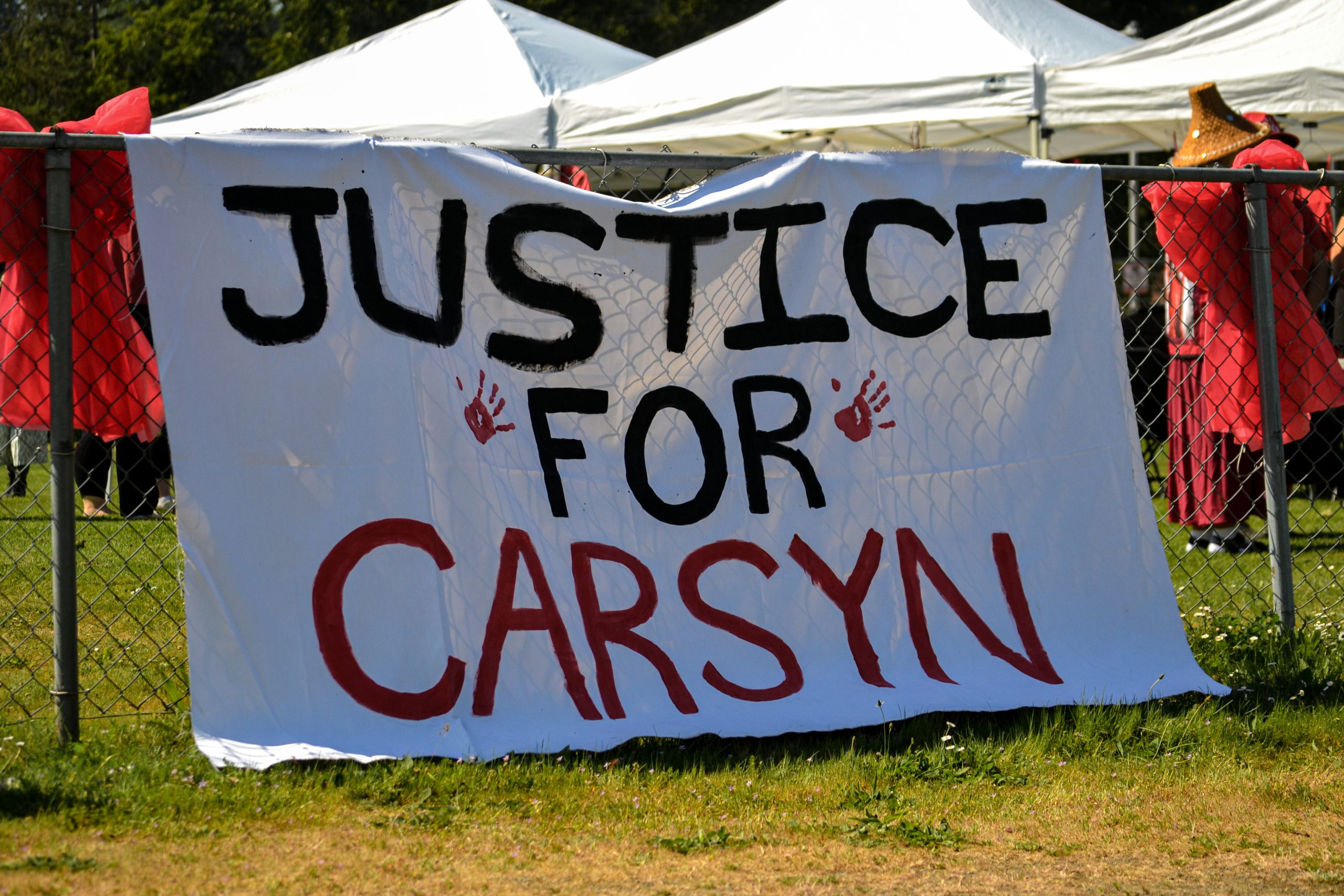
This year, the route took walkers and runners alongside the Quw’utsun Sta’lo’ (Cowichan River), which LuuGakk’ told The Discourse was a deliberate choice.
“People who have privilege and who have power in the community, they don’t see or they choose not to see, how intergenerational trauma and oppression has affected our people,” she said. “Sadly, too often, a lot of our people make their home down there because it’s somewhere they feel safe from racism, from discrimination, from violence, and I wanted people to see that.”
LuuGakk’ also chose the location because of the river’s healing properties. She said she runs along the river almost every day and that it often brings her to tears.
“You can feel the sustenance of its life. You can feel all that it has to offer, and I wanted people to experience that as well,” she said.
At the opening ceremony held on a nearby field, families shared the stories of their loved ones who are still missing and called for action from the community and local governments.
“We shouldn’t have to do this, but it has to be done, and we must do it until there is justice,” said Elder Nancy James who works as a counsellor for Kwun’atsustul Mental Health. “We call for justice. We demand the call for justice.”
Continued calls for justice
One speaker at the opening ceremony, Christina Tinoco, shared the story of her cousin, Rosemarie Harry, a 34-year-old Quw’utsun Nation member who was reported missing on Feb 4, 2026.
“I’m really grateful to see everybody here today. On a day that I feel like I came here alone,” she said through tears. “May 5 is just a day for some people. Now it’s become my life, a life that I never thought I would experience myself.”
Harry was last seen on Jan. 28 after she was dropped off at an appointment in Duncan by her roommate.
“Genocide is alive and well in 2026 and those are the unspoken things that people don’t want to talk about, and that needs to be talked about,” LuuGakk’ said.
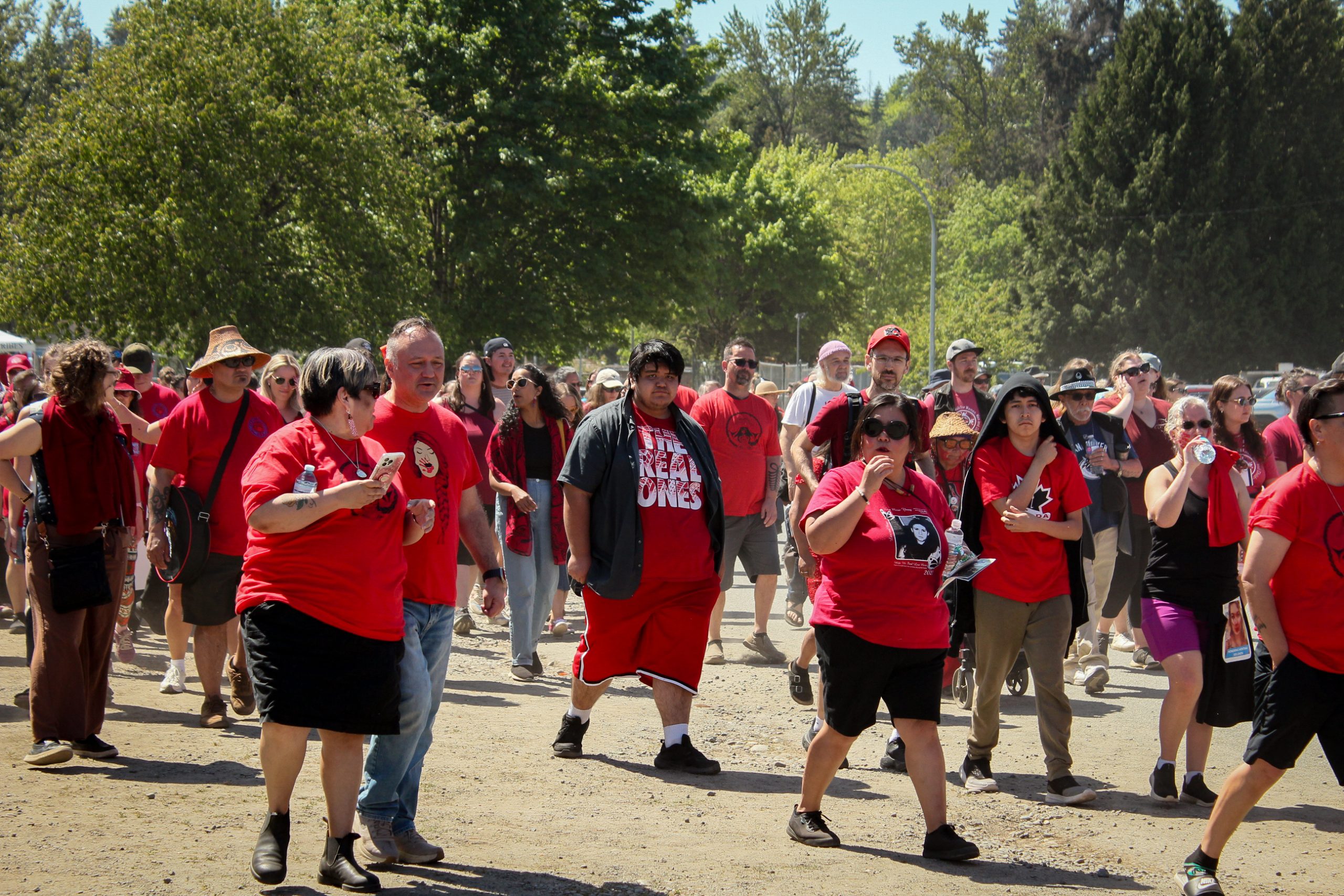
The final report from the National Inquiry into Missing and Murdered and Indigenous Women and Girls documented testimony from survivors of violence and family members.
The inquiry also released 231 Calls For Justice in 2019 along with the final report, providing a path forward “to end and redress this genocide.” The calls explore four pathways that address “historical, multigenerational and intergenerational trauma; social and economic marginalization, maintaining the status quo and institutional lack of will and ignoring the agency and expertise of Indigenous women, girls and 2SLGBTQQIA people.” The inquiry says these Calls for Justice are not optional.
A 2024 progress report from the Assembly of First Nations noted that two of the 231 Calls for Justice had been fully implemented by the federal government at the time. The federal government has created an online reporting tool to track the progress of implementing the Calls for Justice.
“To our families, May 5 is every day for the missing and murdered. Some of us have justice. Some of us are still seeking justice,” said Monica Patsy Jones, the founder of the Cowichan Missing and Murdered Men, Women and Children Society. “We need more support from the community and from the leadership in this area.”
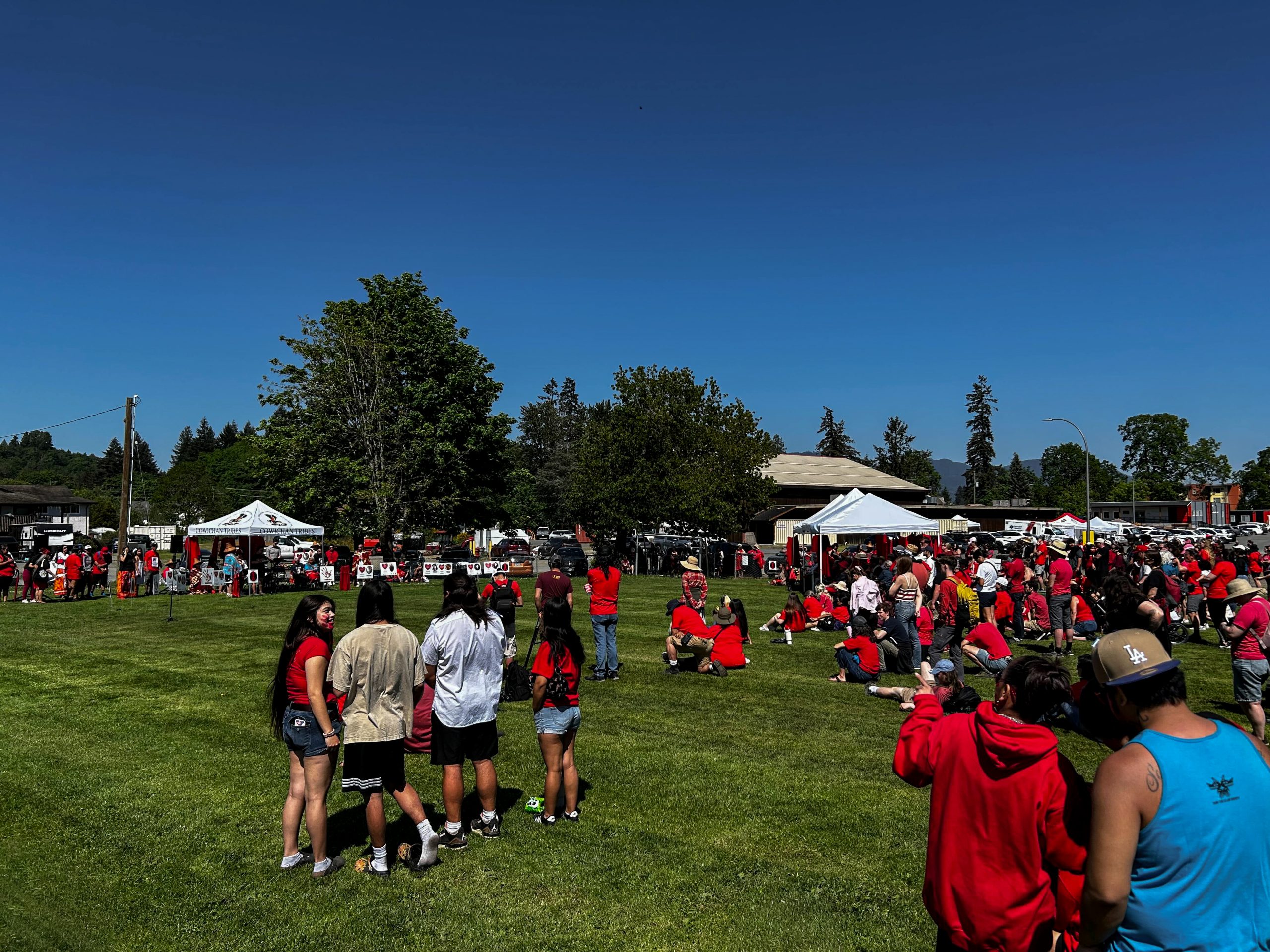
Duncan Mayor Michelle Staples was in attendance at the opening ceremony. She said that even though colonial systems of government have people working in them who are trying to make a difference by standing in solidarity and speaking out, the systems still perpetuate systemic racism and oppression.
The City of Duncan recently passed a proclamation in April that recognizes May 5 as the National Day of Awareness for Missing and Murdered Indigenous Women and Girls.
“I would like to see that proclamation strengthen the language within it to speak deeper to the truth and to be shared across Canada in every municipality, in every city that sits on stolen land,” Staples said.
Beyond Red Dress Day
LuuGakk’ said the work that is done on the day of the event is the easy part. What is more difficult for her is the resistance she meets when trying to promote the event in the community.
“I understand that people don’t know the history, maybe don’t want to know the history. Maybe they’re happy with their understanding of the world, but that’s the thing that makes it difficult,” she said. “Sometimes you’re able to move people, and sometimes I’m very shocked where I would expect support and there’s none.”
READ MORE: Packed OneBC meeting in Nanaimo taps into controversy over Indigenous rights
She noted that rising anti-Indigenous sentiment, especially around residential “school” denialism can add to the weight of organizing an event like this, but the community coming together today gives her hope.
“It is a labor of love,” she said. “Everybody takes some of the work and so it’s not burdensome. You know, everybody is pitching in and sharing their gifts and so it really becomes an honour, and it becomes a joy.”
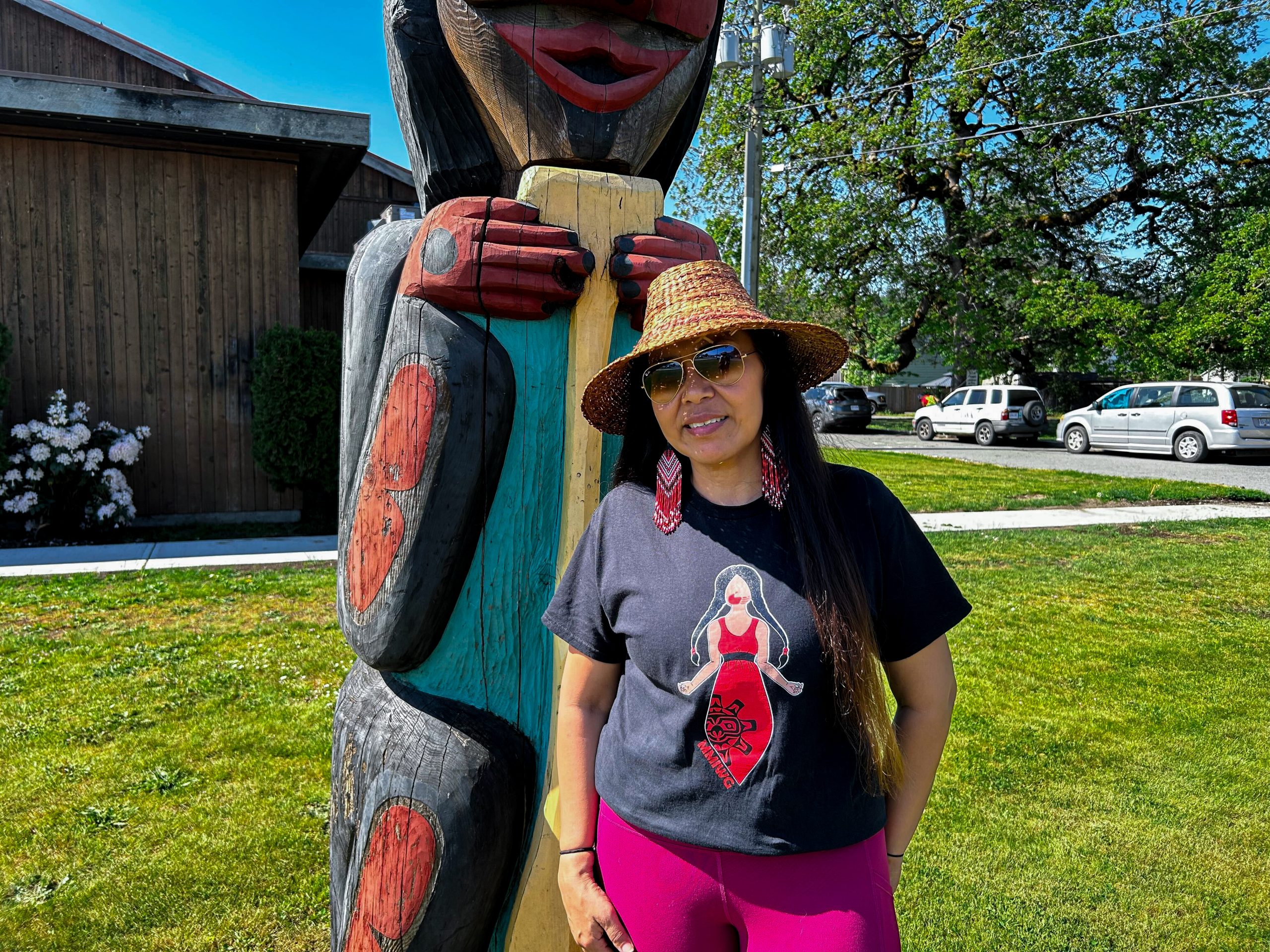
For LuuGakk’, this cause is also deeply personal.
She knows she could easily be one of the faces on the many missing person poster boards at the event. Born female and First Nations, she said, means being born into odds that are stacked against her.
“Most of our women are born and become statistics, sadly, and I’m doing this work because I know very well that I need to raise strong daughters so they will not just survive but also thrive and continue this fight when I’m gone,” she said.
LuuGakk’ said she would like to see the Gone But Not Forgotten event grow larger in the coming years, but she recognizes that more could be done throughout the year as well to raise awareness. She said there are plans in the works for a highway billboard to raise awareness for MMIWG2S+, a relay race that would run from Nanaimo to Duncan and a totem pole raising in Charles Hoey Park.
“This is the very beginning of the work that we need to be doing collectively,” she said.
With files from Mick Sweetman.
What did you think of this story?
Your feedback after we publish a story helps ensure we're always improving our reporting to better serve you
Author
Related Articles
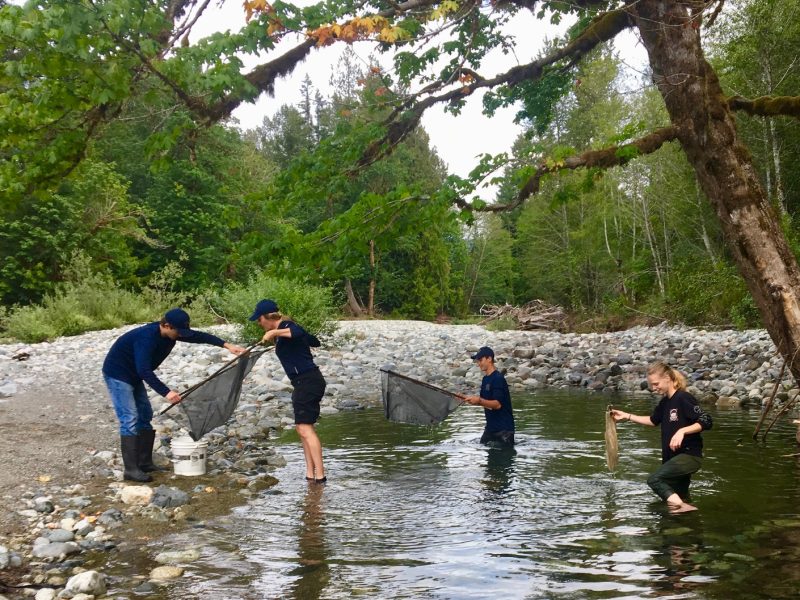
What to do and who to call when juvenile salmon are in danger
Officials say Cowichan Valley residents should call experts to move salmon in isolated pools because of risks associated with relocation.
How is The Discourse’s journalism funded?
And what does it cost to produce The Discourse’s in-depth, independent journalism?
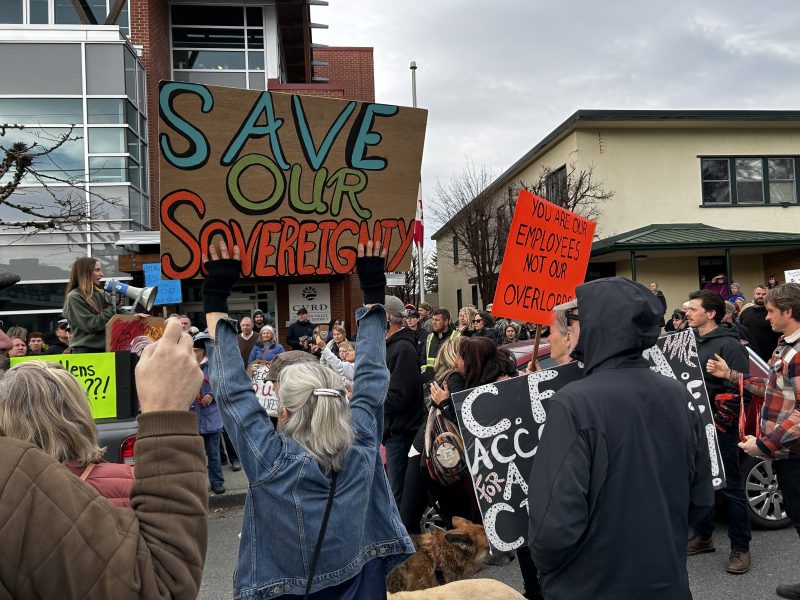
Behind the backlash to the Cowichan Valley’s comprehensive zoning bylaw
The campaign against Bylaw 4710 was fuelled, in part, by misinformation and an organized group of advocates. What could this mean for the future of local politics?