
First person: Indigenous agriculture and the Cowichan Estuary Restoration Project
Jared Qwustenuxun Williams shares the importance of revitalizing Indigenous agriculture in the Cowichan Estuary.
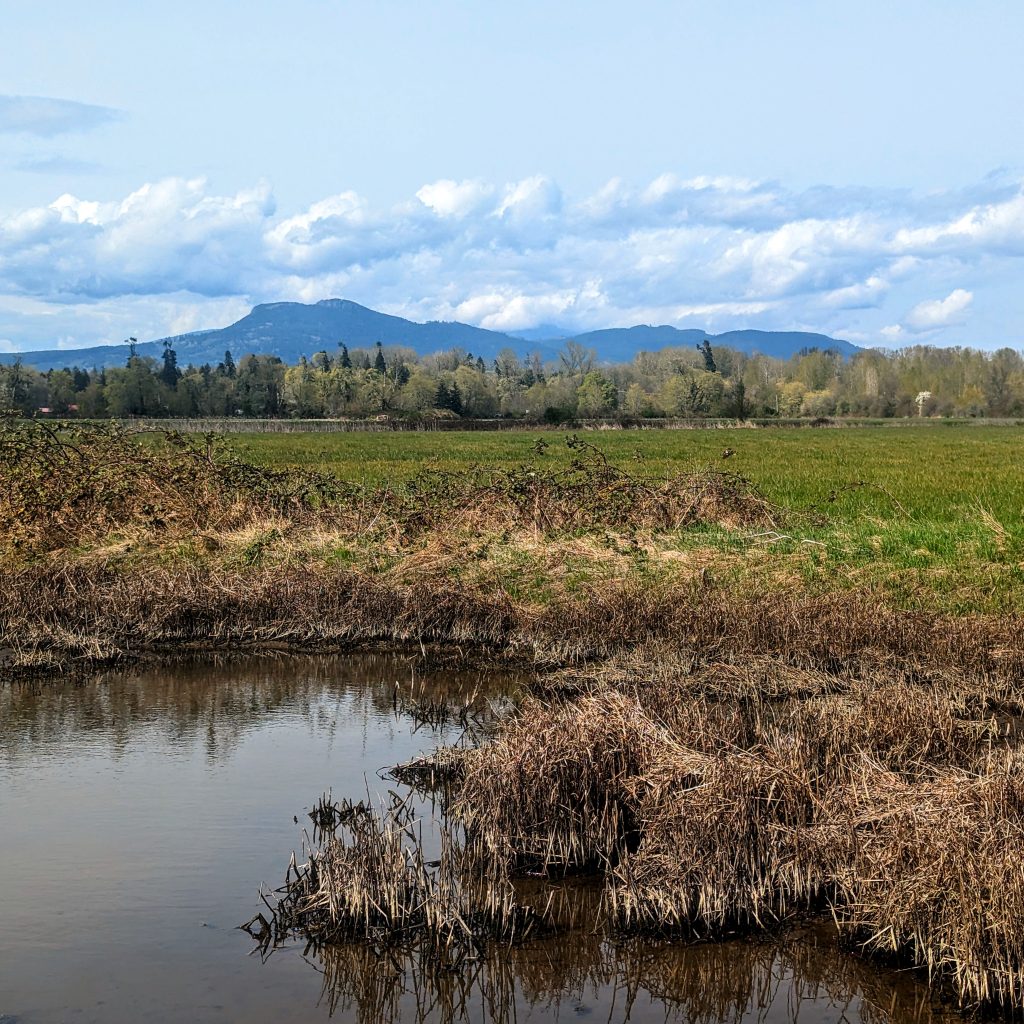
Jared Qwustenuxun Williams, grandson of Qwustanulwut, is a Salish food sovereignty advocate, a cultural educator and a contributing writer for The Discourse. He has been working with Cowichan Tribes and the Nature Trust of B.C. to advise on Indigenous agricultural history in the Cowichan Estuary. There is a glossary of Hul’qumi’num words at the bottom of this article.
One of the biggest falsehoods that was told to the world during the colonization of the Americas was that Indigenous people didn’t have agriculture. So many generations were taught that the Indigenous people of these lands were simply hunter-gatherers, subsisting on what they could find or the herds they followed.
This untruth has been perpetuated so rampantly that most people in our common time find the idea of Indigenous agriculture nearly preposterous. Yet, the grocery store shelves that populate the modern western world are littered with examples of products that were cultivated by Indigenous people since time immemorial — foods such as potatoes, tomatoes, corn, squash, beans, cacao, avocados and more.
Where would the world be without corn? What is Italian cuisine without tomatoes or Irish history without potatoes? Yet these two truths cannot exist simultaneously. We cannot believe that Indigenous agriculture didn’t exist and still have our market dominated by Indigenous agricultural products.
So what’s the story? It’s simple, really. The idea that Indigenous people wouldn’t, or couldn’t, do agriculture was a way of supporting and enacting the colonial doctrine of Terra Nullius. The idea that our Indigenous ancestors didn’t use the land or left the land vacant allowed colonists to take the land for themselves. But this idea couldn’t be further from the truth.
Indigenous agriculture dates back millennia
While many Indigenous food systems do involve hunting, fishing, trapping, harvesting and gathering, there are also many examples of aquaculture, permaculture and agricultural systems that have been used by Indigenous people for millennia.
Several examples of pre-contact Indigenous aquaculture, permaculture and agriculture are located on the southern end of Vancouver Island. Surrounded by clam gardens rife with butter clams and cockles, as well as root gardens filled with Sqewth (wapato) and Stl’eleqw’ (chocolate lily), the Cowichan Estuary is home to a thriving and vibrant example of pre-contact Quw’utsun agriculture.
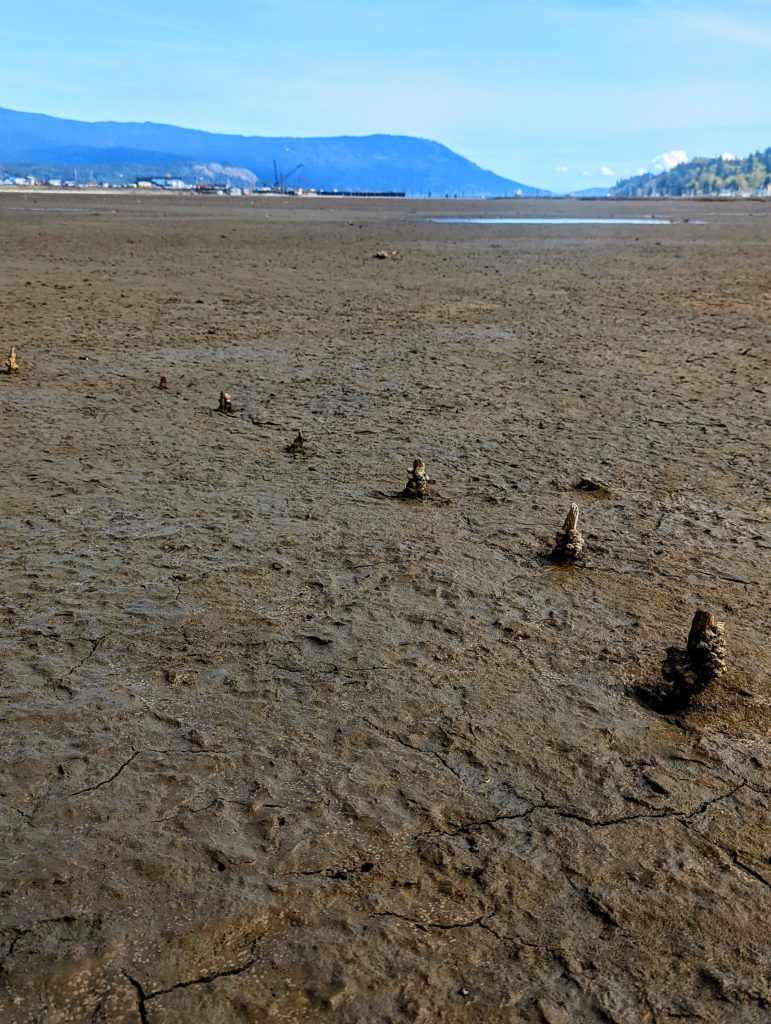
Growing in the untouched places of the Cowichan estuary is a plant not commonly found in the tidal salt marshes, a plant that was genetically modified over generations to adapt to these conditions and that was once the cornerstone of Quw’utsun wealth. Speenhw, colonially known as camas, has not been found to grow in salt conditions anywhere else on turtle island, yet in this estuary it grows in great abundance.
By growing in abundant and obviously managed patches, the Speenhw shows us that it was deliberately bred to be tolerant of these conditions. This is a direct example of Quw’utsun agriculture.
Anthropological evidence paired with Elders’ oral history tells us that camas bulbs were a well-traded commodity. They were easily dried and stored for long periods to be traded with both neighbouring and distant nations. In addition to the economic value of Speenhw was the fact that it was the main carbohydrate of the Quw’utsun people, with small additions of Sqewth and Stl’eleqw’ for variation in diet.
In fact, further evidence of Speenhw grown as an agricultural crop can be found in the fact that the bulbs increase in size when properly worked by the techniques that were used by Quw’utsun women for countless generations. Speenhw can be cultivated to produce bulbs equivalent to the size of an adult fist, whereas wild, uncultivated Speenhw produced bulbs about the size of a thumb.
Lastly, in regards to the value of Speenhw, it should be noted with the utmost importance that the bulbs are known to be high in inulin, a substance that can play a significant role in managing blood sugar levels and diabetes.
The Quw’utsun and Xwulqw’selu estuary project
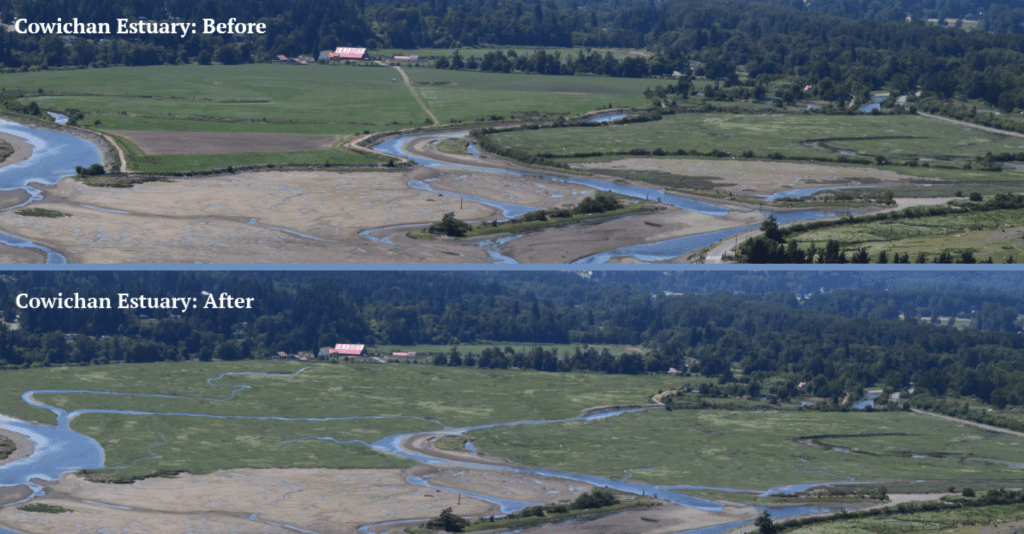
With all that as a basis, now we can better move forward to discussing the powerful project that is taking place in the Quw’utsun and Xwulqw’selu estuary. The Cowichan Estuary Restoration Project aims to restore 70 hectares of marsh habitat by removing human-made barriers, such as a dike, and reconnecting freshwater channels to the estuary.
Currently, the estuary is in trouble as rising sea levels, caused by climate change, threaten to further squeeze out this important ecosystem. Estuaries make up just 2.3 per cent of B.C.’s coastline, and 80 percent of coastal species rely on them at some point in their life cycle.
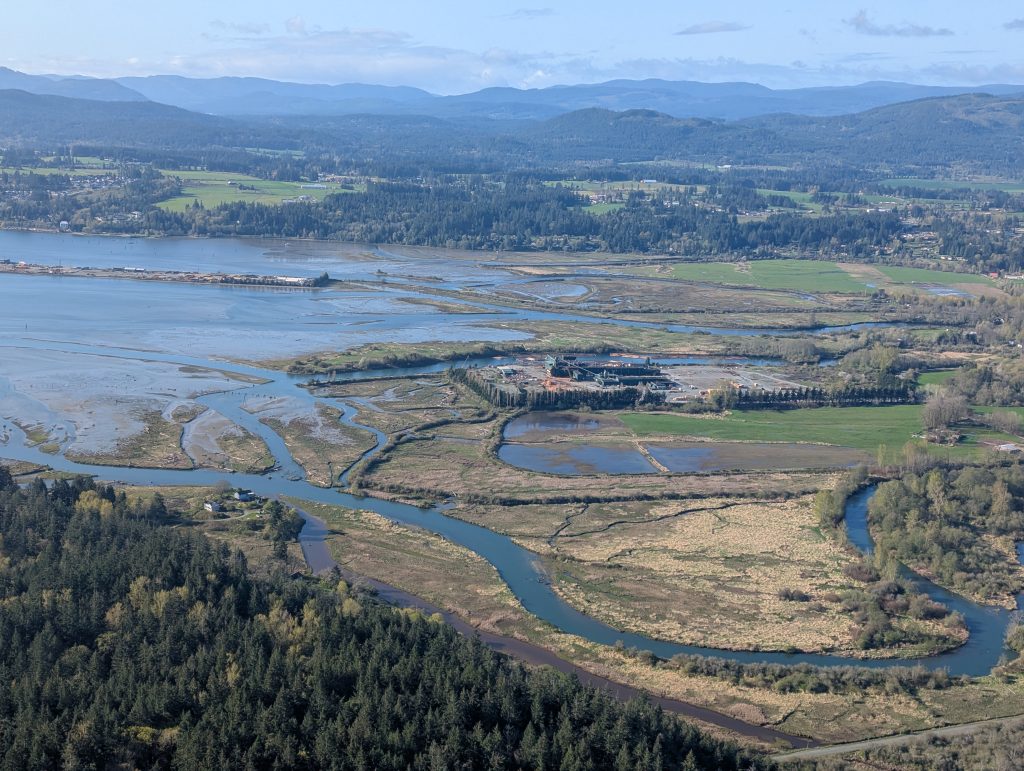
The land, recently known as Dinsdale Farm, was preempted — a colonial word for taken without permission — in the late 1800’s. Prior to being preempted, the land was known as Hwkw’akw’la’hwum, which translates to little dog salmon creek. At Hwkw’akw’la’hwum, our recent ancestors grew the many food plants mentioned above. Our agricultural use of this land was even recorded by Governor James Douglas during his first arrival in Quw’utsun.
In The Terror of the Coast, archaeologist and ethnohistorian Chris Arnett describes how Douglas was “impressed” by Quw’utsun agriculture and includes writings from Douglas.
“‘These Indians,’ he wrote, ‘partially cultivate the alluvial Islands near the mouth of the river, where we saw many large and well kept fields of potatoes, in a very flourishing state, and a number of fine cucumbers which had been raised in the open air, without any particular care.’”
From the very moment of contact it was acknowledged that the land at Hwkw’akw’la’hwum was used as an Indigenous food producing site. Our Quw’utsun ancestors had acquired potatoes and cucumbers from trading with the Spanish in the late 1700’s. They then took it upon themselves to grow these crops alongside their own food plants on the small islands that made up our estuary.
Since time immemorial Hwkw’akw’la’hwum has existed as a place where Indigenous people have grown food. Now, after more than a century of colonization and land theft, the land is finally being returned to Quw’utsun stewardship.
In 1990, The Nature Trust of B.C. and Ducks Unlimited purchased the land from it’s previous owners, the Dinsdale family. Since then, the Nature Trust has spent time investing in the creation of a strong relationship with the Quw’utsun government and community members. It is a relationship that has brought forward strong teachings about Indigenous food systems, a deep connection to land and a path forward to reconciliation in the Cowichan estuary. This is a path that our not-so-distant Quw’utsun ancestors have been guiding forward all these decades.
For untold generations, our people were healthy and strong as they survived off of food from the land, river and sea. Yet, within the past century, our people have suffered with illnesses such as diabetes, liver disease, heart disease and many more.
As an active member of our community and chef to many of our events and Elders, I’ve witnessed first hand what the western food system has done to our nation, all while hearing stories of how strong and healthy our ancestors once were.

Knowing what I know about our food systems and the lasting impact of colonization, you can imagine how I rejoice at the idea of reclaiming our food system at Hwkw’akw’la’hwum. I am overwhelmingly happy to see the work being done to create an Indigenous food seed crop — in a place that my auntie, Philomena Williams, lovingly named Hulitun Spulhxun, which translates to nurturing fields. This seed crop was recently highlighted on CBC and other news outlets and praised as one of the first of its kind.
This crop will be used to transplant these traditional food plants onto the land so that once again, our traditional foods will be available to our community and beyond. In fact, the completion of this food system reclamation will be the first chance to share Indigenous agricultural products in over a century.
Products like Speenhw were once the cornerstone of the Quw’utsun economy and a main trade staple from Quw’utsun to the outside world. The hope is that we can once again grow economically from the power of our food system. If our modern western food scientists can turn corn into a worldwide crop, I am excited to see where we can take Speenhw.

Backlash to the Cowichan Estuary Restoration Project
This journey to reestablishing our traditional agriculture at the Cowichan estuary has not been without its trials and barriers. While I’d love to tell you that it’s all been smooth sailing and that in less than a decade we’ll be serving Indigenous foods in restaurants across B.C., that’s just not the case. Sadly, this project has become a political issue and a space where racism and misinformation have begun to thrive. It saddens me that after generations of the systematic destruction of our Indigenous food system, that the first project to begin to reclaim these systems has come under fire. I am reminded of a pair of quotes:
“When you’re accustomed to privilege, equality feels like oppression.” – Franklin Leonard
“The function, the very serious function of racism is distraction. It keeps you from doing your work. It keeps you explaining, over and over again, your reason for being. Somebody says you have no language and you spend twenty years proving that you do. Somebody says your head isn’t shaped properly so you have scientists working on the fact that it is. Somebody says you have no art, so you dredge that up. Somebody says you have no kingdoms, so you dredge that up. None of this is necessary. There will always be one more thing.” – Toni Morrison
Responding to misinformation
So, in the spirit of working together as one, I hope to help clear up the misinformation that is being perpetuated. I am honoured to share the following answers to some of the frequently asked questions about the Cowichan Estuary Restoration Project. So let’s get into it.
This project is flooding or swamping 150 acres of farmland.
Through years of research that has been conducted in collaboration with Cowichan Tribes Lulumexun staff, it was determined that the Quw’utsun and Xwulqw’selu estuary was not going to be resilient to changing climate conditions and the estuary and ecosystems would, over time, continue to degrade and ultimately no longer provide any habitat for the myriad fish, wildlife and plants that rely on the area.
In assessing the options of what can be done to reverse the course and make the Cowichan estuary resilient, The Nature Trust of B.C., Ducks Unlimited Canada and Cowichan Tribes identified several projects that could be completed. The most significant project would be the removal of over 2 kilometres of dike at Dinsdale Farm and Koksilah Marsh.
After assessing the dikes, it was determined that it did not meet provincial standards for dikes, was failing and would require massive repairs. The Nature Trust along with Ducks Unlimited Canada, Cowichan Tribes and other partners determined that the best option was to remove the dike and add other flood mitigation strategies that will allow the river to return to its natural flows, increasing salmon spawning habitat, eelgrass habitat, crab and shellfish habitat and other integral wildlife habitat in the Cowichan estuary. This will be done while maintaining a large percentage of land in small islands to be transformed into Indigenous food gardens, growing many salt-tolerant Indigenous crops.
In order to remove the dike, The Nature Trust and project partners needed to receive authorization under the Dike Maintenance Act, which requires that there will be no transfer of risk to adjoining properties. This authorization was granted in 2023.
This is prime farmland.
The Agricultural Land Commission states on its B.C. Agricultural Capability map that this land is considered 5NI. A numbering of 5 means that the land is in nearly the lowest output range, considering that a rating of 1 means the land holds no significant limitations on agricultural production while a numbering of 7 means that the land has no capability for arable culture or permanent pasture. The subclass N means that the land is high in salinity and a subclass I means the land experiences inundation by streams or lakes. All these classifications can be found on the British Columbia Soil Information Finder website. All this to say, the land is far from prime farmland.
This is taking away food security.
While this field has been used to grow forage crops for livestock, it is now being moved into the production of food for people. This includes Indigenous agricultural products such as Speenhw and assorted berries, as well as aquacultural products such as crab and increased salmon production. In the end, this project increases the food security on the Island as all these foods require no additional water, fertilizer or environmental alterations such as greenhouses or hot houses. In fact, Indigenous foods are a great way to ensure that food production can continue to sustain us all in a time of ongoing climate change, drought and heatwaves.
The removal of the dike will contaminate Cowichan Bay’s drinking water
For thousands of years, the village at Cowichan Bay was once called Tl’ulpalus and where the main town of Cowichan Bay rests now was once the heart of Tl’ulpalus. This village gained its drinking water from surrounding springs which produced clean, freshwater, all while Hwkw’akw’la’hwum was still just a series of estuary islands. The modern community of Cowichan Bay receives its drinking water from the Cowichan Bay Water Works District with most of the water being provided by Valleyview Wells numbers 1 and 2 with the Office Well on Pavenham Road utilized as a back up. These wells are not in the estuary area. The Kidd Well, located in close proximity to the project area, is no longer in use. The Nature Trust is currently working with hydrogeological experts to assess the risk for saltwater intrusion to other wells within the immediate area of the project, noting that the province’s own experts have concluded the greatest risk in the area is from excessive pumping.
Why is the land being taken out of the Agricultural Land Reserve (ALR)?
No land is being removed from the ALR. A non-farm use application was required to remove a small portion of the dike. The majority of the dike is outside of the ALR. With that said, let’s talk about the bigger picture involving the interaction between Indigenous foods and the ALR. The regulations that govern the ALR have a set list of approved crops that can be grown on the farmland in the ALR. As a prime example of deep-rooted systemic racism, many Indigenous agricultural products are not on this list and therefore are not allowed to be grown on ALR lands. This means that even if a farmer wanted to convert from growing hay to growing Speenhw, they’d face regulatory barriers. It’s increasingly difficult, if not impossible, to revive Indigenous agriculture in the ALR. This must change.
Dike removal will increase flooding on Tzouhalem and Cowichan Bay roads
The Nature Trust received authorization from the Province of B.C. under the Dike Maintenance Act to decommission and remove the dike. In order to receive this authorization, The Nature Trust was required to follow the decommissioning guidelines as provided by the province. A key element of these guidelines is that the removal of the dike cannot transfer flood risk to adjoining properties or infrastructure. Through extensive engineering design, The Nature Trust and project engineers have proven this project will not transfer flood risk. In fact, the project will improve flood conditions in the lower estuary. The mitigation features that have been designed include several wave attenuation features, islands, raised marshlands, estuary channels and improved flood drainage.
Moving forward in the Quw’utsun and Xwulqw’selu estuary
I would like to commend the work of Cowichan Tribes, The Nature Trust of B.C., Ducks Unlimited Canada, UBC Indigenous Ecology Lab, Lulumexun and more who are working tirelessly to see this project through. I have stood in meetings with our Chief of Quw’utsun, Cindy Daniels, and many of her councilors when they met with the Minister of Water Lands and Resource Stewardship. I witnessed first hand when Minister Randene Neill promised our chief that she would work to help make this project a success. I spoke in a meeting with Chief Cindy Daniels and the Minister of Agriculture and Food, Lana Popham, where the minister said she would work to ensure that this Cowichan estuary project succeeds. I have sat in these rooms with these people in positions of great power and witnessed their promises and in our ancient oral traditions, this witnessing is a contract that is stronger than any other.
So, even against barriers of racism and misinformation, I have faith that our Quw’utsun Chief, working with our Elders and the good people at The Nature Trust, Ducks Unlimited, UBC Indigenous Ecology Lab and Lulumexun, will make the dream of our ancestors a reality and bring our food system back to life at Hwkw’akw’la’hwum.
I raise my hands in gratitude to all those who’ve taken the time to read my words and hear our story. I hope that in the years to come, this will be only one of many examples of the revitalization of Indigenous agriculture in B.C. Let our children once again know the taste of Speenhw and the power of our food systems.
Hul’qumi’num translations
- Hwkw’akw’la’hwum – Little Dogsalmon Creek
- Qul-lhanumutsun – Orca or Killer Whale
- Quw’utsun – Cowichan
- Skewth – Wapato, also the word for potato
- Speenhw – Camas
- S-hwu-hwa’us – the Thunderbird
- Shxetl’ – salmon weirs,
- Stl’eleqw’ – Chocolate Lily
Editor’s note: Reporting that includes lived experience is an important part of our work at The Discourse, especially as we aim to lift up voices and stories of people who have been historically marginalized or have experienced harm or injustice. These stories include information that only the person speaking/interviewed has the authority to speak on based on their experiences and knowledge. The Truth in Journalism Fact-Checking Guide expands on this: “While everyone’s experiences count as lived experience, of course, most people whose testimonies are labelled as such by journalists are treated this way because they have not had the opportunity to record their experiences in more formal ways — likely due to exclusion from official record-producing institutions such as mainstream media, academic research institutions, and government services.” If you have any questions or would like to learn more, reach out to us at cowichan@thediscourse.ca.
Editor’s note, May 24, 2025: A former version of this story incorrectly gave credit to western food scientists for creating modern corn from teosinte, when credit should be given to the Oaxacan peoples. The story has been changed to reflect that western food scientists took corn and turned it into a worldwide crop.
What did you think of this story?
Your feedback after we publish a story helps ensure we're always improving our reporting to better serve you
Author
Related Articles
Voting in the 2026 Cowichan Valley local elections? Here’s what you need to know
Where, when and how to cast your ballot in North Cowichan, Duncan, Ladysmith, Lake Cowichan and the Cowichan Valley Regional District for the 2026 local elections.

Cowichan Valley candidates on protecting the community from climate change
Candidates in Duncan, North Cowichan, Ladysmith and Lake Cowichan share the steps they’d take to protect the community from the impacts of climate change.
Here’s how Cowichan Valley’s municipal candidates will respond to the homelessness and mental health crises
Cowichan Valley’s 2026 candidates share how they’d respond to issues related to homelessness, mental health and addiction.