
Coalition plans renewed effort to address homelessness in Cowichan
Long-term housing projects are in the works, but emergency measures are also needed to address immediate and rising needs.
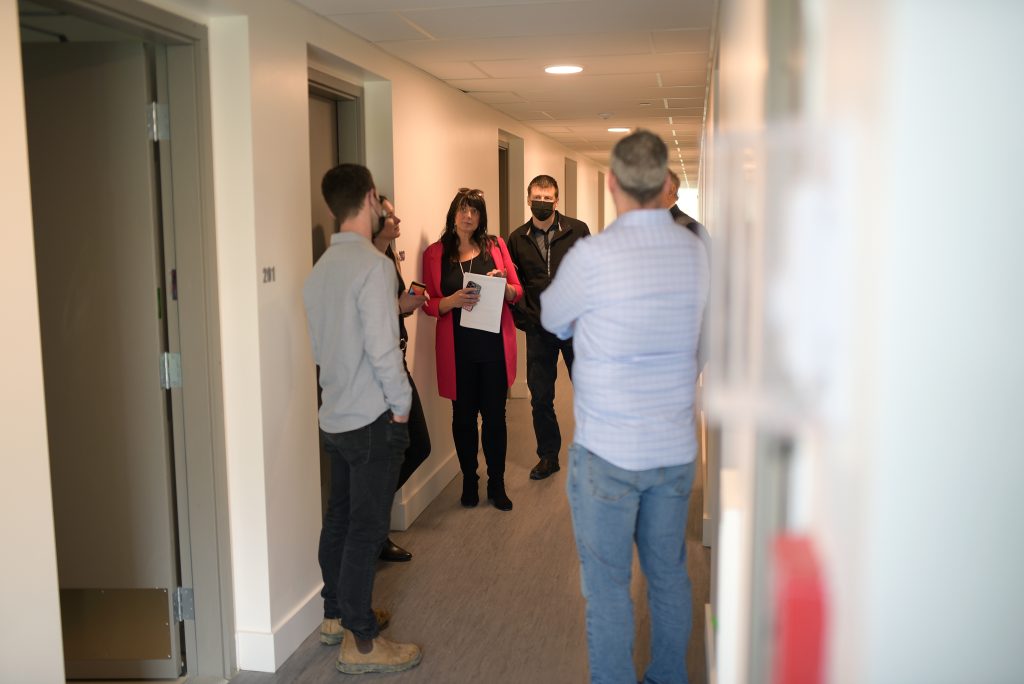
Plans are underway for the Cowichan Housing Coalition, a roundtable working towards local solutions for housing and homelessness, to come back together for the first time since the start of the COVID-19 pandemic.
The coalition’s work from 2016-2020 showed the power of communication and collaboration across governments, service providers and people experiencing homelessness. It’s thanks to that effort that the Cowichan region led the way on an emergency response to shelter people during the pandemic. That response evolved into The Village, a supportive housing project now seen as a model that can be implemented quickly and affordably, with demonstrated positive impacts for residents and the surrounding neighbourhood.
The number of people in the community who are unhoused or precariously housed is on the rise, and there’s renewed energy to bring the coalition back together to work on big-picture solutions and an immediate emergency response.
In terms of regional housing initiatives, “there’s a lot of things being implemented but these are all long-term things,” says Duncan Mayor Michelle Staples, who just returned from a housing conference in Vancouver. “They’re things that won’t actually be up and running for three-to-five years, and that doesn’t do us any good in between. So it’s deciding what we need right now, and then getting the funding to implement that.”
The renewed coalition will bring together dozens of community groups, service providers, businesses, developers and other stakeholders. But there are still some roadblocks to get through before plans are implemented, Staples says.
“What’s standing in the way of us putting together a plan? … There’s not enough people to do all of this all at once,” Staples says.
Homelessness on the rise
In June, Cowichan Housing Association released numbers from its 2023 Point In Time Count, which seeks to identify as many people experiencing homelessness as possible in a 24-hour period. The survey counted 223 people without housing, and surely missed many others.
The survey also helped to confirm that the population of people experiencing homelessness in the Cowichan Valley is growing, and that the demographics are changing as well.
Lack of affordable housing is leading to more seniors, youth and families losing their housing, despite many of them having jobs or collecting a pension.
At the time, former Cowichan Housing Association executive director Shelley Cook said that “people who are teetering on the edge have fallen into homelessness.”
Many more are struggling to make ends meet. As The Discourse previously reported, usage of the food bank in Duncan doubled last year.
People currently experiencing homelessness tell The Discourse that the one thing they’re asking for is support with finding some sort of housing and permanent place to stay. Shelter beds, including at the emergency warming shelter, can fill up fast, and many people who are unhoused don’t feel comfortable or safe in certain shelter environments for a variety of reasons.
For people experiencing homelessness, having to constantly move their belongings, sleep in the cold and set up tents on beds of snow in the winter is taxing, they say, and leaves little room to focus on other things, including their health and wellbeing.
“Being out in this … it’s cold out,” one person experiencing homelessness told The Discourse. Their identity is not being shared to respect their privacy.
“We need proper housing,” another person said, expressing frustration at the slow pace of development.
And advocates say that diverse housing is needed as well. While one model — such as The Village on Trunk Road in Duncan — might work for many people, it may not meet the needs of others. Some people may stay in The Village for a long time in order to stabilize and focus on recovery, while others may be ready to move on to more independent living in a supportive housing building, says Cindy Lise, facilitator and executive director of Our Cowichan Communities Health Network.
“Every community has different needs,” Lise says.
Collaboration and increased capacity required to address homelessness
The Cowichan Housing Coalition formed in 2016 and included dozens of service providers, community groups, developers, local leaders and more. Under the direction of the Cowichan Housing Association, the coalition communicated about housing needs as well as ongoing projects in the Cowichan Valley. It was a roundtable, Staples says, and a singular place where information about housing projects and needs could be stored and shared.
The coalition was broken up into various committees, which tackled issues including homelessness, stigma and affordable housing. The Cowichan Housing Association would share data from research and surveys with the groups so they understood the needs of the community and could try and find solutions.
One of the subgroups, Staples says, was focused on understanding diverse housing needs in the community — from affordable housing to supportive housing and treatment and recovery models. In the fall of 2019, just before the COVID-19 pandemic took hold, the coalition presented a plan to the province highlighting specific needs of the community and requesting funding to implement various solutions. The Village transitional housing project was part of that plan.
The province shut down the proposal, Staples says, but having a plan helped the Cowichan community act fast when the COVID-19 pandemic hit. It was an emergency response, much like what is needed now, she says.
When the pandemic hit, Staples says the housing coalition went dormant. A COVID-19 taskforce that included many members of the coalition formed in its place to address homelessness during the pandemic.
“It didn’t prevent other things from moving forward, it just prevented the full coordination of everyone knowing what was going on,” Staples says.
Since then, capacity has been stretched across the board, making it difficult to bring the coalition back. But work is being done to do so, and to hire a coordinator who can keep track of everything happening as part of the housing coalition, Staples says. As long as funding comes through, a way forward for the housing coalition is expected in the next few weeks.
Emergency response needed as we wait for long-term housing solutions
Despite the housing coalition temporarily shutting down, Staples says work to address the housing crisis has been ongoing. Affordable housing projects continue to move forward, as do plans for other types of housing, such as supportive housing buildings.
But these things take time, funding and increased capacity, all while homelessness and unaffordability is on the rise.
“These things take years and years,” Staples says. “Look at how long The Village took from the time it was conceived to the time that it was implemented here, due to a pandemic only … and we still have work to do there.”
With so many diverse housing options and supports needed to address various needs in the community, a long-term solution is still years away. In the meantime, Staples says members of the housing coalition are thinking of what to do to get people off the streets and in safe places as soon as possible.
“It’s a staged process. I look at it like an emergency response,” Staples says. “You figure out who everyone is, what do they need — and then you go, ‘this is our first phase, and we’re going to make sure everyone is housed in these ways, and then work on that next stage of housing for them.’”
As the housing coalition forms again, Staples says she is hopeful that work can be done in the near future to understand what updated community needs look like and go from there. The short-term solution may look like more sites similar to The Village popping up, she says, while we wait for funding and capacity for larger projects to come through.
“It’s that immediate need, and understanding that some of those immediate things may be things that last for five years. So we need to build them accordingly,” Staples says. “I honestly don’t see any other way of solving this than to look at it with a regional lens … Every single community has a need. We’re not alone in any way shape or form.”
What did you think of this story?
Your feedback after we publish a story helps ensure we're always improving our reporting to better serve you
Author

Related Articles

DRIPA debated in B.C. election on Vancouver Island
The Conservative party of B.C. is promising to repeal the Declaration on the Rights of Indigenous Peoples Act (DRIPA), while other parties argue that would set back relations with First Nations and create economic uncertainty.

Where Cowichan region MLA candidates stand on water, old growth and reconciliation
MLA candidates in the three ridings that cover the Cowichan region answered questions from Discourse readers ahead of the Oct. 24 B.C. election.
Cowichan Valley’s guide to the 2026 B.C. election
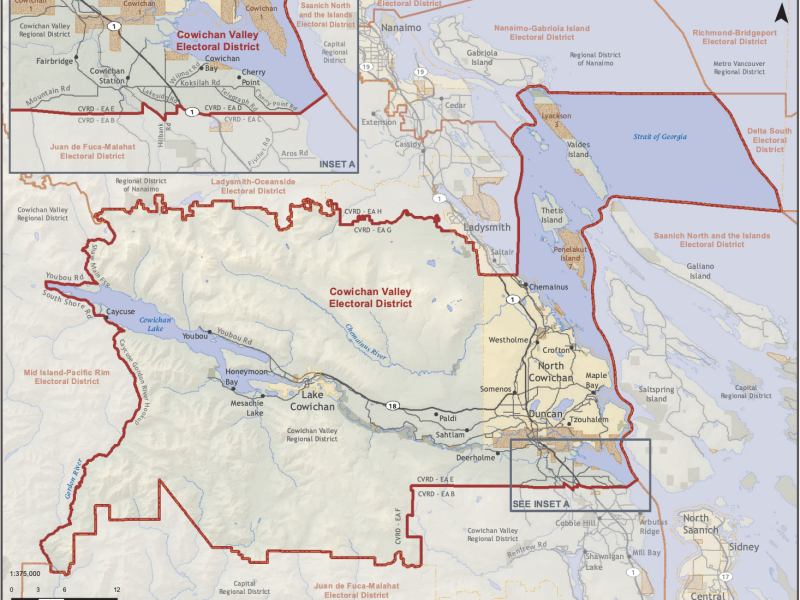
What riding am I in? Who are the candidates? When do I vote? The B.C. election basics for Cowichan Valley residents.