
How is The Discourse’s journalism funded?
And what does it cost to produce The Discourse’s in-depth, independent journalism?

The Discourse has been serving audiences with in-depth news since 2014. By continuing to meet this mandate for more than 10 years, we’ve helped prove there is a new way forward — and a market — for journalism that’s truly responsive to communities.
How do we fund our journalism? This is a question we get asked regularly. Everything we do is driven by our core values, such as community and impact.
We’re constantly thinking about what’s of most benefit to the communities we serve. This means continually finding new ways to diversify our revenue streams for long-term sustainability.
We currently rely on a combination of financial support from our readership, partnerships, sponsorships and grants, including some from the government which you can read more about below.
Collaboration is also a key value, and partnerships with other newsrooms help us share resources to maximize impact. This led The Discourse to join forces with Sun Peaks Independent News in 2022, followed by the launch of The Wren and acquisition of Revelstoke Mountaineer in 2023.
What does it cost to produce in-depth journalism?
Before we get into how we’re funded, let’s recap where our funding goes. While local journalism has become an essential ingredient in civic life, providing information on where and how to vote during election time, covering local decisions and holding power to account, the business of local journalism has become notoriously unstable. We’ve all watched news outlets fold, cut back staff and stop printing papers, resulting in fewer and fewer genuinely local news stories.
The Discourse aims to fill this gap by delivering in-depth and investigative journalism on issues people care about, bringing in dozens of awards and nominations over the years from the Canadian Association of Journalists, Webster Awards, Canadian Online Publishing Awards and Digital Publishing Awards.
We do this with very few resources and an average of one staff member per community. By far, the largest share of our budget goes to paying journalists themselves. We employ journalists full-time, part-time and freelance to go out into the community to interview people, research, write stories, fact-check and file photos.
Another significant portion of our budget goes toward the various software subscriptions we use to produce stories, send newsletters and receive financial support from our readership. Additional costs include accounting and administration, libel insurance, printing, hardware and telecommunications. We keep these costs relatively low by sharing them amongst six outlets.
What do we mean by independent?
When we say we’re an independent news group, we mean that we are financially independent, editorially independent and our ownership is independent.
We are financially independent because our local news outlets rely on a diverse mix of community members — both individuals and local businesses or organizations — supporting our work financially because they believe in the importance of meaningful local news for the health of our communities.
Whether it’s through a one-time, monthly or annual contribution, or one-time support for a specific deep-dive journalism project, we invite community members to make an impact through local news.
This keeps us accountable to the community, not a single funder or group of shareholders.
We are editorially independent because we carefully adhere to the Canadian Association of Journalists’ ethics guidelines to ensure our news coverage is delivered in the public interest, driven by genuine community questions and needs and reported independently without interference from advertisers or political influence.
We are independently owned by a small group of Canadian journalists who believe in the value of independent local news. As a network of local news outlets, Discourse Community Publishing is driven by a commitment toward impactful journalism that fosters meaningful connections, sparks conversation and drives positive change.
Individual people support us
The big difference with Discourse Community Publishing is we aim to keep our journalism free for everyone to access. We don’t put our content behind a paywall and we avoid cluttering it with too many ads.
We want our journalism to be accessible to everyone in the community, not just people who can pay for it, and we know that our supporters want that too. Our supporters share the belief that local journalism is just too important for democracy and community to make inaccessible.
We welcome support of all kinds, from $10 per month to larger gifts.
Newsroom Partners support our journalism, too
Local businesses and community organizations also support our work through various types of advertising and sponsorships, from newsletter sponsorships to paid event promotion to print magazine advertising spots, with discounts available for bulk buys and non-profits.
Becoming a Newsroom Partner provides businesses and organizations a chance to reach an engaged audience of community builders and supporters who are more inclined to shop and support local.
We believe these types of sponsorships make our communities stronger. These relationships play a critical role in ensuring Discourse Community Publishing can keep our award-winning publications free-to-access for all readers.
To protect our editorial independence, The Discourse’s sponsorship policy requires all partners to agree that we retain editorial control of our content in all circumstances.
Funding partners are not involved in the reporting process, do not review stories before publication and do not have special access to reporters.
Government grants and programs
DCP is the recipient of government grants and programs, like the Canadian Journalism Labour tax credit, aimed at keeping journalists employed and producing news stories in the public interest, which is critical to a healthy democracy.
While some have criticised these programs as a way for political parties to influence the press, most Canadian news outlets you likely read or follow are recipients of these grants and programs. Funding support is designed to be provided at arms length to preserve journalistic independence, and government officials can in no way influence the types of stories or the content of the stories, as per DCP’s partnership policy.
In order to qualify for these programs, DCP had to be designated as a Qualified Canadian Journalism Organization (QCJO) by the Canada Revenue Agency.
To qualify, DCP went through several rounds of reviews and assessments by the government’s independent panel made up of journalists and we must continue to abide by transparent and clear journalistic standards that ensure we are actually producing original news in the public interest.
While research has shown that Nordic countries with more long-standing state support for the press have higher rates of public trust in news and press freedom, no one solution is without its disadvantages.
Government journalism programs are vulnerable to political pressures and animosity toward publicly funded media, which is why our overall funding strategy is to support a diverse mix of civic funders rather than concentrated funding from one single source.
What did you think of this story?
Your feedback after we publish a story helps ensure we're always improving our reporting to better serve you
Author

Related Articles
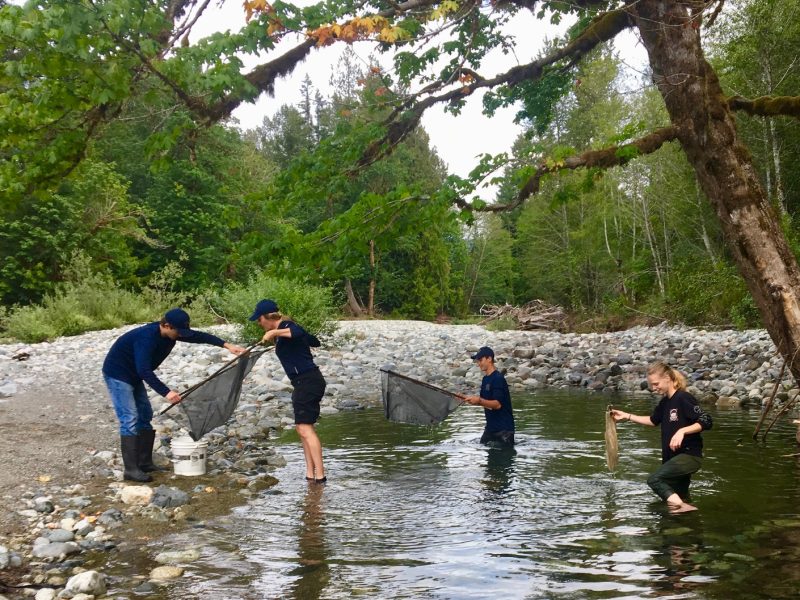
What to do and who to call when juvenile salmon are in danger
Officials say Cowichan Valley residents should call experts to move salmon in isolated pools because of risks associated with relocation.
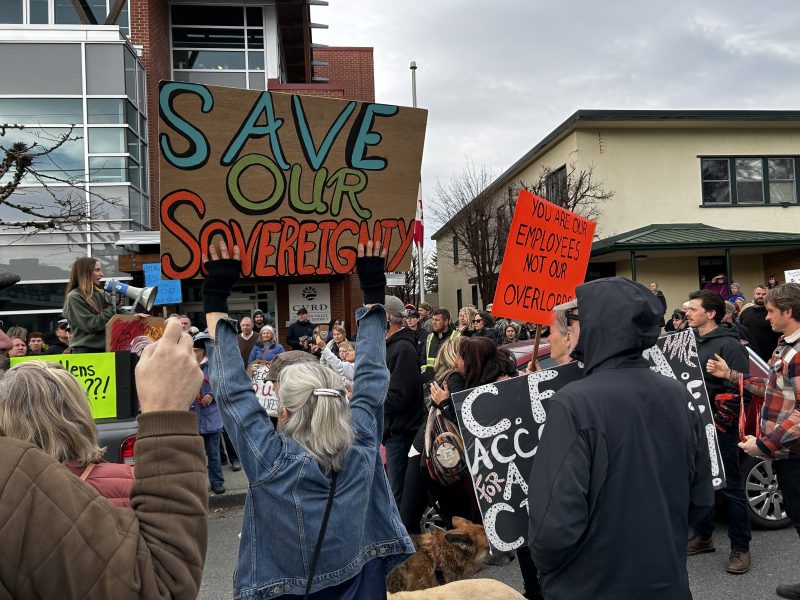
Behind the backlash to the Cowichan Valley’s comprehensive zoning bylaw
The campaign against Bylaw 4710 was fuelled, in part, by misinformation and an organized group of advocates. What could this mean for the future of local politics?

What to do and where to go during extreme heat events in Nanaimo, the Comox Valley and the Cowichan Valley
A guide to prepare for extreme heat events on Vancouver Island