
Winter market at the HUB spotlights Indigenous artists
The Winter Indigenous Makers Market lifts up Indigenous artists and provides non-Indigenous people with a chance to buy authentic art.
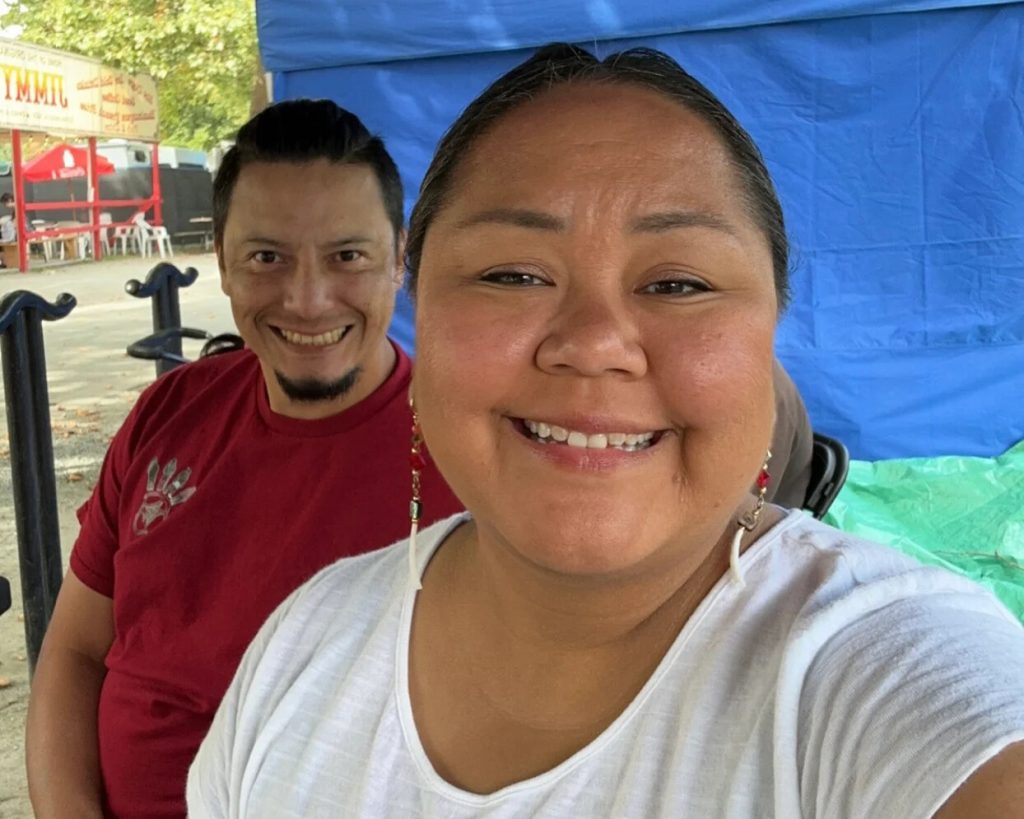
In 2020, Jenn Baird was living in Cowichan when she was inspired to create a space to spotlight Indigenous artists. As a mixed Swedish, Scottish and Anishinaabe settler and artist, Baird saw an opportunity to help artists historically silenced by colonialism protect their work and, more importantly, build a sustainable income.
Thus came the Indigenous Makers Market, now in its third year and hosted by Hustle Berry Jam Productions, led by Baird.
Art styles like coastal Formline are often appropriated by non-Indigenous people without credit to Indigenous artists, Baird said. A big motivator behind this market is to prevent that from happening. All of the vendors are Indigenous artists, and no re-sellers are allowed.
“The whole premise is to raise up and feature Indigenous artists so they can earn a fair income on their hard work,” Baird said.
Knock-off art impacts Indigenous artists
It’s no secret that Indigenous artists have faced barriers to profiting from their art, and there aren’t any laws on the books yet to stop fake Indigenous art from reaching the market.

A 2019 investigation by The Discourse found that 75 per cent of souvenir shops in Vancouver sold some knock-off Indigenous art made without permission or collaboration with Indigenous artists.
Cowichan knitters are a group affected by that appropriation. Some work is being done to protect Cowichan sweater designs from theft. In 2023, a fair trade agreement with the Victoria Native Friendship Centre called Knit Wutth’els led to the creation of an online store for knitters to sell their work. Part of the Knit Wutth’els mission statement is to combat fake Cowichan Sweaters circulated since the 1950s.
The Winter Indigenous Makers Market aims to remedy those issues by highlighting Indigenous voices and allowing non-Indigenous people to source authentic art.
To keep with that spirit, Baird thought it essential to have a low barrier to entry. If an artist couldn’t pay the vendor fee, they would waive it.
“We have never turned away a vendor because of a lack of dollars,” Baird said.

‘We are real, we are human’
Quw’utsun artist Larissa Yamelst still remembers her first market in the Cowichan Valley during the winter of 2022 with her partner, Clayton Yamelst, who is from the Nlaka’pamux Nation. They sold 12 pairs of earrings at that market.
“We were so proud of what we made, and it’s so crazy to see how fast it took off,” Larissa said.
Larissa and Clayton’s journey in making and selling jewelry began two years ago as a way to supplement Larissa’s income. Clayton had been beading since he was five years old. Together, they created Yamelst Designs and specialize in making earrings and necklaces from dentalium shells, also known as tusk mollusks.
Pre-colonial contact, the thin white shells were used as currency for Indigenous people in the Pacific Northwest, Larissa said. She recalled having seen a dentalium necklace that had a value equivalent to a red cedar dugout canoe. Along with dentalium, the pair uses flat-stitching, abalone shells and porcupine quillwork to craft their pieces.
Since that first market, Larissa and Clayton have been able to attend conferences and powwows all over B.C. to sell their art.
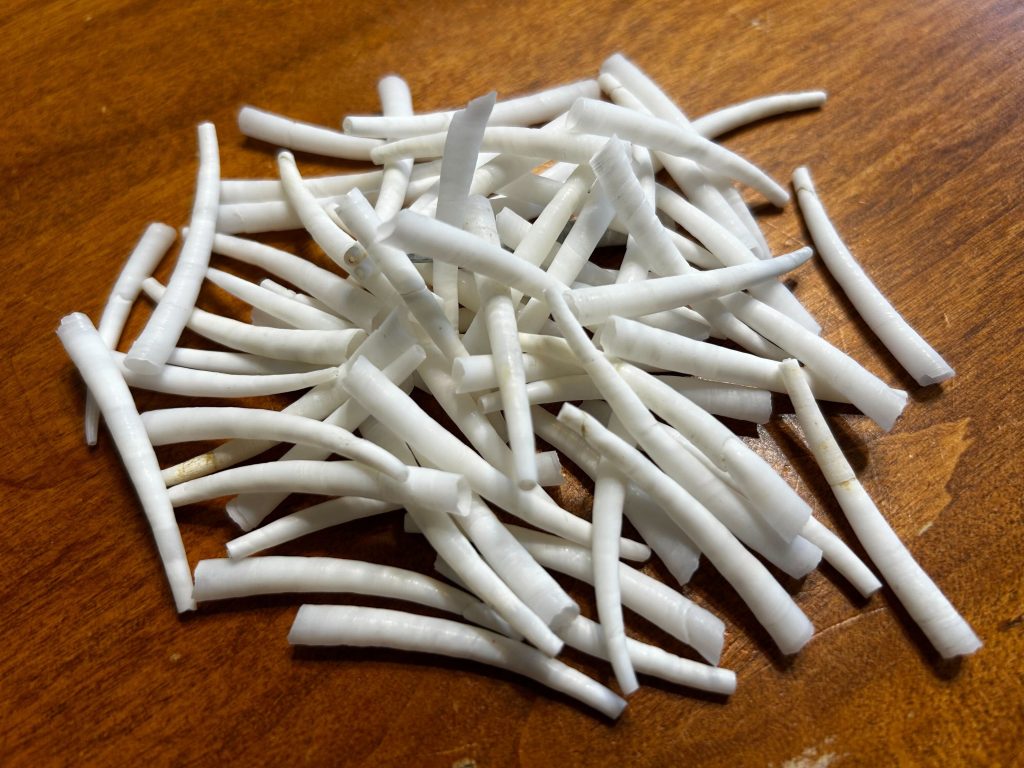
Even though their pieces are wholly unique, Yamelst Designs still feels the pressure of a market primed to reward resellers.
Larissa said they see mass-produced bead embroidery at the markets they attend, sometimes undercutting their price by 30 to 60 per cent.
“We battle that right there at the market,” Clayton said. “And online, it’s a constant battle to be like, we are real, we are human.”
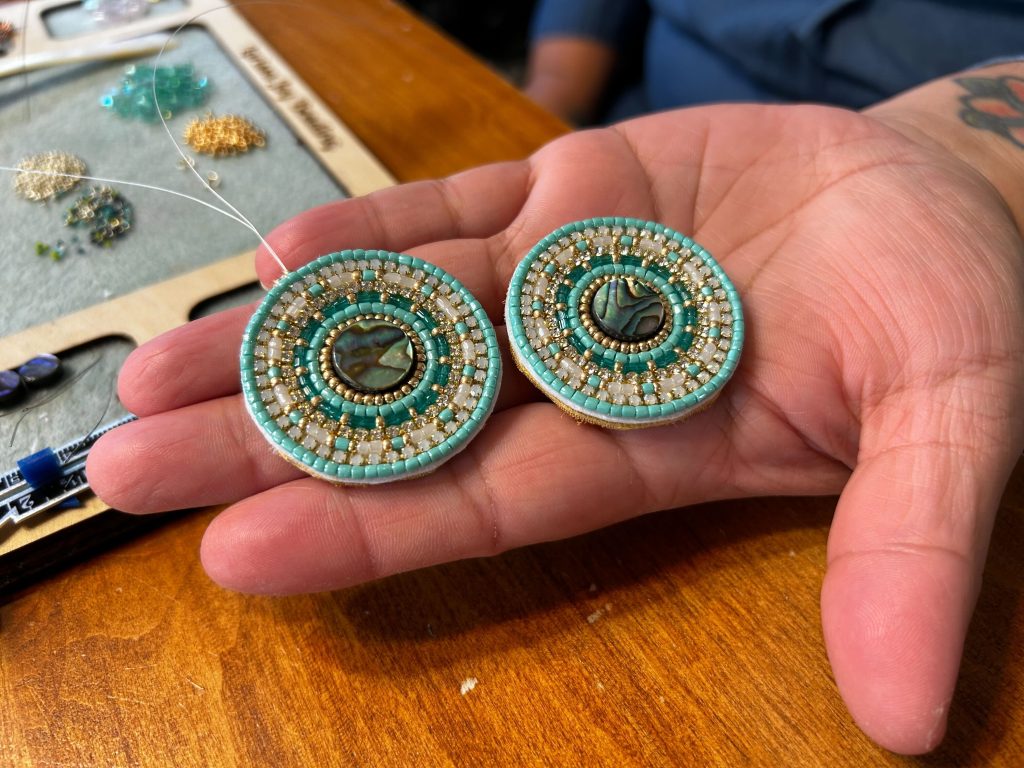
Yamelst Designs sells their work through their shop and Facebook Marketplace and has been invited to sell at the Vancouver Indigenous Fashion Week marketplace.
“What I really appreciate about this coming market is that it’s a makers market,” Larissa said about the Winter Indigenous Makers Market at The HUB. “It’s not like a reseller’s market. You have to be the creator.”
This time of the year is busy for Larissa and Clayton, and a lot of it has been spent replenishing their supply after Vancouver Indigenous Fashion Week, where they sold 70 per cent of their stock.
Looking to the future, Larissa and Clayton hope to host more workshops in the new year and, in the long term, start creating bead kits that give people the tools to make a particular project on their own.
Yamelst Designs is just one of the many artists featured at the market, which takes place from 1 p.m. to 5 p.m. at The HUB at Cowichan Station. For more information, visit @hustleberryjam on Instagram or the Facebook event page.
Meet a few of the artists from the Indigenous Makers Market
Norman Starr (Ojibway, Pic River First Nation – Biigtigong Nishnaabeg)
Norman’s work bridges the traditional and contemporary, weaving vibrant woodlands art with modern expressions. His pieces — ranging from stunning prints to apparel and stickers — resonate deeply with themes of Ojibway spirituality and storytelling. A proud son of artist Robert Sanderson, Norman’s art is a celebration of his heritage and a testament to the evolving richness of traditional styles. Don’t miss his apparel collection, where culture and modern design come together in wearable art.
Katie Roland Phillips (Quw’utsun)
Katie is a powerhouse beadworker with an eye for merging meticulous brick-stitch techniques with pop culture and contemporary motifs. Her creations include whimsical yet precise pieces like her iconic gold and silver dragonflies, reflecting a balance of nature and modernity. Katie’s warm and joyful presence has been a cornerstone of every market, and her table is always brimming with vibrant, conversation-starting jewelry that tells stories of culture, creativity and community.
Taylor Devine (Two-Spirit, Métis)
Taylor’s artistic journey spans over 15 years of painting, drawing and beading. Their work is deeply infused with a passion for reconnecting to Métis culture and community, blending traditional techniques with innovative designs. Beading, a skill taught to them by a fellow Métis community member, is just one medium through which Taylor expresses their creativity. Their pieces, often incorporating multiple art forms, are a reflection of both personal growth and cultural revival.
Yamelst Designs (Quw’utsun and Nlaka’pamux Nation)
Larissa and Clayton Yamelst create art that marries the beauty of traditional materials with contemporary aesthetics. From shimmering dentalium and abalone shells to intricate porcupine quillwork and semi-precious gemstones, their pieces are a celebration of ancestral craftsmanship. Larissa’s evolution from Larissa Joy Beadwork to Yamelst Designs represents years of dedication and innovation, while Clayton’s contributions bring depth and a unique perspective to their collaborative work.
Emilie et Valentine (Buffalo Lake Métis Settlement, Sucker Creek Cree, Peguis First Nation)
This dynamic duo — Emilie from Buffalo Lake Métis Settlement and Stephanie from Peguis First Nation — create art that honours their ancestors and bridges their Cree and Métis heritage with contemporary techniques. Their offerings range from exquisite beaded floral jewelry to sewn and quilted fashion pieces, blending traditional motifs with high-quality craftsmanship. As newer vendors at the market, Emilie and Stephanie’s work has quickly become a standout, embodying the strength of cultural connection and storytelling.
What did you think of this story?
Your feedback after we publish a story helps ensure we're always improving our reporting to better serve you
Author
Related Articles
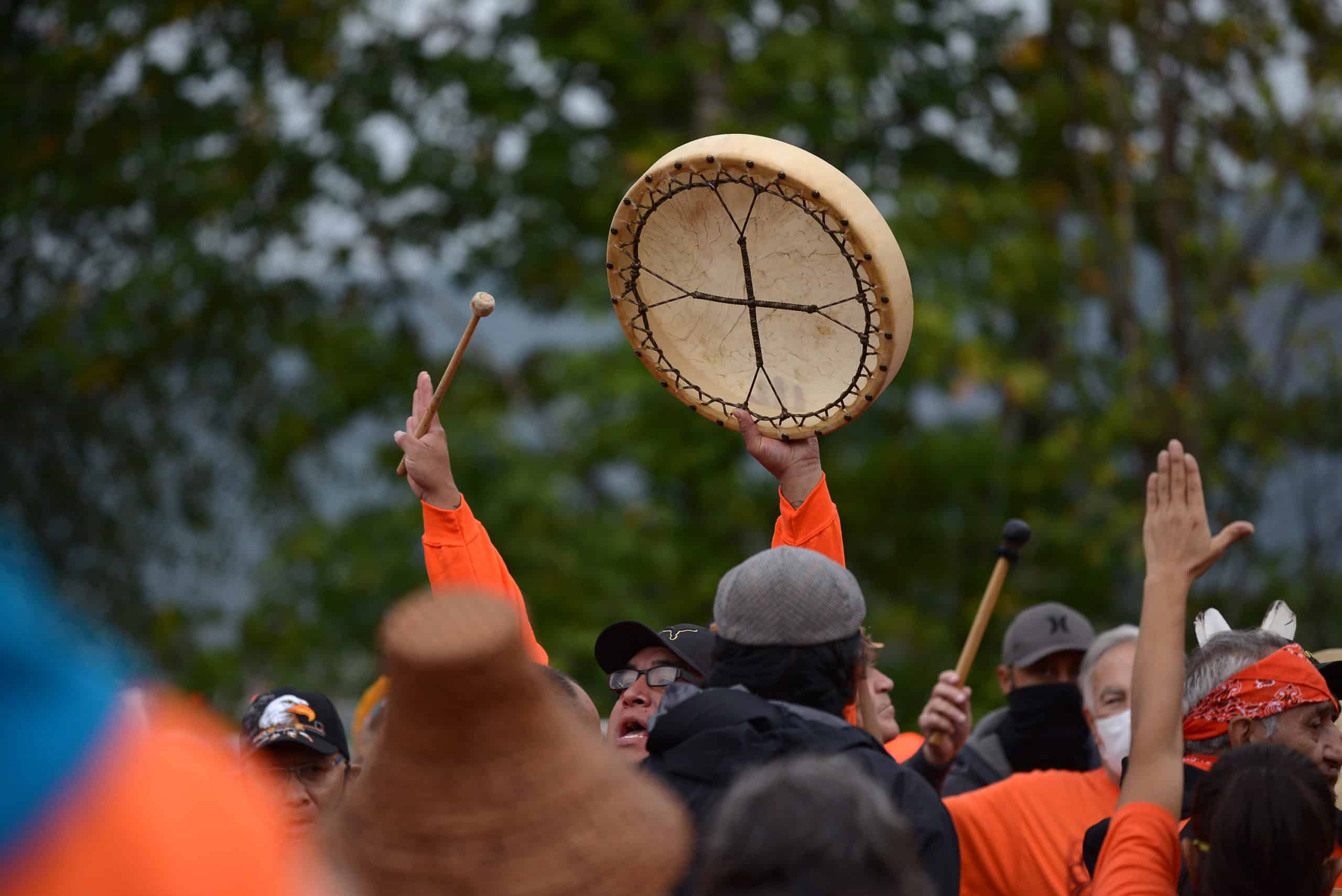
DRIPA debated in B.C. election on Vancouver Island
The Conservative party of B.C. is promising to repeal the Declaration on the Rights of Indigenous Peoples Act (DRIPA), while other parties argue that would set back relations with First Nations and create economic uncertainty.
Where Cowichan region MLA candidates stand on water, old growth and reconciliation
MLA candidates in the three ridings that cover the Cowichan region answered questions from Discourse readers ahead of the Oct. 24 B.C. election.
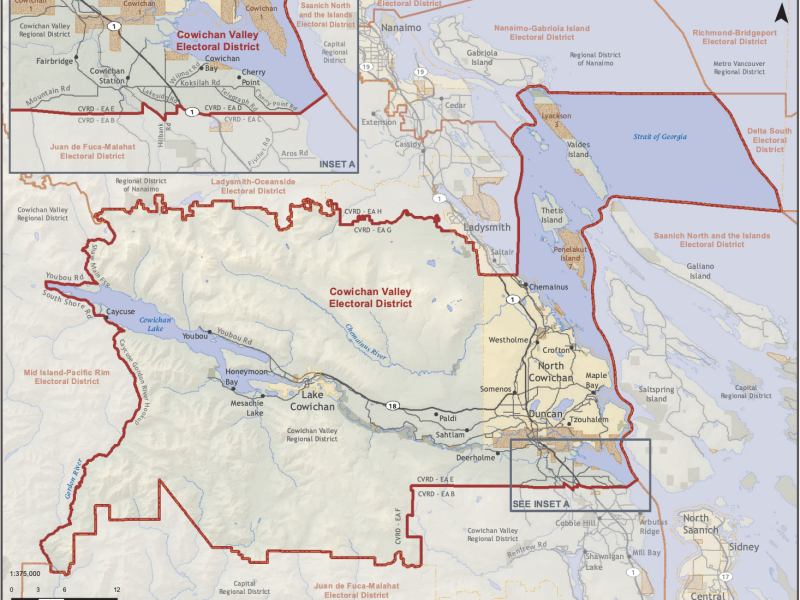
Cowichan Valley’s guide to the 2026 B.C. election
What riding am I in? Who are the candidates? When do I vote? The B.C. election basics for Cowichan Valley residents.