
Is now the time for electoral reform in Canada?
Activists say federal election results on Vancouver Island are a perfect example of why the country should drop first-past-the-post.
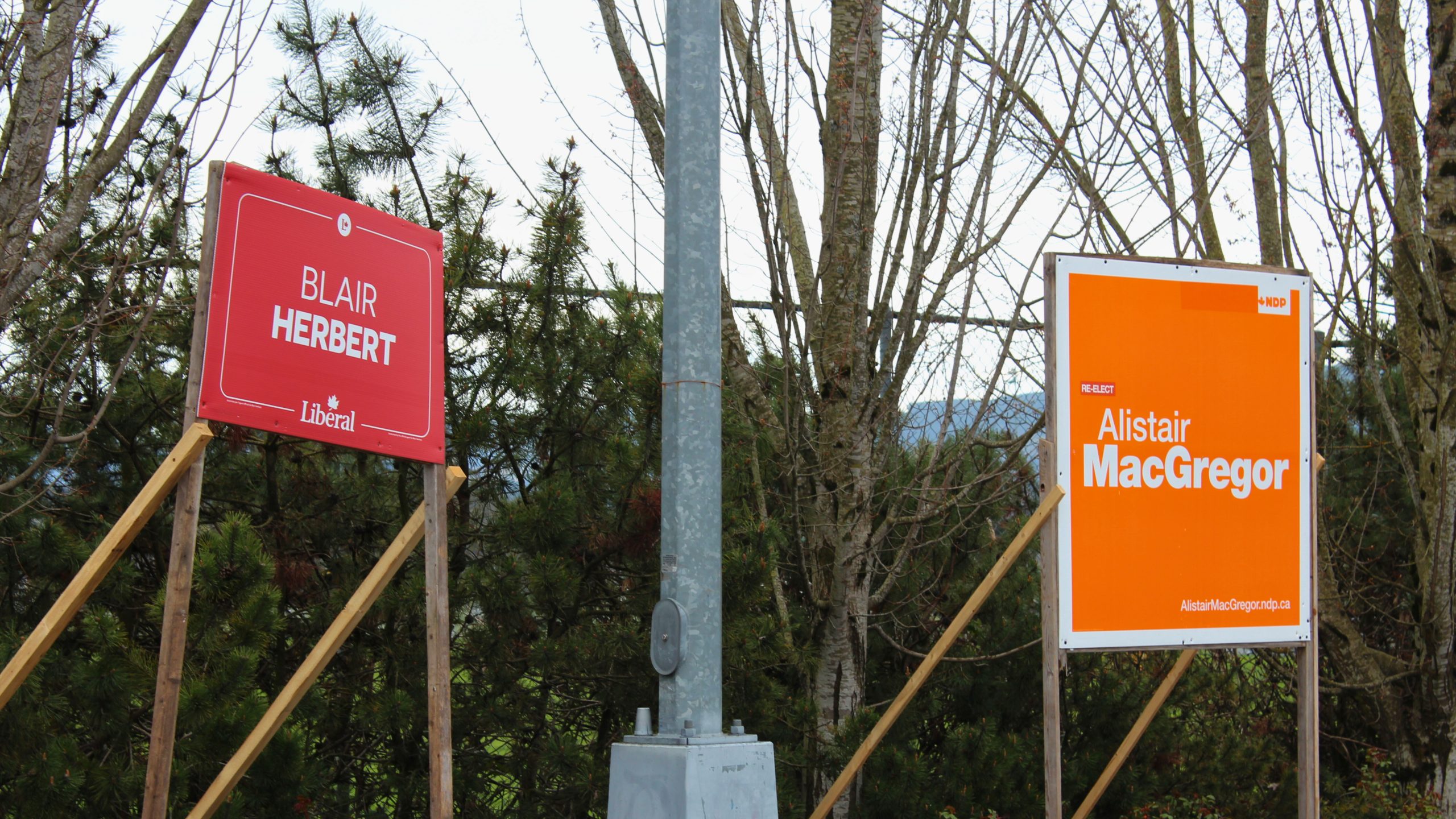
“There’s nine and a half years of history in this office, so there’s a lot to go through,” said Alistair MacGregor, the NDP candidate for Cowichan—Malahat—Langford who, after 10 years of service to the region, lost his seat in the recent federal election.
MacGregor remarked that the hardest part of losing “is we have such an amazing team that made this office function and made it into what it was, and it’s going to be hard for all of us to part ways now.”
The Discourse caught up with MacGregor as he cleaned out his office in downtown Duncan. When asked how the days after the election had been, he laughed and said that speaking with residents out in the community “has felt a little bit like I’m consoling other people at my own funeral.”
The outcome of the 2025 federal election in Canada saw some historic losses by the NDP across the country and on Vancouver Island, with only one NDP incumbent out of six on the Island keeping their seat in Courtenay—Alberni.
While the NDP are left to sort out what happened, local electoral reform activists blame this swing, in part, on the country’s electoral system and say that now is the time for Canada to change how it elects members of parliament.
“Theoretically, you should be able to vote for what you really believe in and the person who most represents what you believe in but because of the way our system works, people end up having to vote strategically and that undermines people’s belief in the system,” said Fair Vote Canada spokesperson Sharon Sommerville.
Fair Vote Canada is a non-profit multi-partisan organization advocating for electoral reform in Canada. The group hopes this election will spark more interest in electoral reform and changing Canada’s first-past-the-post system to proportional representation.
Conservatives took both Nanaimo—Ladysmith and Cowichan—Malahat—Langford on election day capturing 35.2 and 37.2 percent of the vote, respectively. In both ridings, the NDP lost much of the vote share to the Liberals. A similar story played out in North Island—Campbell River, where the Conservatives flipped an NDP riding with 38.8 per cent of votes.
MacGregor said what happened in Cowichan “was a microcosm of what happened across the country. The sheer number of people who once voted for me flocking to what they thought was a safe haven, that’s what ultimately sunk our chances.”
Nationally, the New Democrats lost 17 seats and faced a leadership shake-up with longtime leader Jagmeet Singh announcing he was stepping down after losing in his riding.
Advocates for electoral reform say that under proportional representation, results on the Island would have looked much different.
“First-past-the-post served one party in Cowichan—Malahat—Langford. Conservative supporters, they’re happy, but the bulk of people who woke up on Tuesday morning were not that happy,” Sommerville said.
How does the electoral system work right now?
Under Canada’s current first-past-the-post voting system, the person who receives the highest number of votes gets a seat in the House of Commons and represents that electoral district as its member of parliament. A candidate doesn’t need to get a majority of the votes to be elected, sometimes resulting in a disparity between the number of votes cast and who gets a seat. For example, more than 50 per cent of voters in Cowichan—Malahat—Langford and Nanaimo—Ladysmith didn’t vote for the Conservative candidate, but because their votes were split between multiple parties, the Conservative candidates in both ridings won.
Fair Vote Canada says that broadly speaking, proportional representation is any electoral system where the percentage of seats a party has in a legislature is equal to the percentage of people who voted for that party. If a party gets 40 per cent of the vote, it would get 40 per cent of the seats in parliament.
Proportional representation isn’t a new talking point in Canadian politics. In 2023, then-Nanaimo—Ladysmith’s MP Lisa Marie Barron put forward a motion to create a national citizen’s assembly on electoral reform.

In 2016, the Liberal government created a Special Committee on Electoral Reform which issued a list of recommendations including that the government hold a referendum on proportional representation.
Different kinds of proportional representation systems are used in democracies around the world including Australia, Ireland, Germany, New Zealand and Scotland. The committee explored all of these systems, according to a report.
A January 2025 poll from Ekos Research Associates found that nationally, 68 per cent of Canadians support moving the electoral system to proportional representation while 16 per cent said they opposed it.
Fair Vote argues that career politicians don’t have an interest in changing electoral systems that got them elected. The group says a proportional representation system would force parties to collaborate and work together, making decision-making more difficult for parties that want to push their own policies and interests.
“The window has been opened a little bit with a Carney government because he’s not a lifetime politician,” said Sommerville, who is hopeful the new Prime Minister will explore electoral reform — a promise made by former Liberal Prime Minister Justin Trudeau that wasn’t followed through.
Prime Minister Mark Carney has stated that while electoral reform wasn’t in the party platform he personally is open to addressing “structural issues in our democracy” after the government has dealt with more pressing priorities.
“The electoral system doesn’t accurately represent the voting intentions of Canadians, and that’s so clear in Cowichan—Malahat—Langford,” Somerville said.
Electoral reform an antidote to vote splitting and polarization, activists say
Leading up to the election, some progressive voters in ridings such as Cowichan—Malahat—Langford and Nanaimo—Ladysmith were split on who to vote for — NDP incumbents or Liberal or Green candidates.
“In the end, the bulk of voters voted for other parties, which is what first-past-the-post does. It’s how we get vote splits, and how a single party can come up the middle,” Sommerville said.
Websites such as SmartVoting and VoteWell were shared widely online and voters took to social media platforms to urge others to vote strategically in order to avoid a Conservative win. Those websites indicated the strategic vote in Cowichan—Malahat—Langford was NDP but in Nanaimo—Ladysmith the websites showed conflicting information, one saying a strategic vote was for the Greens and the other saying the Liberals were the strategic vote.
“People can become very polarized because of what they’re being told in terms of how they should vote. And some people will simply say, I’m not going to bother,” said Connie More from the Langford chapter of Fair Vote.
In the current system, voters will often vote out of fear that a disliked party will win, More said. But then they struggle to determine which party is actually favoured, leading to vote splitting. In contrast, More said proportional representation takes away that fear and allows for people to vote for their preferred candidate or party.
“They don’t have to vote strategically out of fear in order to block someone else and all that mess with trying to figure out how to do that,” More said.
Proportional representation would solve the problems of polarization and isolation, Sommerville said, “because everyone has a greater opportunity to see their voice around the decision making table.”
More civic literacy needed
Fair Vote argues that first-past-the-post, while seeming simple on the surface, is actually confusing to voters who have to consult competing polls, partisan announcements and contend with misinformation online.
A recent post-election poll by Leger found that three quarters of Canadians believe misinformation impacted the federal election.
“I heard more than lots of times that people at the doorstep thought they could vote for a party leader, as in the U.S.,” More said. Many of what she called “low-information” voters didn’t realize they were voting for a local representative, not the Prime Minister.
In Nanaimo, former NDP MP Lisa Marie Barron put forward a motion to create a national citizens’ assembly on electoral reform in 2023. She told the Discourse that while campaigning this time around, she also noticed a lot of confusion from voters around how our elections work.
“There were people who showed up at the polls asking, how do they vote for Mark Carney? So I think it’s been a bit of an eye opener for many people, and a bit of education for the general public as to how our political system works,” Barron said.
However, More doesn’t blame voters for not understanding how the system works.
“A lot of people are so busy just trying to make ends meet in their own lives they just don’t think of politics and elections,” she said.
Educating the public on how our existing electoral system works is one piece of the puzzle for Fair Vote. The challenge for Somerville and other voting reform advocates is getting Canadians familiar with proportional representation.
“Because this is all we’ve ever used, it’s all we think that there is out there,” Sommerville said. “One of the ways to legitimize a way forward would be to use a citizens assembly.”
A citizens’ assembly is a group of people selected to learn about and deliberate on an important policy issue such as electoral reform. The assembly would then make a recommendation to the government.
British Columbia held a citizens’ assembly on provincial electoral reform in 2004 and recommended that the electoral system be changed to a single-transferable-vote system but did not receive enough support in a 2005 or 2009 referendum.
In 2018, the question was once again put to British Columbians in a referendum in which 61.3 per cent of voters indicated they wanted to keep the current first-past-the-post system.
For now, More is optimistic that the new prime minister will look at creating a citizen’s assembly to keep partisan politics away from electoral reform, “so that people across all political parties could trust the results.”
“It’s not a fringe issue anymore,” Sommerville said. “A lot of people are talking now because of these results.”
– With files from Mick Sweetman.
What did you think of this story?
Your feedback after we publish a story helps ensure we're always improving our reporting to better serve you
Author

Related Articles
DRIPA debated in B.C. election on Vancouver Island
The Conservative party of B.C. is promising to repeal the Declaration on the Rights of Indigenous Peoples Act (DRIPA), while other parties argue that would set back relations with First Nations and create economic uncertainty.
Where Cowichan region MLA candidates stand on water, old growth and reconciliation
MLA candidates in the three ridings that cover the Cowichan region answered questions from Discourse readers ahead of the Oct. 24 B.C. election.
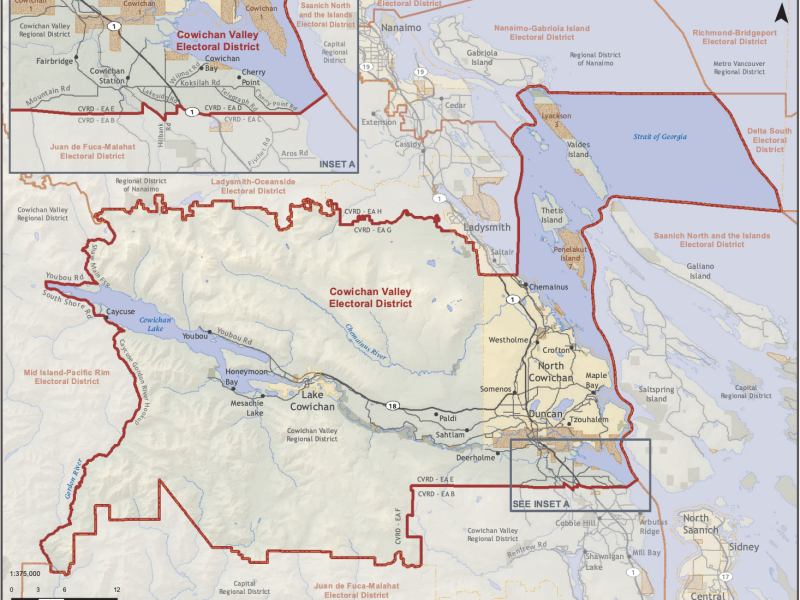
Cowichan Valley’s guide to the 2026 B.C. election
What riding am I in? Who are the candidates? When do I vote? The B.C. election basics for Cowichan Valley residents.