
Local poet pens love letter to women for International Women’s Day
Aimee Chalifoux says her poem, ‘The Young Woman’s Guide To Liberation,’ channels the voices of ancestors and shares her hopes for the future.
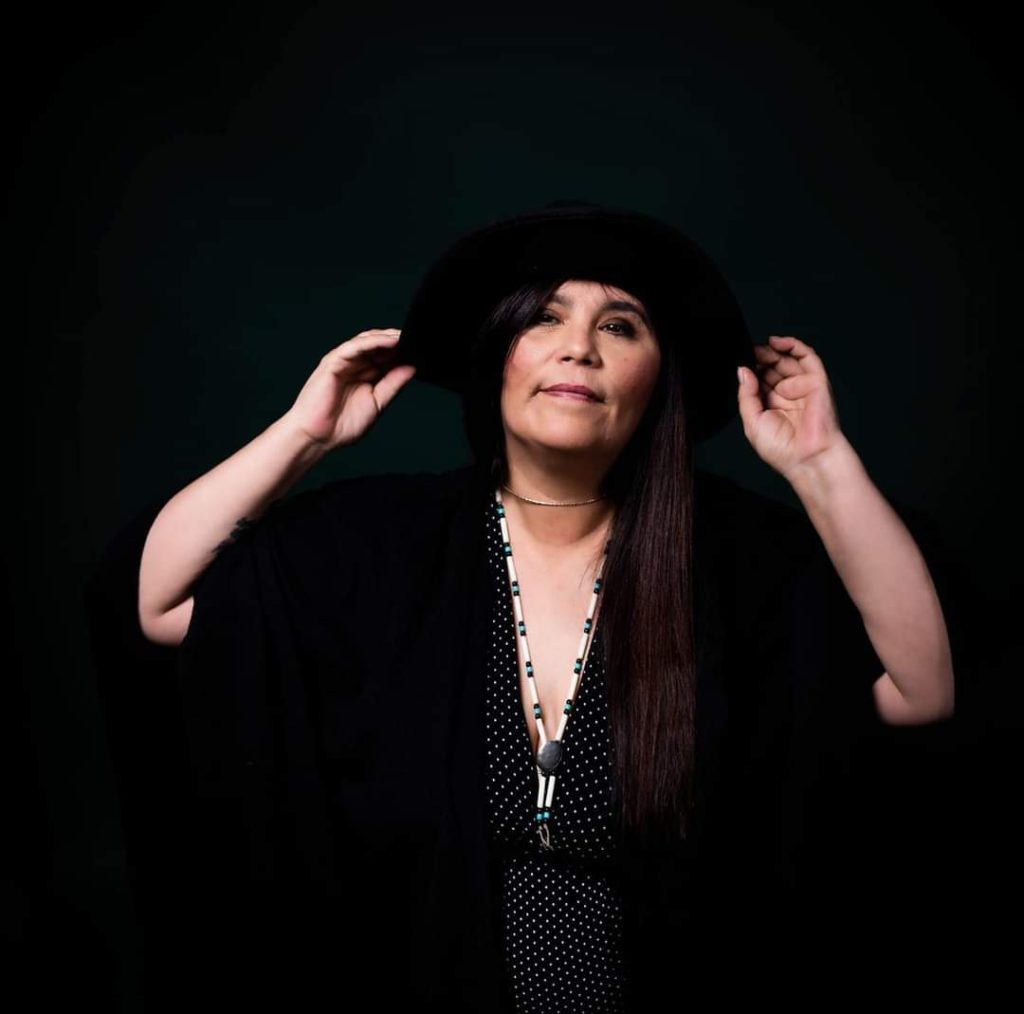
Every year since 2019, the grassroots organizers behind Cowichan Valley International Women’s Day have made space to feature and celebrate the work of local women poets and spoken word artists.
This year, Nanaimo-based poet Aimee Chalifoux contributed a new commissioned work, The Young Woman’s Guide To Liberation, which shares its title with a 1971 book by Karen DeCrow. The poem has been printed on postcards for distribution through the Cowichan Valley and Nanaimo — and wherever else they may land — to honour International Women’s Day, which is celebrated annually on March 8.
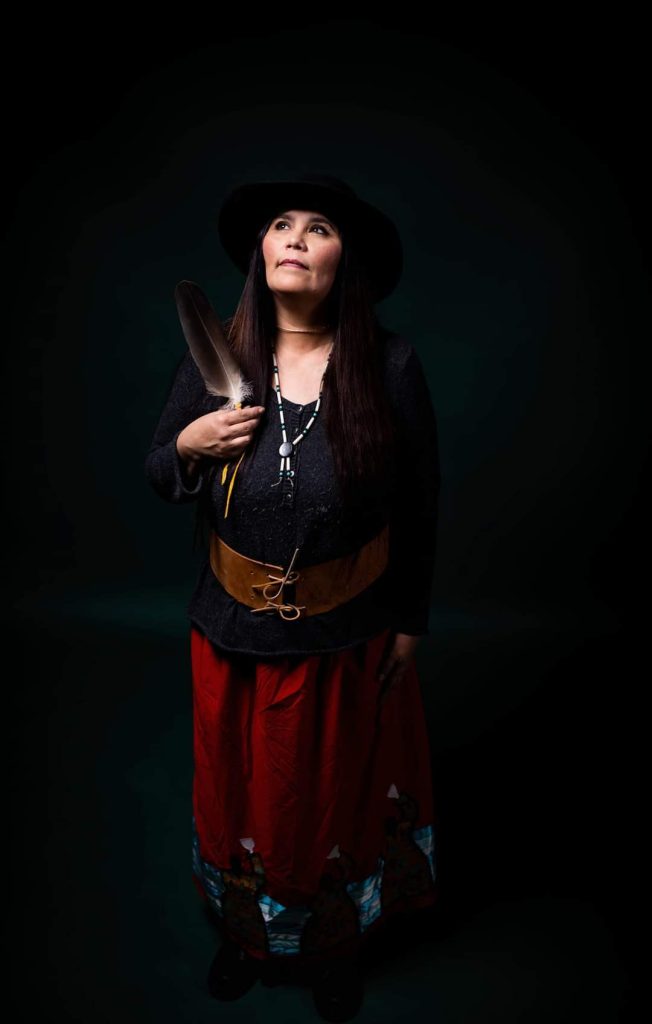
Chalifoux is a Cree, Saulteaux and Métis woman who grew up on Vancouver Island. She has worked with Literacy Central Vancouver Island as the Indigenous literacy coordinator and executive director and also has experience as an outreach worker for women and youth. She has been working for decades to advocate for Indigenous and marginalized community members and was recently recognized with the Breaking Barriers Award from the Government of B.C. for her work combating racism and fostering multiculturalism.
Chalifoux’s upbringing wasn’t easy. She grew up in foster care and group homes and dealt with racism, violence and more. Today, she supports people in the community who have had similar experiences to her own, helping them to achieve their goals in literacy and in life.
The poem she wrote for Cowichan Valley International Women’s Day reflects on the hardships and pain women face, as well as the work that has been done by women in the past to pave a way forward. The Discourse’s Shalu Mehta spoke with Chalifoux to learn more about her life, poetry and process. The interview, which has been edited for length and clarity, follows after the poem below.
The Young Woman’s Guide to Liberation

Oh you beautiful girl
When the light leaves you
Let the darkness keep you safe but just,
For a while to gather your thoughts
Let your bones and bruises heal
Find your way through the shadows that steal
Standing in your way, throwing stones,
To hold you back with
An invasion of your body and
Remorseless
Ways to keep you unknown
When the scales of justice turn on you
Let it be the fuel to fight the way back to your life
Your grandmothers will be there
See the resistance in their eyes
Resist, persist, but most of all do more than Exist!
My girl, you walk on the ground of many battles won
I don’t mean World War II or even World War I
I mean a world not meant for resilient women
Feel the moccasins before you
That bled for our futures
Yet stayed soft on the path
To liberation
You lived your darkness but let your light shine on
My girl, keep your spirit free and wild
Hold space
For the next generation

Aimee Chalifoux 2024
SM: How would you describe yourself?
AC: I think I’m really shy. I’m a survivor, so I’m very driven by that survival. I feel like it’s my purpose to help others that have been in the same shoes as me, and to bring dignity to people. You know, I didn’t experience much of that growing up and one of my closest mentors taught me that the work that we do is about bringing dignity to people’s lives. I think I’m also very authentic, like, my life is still a mess. Sometimes I still have drama in my life. I’m very much an open book about that because I think that authenticity helps when you’re working with vulnerable people. They need to know that everybody has a vulnerable piece, right?
SM: I’m wondering how you feel connected to International Women’s Day. There’s so much around it but I would love to know what your connection is to it.
AC: It’s ironic because growing up, I wasn’t very close to women. I had a stepmom that I didn’t get along with as a child but we were very close in my later years. I had a very tumultuous relationship with my birth mother — she abandoned me and I had a lot of issues around that. It wasn’t until much later in my life that I looked back and realized the women that really had a lot of influence on me: youth workers, group home workers, social workers, counsellors. I didn’t realize it at the time because I was stuck in my own head.
But years later, I’ve managed to reach out to many of them, express that to them, thank them and apologize when necessary, because I wasn’t always nice when I was a teenager. And I feel very blessed that I’ve even been able to do that. To reach out to them and reconnect with them.
When you go back and you reconnect like that, it really gives you the chance to feel gratitude. So even though I didn’t realize it when I was younger, I now realize that there have been a slew of women that have seriously impacted my life in a good way.
And for International Women’s Day, when I first started working at the [Nanaimo] Women’s Center about 10 years ago, that was when I started really getting involved. I’ve interviewed people that I admired and respected for International Women’s Day and I think the more that we lift each other up, the better the world is going to be, rather than tearing each other down. So I’m very grateful that we get to have a day where we can do that, where we can lift others up.
SM: It’s my understanding that you wrote this poem specifically for International Women’s Day. Why was it important for you to share this poem?
AC: I had actually written an entirely different poem and when I reached out to the organizer [Gayle Hurmuses] and we spoke on the phone, she kind of dragged this poem out of me. I didn’t know it was in there but it was!
I was actually working on a piece for my daughter, my oldest daughter. She survived a pretty significant assault about eight months and I’ve been watching her navigate both the justice system, as well as the medical system ever since. Wow. Because as you know, even after the bruises heal, it’s hard to really heal from it.
I wrote that poem with my daughter in mind initially, and other daughters — everybody’s daughters. I come from a family where there’s been a lot of violence. I’ve had two women in my family murdered by spouses. So when we first spoke about The Young Woman’s Guide to Liberation, I thought of all the young women that are out there, navigating love and relationships and finding their way in the world, sharing it with other people. And in my own life, being also a survivor of violence — when we’re vulnerable, we tend to be attracted to something that’s not healthy for us.
So the organizer suggested that I write a love letter to my daughter, and to the other daughters out there — what I see for them and what I want for them for their healing. So that’s where that poem came from.
That’s why there’s the mention of “when the scales of justice turn on you.” because our justice system is not failsafe and it’s not always safe to navigate. So that was why I mentioned that.
I’ve known so many young women, being a youth worker myself, having to navigate that system. And I know that we’ve made progress. I know we’ve come a long way and we have our aunties and our grandmas and our sisters to thank for that. But we’re not done. We still have a long way to go.
I feel like there’s this rush. It’s probably always been there. I wake up with it, thinking that our young people are so vulnerable. This was a chance for me to just sort of share what I wished for them for their healing.
I wanted this piece to be more imagery and to leave people with a feeling of hope. I didn’t want it to just be dark, I wanted it to be about finding the light, finding the hope, recognizing that we do walk on the ground where women before us have laid out a path and we need to keep that going. We need to keep that resistance going and to keep that healing going while still maintaining our softness.
SM: You briefly talked about the title of the poem, and the book with the same title. I’m wondering what that book means to you, and why you made the choice for the poem to share the title.
AC: That book was written in 1974. I was three years old and I was already navigating a scary world at that age. So for me, I see what that author wrote as more of a love letter to the next generation. So I wanted to honour that.
SM: In a sense, it’s as if your poem continues that love letter.
AC: That’s what I was trying to do, yeah.
SM: You talked about this poem addressing your daughter and the other daughters in the world. One of my questions was who you are addressing in this poem, but I’m also curious about who the speaker is of the poem.
AC: I cried a lot while I was writing this poem, not just for myself, but I thought of my grandmothers, I thought a lot about my aunties. When they visit me in my dreams, that’s when I feel that they’re with me. My mom — my stepmom who raised me — passed away during COVID and I feel her around me all the time. And I feel like these are her words and the words of all of our grandmothers. When I write, I don’t often feel like it’s necessarily my words. I’ve always tried to stay in touch with my muses and sometimes I end up with words that don’t necessarily feel like they came from me. They come from the ancestors.
SM: There’s a sense of pain and struggle in the poem as well, especially at the beginning. You’ve talked a little bit about where that comes from but I’m wondering if you can elaborate and talk about how it relates to the experiences of women today.
AC: I don’t think any of us don’t ever feel that darkness, but I think for some, it’s harder to find your way out. You can’t do it alone. I cried for so many years. I was so stubborn and independent, and refused to take help. I thought that there was a sense of pride in that, but I think the sense of pride is actually in taking help and reaching out, because that’s a lot harder to do. So I think that’s what that means to me, that pain is just being used to doing things alone and then coming to the realization that you don’t have to. That’s really what I want for young women is to not feel like they’re alone.
SM: In the poem, the picture you paint of the moccasins walking before us is really vivid. What connection do you have to those moccasins? And what connection do they have to other women?
AC: There’s another reason for that being in there, the moccasins in particular, besides the fact that I’m indigenous. I’m also the mother of a murdered child. I had a daughter that was murdered in 1992. I was approached by a good friend up North, an artist, and she asked me if she could design a pair of moccasin tops (vamps) for my daughter, to be part of the Walking With Our Sisters memorial project. So that’s where that came from. I was paying homage to my daughter and the other women of my family that have lost their lives to violence. Even though they’re gone, they leave a legacy and their story is carried on.
SM: What do you hope for when it comes to the future for women?
AC: Equality not being a question anymore! My hope is that we don’t have to keep fighting for that, but it’s just recognized. Like, it just feels like we should have been there so long ago, the work has been done. What’s the problem? What’s the holdup? Totally. I’ve been in boardrooms and never felt so judged and uncomfortable in all my life.
SM: Do you have any final thoughts you’d like to share about the poem or International Women’s Day?
AC: Keep up the good fight so one day we won’t have to fight anymore.
What did you think of this story?
Your feedback after we publish a story helps ensure we're always improving our reporting to better serve you
Author

Related Articles

Cowichan Valley local election candidates on natural disaster preparedness
In the summer months, the threat of wildfire is becoming more frequent. In the winter, there’s flooding. What do the candidates suggest doing to prepare?
Voting in the 2026 Cowichan Valley local elections? Here’s what you need to know
Where, when and how to cast your ballot in North Cowichan, Duncan, Ladysmith, Lake Cowichan and the Cowichan Valley Regional District for the 2026 local elections.

Cowichan Valley candidates on protecting the community from climate change
Candidates in Duncan, North Cowichan, Ladysmith and Lake Cowichan share the steps they’d take to protect the community from the impacts of climate change.