
St. Ann’s Garden Club supports seniors to ‘create their own narratives’
The long-running St. Ann’s Garden Club at Providence Farm is seeking more funding to expand and serve more people.
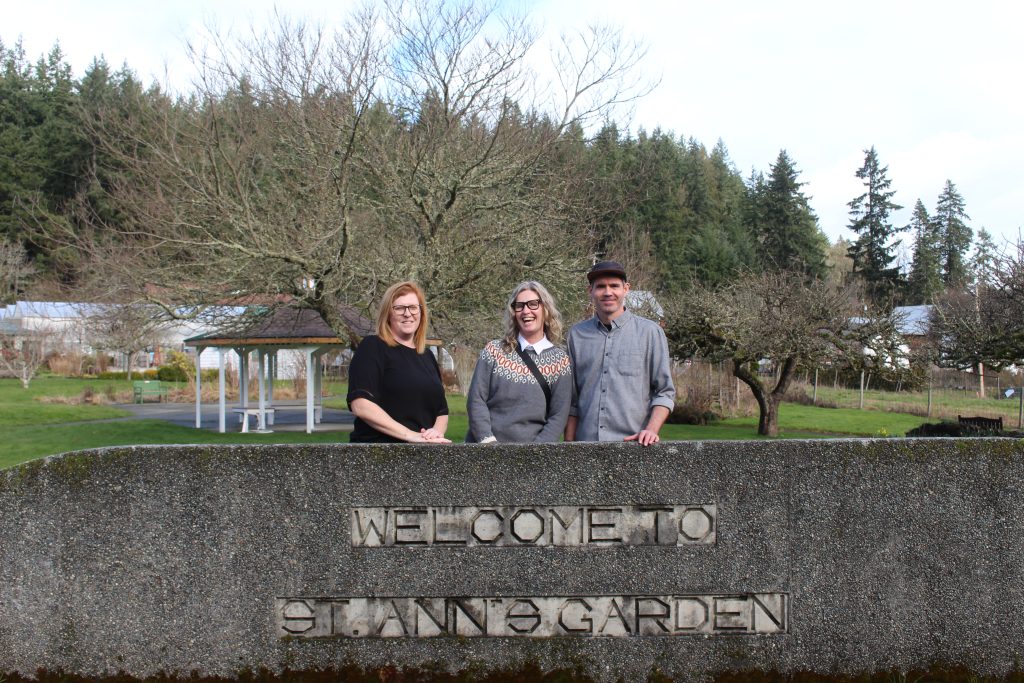
Magic seems to take place on Cowichan Valley’s Providence Farm.
Behind large gates on the property lies raised garden beds, heritage apple trees, a greenhouse, farm animals and pathways that make the shape of a figure eight. A timber building with a green roof invites visitors inside where cookies are baking, a woodfire is burning and people can be seen enjoying tea, creative projects and more. Visitors are welcomed with a warm hello, and people on the farm are buzzing about the arrival of newly hatched chicks.
This area of Providence Farm is set aside, in part, for the St. Ann’s Garden Club. It’s a space for people — many of whom are seniors who struggle with dementia, Alzheimer’s Disease, mental health issues and substance use — to feel peace, enjoyment and connection. It also serves as a space where they can engage in nature-based healing and explore the range of emotions humans feel through gentle movement, creativity and watching animals on the farm.
The program, which has been operating since the 1990s, has been a huge success in supporting people who need it, but its funding hasn’t changed for the last five years, according to Providence Farm program director Stephanie Kok. This limits the number of people who can participate in the program on any given day, and also puts people hoping to access it on a waitlist.
But negotiations to fund the program differently — with an affordable pay-per-use model that is subsidized by Island Health and other funders — are currently taking place and, with any luck, the program may be able to expand.
“[The program] is a prescription for individuals … to help develop skill sets and tools to be able to navigate the symptoms of their diagnosis, without having it be something that’s actually prescribed,” Kok says. “It’s this homeopathic way of delivering and administering medicine to people through natural activity.”
A place to be who you are

Kathleen, who has been a part of the program since 2017, says she finds many different projects to work on when she’s on the farm. From creating artwork using old jewelry to sewing lavender sachets — using lavender harvested from the farm — that are a big hit at the Christmas market, Kathleen says she keeps busy. She also says she’s shy, but speaks openly about her life and her projects.
Early on in life, Kathleen was one of the few female pilots in B.C. She speaks of her travels through the U.K. and her time working at a Cadbury chocolate factory with a friend and travel partner of hers. She eventually got married and settled, but her eyes light up when she’s asked about her life experiences.
When Kathleen’s husband died, she says she had a lot of difficulty coping. She began attending the garden club and says it’s a place where she can find a lot of projects and things to do.
“I was able to sit with people and do things together,” Kathleen says.
At one point in the conversation, Kathleen gets up to retrieve examples of the lavender sachets she makes. She walks by two other women who are keeping each other company by a fireplace. One is sorting through lavender buds, removing sharp stems so the lavender can be used for the sachets. The smell of lavender fills the room.

The other woman, who has just woken from a short nap, begins to tell a story about the drawings she sees on a coffee mug near her.
Kok sits down on the ground, cross-legged, to ask more about what the woman sees on the mug. She picks up the mug and points to an image of a dog and two gardeners, asking for the woman to tell her their story.
“I’m right here with you,” Kok says, encouraging the woman to explore how the images on the mug make her feel, rather than pointing out that they’re just fictional drawings.
St. Ann’s Garden Club is a space where people can be whoever they are, and explore their feelings and emotions through their surroundings, Kok later explains. It’s a safe space where participants are encouraged to lean into their creativity and use their observations of their surroundings to process things they’re experiencing or have experienced internally.
“Here, we create narratives alongside people. So with person-centered care, a person has the capacity to re-author trauma in their life,” Kok says. “Offering that limitless imagination and that awareness that we construct our reality — and for some of us in psychosis our reality looks really wonky — we’re with someone to harness it and make it a wonderful place.”
Intentionally designed spaces and programming

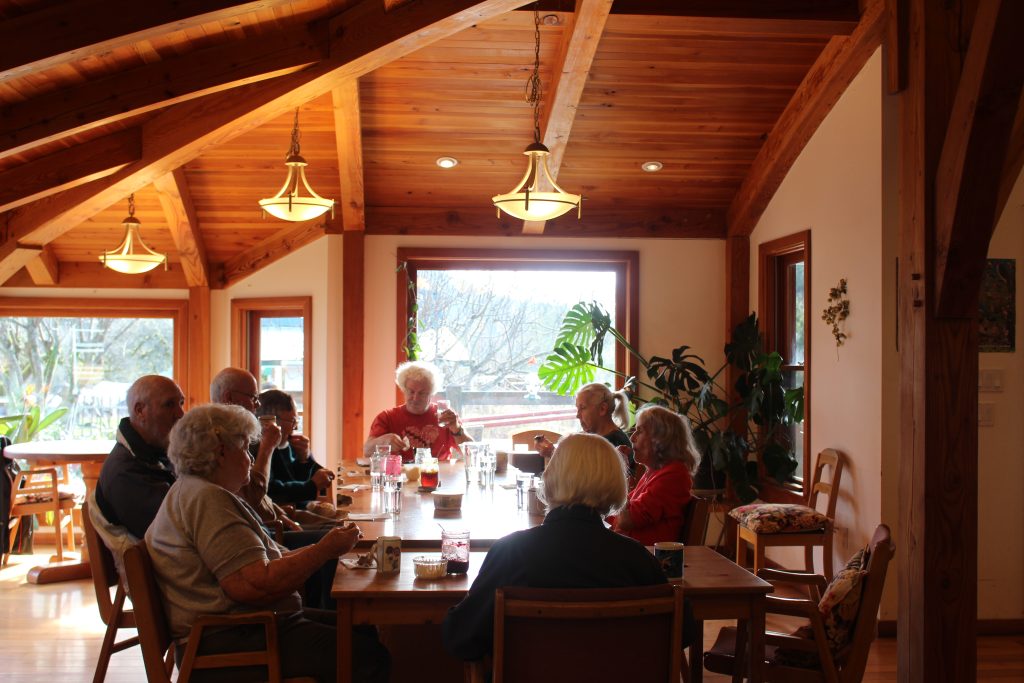
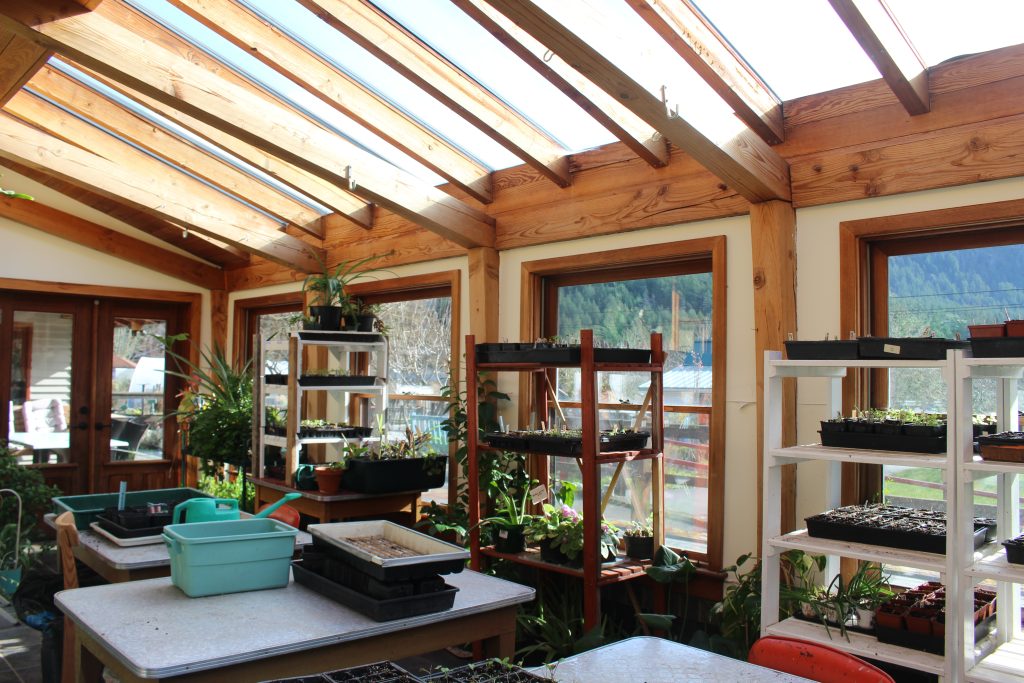
The building housing St. Ann’s Garden Club is the newest on the large Providence Farm property, which includes buildings that are over 100 years old. The new building was finished in 2009 and created intentionally, with a solarium so folks can work with plants even when the weather is poor, large windows so people in the building can observe what’s happening outside and an open concept.
Upon entering, an open-layout kitchen with a large table is just to the right where people can gather to cook and share a meal together. To the left is a living room area with a roaring wood stove and cozy chairs for guests to settle in as they work on projects or relax to take a nap.
A craft space is just behind where the smell of hot glue greets you and projects created by participants in the program are hung on the wall. The solarium, right next door, is warm and bright and full of plants waiting to be transplanted outdoors.
The building and the grounds where the garden club meets creates a “gated opportunity for folks to be able to experience a higher feeling of autonomy,” Kok says. The pathways outside are intentionally designed to encourage mindfulness and always end up back in the same spot, in case people walking along them lose track of where they are.
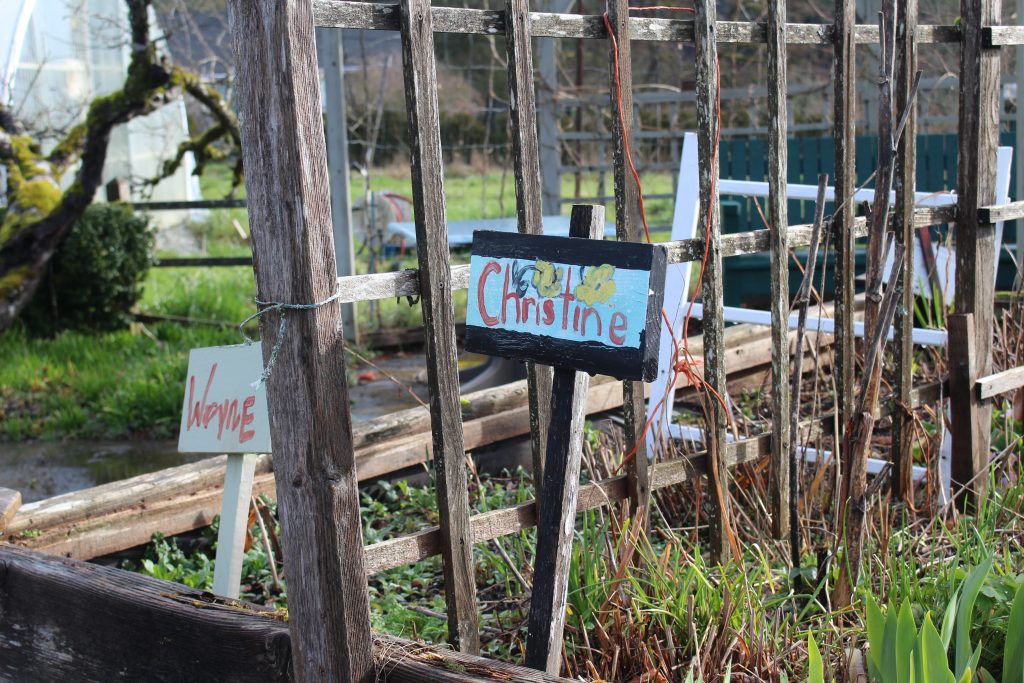
Tall, raised garden beds, and some that are wheelchair accessible, are available for use. Seniors in the program take to growing their own flowers and produce, with some even harvesting the seeds to plant at home.
Cindy Ross, a registered horticultural therapist who works with St. Ann’s Garden Club, says she creates programming and projects very intentionally to support the engagement and even healing of participants.
“A lot of times with horticulture, it encompasses so very many aspects and dimensions of maybe the history of a person, or connections with others and with the plants themselves,” Ross says.
Participants plant their own vegetables and plants, harvest them, process them, make meals with what they’ve grown and collect seeds from their favourite plants. They also work on hardscaping projects and woodworking, like making birdhouses. All of these projects and the engagement participants find through them invites them to open up, talk and process memories and feelings, Ross says.
“It’s a natural direction that the activity takes you to,” Ross says. “There’s memories, smells, tastes, sharing food with others, sharing information and connections, comfort. A lot of the folks are very anxious about who they are, especially if they’re on the brink of, half the time knowing who they are and the other half not knowing. To have that anxiety just drop away, they’re usually a lot more lucid.”
Providence Farm director of operations Leah Boisvert notes that all of the programs are created very intentionally with participants in mind. From what they plant and where they work to the order in which they do things, Ross has thought of everything, Boisvert says. And the same goes for the space that all of these activities take place in.
“I see [Ross] set up these activities without anybody knowing, but actually they’re intentionally structured from behind the scenes,” Boisvert says. “One that [Ross] explained was they start with planting peas, because the peas are going to come up quickly. And then the person will see that what they did worked and they were successful and they start to build their confidence … They can see success so that they’ll keep moving through the process.”
A goal to expand St. Ann’s Garden Club
When the COVID-19 pandemic hit, Kok says Providence Farm lost all of its volunteers. The staff that were left had to assess what the bones of its programming were and work from there. But that wasn’t necessarily a bad thing.
“It was a blessing,” Kok says.
They came together and sorted out what the purpose of each of Providence Farm’s programs is, and made that their focus.
“We re-harnessed and reimagined programming to its simplest, most profound level,” Kok says. “We are here to take care of you and to take care of this land so all the programming just naturally fell into this new structure of promoting care of each other and the land.”
But with inflation increasing operating costs, Kok says the garden club is running at a deficit right now. They not only have to pay the limited staff they have, but have to pay to manage the building and the grounds as well as the animals, including sheep and chickens that reside on the farm.
Participants currently pay $10 per day that they attend, and up to eight participants are able to attend each day. They are referred by health care practitioners to the program, but the waitlist is long, Kok says.
The program receives some funding from Island Health, as well as some grants and support from fundraising efforts, contractors and local donors — but it isn’t enough. Kok says they’re hoping to move to a subsidized program, increasing the per day cost to $30 and working with Island Health to cover more of the costs so the program is not only well-funded, but can expand as well.
Negotiations are currently underway and Kok hopes they’ll be able to look at expanding the program and opening it up to more people in the near future.
“Our goal moving forward is to really address the need and create a generalized awareness that it takes more,” Kok says.
What did you think of this story?
Your feedback after we publish a story helps ensure we're always improving our reporting to better serve you
Author

Related Articles
What to do and who to call when juvenile salmon are in danger
Officials say Cowichan Valley residents should call experts to move salmon in isolated pools because of risks associated with relocation.
How is The Discourse’s journalism funded?
And what does it cost to produce The Discourse’s in-depth, independent journalism?
Behind the backlash to the Cowichan Valley’s comprehensive zoning bylaw
The campaign against Bylaw 4710 was fuelled, in part, by misinformation and an organized group of advocates. What could this mean for the future of local politics?