
Revising Cowichan history: How Thomas Quamtany actually lost his arm
Historian Kelly Black gets to the bottom of a persistent myth about a one-armed Hudson’s Bay Company employee.
This is the second part in a two-part series about Thomas Quamtany. Read part one.
“The work of history is the work of retelling and revision.”
That’s how I concluded a previous article for The Discourse about Thomas Quamtany — sometimes called Tomo Antoine — a one-armed Hudson’s Bay Company (HBC) employee, guide and interpreter of mixed-First Nations ancestry (Haudenosaunee/Chinook).
Stories about his life first became popularized in 20th century Vancouver Island newspapers, embellished as tales of mystery, violence and colonial exploration.
One story in particular suggested Quamtany had his arm amputated after he was shot by a Quw’utsun Chief in August 1856. That story turned out to be incorrect, but it was repeated many times in newspaper articles and academic publications.
Today, fake history videos, fake archival documents, fake historical images and other AI slop can continue to circulate even if they’ve been corrected, harming our ability to access real stories by, for and about real people.
Like journalists, historians work to find and verify sources. Piecing together the life of a historical person is a bit like a scavenger hunt where each clue leads you to a puzzle piece.
In Revising Cowichan history: The story of Thomas Quamtany, I explained that the story of Quamtany’s arm amputation had an ending yet to be written. The series of events that led me to this conclusion is worth telling — and I am going to tell it to you now.
Retelling and revision
Chemainus historian W.H. Olsen introduced readers to Tomo through a series of stories featured in the Ladysmith-Chemainus Chronicle in the early 1960s.
Where the primary sources he consulted were unclear about the name of the victim who was shot in the arm, Olsen inferred the name of Tomo. The local popularity of Olsen’s writing cemented a connection between Tomo’s amputation event and the Cowichan shooting event.
This false connection was later repeated many times on the pages of Vancouver Island newspapers.
In 2000, historian Graham Brazier published an article in BC Historical Quarterly (now BC History Magazine) where he introduced additional primary sources connected to the 1856 shooting and returned to the ones that Olsen had consulted.
Through this additional context and evidence, Brazier concluded that Tomo was not the shooting victim and therefore he did not lose his arm from the event.
Not everything is digitized
To piece together Thomas Quamtany’s life, Olsen, Brazier and myself all had to visit the BC Archives in Victoria. Despite conducting our research decades apart from each other, all of us accessed primary sources in more or less the same way: by requesting boxes of documents from archives staff and searching records previously scanned to microfilm by archivists.
During a time when most people have a search engine in their pocket, one might think boxes of records are now irrelevant. But, an internet search or chatbot prompt cannot replace making a trip to the archives, simply because not everything is digitized. For example, the BC Archives contains more than five million photographs; only about 100,000 have been digitized.
Tomo was a polyglot, meaning he could speak French, English and multiple First Nations languages. However, archival records show that Tomo signed his name, or “mark,” with an “x” — typically an indication that he did not write and likely authored no documents that would have found their way into an archive.
Archives in a place like Canada began with the primary source material considered important to the colonizers — from colonial officials, settlers and prominent businesses.
Primary sources are first-hand accounts of past events and include materials such as newspaper articles, photographs, letters and diaries created by participants or witnesses at the time of an event. Primary sources and oral traditions are the historian’s building blocks, and it is through their assembly and interpretation that history is communicated.
The answer to how Tomo lost his arm, if it could be found, would be in a primary source created by someone other than Tomo.
Piecing together the puzzle
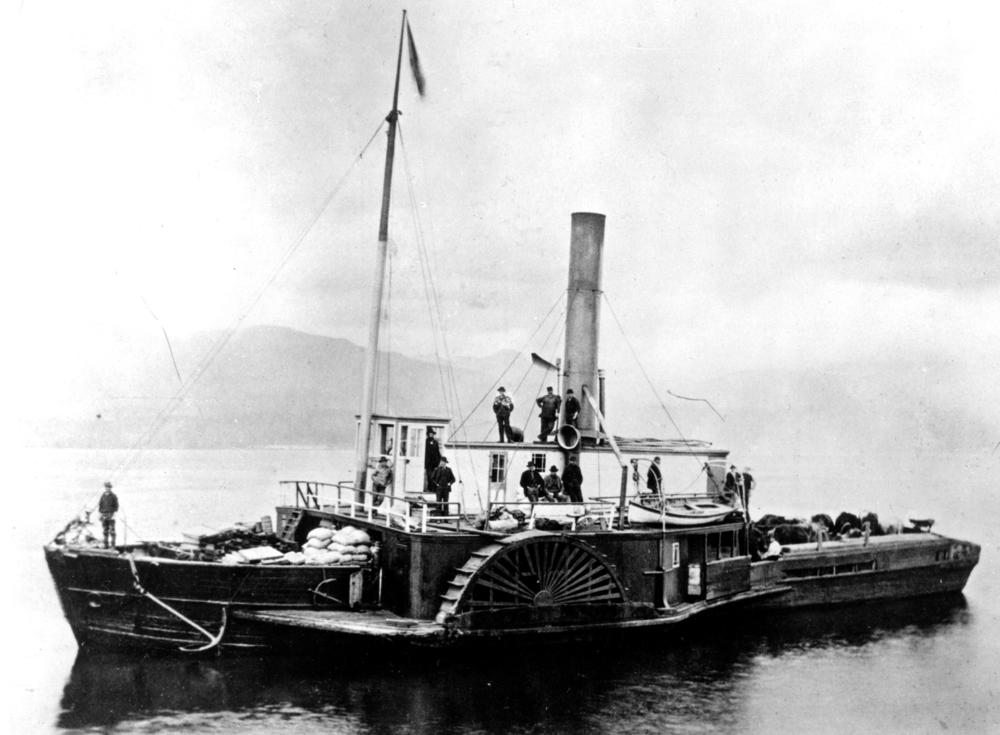
Hudson’s Bay Company records show that Thomas Quamtany began his service on board the SS Beaver, the fur trading company’s coastal steamer, in spring 1843. He was probably 20 years old.
Knowing that he did not lose his arm at Cowichan in 1856, Brazier returned to the start of his employment and followed the Beaver’s 1843 travels through the archival records.
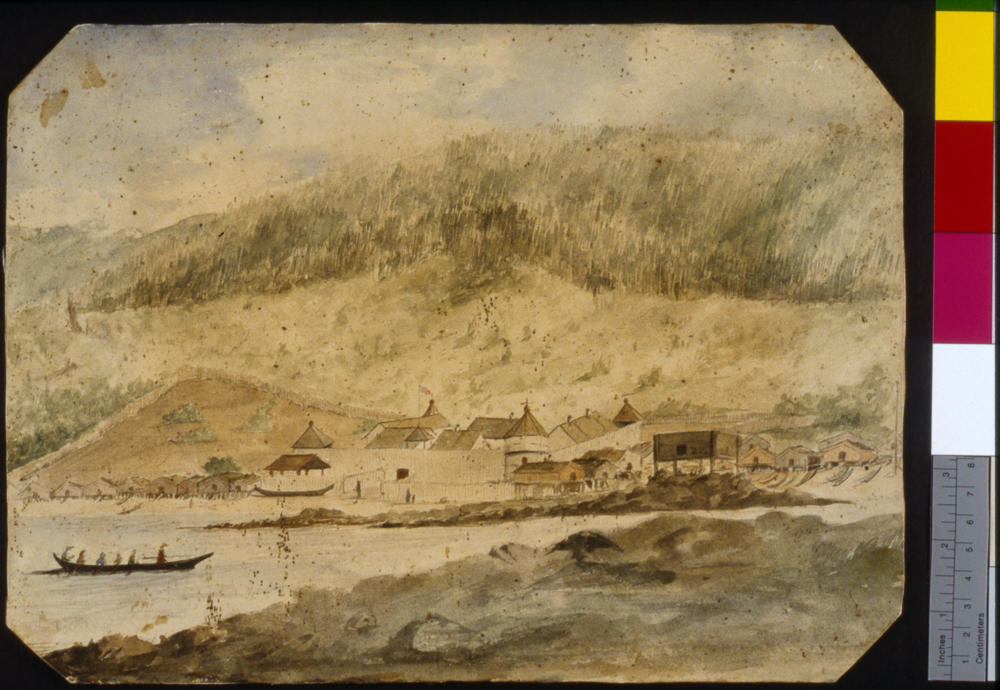
A variety of primary sources found in the BC Archives — including correspondence, diaries, log books and fort journals — mention the ship’s visits to HBC outposts and First Nations communities. The Fort Simpson journal entry for May 23, 1843 provides evidence for the amputation of an arm:
Tuesday, May 23
Fine weather with a fresh breeze of wind from the north. Men all employed as usual, about 10am, the steamer Beaver with the [ship] Cadboro in tow was ready to start for Fort McLoughlin. The Fort saluted the vessels with 7 guns, in returning which one of the Steamer’s men [had] his hand blown off which required amputation a little below the elbow joint.
Entries on May 25 and 26 describe the amputee as “sinking” before showing a slight recovery.
In preparation for the article about Tomo for The Discourse in 2024, I reached out to Graham Brazier who shared his archival notes. Following his transcription of the Fort Simpson journal entries there is a note from Brazier:
{see Meilleur, A Pour of Rain, p.168 where she concludes that, “the sailor recovered and left Fort Simpson and the life of the sea to become an interpreter at the new Fort Victoria” Though I suspect this is Tomo, I haven’t yet been able to find proof}
Helen Meilleur’s book, A Pour of Rain: Stories from a West Coast Fort, is a personal memoir and history of Fort/Port Simpson published in 1980.
Unfortunately, Meilleur did not provide a name or a citation for her conclusion in the book. Rather than infer that it was Thomas Quamtany, Brazier filed the source away and eventually moved on to other projects.
The Fort Simpson journal is held at the BC Archives, so I made the trip to review the source and see if I could find additional leads Brazier may have missed.
I turned up no results, leaving The Discourse readers in 2024 with a somewhat unsatisfying answer to the question of Tomo’s amputation: “The short answer is, we don’t know.”
Correspondence outward
For another year I went down many rabbit holes trying to find a primary source that could connect a name to the Fort Simpson event.
After reading letter after letter on a reel of microfilm titled “Fort Simpson correspondence outward,” I finally found what I was looking for. The letter, dated Aug. 13, 1843, is from the fort’s chief trader John Work to Dr. John Mclaughlin at Fort Vancouver (Washington):
…One of the Steamer’s men, Thos. Quani received a severe hurt in the hand as the vessel was leaving in May last, he was brought ashore and on examination Doctor Kennedy decided that amputation was indispensable and performed the operation immediately which was attended with the utmost success. He is now well. I send him by the [ship] Vancouver in compliance with a note from Chief Factor Douglas who intended him to act as interpreter at Camosan.
There it was, a name connected to the event. “Thos.” is shorthand for “Thomas,” and although John Work spelled the last name differently than it is found in other documents, the similarities between “Quani” and “Quamtany” are strong.
Thomas Quamtany, or Tomo Antoine, blew up his hand while returning a cannon salute from the SS Beaver to Fort Simpson in May 1843; the arm was then amputated.
Work’s letter also provides some insight into Tomo’s recovery — a little more than two months after the amputation, he was ready for travel.
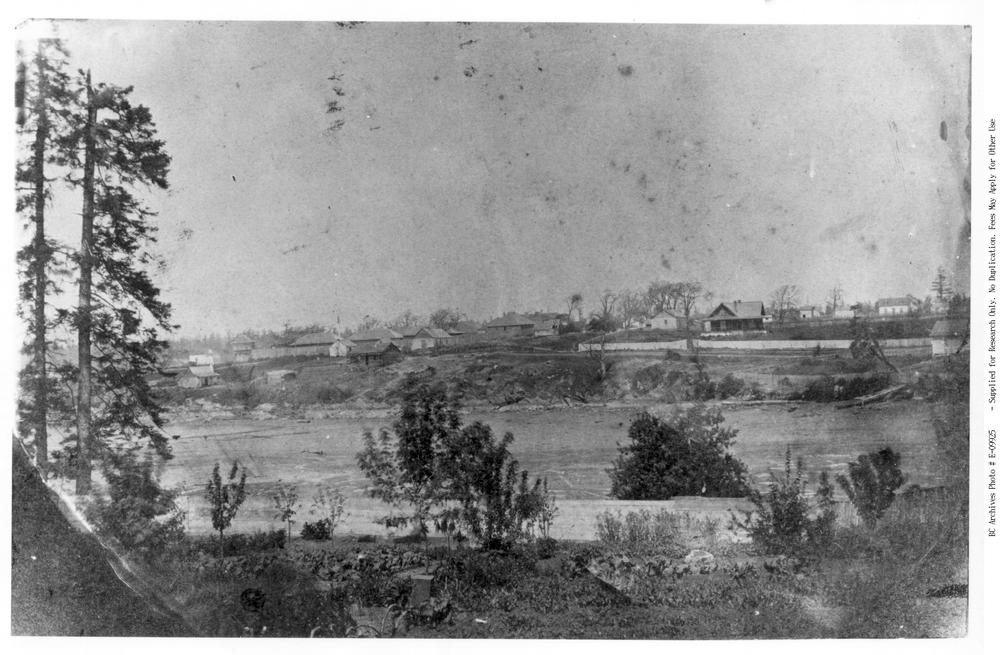
The last sentence is particularly important for BC history. Tomo went to “Camosan,” later to be named Fort Victoria, to act as the interpreter for the new fort and its operations.
In the years that followed, he was front and centre at many important historical events, including the signing of the Fort Victoria treaties in 1850.
A human journey
The story of Thomas Quamtany’s amputation had an incorrect ending for nearly 40 years, and it took another 25 years to find out what really happened.
Telling this part of Tomo’s story started with a question and the desire to seek out an answer; no amount of prompts entered into a chatbot could provide a shortcut.
By the time you have read this, the sentence above may no longer be true. It is likely that this article has been crawled by an AI bot and that the labour of historians and archivists has been subsumed and erased.
The tech industry has worked hard to make us think that the widespread use of generative AI for writing and art is inevitable; agreeing with such a premise suggests that we no longer wish to find joy in that which makes us human.
Storytelling, whether it is by our family, friends, historians, artists or journalists, takes us on a journey, and stories are regularly revised and retold to offer context and insight into our present.
The amputation of Tomo’s arm is not a joyful story, but it is a profoundly human one. For me, the conclusion of a 60-year search for an archival document brought a lot of happiness and it was something I had to share — because what’s a good story without an audience to tell it to?
Kelly Black is a researcher, writer, historian and collector of books and has taught B.C. and Canadian history at Vancouver Island University. What questions do you have about local history? Send us an email and we’ll do our best to tackle them.
What did you think of this story?
Your feedback after we publish a story helps ensure we're always improving our reporting to better serve you
Related Articles
What to do and who to call when juvenile salmon are in danger
Officials say Cowichan Valley residents should call experts to move salmon in isolated pools because of risks associated with relocation.
How is The Discourse’s journalism funded?
And what does it cost to produce The Discourse’s in-depth, independent journalism?
Behind the backlash to the Cowichan Valley’s comprehensive zoning bylaw
The campaign against Bylaw 4710 was fuelled, in part, by misinformation and an organized group of advocates. What could this mean for the future of local politics?