
Indigenous women speak out about housing challenges
‘They don’t have enough housing for single women who struggle with life,’ says a member of the local Women’s Poverty Response Circle.
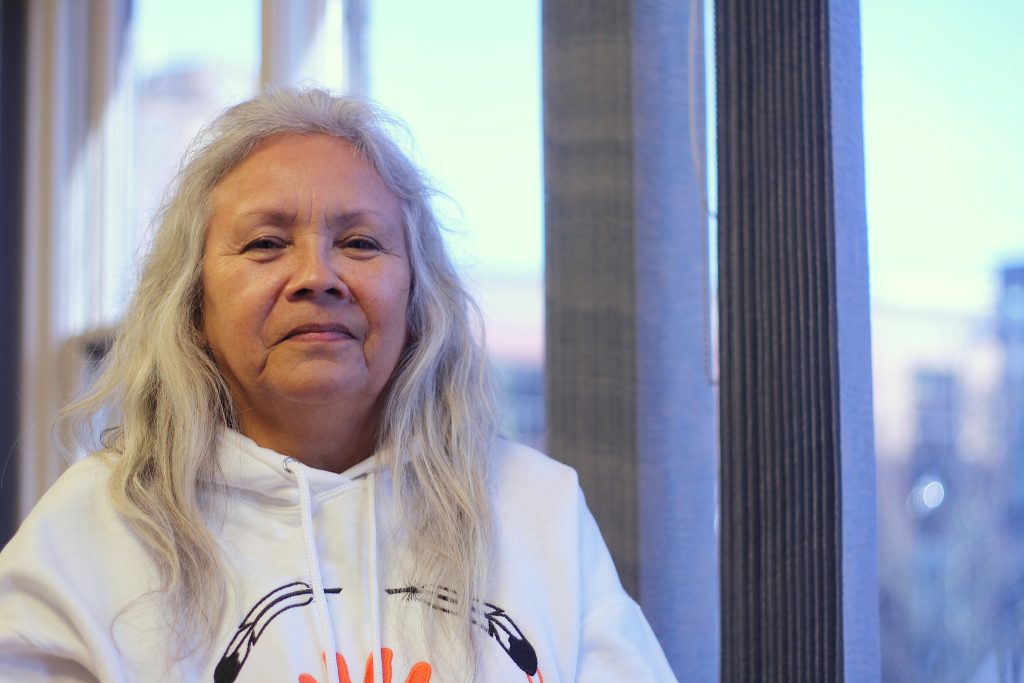
This article is the first in a three-part series written in partnership with The Women’s Poverty Response Circle and Mid-Island Métis Nation, which looks at the experience of local Indigenous and newcomer women when it comes to housing and poverty issues.
Carrie Daniels can recall the exact moment she realized she was homeless.
At the time she was living in Calgary in a low-income subsidized housing complex with her son, but once he turned 18 and moved out, she says she was told to leave because the building was oriented towards families.
“I was couch surfing, staying in my car, staying at friends’ places,” she says. “But then one day, me and a couple of friends were in downtown Calgary and there was this great big sign that said, ‘End homelessness.’ And that just hit me, right here,” she says, placing a hand on her chest. “It kind of stopped me in my tracks. It made me realize, ‘Yeah, I’m homeless. I’m homeless.’”
Daniels is a member of the Women’s Poverty Response Circle, an anti-poverty network based in Nanaimo whose members are primarily Indigenous and newcomer women who have experienced poverty and other systemic barriers.
An initiative of Mid Island Métis Nation, the group is funded by Women and Gender Equity Canada. Participants gather on a regular basis to share cross-cultural dialogue, talk about their experiences and draw from traditional knowledge systems and non-Western ways of knowing, with an aim of influencing policy to become more equitable.
Daniels is Cree and Métis and her traditional name translates to Blue Lightning Woman. She grew up in a small town called Kinistino in rural Saskatchewan, but moved to Nanaimo eight years ago to spend time with her grandchildren.
Now 65, she has found a home at Nuutsumuut Lelum (All in One House), an environmentally sustainable housing complex on Bowen Road that is run by the Island Urban Indigenous Wellness Society and offers affordable and culturally appropriate housing for urban Indigenous peoples.
Having lived in low-income housing for most of her adult life, Daniels says her struggle to stay housed started once her kids were grown and resources seemed to be harder to access.
Abusive relationships, an attention deficit disorder and a tendency towards impulsivity also contributed to her housing problems. Though adamant that she takes responsibility for her own issues, she acknowledges that women in her position often need supports.
“I was in my 50s or late 40s [and] all of a sudden I started thinking, why isn’t there help for women my age, women that are single? I just remember seeing women not having a place to live, and there was no support,” says Daniels. “They don’t have enough housing for single women who struggle with life.”

Unhoused women are ‘less visible’
Older women are more likely to live in poverty than men, and seniors living alone are more than four times as likely to be poor than those living with relatives or a spouse, according to a 2017 report from the Canadian Centre for Policy Alternatives (CCPA).
Though the numbers may have shifted in the years since that report was written, little has changed, says lead author Iglika Ivanova, a senior economist and public interest researcher with the CCPA.
There are some housing and financial supports for families with young children, and for people once they turn 65, but there isn’t much for women of working age without children or after they are grown, she says.
The fact that during their working years, significantly more women care for children and dependents and are paid less than men also contributes to poverty and housing precarity, she adds.
“We’re still seeing a much higher rate of poverty among women than among men,” says Ivanova. “There’s also a lot of research on how the homelessness of women is less visible than male homelessness, and is not included in the homeless counts.”
This invisibility is because older men are more likely to be living in tents or unsheltered on the streets while older women are more likely to sleep on couches with family and friends or live with roommates, according to a recent report from the United Way on the housing crisis for B.C. seniors.
Because women who are now seniors were more likely to have been stay-at-home parents or paid less when they participated in the workforce, Ivanova’s research also found that they correspondingly receive significantly less private retirement income and CPP benefits.
“Compounded over a full working career, the gender wage gap adds up to hundreds of thousands of dollars and makes it more difficult for women to save for retirement, which leads to poverty in old age, especially for senior women living alone,” the 2017 report states.
In 2022, women in B.C. earned 17 per cent less than men, and the province has one of the highest income gaps in Canada. This pay gap also disproportionately impacts Indigenous women, women of colour, and immigrant women, as well as women with disabilities and non-binary people.
Nanaimo’s relatively large urban Indigenous population is also over-represented among the unhoused: one third compared to about eight per cent of the overall population.
Nanaimo’s most recent homeless count also shows the percentage of unhoused seniors has gone up since the last count, and though local numbers were not available, the Parksville-Qualicum point-in-time count shows that numbers of unhoused women are on the rise — up to 35 per cent in 2023 from 22 per cent in 2018.
‘I’m at home in my territory’
Now 68 years old, Snuneymuxw First Nation member Mary Ann Mitchell lives in an on-reserve transition house and struggles with an uncertain future.
Already battling knee problems after a double replacement, Mitchell was admitted to hospital in May for five weeks with a kidney illness and quickly realized that accessing her second-floor apartment at Willow Grove Estates would likely no longer be feasible.
The elevators kept breaking down and no ground-floor units were available. The building had sold the previous fall, and once she began to receive notice of an imminent rent increase and new parking charges from the new landlord, Mitchell decided to accept an offer from the nation to live on reserve where there were more community supports.

However, Mitchell didn’t realize her housing on reserve isn’t permanent but is rather a temporary transitional unit.
Though an affordable apartment has since become available at the Seafield Crescent complex near the hospital, it represents a rent increase on her meagre income, and the second-floor unit is far from her home community.
At present she remains on-reserve, but is uncertain about what to do next.
“At Willow Grove I felt isolated. There were people around me but it wasn’t my own culture,” she says. “I’m at home in my territory, so I can attend a lot more cultural events, when it’s feasible.”
Michell now lives alone after leaving a verbally abusive common-law partner, and her grown child has moved outside of Canada. As a member of the Women’s Poverty Response Circle, she says she would like to see policy changes aimed at helping aging single women and elders in her position.
Snuneymuxw First Nation has been working to create more housing for its membership but faces unique challenges — with more than 1,700 people it is one of the largest nations in the province, but per capita is on the smallest reserve land base of any First Nation in B.C.
“We need more supports for people who don’t necessarily have children but who are still struggling, and we also need more proactive pay equity legislation so that we close the gender pay gap,” says Ivanova.
Policy-makers and housing providers also need to carefully consider what happens to parents in low-income and subsidized housing once their children and grandchildren become adults, says Linda Jack, an elder from Cowichan Tribes who is also a member of the Women’s Poverty Response Circle and found a home at Nuutsumuut Lelum after she had to leave a subsidized unit on Short Avenue.
“They got me out of my place before I turned 60,” she says. “They said it was a family unit but my grandchildren are big now, so they got me out of there. I thought I was going to be homeless.”
Raising the bar for women
There is some movement politically when it comes to addressing widespread poverty and gender pay gaps in B.C., though whether these measures are enough to deal with the scale of the problem remains to be seen.
In May, the provincial government passed legislation that addresses pay transparency in the workplace by placing new requirements on employers like requiring them to prepare pay transparency reports, barring them from asking job applicants what they were paid at previous positions and preventing them from firing or harassing employees who ask questions about their pay or discuss it with other employees.
Other steps the province says it is working on are to invest in childcare and housing, to support women to enter skilled trades and to raise the provincial minimum wage.
The latter is especially important as the majority of low-wage workers are women, says Ivanova, so raising the minimum wage can also go a long way toward addressing the poverty of women. In addition, she says workplaces need to look at being more flexible with their employees’ requirements so they meet their caregiving needs.
On Thursday, Nanaimo-Ladysmith MP Lisa Marie Barron joined Leah Gazan, the NDP’s critic for Families, Children and Social Development, to host a town hall in Nanaimo that called on the federal government to develop a national framework for a permanent guaranteed livable basic income as a “social safety net,” adding that 20 per cent of British Columbians are experiencing food insecurity, and half say they’re financially worse off than they were last year.
Gazan, who brought forward a private member’s bill in 2021 that proposed a basic income for all Canadians over the age of 17, told the Nanaimo News Bulletin that an experimental universal basic income program run by the NDP in rural Manitoba in the 1970s found that the cost of the guaranteed income was off-set by savings on health care and the justice system, and resulted in higher graduation rates and better mental health.
What did you think of this story?
Your feedback after we publish a story helps ensure we're always improving our reporting to better serve you
Author

Related Articles
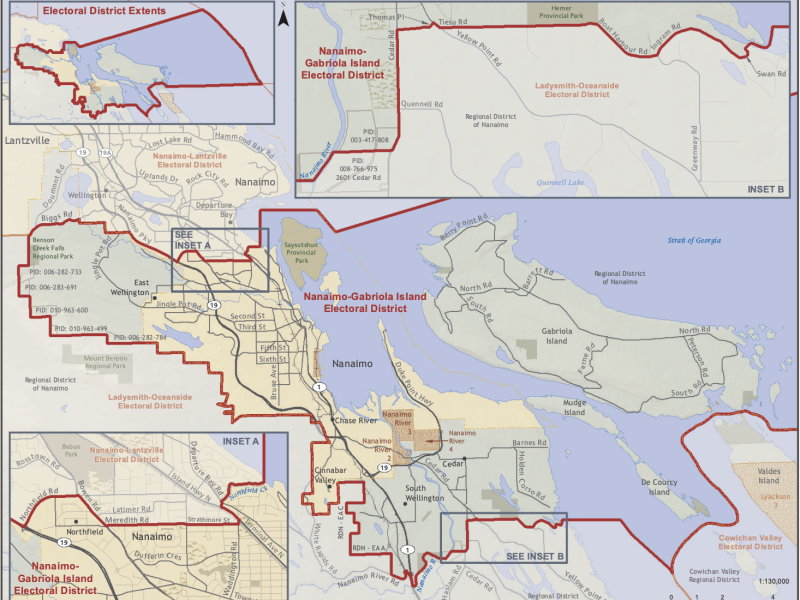
Nanaimo’s guide to the 2026 B.C. election
What riding am I in? Who are the candidates? When do I vote? B.C. election basics for Nanaimo voters.
Nanaimo mayoral candidates address the homelessness crisis
Homelessness is a key election issue but what can the City of Nanaimo do about it?
How Nanaimo candidates would pay for rising infrastructure costs
City of Nanaimo’s 2026 candidates share how they’d manage the budget to cover rising infrastructure and repair costs without overburdening taxpayers.