
‘Nearly 200 years of big work and persistence’: te’tuxwtun lands returned to Snuneymuxw
Roughly 80 hectares of federal land near Vancouver Island University added to Snuneymuxw’s reserve
Editors note, Oct. 21, 2025: Additional information about the proposed innovation zone was added to the story.
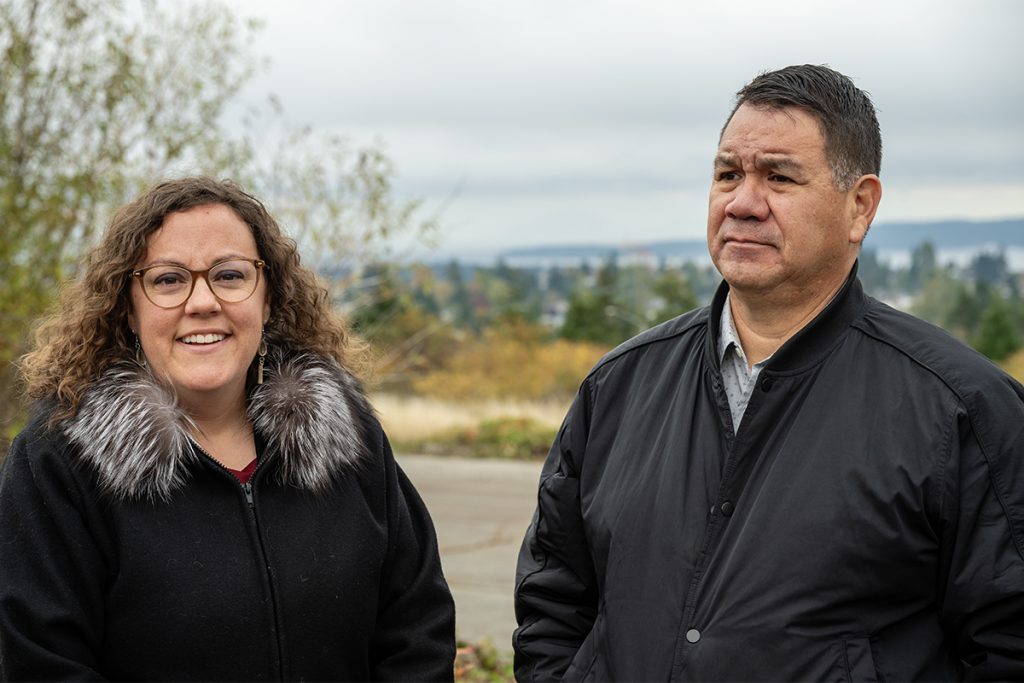
Last Thursday was an emotional day for Chief Mike Wyse (Xumtilum).
As Snuneymuxw First Nation’s elected leader stood at a podium — to accept Ottawa’s transfer of 80 hectares of federal land to the band’s reserve — he stood in front of a photo of his late mother, Viola Wyse.
During her own time as Chief, his mother had once sat at the negotiation table with the federal government, when she was told the land “would never become reserve land,” Xumtilum told the crowd gathered at the Snuneymuxw Recreation and Wellness Centre.
“But our leadership knew better, and they carried the fight forward. Nearly 200 years of big work and persistence led us here.”
The land — known as te’tuxwtun, or Mount Benson — was part of an interim land reconciliation agreement announced in January 2024.
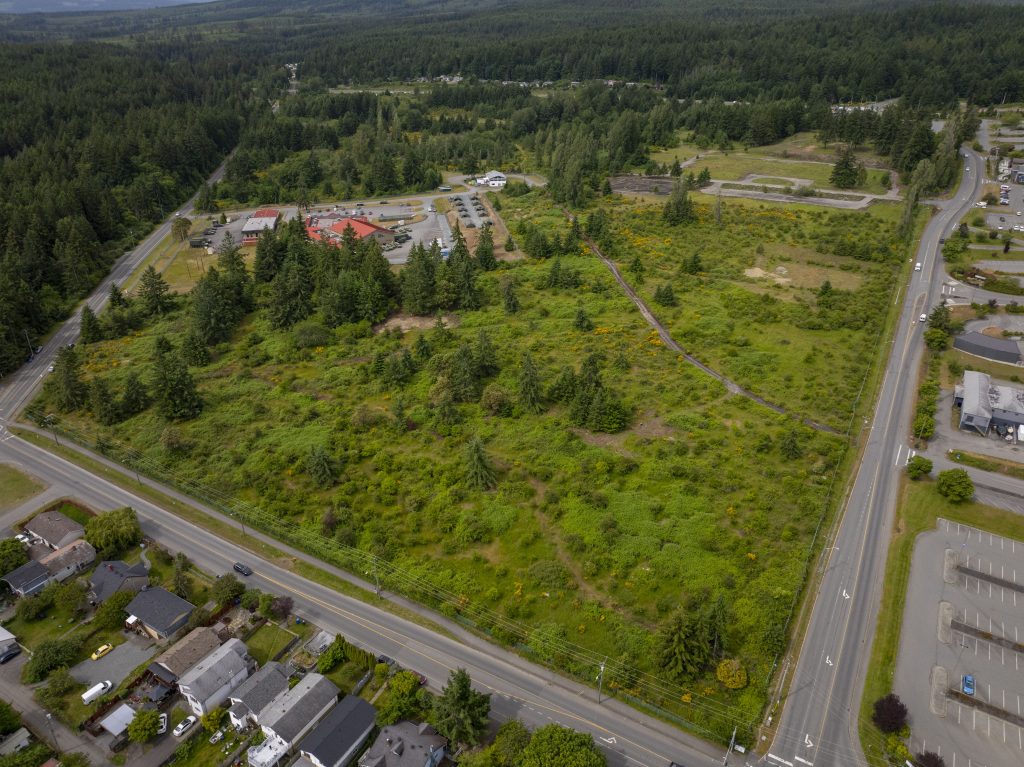
It consists of two properties beside Vancouver Island University and the Nanaimo Parkway, with a Lower Village section stretching from the Parkway to Wakesaih Avenue; to the south, the land is bordered by Nanaimo Lakes Road.
The Nanaimo Military Camp, housing an armory for local reserve units and cadets, will remain federally owned.
Snuneymuxw’s intention is for the te’tuxwtun lands to be developed into a mix of high- and low-density housing. That plan includes building short-term residential units, with mixed residential and commercial use on Wakesiah Avenue.
The plan is to also include in the development space for innovation, commercial activity, plus an entertainment resort.
The innovation zone would be for education, business incubation, art and culture. An email from Snuneymuxw First Nation says it would be the “first of its kind on reserve land in the province.”
West of the Parkway, the Upper Village includes a parcel of more than five hectares south of College Drive, and a roughly 37-hectare parcel west of College Drive, that is marked for low-density residences, green space and recreation.
Rebbeca Atly, federal Minister of Crown- Indigenous Relations, signed the order to transfer the land to the First Nation in late September, using what’s known as an Addition to Reserve Land process.
Last week’s event, she said, was the “first opportunity to come into the community to celebrate and share the news.”
But the event was centuries in the making.
Returning the land is part of the Government of Canada’s obligations under the Snuneymuxw Sarelquun (Douglas) Treaty of 1854, which promised to set aside village sites and cultivated fields for the Snuneymuxw people’s continued use, Chief Wyse said.
“Immediately after signing our treaty, the Crown turned their backs on their treaty promises,” he said.
“Despite continuous efforts through the centuries by Snuneymuxw to uphold the treaty, Canada took these lands from us and used it as a military base and also as an Indian hospital, committing genocide and atrocities onto our people. Snuneymuxw people live with these experiences every day.”
According to the treaty, the British would be allowed to mine “Snuneymuxw coal” in the area — but only if “our villages and marine areas, cultivated fields, harvesting and gathering and our rights to hunt and carry on fisheries as formerly would be protected forever,” he said.
“We never surrendered our land. Not one acre.”
Snuneymuxw First Nation has the lowest per-capita reserve landbase in B.C., according to a news release.
The lower village section of the te’tuxwtun land transfer was once the site of an “Indian Hospital.”
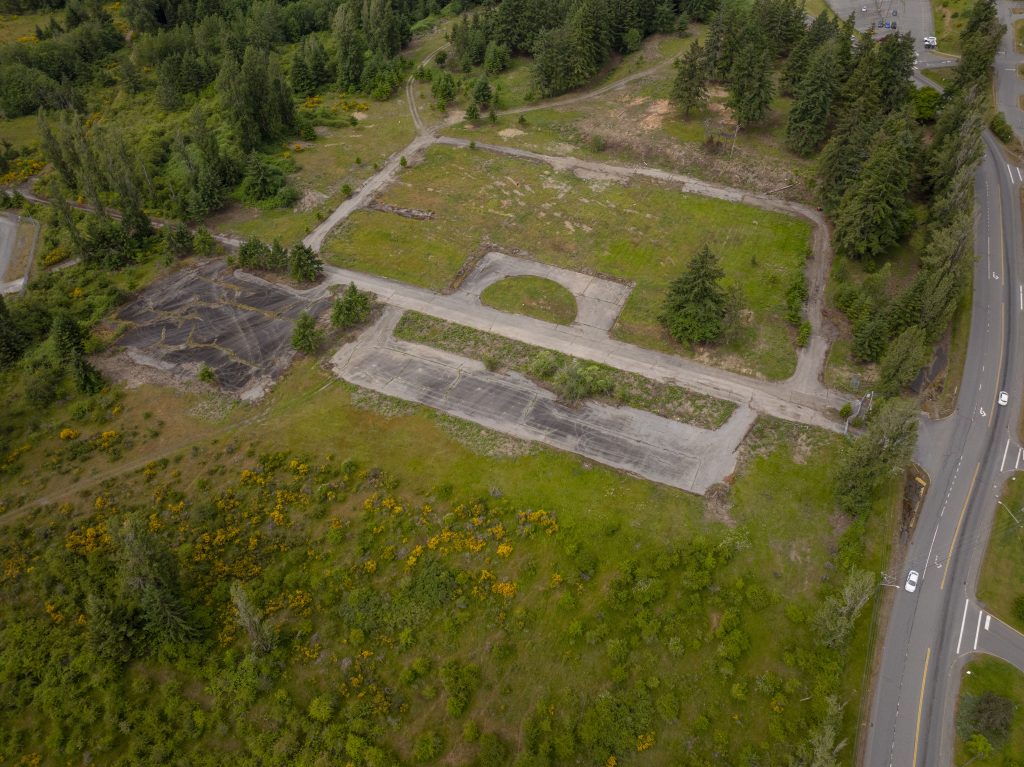
In 2020, a class action lawsuit representing survivors of former “Indian hospitals” alleged Canada “was negligent in the funding, oversight, operation, supervision, control, maintenance and support of Indian Hospitals” — and is therefore liable for abuses endured in them, in many cases held by force.
That lawsuit ended with a settlement in March, with Canada agreeing to compensate individual plaintiffs, plus $110 million to support reconciliation and commemoration activities, and nearly $236 million for research and education about the hospitals.
A further $150 million will be used to extend mental health and wellness supports to survivors.
Timeline of a transfer
Last week’s addition to reserve lands is the latest in a series of agreements and settlements between the Snuneymuxw First Nation and the federal and provincial governments.
The Teytexen Village Specific Claim was settled earlier this year and saw the federal government pay $42 million for more than 23 hectares taken from the First Nation along the Nanaimo River.
In 2024, the sxwayxum village site on the Milestone River was returned to Snuneymuxw after years of the former Howard Johnston hotel lying abandoned on the site.
A 2023 agreement with Seacliff Properties saw the return of 41 hectares of land along the Nanaimo River.
Next steps
Now that the te’tuxwtun land has been designated as reserve land, Snuneymuxw First Nation is asking its members to vote on a proposal to designate part of it for mixed-use, residential, commercial, and light industrial development for 120 years.
If approved, that portion of the land will be leased to Snuneymuxw First Nation’s Petroglyph Development Group.
This vote to lease it for over a century would not remove the land’s reserve status, however.
If the vote passes, the Chief and council will determine which designated lands will be used for each purpose, which tenants will lease the land, the term of the lease, and the rent charged.
Plans for the remainder of te’tuxwtun will be decided in a future vote.
The vote is planned during the general election for Snuneymuxw First Nation’s Chief and council in December.
Chief Wyse also said that his nation is hoping to ink partnerships to help raise funds to develop the land.
He also told reporters they are looking to sit down with the neighbouring Vancouver Island University to find out what their needs are and how they could work together.
He said his late mother would “be hooting and hollering” if she’d been at Thursday’s ceremony.
“She’d be very happy today.”
With files from Lauren Kaljur.
What did you think of this story?
Your feedback after we publish a story helps ensure we're always improving our reporting to better serve you
Author
Related Articles
Comox Valley, Nanaimo land trusts raising funds to support Deep Bay land conservation purchase
In a partnership with the Comox Valley and Nanaimo Area land trusts, BC Parks Foundation is fundraising to protect 50 hectares of pristine shoreline in Deep Bay and make it accessible to the public.

Nanaimo Jazz Festival celebrates 10 years with more than a dozen shows in September
Local and international artists to perform on multiple stages in the city at this year’s Nanaimo Jazz Festival.
Snuneymuxw Elder C’tasi:a shares traditional plant knowledge in new book
‘Plant Teachings from my Auntie’ by Snuneymuxw Elder C’tasi:a and ethnobotanist Nancy Turner delves into traditional plants and plant medicine.