
Regional District of Nanaimo developing policy on full-time living in recreational vehicles
District staff will also create a rural housing strategy.
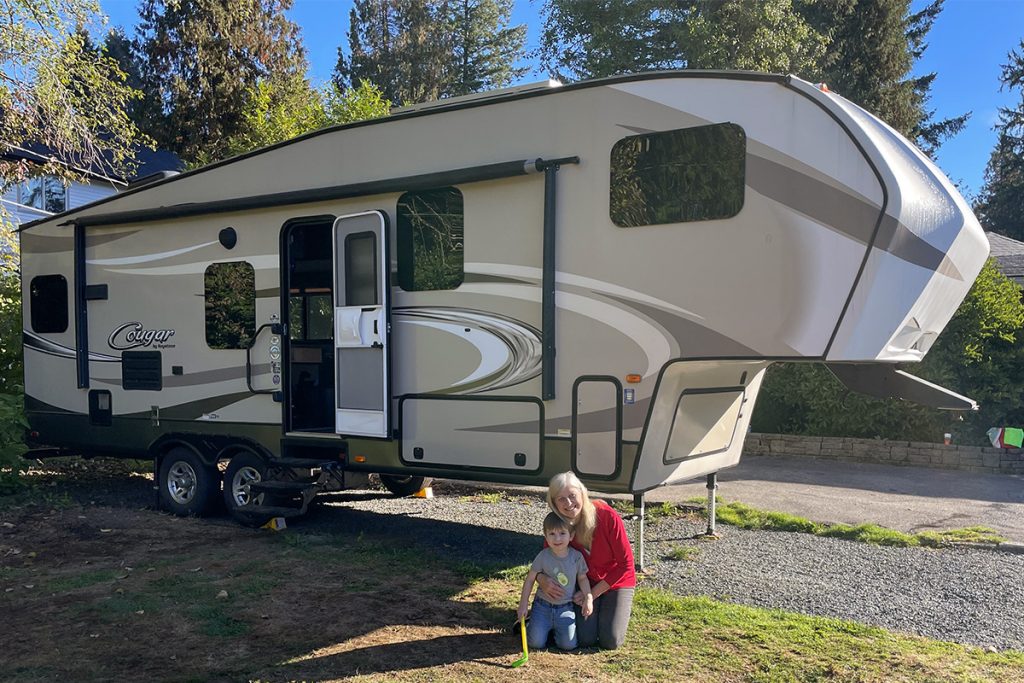
At its meeting last week, The Regional District of Nanaimo’s board of directors directed staff to draft a policy allowing full-time living in recreational vehicles (RV) on private property as a temporary measure while a rural housing strategy is developed.
This comes at a time when housing affordability is an issue of concern for many across the province and country. Rural areas also face unique challenges when it comes to housing affordability due to the lack of housing supply and infrastructure.
An estimated 90,000 people live in RVs in B.C., according to a report on RVs as alternative full-time housing authored by B.C. RV Alliance.
An interim housing needs report for the Regional District of Nanaimo, prepared by Deloitte in 2024, says 387 new units of housing needed to be built in the district over five years, and 1,275 over a 20-year period, in order to raise the vacancy rate to a healthy three per cent. At the time, vacancy rates for electoral areas in the Regional District of Nanaimo ranged from 1.2 per cent to 2.7 per cent.
“We have a problem and we need to find a solution,” Electoral Area A director Jessica Stanley said. “This is a great step forward into addressing the problem from a broader perspective, and looking at the RV specifically, in that challenge.”
The regional district is currently undergoing a review of its land use bylaw, which oversees developments and how the land is used in the district. The review is in three phases, with phase one completed last year as Bylaw 2500 was adopted. Phase two will look specifically at housing, sustainable building practices and affordability and phase three aims to tackle any additional concerns that come up.
Regional District of Nanaimo bylaws only permitted people to live in RVs in parks and campgrounds for a maximum of six months. However, in September 2025, the board voted to suspend bylaw enforcement for length-of-stay regulations for RVs located in campgrounds, resorts and recreational vehicle parks in Electoral Areas A,C, E, G and H until phase two of the land use bylaw review is completed.
The bylaw can still be enforced in cases where there are risks to health and safety, the environment, where sewage is not being properly disposed of and if there is contamination of wells or drinking water.
Regional district residents can already apply for temporary use permits on a case-by-case basis to use the land in ways that may not be allowed according to its zoning. This would be voted on by the RDN board. But there is no policy to help guide applications for RVs on private property.
The new policy that council has directed staff to prepare will guide applications for temporary use permits for full-time RV living. The cost of the permit is $800 and it is good for up to three years.
The Regional District only regulates land use, so RVs will still be subject to the BC building Code.
Advocates say Nanaimo one of few districts to permit RVs for full-time housing
A letter from the B.C. RV Alliance commended the board for taking action.
“This progressive approach marks a significant advance in addressing the lack of affordable
housing in the region, which stands out as one of only a few municipalities and regions in
the province to permit RVs as liveable full-time housing,” the letter from Rob Fenton and Mamie Hutt-Temoana of the B.C. RV Alliance says.
Hutt-Temoana has lived in an RV for the past two years and is currently living on Pender Island but plans to move to Nanaimo next month. She started living in an RV because she’s on a pension and can’t afford market rental prices.
“It’s really hard to find a place that you can rent on a pension,” she told The Discourse.
Hutt-Temoana estimates that about 80 per cent of people living in RVs in B.C. are seniors and families as well as working people.
“People have an image that it’s the old trailer trash scenario,” she said. “But it’s not like that.”
The District of Ucluelet allows applications for temporary use permits for RVs to be used as housing for up to three years.
The City of Vernon changed its bylaws in 2024 to allow RVs parked on agricultural lands to be used as dwellings, subject to health and safety regulations.
Meanwhile, as the Regional District of Nanaimo prepares to allow full-time living in RVs, other cities are cracking down on people living in vehicles.
The District of Squamish and the City of Surrey passed bylaws in 2019 that restricted overnight use of camper vans and RVs.
Hutt-Temoana said she was familiar with a case in the Cowichan Valley where two families living in an RV had a complaint and were kicked off the property they had been living at for two years.
“They became homeless because they couldn’t move their RV,” she said. “They couldn’t find anywhere else to go. So what happens with that kind of situation is that they end up somewhere illegally, without services, without amenities, and then that’s when the issues happen.”
The report by the B.C. RV Alliance, co-authored by Fenton and Hutt-Temoana, argues that “RVs provide an immediate, flexible and cost-effective housing option, particularly beneficial to seniors, individuals and families.”
Prioritized zoning and accepted RV building standards and amenities, including water and sanitation facilities, would “provide RV dwellers, property owners and many B.C. residents seeking affordable housing with the opportunity to have housing security,” the report says.
Read More: When it comes to the housing crunch, tiny homes have their place
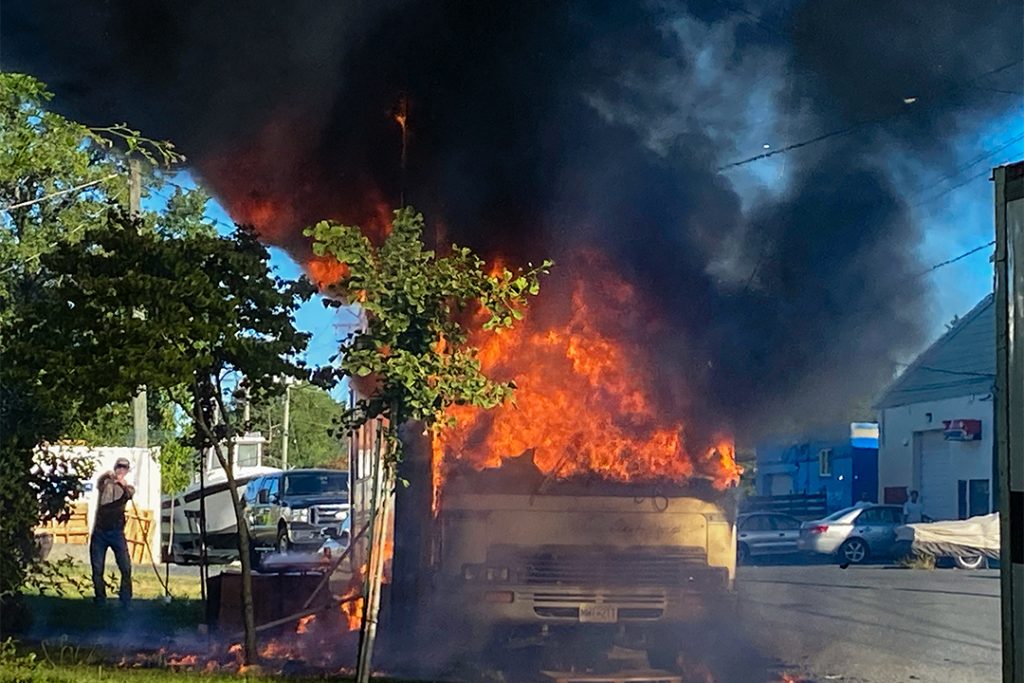
In December, one man died and another was severely burned after the recreational vehicles they were living in caught fire in Nanaimo.
“In both those situations, the people were living off grid,” Hutt-Temoana told The Discourse. “They didn’t have any electricity, they didn’t have any heat, so people who are freezing will put on a propane heater, and that’s when you get trouble.”
Hutt-Temoana said people who live full-time in RVs need to have access to electricity, water and a septic tank or municipal sewer service, just like anyone living in a house.
Director Sheryl Armstrong asked if district staff would be talking with local fire departments about the potential changes to allow living in RVs. She was told by staff that it would be done as part of the rural housing strategy.
Bob Rogers, director for Electoral Area E Nanoose Bay, was the sole voice opposing the motion.
“This is looking at putting RVs on private property,” Rogers said. “It does not refer or make reference to zoning requirements or the impact on adjacent properties or on neighbours, and also then on the safety of those units in there and the proximity to other neighbouring properties.”
As previously reported in The Discourse, Rogers said that he wasn’t sure of Zoe Todd’s tiny home RV was allowed in the district when he saw one was towed onto her property. Shortly after, Todd received a letter from the Regional District of Nanaimo instructing her to stop living in the tiny home and have it removed from her property in 90 days. Documents obtained by The Discourse showed that Rogers, who lives near Todd, flagged the tiny home RV to bylaw within hours of its arrival on Todd’s property.
Hutt-Temoana told The Discourse that while RV parks have all of the required amenities needed to live full-time, people want to have a private space and not be parked three metres from their neighbour, while also having housing security.
“When I was living in Cedar, I was on a farm,” she said. “So I had a beautiful pad. My dogs could go outside and roam around. I had a space where I could set up a little patio.”
Correction: A previous version of this story said that RDN director Bob Rogers personally told Zoe Todd he wasn’t sure if the tiny home RV was allowed on her property. Todd was actually in Errington at the time and the conversation was with someone else on her property. We regret the error.
What did you think of this story?
Your feedback after we publish a story helps ensure we're always improving our reporting to better serve you
Author

Related Articles
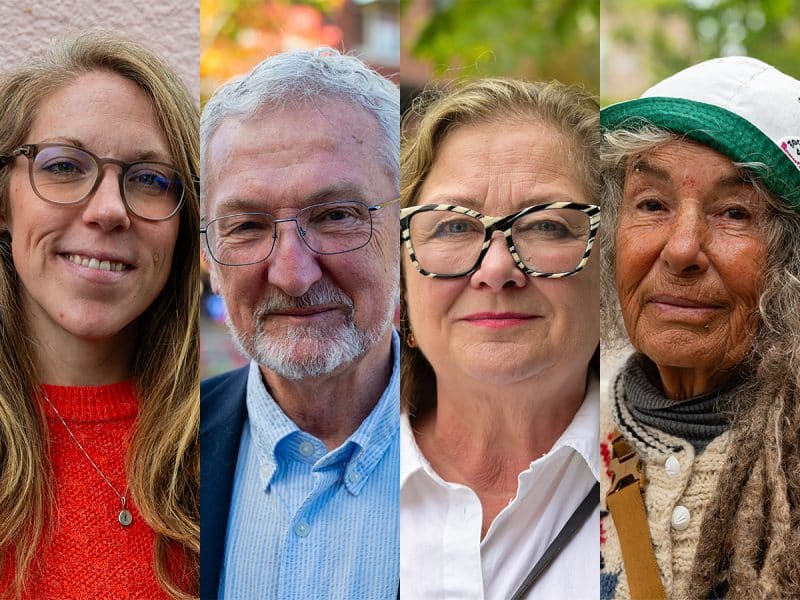
Nanaimo mayoral candidates address the homelessness crisis
Homelessness is a key election issue but what can the City of Nanaimo do about it?
How Nanaimo candidates would pay for rising infrastructure costs
City of Nanaimo’s 2026 candidates share how they’d manage the budget to cover rising infrastructure and repair costs without overburdening taxpayers.
Nanaimo candidates on how the city can cut emissions
City of Nanaimo’s 2026 candidates share two actions within city jurisdiction they’d prioritize to reduce emissions, and how they’d know if they were working.