
Trust Fall exhibit at Nanaimo Art Gallery ‘embraces the happy accident’
Jon Sasaki and Laura Gildner exhibit a journey into misadventure and miscommunication in Trust Fall.
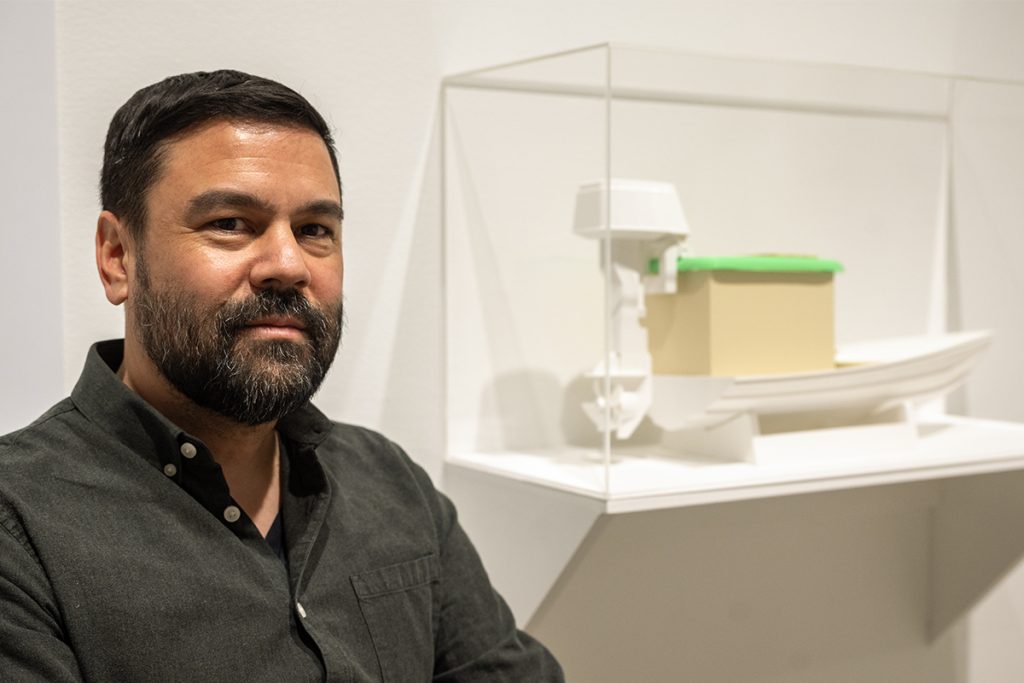
The Nanaimo Art Gallery’s new exhibit Trust Fall features works by two artists, Laura Gildner and Jon Sasaki, that “celebrates the creative potential of mistakes and miscommunication.”
At an artist talk on Saturday, Sasaki told a story about how a “long distance studio visit” with Nanaimo Art Gallery curator Jesse Birch in 2007 led to one of the pieces in the exhibit.
A friend of Sasaki took photos of his home studio and sent them to Birch before the two corresponded by email.
One of the photos was a replica Gibson Flying V guitar resting against a Gibson guitar case that would clearly not fit the shape of the guitar.
“I thought, well, that’s a really interesting conceptual artwork,” Birch said during the talk. “I knew that Jon worked with different ways of being creative around the intersections between different things, and also thinking about ideas around failure. So I thought that this was a representation of that, maybe a work in progress, I thought this is something that’s really juicy we can really dig into. ”
But when he asked Sasaki, he was told that it wasn’t art, it was just a few things in the corner of his apartment.
“But it was a great conversation starter,” replied Sasaki. “Because, in fact, all the themes that I think you were responding to and seeing in this haphazard arrangement were themes that I do deal with in my art practice. This idea of misfitting and mismatching.”
“So, lo and behold, in 2025 we made an artwork called Not An Artwork.”
Saskai said the piece celebrates misunderstanding, and “embracing the happy accident” which is one of the umbrella themes for the exhibition.
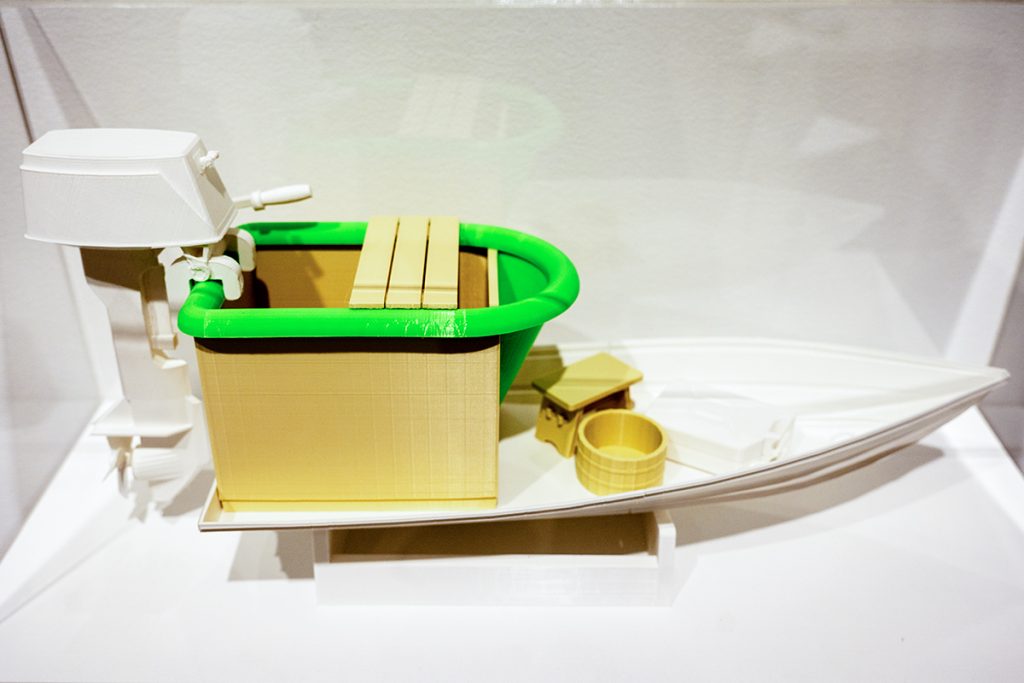
Another one of Sasaki’s pieces is a reimagined Nanaimo bathtub raceboat based on a Japanese ofuro bathtub instead of a western rolltop claw bathtub.
Talking about the impact of internment
Sasaki and his family grew up in Ontario after his grandfather moved there from B.C. during the Second World War.
Sasaki’s maternal grandmother’s family lived in Victoria until they were interned in 1942 during the Second World War when Japanese Canadians were displaced from the coast. After internment, the family reunited in Ontario in the summer of 1943 and never returned. His grandfather lost his fishing boat which “was sold out from under him for the bargain basement price of $1,000 to B.C. Packers.”
His family wound up in Islington, Ont. working in a greenhouse before his grandfather retrained as a typesetter.
“I’ve taken a number of trips to B.C., to Vancouver, and for this exhibition to Nanaimo, and I’m always struck by how the Japanese Canadian community is so open to talking about this history,” he told The Discourse after the talk. “Whereas, in my family, we were discouraged from talking about it.”
“The ofuro racer piece was sort of about that process of assimilation, taking something Japanese and making it less Japanese — making it a little bit more Western. And that was very much talking about the process that the community underwent, either consciously or unconsciously, to blend in and sort of disappear as like a visible minority.”
In 2010, Sasaki was approached to have one of his artworks in a show of Japanese Canadian artists.
“I was such a dick about it,” he recalled.
“I was bristling. I was like, ‘It’s not really about that, I don’t identify as a Japanese artist. You can put it in there, but full disclosure it’s not about that.’ They were astute enough to know that Japanese Canadian people don’t identify as Japanese Canadians, that’s a big part of the story. They knew something that I didn’t know. That there are historical reasons why I would be oblivious to my heritage.”
The curator put the artwork in the show and years later Sasaki says he is grateful they did.
Victoria artist Laura Gildner and the ghost of Patrick Swayze
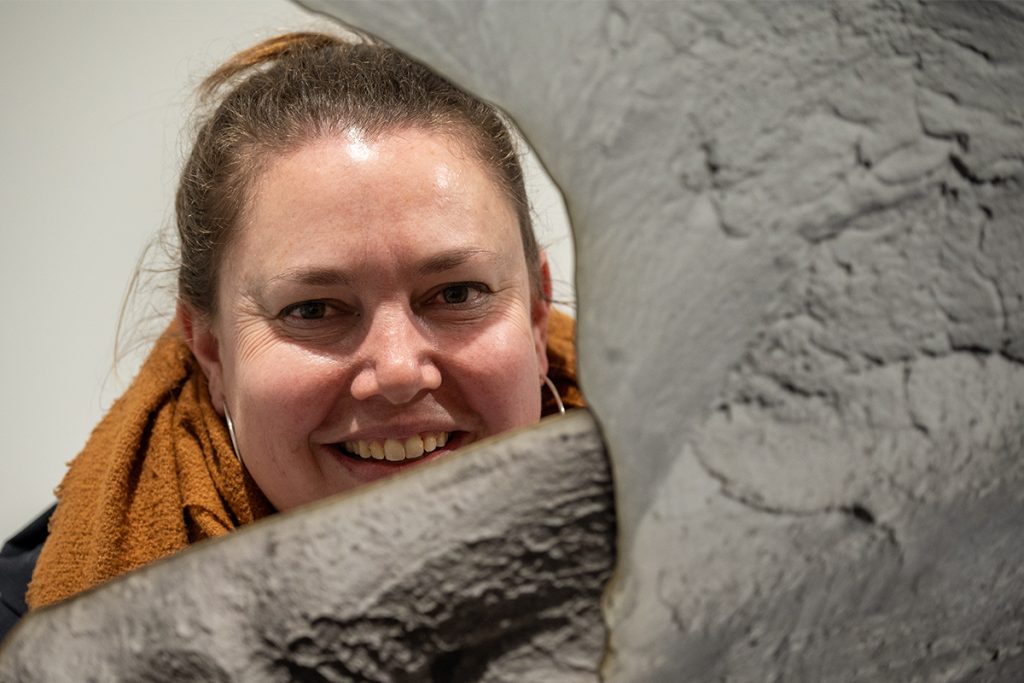
The other artist in the exhibit is Victoria-based Laura Gildner.
“Jesse thought that we would make a good pair because both of our practices involve a degree of embracing failure and embracing mistakes or the unexpected,” Gildner told The Discourse.
One part of Gildner’s artwork in the exhibit is a video of a performance art piece based around the auction of Patrick Swazye’s molar.
“His actual molar was being auctioned off, and I thought that was so strange,” she said. “Because it was like a part of his body.”
“The next day, I was thinking about relics — the history of relics and art history — and how there’s this very, very long tradition. It could be a tiny piece of wood and it’ll become a holy item, or something like that. This kind of idea that you can inscribe meaning onto something, and then it becomes this kind of magical thing.”
Gildner bid on the tooth but it sold for over US$10,000, so instead, she had a biotech lab make a replica of it from images from the auction catalog. She then took the replica tooth to a psychic medium to attempt to channel Patrick Swayze’s ghost to give her instructions to use a pottery wheel.
“I’d never done pottery in my life,” she said. “She held the tooth, I didn’t tell her it was a Patrick Swayze replica until we were together, and she she gave me instructions that were ‘from the ghost of Patrick Swayze.’”
“We ended up with these sculptures that really looked strange in the best possible way because they were kind of like these physical representations of that process. From there, I photographed them and turned them into bigger sculptures.”
Then, Gildner had a friend who is a dental hygienist temporarily implant the tooth in her mouth so she could “sing a duet with Patrick Swayze.”
In Trust Fall, videos play on four TVs documenting Gildner’s creative process with the artwork — and the tooth itself is tucked away somewhere in the exhibit.
Trust Fall is open until April 13 with lunchtime tours every Friday at noon.
What did you think of this story?
Your feedback after we publish a story helps ensure we're always improving our reporting to better serve you
Author

Related Articles
Comox Valley, Nanaimo land trusts raising funds to support Deep Bay land conservation purchase
In a partnership with the Comox Valley and Nanaimo Area land trusts, BC Parks Foundation is fundraising to protect 50 hectares of pristine shoreline in Deep Bay and make it accessible to the public.

Nanaimo Jazz Festival celebrates 10 years with more than a dozen shows in September
Local and international artists to perform on multiple stages in the city at this year’s Nanaimo Jazz Festival.
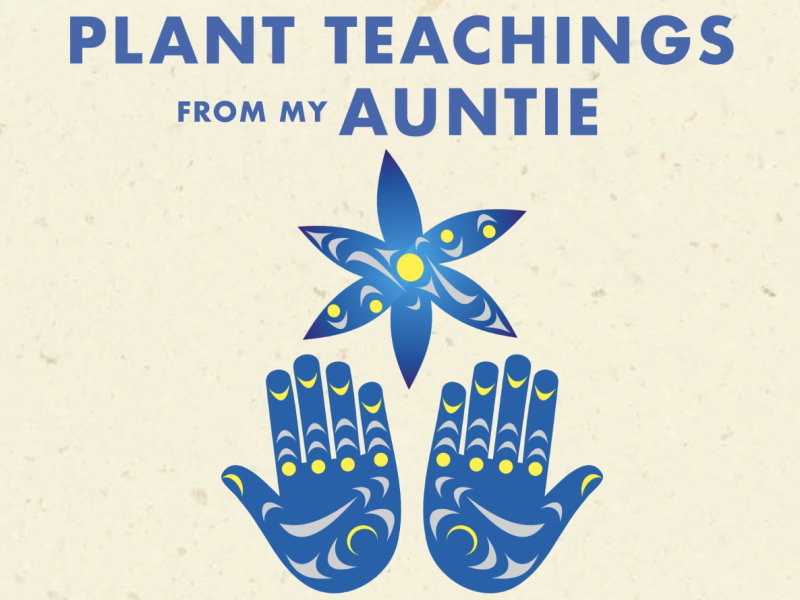
Snuneymuxw Elder C’tasi:a shares traditional plant knowledge in new book
‘Plant Teachings from my Auntie’ by Snuneymuxw Elder C’tasi:a and ethnobotanist Nancy Turner delves into traditional plants and plant medicine.