
What are Nanaimo candidates saying about homelessness and social supports?
Nanaimo candidates answer reader questions about homelessness and social supports in the lead up to B.C. election 2024.
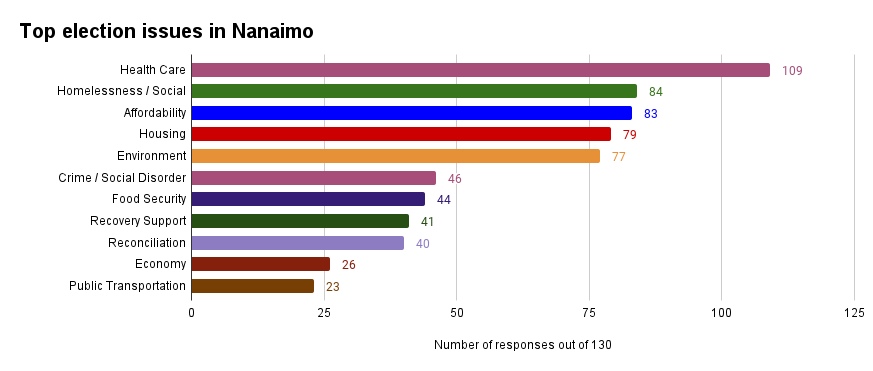
The Discourse asked readers what issues are important to them in the provincial election ending on Oct. 19 and homelessness and social support ranked second with 65 per cent of respondents in Nanaimo identifying it as a priority.
What are the parties saying?
The Conservative Party of BC does not have a full and costed platform but has made a series of campaign promises including to “end tent cities” in British Columbia. The party has also promised a tax rebate of up to $3,000 per month for rent, mortgage and strata fees.
The BC Greens platform addresses homelessness by promising to expand the availability of “deeply affordable housing,” offer direct support to people leaving hospitals, medical care and prisons for six months and provide housing with wrap-around supports to reduce the risk of people who become homeless using the village model in Duncan. The party also plans to add second-stage housing for victims of intimate partner violence, residential “school” survivors and people leaving government care and fund housing in First Nations communities. They also plan to safeguard affordable rental housing.
The BC NDP platform mentions homelessness once stating: “We will bring the Homeless Encampment Action Response Temporary Housing (HEARTH) program to more communities, in line with our provincial decampment strategy to get people inside. We’ll work closely with communities on new housing options — and make sure new facilities have the staff, enforced good neighbour agreements, and locations to deliver successful outcomes for residents and the whole community.” The party also plans to expand the Rental Protection Fund to support the non-profits in buying residential housing.
Your questions on homelessness and social supports
Editor’s note Oct. 17: This article has been updated to include answers from Conservative candidates Dale Parker (Nanaimo-Gabriola Island) and Gwen O’Mahony (Nanaimo-Lantzville). Some of the answers for the NDP candidates are nearly identical, that is how they were submitted and is not an error. All answers have been lightly edited for style and length for fairness, as candidates were given 100-word limits for their responses. Links to party platforms on these issues have been added for further information.
Q. How would you solve the homelessness crisis in Nanaimo?
Nanaimo-Gabriola Island candidates’ answers
Shirley Lambrecht, BC Green Party, Nanaimo-Gabriola Island
We have costed and pledged to build 26,000 accessible non-market, below-market, social, and co-op housing units throughout the province each year. We will seek to implement vacancy controls to limit rent increases between occupancies. We will provide a guaranteed liveable income to raise the homeless out of poverty and seek legislation to de-commoditize housing stock by supporting speculation tax, preventing Real Estate Investment Trusts (REIT’s) from purchasing housing stock and competing in the real estate market with personal home buyers. We will continue to support the application of non-resident taxes and restrict short-term rentals to suites within an owner’s primary residence.
Sheila Malcolmson, BC NDP, Nanaimo-Gabriola Island
Everyone deserves a home and a safe, healthy community. The BC NDP remains committed to building affordable housing and ensuring wraparound services are provided for those who need that support. We’re taking action to prevent bad-faith evictions and – through our Rental Protection Fund – strengthening protections so people can keep their housing instead of buildings being bought up by speculators trying to make a quick buck.
We also know one of the groups most at risk of homelessness is our former youth in care, we are extending support to age 27, including a new $600/month rent supplement for these members of our community.
Dale Parker, Conservative Party of BC, Nanaimo-Gabriola Island
The Rustad Rebate is a plan by John Rustad, Leader of the Conservative Party of B.C., to provide relief for renters and homeowners in BC. The plan exempts up to $3,000 monthly rent or mortgage interest costs from provincial income taxes. This rebate is designed to help families manage high housing costs and support the middle class.
Our Get BC Building program will reduce permit delays by setting strict timelines for approval and remove restrictions that limit housing density to encourage development. If municipalities don’t meet the new timelines, the government will step in to grant permits directly. We will also implement measures to reduce the costs associated with building homes.
Nanaimo-Lantzville candidates’ answers
George Anderson, BC NDP, Nanaimo-Lantzville
Everyone deserves a home in a safe, healthy community. The BC NDP is taking action to build housing and strengthen services to tackle homelessness. In Nanaimo, we have invested in over 450 supportive housing spaces, including spaces dedicated for women fleeing domestic violence. We are also working with community stakeholders to create rapid response teams and temporary spaces to help resolve encampments in our communities. But we know the real solution is long term housing. That’s why David Eby is laser focused on building housing for people across the income spectrum, to increase supply and provide home people can afford.
Gwen O’Mahony, Conservative Party of BC, Nanaimo-Lantzville
People experiencing homelessness are experiencing it for many different reasons: untreated serious mental health issues, the breakdown of family, severe addiction and poverty. The root causes in each instance must be identified. But we won’t be getting in the way of the crucial work of non-profits and businesses, who are slowed down by red tape, to address these issues.
Lia Versaevel, BC Greens, Nanaimo-Lantzville
An important first step is vacancy controls. This means that when one tenant moves out, a landlord cannot increase the amount charged for the same unit more than the allowable rate of two per cent, for example.
Q. Nanaimo Mayor Leonard Krog has been a long-time advocate for the province to involuntarily institutionalize people with severe addictions, mental health issues or brain injuries so they are not living on the streets. What do you think should be done for people with these conditions?
Nanaimo-Gabriola Island candidates’ answers
Shirley Lambrecht, BC Green Party, Nanaimo-Gabriola Island
As BC Greens we do not advocate for involuntary institutionalizing individuals but rather advocate for more proactive interventions such as providing care earlier, once mental health or addictions become known. We will introduce legislation to update the Mental Health Act including to address the rare occurrences when there is significant risk to self and others. We will expand treatment facilities and support staff and provide extensive training to ensure those who are suffering have timely, compassionate, and informed access to detox services and transition directly into treatment. Post-treatment, we will then transition clients into supportive housing to support their recovery.
Sheila Malcolmson, BC NDP, Nanaimo-Gabriola Island
There are people struggling with extremely severe mental health and addictions issues, coupled with brain injuries, who are a risk to themselves and a risk to others. They need stronger interventions than we have right now.
David Eby is taking action, launching new dignified, secure care to keep people who need it safe and communities safe. We’re creating new secure-care facilities across the province, secure care units in correctional facilities, and more mental health beds in hospitals.
Dale Parker, Conservative Party of BC, Nanaimo-Gabriola Island
We are committed to Compassionate Intervention Legislation: Introducing laws to allow involuntary treatment for those at serious risk due to addiction, including youth and adults, to keep the most vulnerable safe.
Building Low-Security Units: Creating secure facilities designed for treating individuals who pose a risk to themselves or others, ensuring they receive proper care in a safe environment.
Crisis Response and Stabilization Units: Establishing units to provide targeted care for those experiencing severe addiction or mental health crises, reducing emergency room pressure and delivering better outcomes for those in need.
Nanaimo-Lantzville candidates’ answers
George Anderson, BC NDP, Nanaimo-Lantzville
There are people struggling with extremely severe mental health and addictions issues, coupled with brain injuries, who are a risk to themselves and a risk to others. They need stronger interventions than we have right now.
David Eby is taking action, launching new dignified, secure care to keep people who need it safe and communities safe. We’re creating new secure care facilities across the province, secure care units in correctional facilities, and more mental health beds in hospitals.
Gwen O’Mahony, Conservative Party of BC, Nanaimo-Lantzville
O’Mahony did not respond to this question. If we receive a response we will update this story.
On Tuesday, Conservative Party Leader John Rustad announced that his party would “establish housing for those with anoxic brain injuries due to drug use, who cannot thrive in traditional treatment environments” as part of its response to the overdose crisis. He also pledged to redevelop the Riverview Hospital in Port Coquitlam into a “leading centre of excellence in Canada for mental health care and addictions recovery, including secure treatment.”
It’s not clear how this proposal would be possible in light of the Kwikwetlem First Nation’s rights and title claim to this site.
Lia Versaevel, BC Greens, Nanaimo-Lantzville
I disagree with the Mayor of Nanaimo on this subject. Involuntary care is a draconian response to circumstances such as brain injuries. Supportive housing is the answer for these medically challenged individuals. For people with severe addictions, the kindest, most humane response is safe supply. There is a dearth of mental health supports for everyone in B.C. at present, not only those with severe mental health challenges. More needs to be provided via Island Health and the First Nations Health Authority as well as to agencies and non-profit groups to ensure that people are fed, sheltered, and offered counselling, as well as a basic liveable income.
Q. What is your comprehensive strategy to provide immediate, integrated support for those affected by both homelessness and substance use?
Nanaimo-Gabriola Island candidates’ answers
Shirley Lambrecht, BC Green Party, Nanaimo-Gabriola Island
We will expand overdose prevention sites, providing additional security and therapeutic staff, and provide access to safe supply to reduce toxic drug deaths or overdoses occurring when drug users use in isolation. We will ensure clients who wish to use safe supply have access to it. We will regulate safe supply and collect data to study the effectiveness of programs implemented and evolve addictions services. To house the unhoused, we will implement “The Village” model developed in Duncan providing tiny cabins with locking doors where homeless can feel safe, safely store possessions, escape the elements, and access wraparound services.
Sheila Malcolmson, BC NDP, Nanaimo-Gabriola Island
People experiencing a combination of homelessness, mental illness, complex trauma, and drug use deserve support. The BC NDP is expanding care options and building a system of care to support people who are struggling.
We’ll make it easier to see a counsellor in the community, provide much more robust supports for youth, and make it easier to get connected with healthcare practitioners so that smaller issues can be caught before they become big ones. When people do get to a crisis point, we’re implementing strategies and supports that work.
Dale Parker, Conservative Party of BC, Nanaimo-Gabriola Island
Instead of “destigmatizing” problematic drug use, it’s time to acknowledge the severe harm it causes to users, their families and the communities around them.
Our plan will introduce voluntary and mandatory rehabilitation, giving those suffering from addiction an opportunity to get clean and rebuild their lives.
People of all ages are being abandoned to their addictions, left to suffer and die while this government hands out drug supplies instead of real help. The Conservatives will bring in Compassionate Intervention Legislation to ensure those at risk receive the necessary care, even when they cannot seek it themselves.
Nanaimo-Lantzville candidates’ answers
George Anderson, BC NDP, Nanaimo-Lantzville
The BC NDP is expanding care for people who are struggling, like making it easier to see a counsellor and providing more robust supports for youth. The BC NDP created the Nanaimo Community Action Team to connect community stakeholders; invested to build the Orca Le Lum Youth Wellness Centre in Lantzville — supporting Indigenous youth struggling with substance use; opened a Foundry centre for youth; and opened new treatment beds at Edgewood Treatment Centre. There’s a lot more work to be done and we are committed to expanding services to respond to the needs of communities.
Gwen O’Mahony, Conservative Party of BC, Nanaimo-Lantzville
O’Mahony did not respond to this questions. If we receive a response we will update this story.
On Tuesday, the Conservative Party released its mental health and addictions policy, which includes ending the decriminalization pilot project and the safer supply alternatives to street drugs, appointing an addictions specialist to oversee the government’s response, ensuring overdose prevention sites are a “meaningful gateway to treatment,” reducing wait times for treatment and building housing for people with complex needs. It has also promised to “end tent cities across British Columbia.”
Lia Versaevel, BC Greens, Nanaimo-Lantzville
While it may appear that these two social conditions, homelessness and substance abuse, overlap, there are far more people who are unhoused or in precarious housing situations than there are people who have substance abuse challenges.
Where there is intersectionality, however, I do not support involuntary care expansion. Safe shelters are essential, particularly in extreme weather conditions, but supporting people wherever they live is also necessary. Shelters are not housing, however. The availability of housing for longer terms is at a critical point, and we must look to vacant hotels or other structures to repurpose them for housing.
What did you think of this story?
Your feedback after we publish a story helps ensure we're always improving our reporting to better serve you
Author

Related Articles
Voting in the 2026 Nanaimo-area local elections? Here’s what you need to know
Where, when and how to cast your ballot in Nanaimo and the Regional District of Nanaimo for the 2026 local elections.
Here’s what Nanaimo local election candidates have to say about data centres
City of Nanaimo’s 2026 candidates share their position on allowing data centres in the region

Here’s how Nanaimo local election candidates will respond to homelessness and mental health issues
City of Nanaimo’s 2026 candidates share how they’d respond to homelessness, mental health issues and addiction.