
What’s next for Nanaimo’s Five Acres Farm?
The community celebrated when the city purchased one of Nanaimo’s last parcels of historical farmland. But its future as a food security hub is still uncertain.

As the city moves forward with public consultation on what is known as the Five Acres Farm, questions remain about the future of the property and what this means for local food sustainability movements.
The second phase of public engagement on proposed plans for the city-owned property, located at 933 Park Ave., takes place at the Park Avenue Elementary School library on Oct. 25.
Residents are invited to indicate which of five options they prefer for the future of the five-acre site and give their input on why.
Initially, four options for the future of the farm were drafted after the first phase of public consultations last August. These were presented to council at a June 19 council meeting and included variations on an affordable housing development on the property that ranged from one to two acres in size.
At that council meeting, a motion introduced by Coun. Paul Manly passed, which added a fifth option to leave the property intact, with no additional housing. According to the city’s draft concept plan, this option would “fully devote property to productive landscape, nature park, and future recreational use.”
The introduction of this option points to deeper issues at play over the farm’s future.
Some Five Acres Farm advocates feel that as one of the last remaining five-acre farm plots within the city, the agricultural potential on the site should be maximized, and housing should be built elsewhere. Others question what form the proposed development would take, and have ideas about how it could include elements of green construction or facilitate farm workers.
Others say that the city has always been transparent that the future development of the site would likely include housing, and are satisfied with the process thus far.
Which food security and agricultural organizations will continue to grow food on the site is also uncertain. For seven years, Growing Opportunities Farm Community Co-operative farmed on the property and worked cooperatively with Nanaimo Foodshare to host educational programs and work experience participants, and provided food for their Good Food Box program at below-wholesale prices.
However, this summer Nanaimo Foodshare — which is named on the city license that expires on Dec. 31 — decided that Growing Opportunities is no longer permitted to farm on the property. Instead, Nanaimo Foodshare intends to open up the space to other local organizations who may want to grow there.
From intentional farm community to city-owned farm
One of Harewood’s last remaining parcels of historical farmland, the five-acre property was purchased by the city for $1.38 million in 2019 after a sustained community campaign to protect the farm’s use as an educational site and source of local food. The story of the farm’s past and present was documented in a film produced and co-directed by Paul Manly and Laurie MacMillan, funded by a 2018 Telus Storyhive grant.
The history of the Five Acres Farm goes back to the 1890s, when Samuel Robins of the Vancouver Coal Mining and Land Company subdivided a section of what was approximately 9,000 acres of formerly Crown land called Harewood Estates into five-acre parcels and created an intentional agricultural community by leasing and selling them to the company’s miners and their families.

“The availability of work depended on how well coal was selling,” says Aimee Greenaway, curator at the Nanaimo Museum. “ If coal was in a bit of a slump, miners weren’t going to work, so the idea [with the five-acre plots] was that if they had a bit of property, they could have a market garden as a way to bring in income or have enough food for their families.”
In 2015, owners Allan and Linda Torgerson approached the late Craig Evans and Jen Cody, co-founders of Growing Opportunities, and invited them to convert the land — which at that point primarily consisted of pasture, scattered in places with scrap metal and rocks — into agricultural use.
“We bought the property in 1991, from a family who had lived there since 1937,” says Allan Torgerson, who raised chickens and sheep on the property. “That is the second-to-last intact piece of the five-acre properties.”
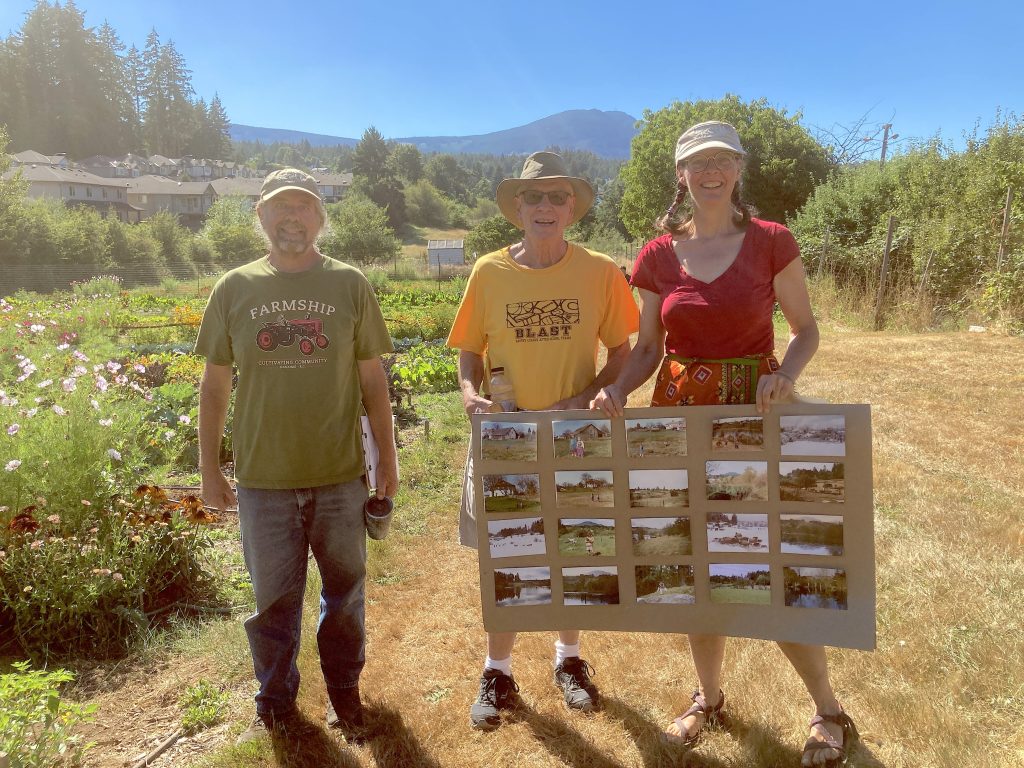
Over the next year, Evans — who co-founded Nanaimo Foodshare as a food security network in 1997 — recruited community volunteers, Vancouver Island University (VIU) students and Canada Summer Jobs participants to clear land and install fencing and irrigation. A nearby farmer turned over the soil with his tractor and local mill Coastland Wood Industries donated fence posts.
By the time the city negotiated a purchase deal with the Torgersons, the farm was growing large amounts of produce for Nanaimo Foodshare’s Good Food Box, was home to a weekly market that engaged the community to learn more about agriculture, and students with diverse abilities from VIU’s Workplace Essential Skills and Training Program had found full-time employment on the farm over the summers.
The farm was also the site of a lettuce, carrot and leek seed trial project with the University of British Columbia and other partners.

Questions remain about the future of Five Acres Farm
When the city acquired the property in 2019, it outlined several community benefits that would be served by the purchase, including the creation of a community nature park, wetland protection, a site for community food production, and affordable housing.
Of the different housing options presented by the city, some question how it would work with the existing farmland.
“When looking at these concepts [for Five Acres Farm] we need to consider how functional the land will be for farming and food production at the end of it all,” Isabelle Morris stated on Facebook.
“Adding housing will change the drainage, the availability of water, shade and air flow, and generate heat from the parking lot. If farming and food production remains an objective for this site, those things need to be carefully considered,” she continued.
Morris has a master’s degree in environmental education, is a director with Growing Opportunities and manages the Ladysmith-based Farmship Growers Co-operative.
Torgerson also raised concerns that on most of the city proposals, he did not see much — if any — accommodations for the property’s numerous heritage fruit and nut trees.
Cody, who is the former executive director of Nanaimo Foodshare and currently serves on the board of Growing Opportunities, says with this in mind, she supports the fifth option to preserve the entire site intact.
“If you develop the property and houses go on it, it will never be available for agriculture ever again. If you preserve it for agriculture now, you can build houses on it at any time in the future,” she says. “There isn’t really a lot of other green space in that part of the community, and there’s nothing in the [wider] community that has a priority or a focus on food production.”
Though Cody supports affordable housing, she thinks there are other development or redevelopment sites in the city that could be more suitable.
Cody also wants to know what the city’s definition of “affordable” is, how long that housing will remain affordable once built, and what organization the city intends to partner with on the housing development — which are all things she thinks the community also needs to know to make an informed decision.
“The intention was for affordable housing of some kind to be there,” says Lisa Brinkman, the city’s manager of community planning. At this stage in the process, no housing partner has yet been confirmed, she added, so it’s still unclear how the project’s affordability would be defined and which residents the housing would serve.
Another complication is that funding for the purchase of the farm was sourced from the city’s property acquisition general fund as well as its parks development cost charge fund. The former was allocated to support affordable housing on two acres, and the latter was allocated to facilitate community recreation, environmental protection, and food security on the remaining three acres.
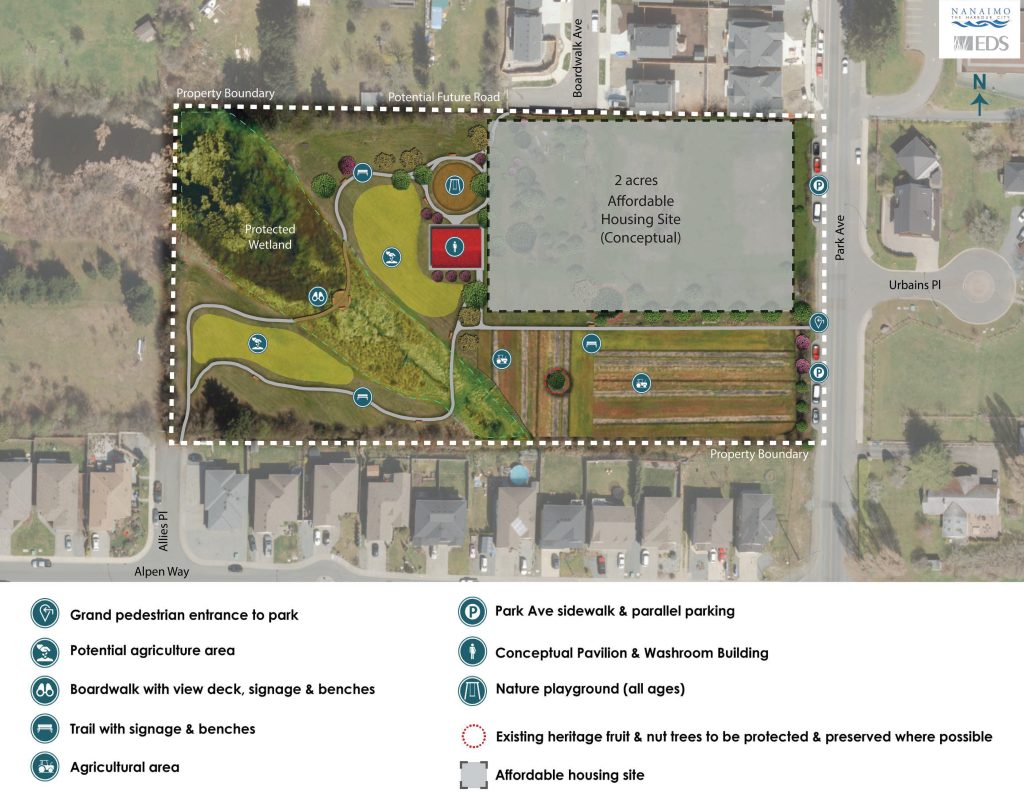
“If council is to support a land use option with no housing, the city will need to find a way to ensure the fund allocation is rectified,” says Brinkman, adding that the city is always seeking properties to add to the city’s affordable housing stock.
“There’s such a huge need. For example, we have a housing needs report that says we need a minimum of 1,115 [new] units per year in the city, and of those, 525 need to be non-market to meet our needs,” she says. “And the city doesn’t have huge areas of land for that. So the council at that time were trying to find little ways to include [housing] here, there and everywhere as much as possible to meet the huge demand.”
What is the future of farming on the Fives Acre Farm site?
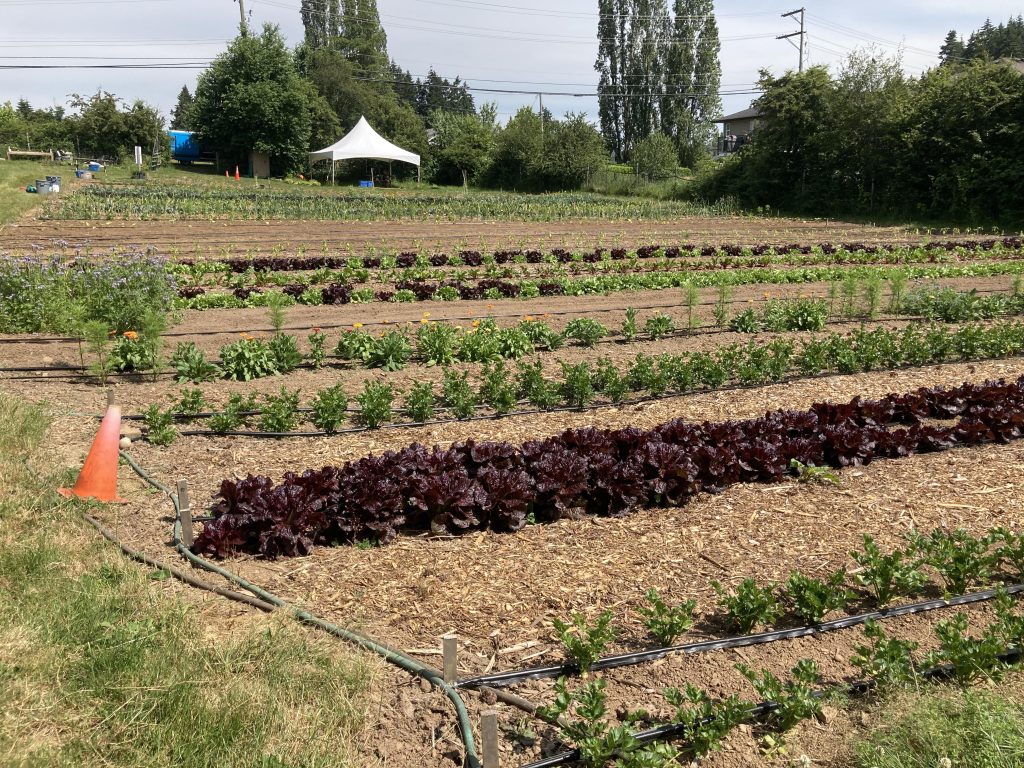
At present, Nanaimo Foodshare staff are running the farm on Park Avenue independently, having decided to abruptly separate from their partnership with Growing Opportunities this spring. Nanaimo Foodshare Society’s license with the city states that they are permitted to use part of the property as an education centre, community garden, and urban farm.
When that license expires on Dec. 31, the city will likely put out a request for proposals for organizations that want to operate a farm there and a provider will be selected, says Brinkman. Sometimes when non-profits are involved, the city’s process is less formal and it instead asks for an expression of interest, after which it enters into a contract with the organization for a certain time period.
“[The site] was always leased to Nanaimo Foodshare,” says Paula Masyk, who took over as Foodshare’s executive director in May of 2022. “I’m well aware that there was some confusion between the identities of Growing Opportunities and Nanaimo Foodshare, and that’s because two of the people in Growing Opportunities were in leadership positions in Foodshare, and at that time treated it as though it was one organization, but it’s not.”
In the last year, Masyk says programming at Nanaimo Foodshare has tripled and they are changing their focus, with a goal of opening up the portion of land they lease on Five Acres Farm to other non-profit organizations. But Growing Opportunities won’t be one of them.
“Nanaimo Foodshare wanted to have control of our own voice and our own autonomy, and we felt that we weren’t, because of this confusion. So we separated from them,” says Masyk. “They are not farming there because Nanaimo Foodshare has different ideas of how best to promote food security, in an inclusive way, that better serves the community.”
As for the options presented by the city for the property, Masyk says the portion that Foodshare is currently leasing won’t really be affected, so there isn’t one option in particular that stands out as being vastly better than the others for their organization.
“We just feel that it’s not our decision. We don’t represent the entire community of Nanaimo,” she says.
Though it makes sense for the two organizations to operate separately — Growing Opportunities had the expertise and experience in the farming aspect of food security, while Foodshare was focused on food distribution and culinary education — Growing Opportunities board member and farmer Ben Glassen says he doesn’t understand why Foodshare no longer wants to collaborate, when there are so few organizations in town that are dedicated to food security.
“We’re not going in different directions. We all want food security, and we all want the same few farms in Nanaimo to be thriving and active. Ninety-nine per cent of our mandates and goals are the same,” he says, and then adds with a laugh: “We’re still sisters. Apparently we’re just sisters that don’t get along right now.”
When it comes to the future of the farm and the options presented by the city, Glassen says his preference is to utilize as much of the property for farming as possible.
“It’s the only farm we’ve got. There’s other housing. Let’s not put housing on the one property that is still a farm,” he says. “However, if we’re going to put housing on there, let’s do it in a minimalistic way, where there’s retail space underneath that can service the needs of the farm for food processing, food distribution and a community corner store that sells good food.”
This vision is shared by Evans, who died from cancer in March.
“We still think it should be a food security centre, with supportive housing for people who are working and training on the farm,” he said in an interview with The Discourse before his death. If there was a housing development put on the property, why not make it a green development that works with the agricultural needs of the property and blends in with the surrounding landscape?
“You could cut into the slope and build houses right into the sloping section. You could make them super energy-efficient [on a] south-facing slope,” Evans said.
Related: ‘Everything in the garden has its season’: Craig Evans’ last summer
Years ago, prior to the city’s purchase of the land, Cody and Evans had discussed housing options on the property with Jack Anderson, who served in the City of Nanaimo’s first planning department in the 1970s and as a planner with the Regional District of Nanaimo in the late 1990s.
He is now the president of Greenplan, a consulting company that specializes in eco-housing, green neighbourhoods and sustainable development.
Some of the ideas they explored were to utilize the existing house on-site as an administrative and agricultural educational hub, while looking at housing options on the least-arable, sloped north side of the property, so it would be south-facing and not cast a shadow over the farmland.
“You can terrace into your sun spaces and have growing spaces within your residences as greenhouses that help provide heat to the home,” says Anderson. “If we could build a farming community of people who lived there and also worked the land, that would be ideal. I think there was also discussion that people with special needs could be accommodated within the housing of that particular site.”
Anderson describes this concept as a “farm hamlet” and is utilizing it for a similar project in the District of Sooke, which is part of its 2022 climate action plan.
These ideas are crucial when it comes to navigating the challenges posed both by climate change and extreme weather events, says Anderson, who points out the importance of local food production in the case of highway closures and ferry cancellations.
“We’ve got to realize that what we’ve been doing previously is no longer acceptable. I believe it’s the responsibility of municipalities to step forward and say, ‘Let’s create an example of a sustainable development, in as many contexts as possible,” says Anderson, who points to resiliency planning measures like rainwater harvesting that can withstand earthquakes and solar power for use in the event of prolonged power outages. “Resilience is actually even more important than sustainability in many ways, because we have to expect now that we are going to feel the shocks of extreme weather situations, and resilience is the ability to overcome that and continue to exist.”
Community input on the city’s proposals for the Five Acres Farm will be gathered at the meeting on Oct. 25, which runs from 6 to 8 p.m. in the Park Avenue Elementary School library at 395 Eighth St. The community can also give feedback via an online survey, which is open until Nov. 3.
This information will be compiled for council’s consideration and a decision is anticipated to take place sometime in December. Once a park plan is in place, city staff will know more about the next steps, but that depends on what the direction from council is, says Brinkman.
Editor’s note: Reporter Julie Chadwick briefly served on a Growing Opportunities transition team to assist the organization with communications — at his request — before and after Craig Evans’s death in March.
Editor’s note, Oct. 21: According to local historian Lynne Bowen, the year Samuel Robins likely began the Five Acre Farms project was 1892, and the article has been updated to reflect this time period. And we have clarified with Christine Meutzner at Nanaimo Archives that though the original property size was 9,000 acres, it was likely not all subdivided into five acre parcels.
What did you think of this story?
Your feedback after we publish a story helps ensure we're always improving our reporting to better serve you
Author

Related Articles
What to do and where to go during extreme heat events in Nanaimo, the Comox Valley and the Cowichan Valley
A guide to prepare for extreme heat events on Vancouver Island

Snuneymuxw Days shares culture with Nanaimo community
Health and wellness event features sport, traditional games and a feast.
Why are nurses in Nanaimo on strike?
Hundreds of nurses and healthcare workers picket Nanaimo Regional General Hospital.