
The Discourse wins GOLD at the Canadian Online Publishing Awards
The Discourse’s in-depth reporting on the overdose crisis recognized by judges at the Canadian Online Publishing Awards.
The Discourse’s in-depth reporting on the toxic drug crisis was recognized at the 2024 Canadian Online Publishing Awards alongside a suite of additional nominations in investigative, community news and photojournalism categories.
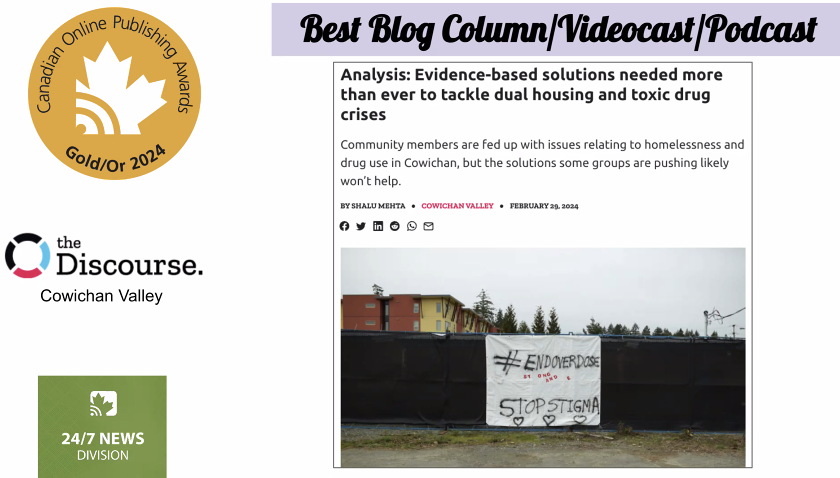
The Discourse Cowichan’s Shalu Mehta took GOLD 🥇 in the Best Column category for Evidence-based solutions needed more than ever to tackle dual housing and toxic drug crises. In this analysis, Mehta explores the roots of the dual housing and drug crises. She examines why experts say both must be addressed in tandem and why imprisonment and forced treatment will not work.
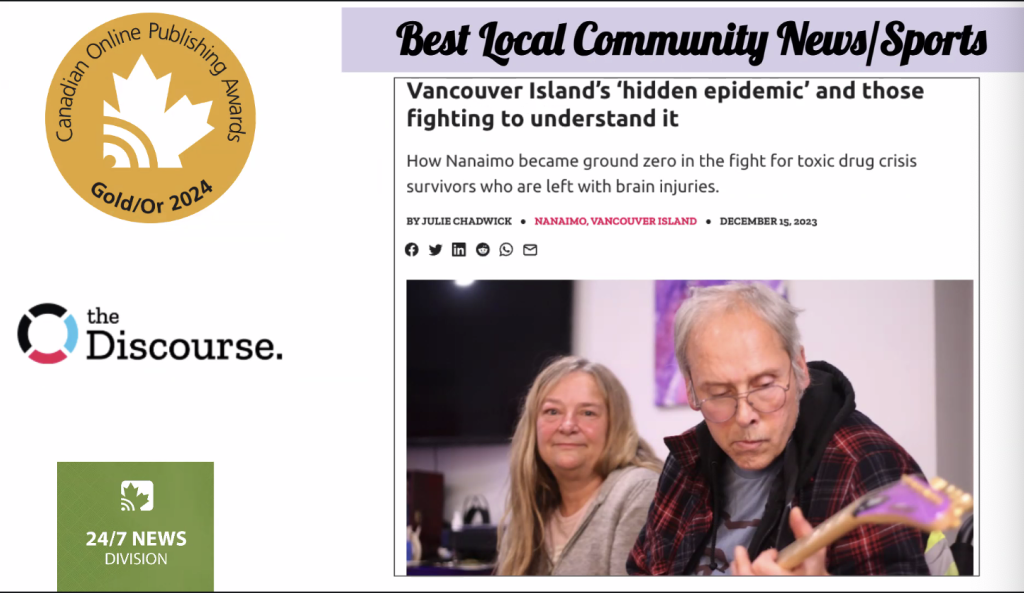
The Discourse Nanaimo took GOLD 🥇 in the Best Community News category for Julie Chadwick’s Vancouver Island’s ‘hidden epidemic’ and those fighting to understand it. The in-depth story explores how a group of Nanaimo-based researchers and community advocates have been building awareness about the link between the toxic drug crisis and brain injuries while fighting to make sure people with brain injuries get the support they deserve.
More finalists from the Discourse Community Publishing network
The Discourse Cowichan Valley was a finalist in the Best Photojournalism category for the story ‘We all want justice’: Hundreds march for missing and murdered Indigenous people on Quw’utsun lands. Reporter and editor Shalu Mehta knew the annual Walk for Justice on Quw’utsun lands — which takes place on the National Day of Awareness for Missing and Murdered Indigenous Women, Girls and 2SLGBTQI+ People — would be a particularly emotional one that year.
The community recently suffered a big loss of 15-year-old Carsyn Mackenzie Seaweed, who died under suspicious circumstances after going missing. Another community member — and family of the walk’s organizer — had recently died from a hit-and-run. Mehta knew she had to document the event with more than just words.
A sea of people wearing red — many with t-shirts with Carsyn’s face on them — marched through Duncan demanding change. Mehta covered the story of Carsyn’s death, and the following calls for justice, when it happened and was greeted by her family at the walk with hugs and tears. They expressed their appreciation for her reporting and for her being a witness to these tragedies in a way that honoured the family and Carsyn.

The Discourse Cowichan was also a finalist in the Best Investigative category for Shalu Mehta’s look at Island community centres face backlash for booking controversial events. Mehta was familiar with the mounting backlash against sexual orientation and gender identity (SOGI) resources provided to B.C. schools. So when she learned that a local community centre had come under fire for hosting an event that community members say was harmful to people who are trans, she quickly turned to cover the story. While the name of the event sounds inclusive — referencing inclusivity, gender identity and women’s rights — the speakers included Meghan Murphy, Bryony Dixon and Serena “Freedombear” Winterburn, all of whom have faced criticism for their views on trans-inclusive policies, trans people and gender identity.
The story digs into community concerns about the application of the community centre’s policies regarding diversity, equity and inclusion and their lack of transparency with the community concerns about the controversial booking. Through community interviews and investigation, Mehta found that one of the organizers had used their professional role with Vancouver Island University to beef up their credibility when booking, by using the university email signature. Mehta went to great lengths to not only share the community’s concerns about the event, but to understand the perspective of the vocal figure leading it.

The Wren was a finalist in the Best Community News category for Macarena Mantilla’s piece Meeting Residents of Merit Place. As a low-barrier shelter, Merit Place is one of the last stops for many experiencing homelessness in Kamloops (Tk’emlúps). However, the supportive housing site became a flash point of local concern related to social disorder. Mantilla spent many hours over multiple visits observing its operations and listening to the experiences of people living there.
The Wren and IndigiNews were finalists in the Best Multicultural category for the story by reporter Dionne Phillips about the Secwépemc-led documentary Sugarcane, which won a directing award at the Sundance Film Festival and is in the running for an Academy Award for Best Documentary.
The film follows the ongoing quest for truth and justice for the harms that took place at the notorious St. Joseph’s Mission near Williams Lake, which operated between 1891 to 1981. The documentary follows intergenerational survivors, including co-director Julian NoiseCat, as they work to uncover what really happened at this colonial institution and how the families are coming together to heal. They started working on the film after evidence of 215 unmarked graves was found at the former Kamloops Indian Residential School in 2021.
Award-winning stories made possible by you
Local readers like you who have pledged $10, $15, or $25 to us every month are what truly sustain this community news network.
Monthly support for The Discourse, The Wren, Revelstoke Mountaineer and Sun Peaks Independent News helps us plan ahead, hire more local writers, and invest in longer form journalism alongside weekly newsletters. It guarantees our local outlets can keep the lights on for another week, month, and year.
Thank you for making this award-winning reporting possible.
What did you think of this story?
Your feedback after we publish a story helps ensure we're always improving our reporting to better serve you
Author
Related Articles
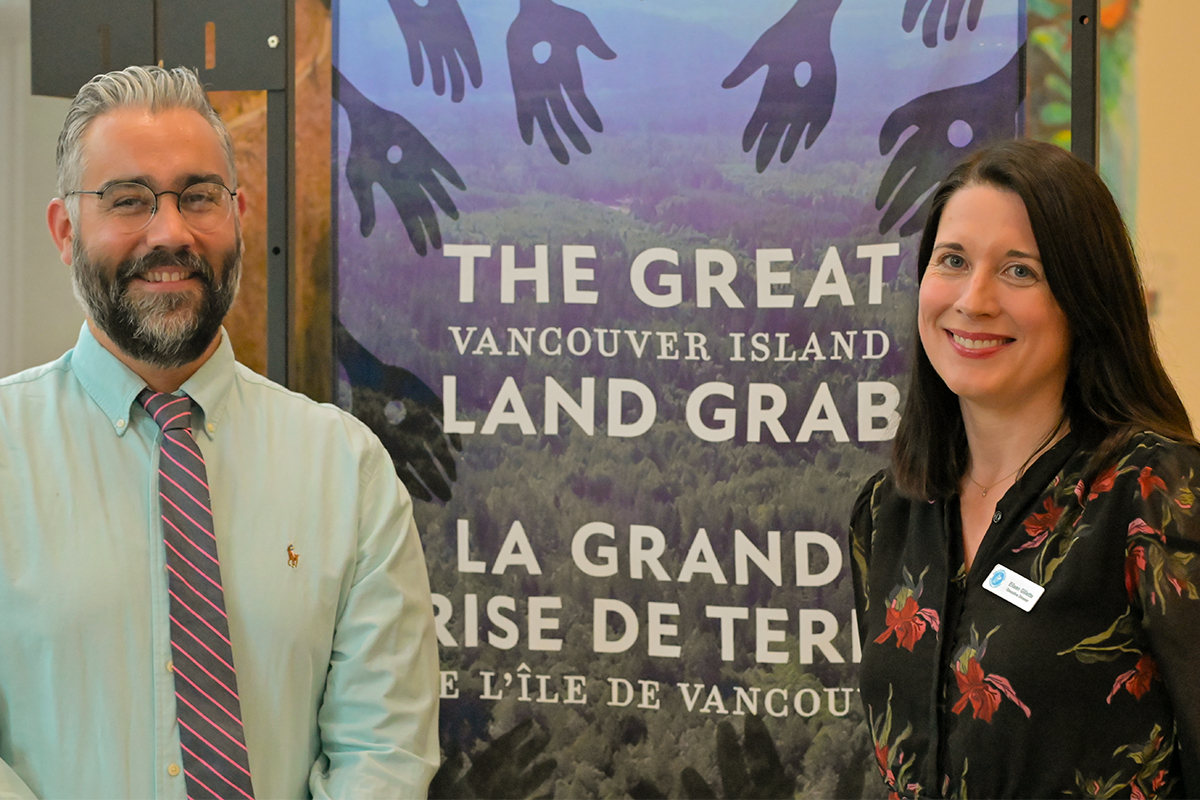
The Great Vancouver Island Land Grab exhibit aims to educate
How a 19th century land grant continues to impact First Nations on Vancouver Island.
Flooding, wildfires and earthquakes: Can the Comox Valley better prepare for disasters?
After being in an earthquake, Sue Pyper learned a lot. Now she and other local groups are sharing what they learned with neighbours — so everyone can be better prepared.
Remembrance Day 2025 events on Vancouver Island
Events, ceremonies and information on Remembrance Day 2025 in the Comox Valley, Nanaimo and Cowichan Valley