
Immigration partnership program aims to make the Cowichan Valley more welcoming to newcomers
A new federally funded partnership wants to understand what barriers immigrants face when they arrive in the Cowichan Valley.

Ask Alejandra Lara-Espinosa what success looks like for immigrants in the Cowichan Valley and she won’t start with data or survey responses. She’ll tell you about Olga Shevchenko, the owner of Mettra Pharmacy in Duncan.
“She experienced so many tribulations to be able to land here and she’s invested herself into that project and it’s been really amazing [to see],” Lara-Espinosa said.
It’s a story she returns to when talking about what is possible for newcomers to the Cowichan Valley, an example of not just surviving but also thriving.
But not every story ends like it did for Shevchenko, according to Lara-Espinosa.
“We had an anti-racism day and the amount of horror stories we heard were terrible,” she recalled.
That gap between what’s possible and what too many newcomers actually experience is why Lara-Espinosa is coordinating the region’s first Local Immigration Partnership, a federally funded initiative bringing together local service providers, like the Cowichan Intercultural Society, municipal governments and business owners to understand and address the barriers newcomers face when settling in the Cowichan Valley.
Those barriers range from difficulties finding employment to a high cost of living, language barriers, transportation and racism, according to Lara-Espinosa.
“We’ve known for a long time how many barriers there are and it’s hard to get a grasp on that,” she said.
But Local Immigration Partnerships have been shown to successfully engage the wider community, such as local businesses, in support of resettlement, research published in 2017 by Immigration Refugees and Citizenship Canada shows, leading to improved language skills.
For Ukraine-born Shevchenko, following her dream of opening a pharmacy in Canada required a five-year long credential transfer process, including a series of exams while studying in a new language.
While Shevchenko was not involved in a Local Immigration Partnership, the program would help make the Cowichan Valley more welcoming for newcomers like her by connecting them with organizations to obtain housing, employment and other essential services.
Lara-Espinosa believes stories like Shevchenko’s do more to shift public sentiment than statistics ever could. “I do feel like conveying positive messages can shift the narratives a little bit.”
What specific barriers do newcomers face in the Cowichan Valley?
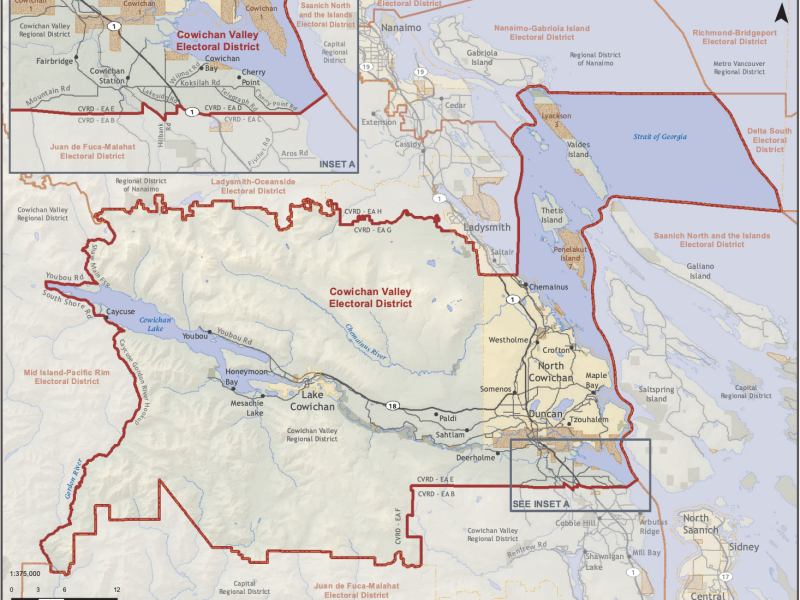
The Cowichan Valley poses some unique challenges for newcomers when compared to Victoria and Nanaimo, according to Lara-Espinosa.
Housing, infrastructure like schools, the large geographic distance between where people live and where services are offered is a weak spot for the Cowichan Valley.
She used Lake Cowichan as a prime example of this. There is currently an effort underway to recruit medical practitioners for the town but that effort has been hampered by the lack of schools and transit options into Duncan.
“One of the main issues is transportation — not only for the practitioners themselves that would be recruited to work there, but they also come with families who might need to work in Duncan,” she said.
The Cowichan Intercultural Society was named in North Cowichan’s housing needs assessment report as the primary non-profit organization helping racialized newcomers with wrap-around services, like support finding housing, connecting with landlords and understanding tenancy rights.
As part of the program, Lara-Espinosa said the society is currently in talks to collaborate with the Cowichan Housing Association to design ways to minimize the barriers people face while trying to find housing because “it’s very, very hard for [immigrants] to afford housing and also it’s becoming more and more scarce.”
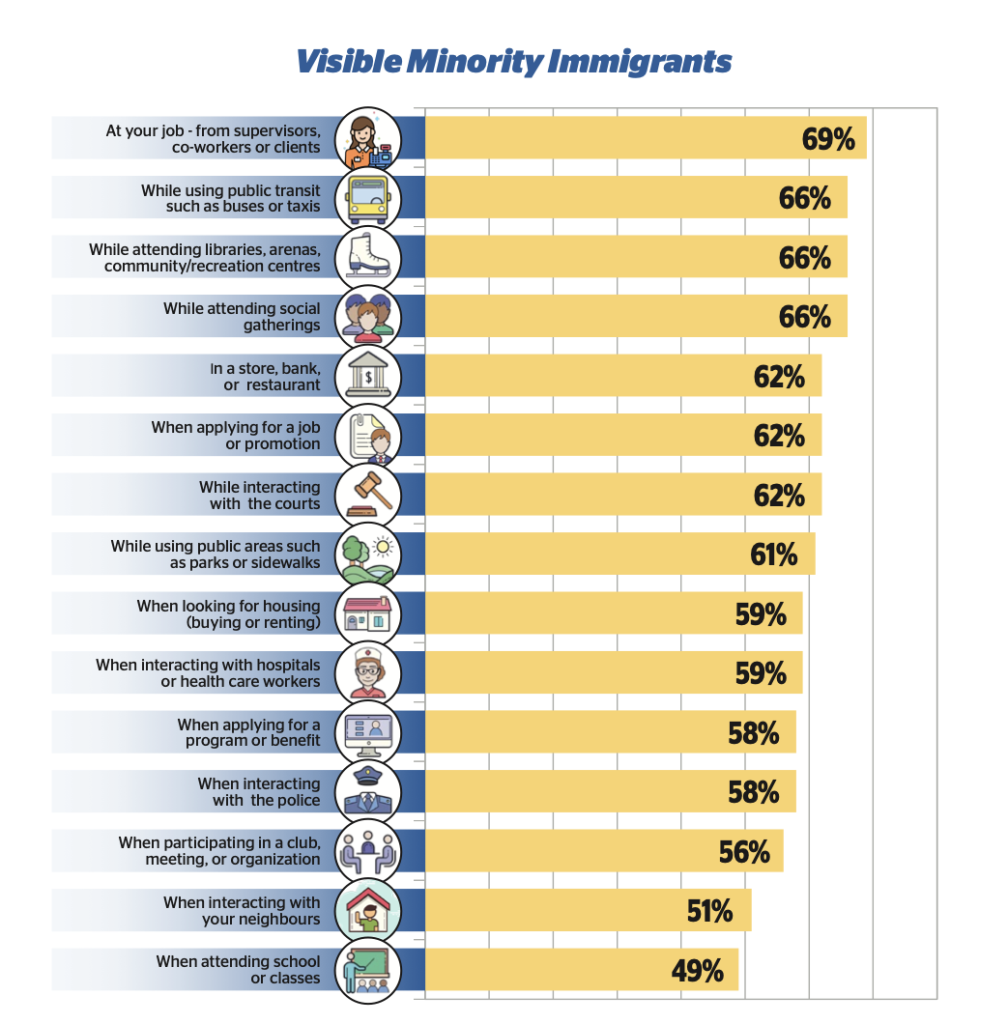
Research done by the society found that, in 2022, 59 per cent of visible minority immigrants and 63 per cent of visible minority non-immigrants reported experiencing racism when seeking rental housing or buying.
That same report found that 66 per cent of visible minority immigrants and 65 per cent of visible minority non-immigrants experienced discrimination while using public transit.
Immigrants still face discrimination
Nationally just over half of racialized Canadians report experiencing discrimination or unfair treatment within the past five years, according to data from Statistics Canada’s 2024 Social Survey — more than double the rate reported by non-racialized people.
That same data shows recent immigrants reported a somewhat lower rate of discrimination compared to Canadian-born racialized people — a pattern Lara-Espinosa recognizes in her own experience.
“I am an immigrant myself, and I have never perceived Canada that way,” she said. “I always felt it was welcoming in a lot of ways, but because of sentiments on social media there have been people who don’t feel included when they come.”
For Lara-Espinosa, this change shows up most starkly in healthcare access for newcomers.
“It’s a problem, and it’s sad that we’re in 2026 and I still hear about people that face racism when accessing healthcare services,” she said.
In a 2022 report, the Commonwealth Fund found that 26 per cent of surveyed Canadian physicians said the health care system treats people unfairly based on race or ethnic background often or very often.
Almost half of physicians responded yes when asked if their patients told them they felt they were treated unfairly or their health concerns were not taken seriously because of their race and ethnic background.
The Cowichan Intercultural Society, the organization that Lara-Espinosa works for, has seen first hand how racism against immigrants to the Cowichan Valley manifests online.
“We would make a post about an invitation to join a workshop to be able to get your citizenship and then we had a number of people saying, ‘go back to your countries’ and other super racist comments,” she said.
She said it’s a very painful thing to witness, but oftentimes the best countermeasure is to spotlight the success stories the society sees, like Shevchenko, which the society did in a social media series spotlighting successful entrepreneurs.
“Some of our local immigration partnerships are trying to do counter campaigns and trying to put out information about immigration levels and barriers for newcomers. But I do feel personally that conveying positive messages can shift the narratives a little bit more efficiently at this point,” she said.
Retention of newcomers a national issue
A key part of welcoming newcomers to the Cowichan Valley is making sure that once they move here they stay, Lara-Espinosa explains.
It’s not just a challenge in the Cowichan Valley, or on Vancouver Island. Research shows newcomer retention varies across the country.
Retention rates differ widely, ranging from 90 per cent in Ontario and 85 per cent in British Columbia at the higher ends, according to Statistics Canada, and 60 per cent or lower in Manitoba, Nova Scotia and Saskatchewan.
Immigration and Refugees and Citizenship Canada recently released the findings of its Rural and Northern Immigration Pilot project, currently running in the B.C. communities of Peace Liard, North Okanagan Shuswap, West Kootenay and Kelowna.
Similar to the Local Immigration Partnership, the project’s stated goal is to connect businesses and employers in remote communities with skilled newcomers.
In a survey of newcomers from the 18 communities where the program is running, 87 per cent of respondents said they planned to stay in their communities.
As part of the program, 8,580 newcomers were granted permanent residence and went on to work in healthcare and manufacturing.
To Lara-Espinosa, that’s the real measure of the Local immigration Partnership’s success — not just getting newcomers here, but making sure they have what they need to thrive when they arrive, and making sure the people serving them know how to help.
“We should look forward as a community and try to create a better future, with everybody as equals,” she said.
What did you think of this story?
Your feedback after we publish a story helps ensure we're always improving our reporting to better serve you
Author
Related Articles
DRIPA debated in B.C. election on Vancouver Island
The Conservative party of B.C. is promising to repeal the Declaration on the Rights of Indigenous Peoples Act (DRIPA), while other parties argue that would set back relations with First Nations and create economic uncertainty.
Where Cowichan region MLA candidates stand on water, old growth and reconciliation
MLA candidates in the three ridings that cover the Cowichan region answered questions from Discourse readers ahead of the Oct. 24 B.C. election.
Cowichan Valley’s guide to the 2026 B.C. election
What riding am I in? Who are the candidates? When do I vote? The B.C. election basics for Cowichan Valley residents.