
What to do and where to go during extreme heat events in Nanaimo, the Comox Valley and the Cowichan Valley
A guide to prepare for extreme heat events on Vancouver Island

After heat warnings for large parts of British Columbia, including eastern Vancouver Island, were issued on July 22, residents have been preparing for ways to stay cool and safe during extreme heat events.
The Discourse checked in to see what resources and services are available to stay cool in Nanaimo, the Cowichan Valley and Comox Valley.
This summer was forecasted to be hotter and drier due to El Niño, the warm phase of the climate pattern. Islanders are also facing more extreme weather events due to their collective influence on the current climate compared to the pre-industrial climate, according to Environment Canada.
After the heat dome of 2021 killed more than 600 people, the province and local governments have implemented heat-related safety plans. All colour-coded weather alerts can be viewed on the Environment Canada website and once implemented, local resources can be viewed on the provincial Emergency Map.
Daytime temperatures over 29 C and overnight temperatures that do not fall below 16 C for at least 48 hours are considered to be extreme heat, according to local emergency management officials using Environment and Climate Change Canada’s definition.
Island Health medical health officer Dr. Melissa Wan told The Discourse in an interview that the most important thing you can do is be aware of your personal risk of heat-related illness and take action to reduce that risk.
“When it comes to heat, everyone’s at risk of heat-related illness, but it’s especially important for individuals to assess their own personal situation and to see if they’re at elevated risk because heat is especially dangerous for certain groups of individuals,” Wan said.
Who is most at risk during extreme heat?
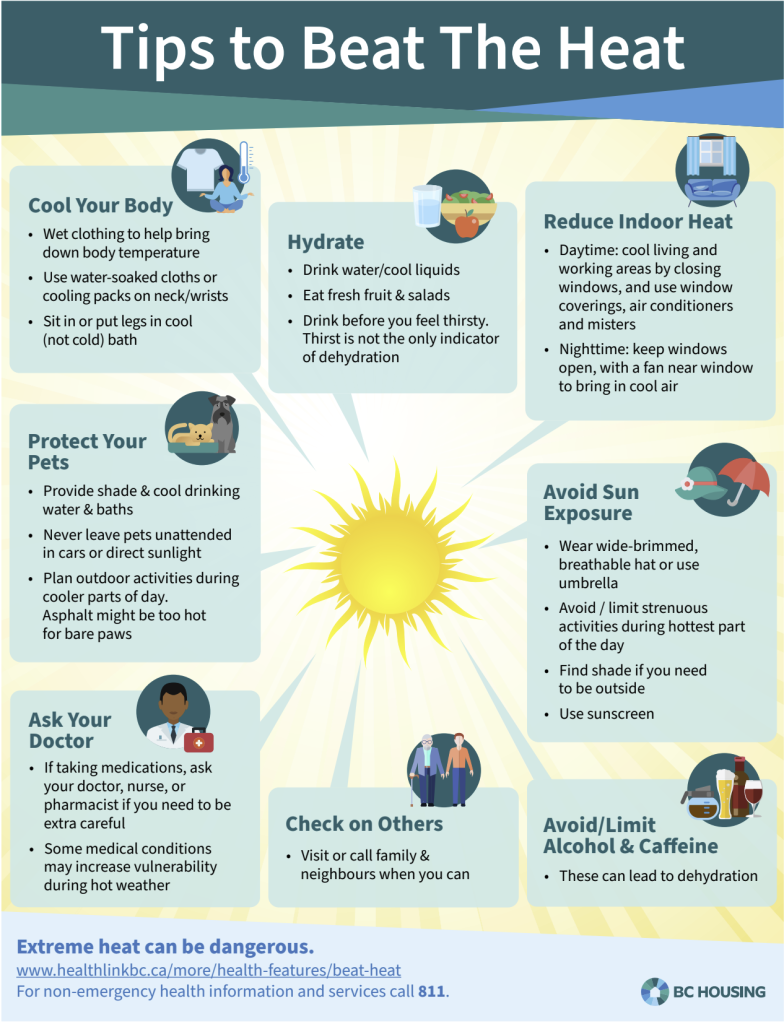
Anyone who may be limited in their ability to respond to heat is at an elevated risk of heat-related illness. This includes:
- People with severe mental illness or cognitive impairment
- People with multiple chronic conditions or disabilities
- People with chronic health conditions
- People with substance use disorders
- People who are living in poverty, marginally housed or experiencing homelessness
- Pregnant people
- Infants and young children
People working outdoors or in hot places like kitchens are also more vulnerable.
Knowing who is at high risk of heat-related illness and dehydration helps ensure everyone checks on their neighbours and loved ones.
What are the signs of heat-related illness, and what do you do?
Signs of heat-related illness include:
- Heavy sweating
- Severe headache
- Muscle cramps
- Extreme thirst
- Dark urine
Wan said people experiencing heat-related illness can start to tell when they begin to overheat. They may experience feeling unwell overall, headache, dizziness, thirst and may sweat. But this can progress quickly into other types of heat illness such as heat exhaustion or heat stroke.
“Very heavy sweating, very severe headaches, having cramping, dark urine — that’s what I would say is the next elevation of severity. But the most concerning signs are of heat stroke,” Wan said. “People feeling confused, fainting, having altered levels of consciousness, rapid breathing, nausea, vomiting. Those are signs when you want to call 911 and get assessed to cool down.”
If you or someone you know is experiencing heat-related illness symptoms, it is recommended to move to a cooler place, drink plenty of water and cool your body with water.
Wan said usually, the first heat warning by Environment Canada has the most impact on people’s health, but given the warmer weather this summer people may have become more acclimatized to the heat.
One of the best ways to cool down is to use water — be that swimming in a lake or the ocean, taking a cold bath or shower, using a spray bottle or even just a cold wet cloth.
“Fans can help move air, but they’re not always effective at reducing core body temperature,” Wan said. “Try to use water as one of the sources to cool yourself down.”
With the possibility of wildfire smoke at the same time as a heat wave, Wan said it is important to prioritize staying cool.
“The risk of overheating is more severe than the air quality,” she said. “While the air quality symptoms will go away, heat is one that’s harder to manage.”
Nanaimo studies and prepares for extreme heat
Christy Wood, social development manager at the City of Nanaimo, said the city is putting out information about how local residents can stay cool, one of the key recommendations from a local study on extreme heat published in 2023.
Wood said the extreme heat mapping project identified neighbourhoods within Nanaimo that are most at risk when it comes to heat. It took a look at building infrastructure, the tree canopy and socioeconomic factors. This mapping has allowed the city to focus efforts on those high risk neighbourhoods in the event of an extreme heat event.
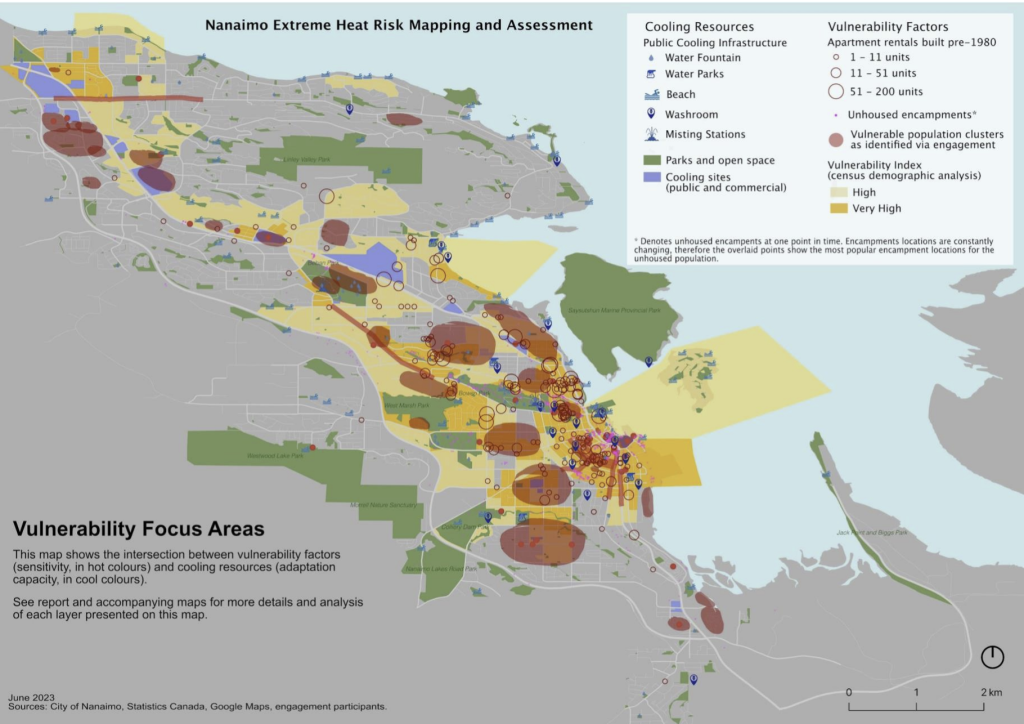
The report from the study also suggested the city take action to come up with solutions for extreme heat by collaborating with Snuneymuxw First Nation.
This includes improving communications and public-facing mapping and identifying community champions and informal gathering spots. The report also recommended the city distribute educational information including a map of heat-relief locations, tips and tricks for home cooling and information about reducing financial barriers so people from vulnerable populations can determine which heat-relief sources are available to them.
Wood said some of the people who are at risk during a heat event are people who are unhoused and using substances. She said the city works with local service providers and Community Safety Officers to hand out water and electrolytes, perform wellness checks and provide education about how and where to stay cool.
However, she also noted that the people most at risk during the summer are people who are housed but living in isolation or who have other health issues, such as seniors.
“Our health partners develop communication so we can reach those folks because they’re not typically people we would interact with from a city perspective,” Wood said.
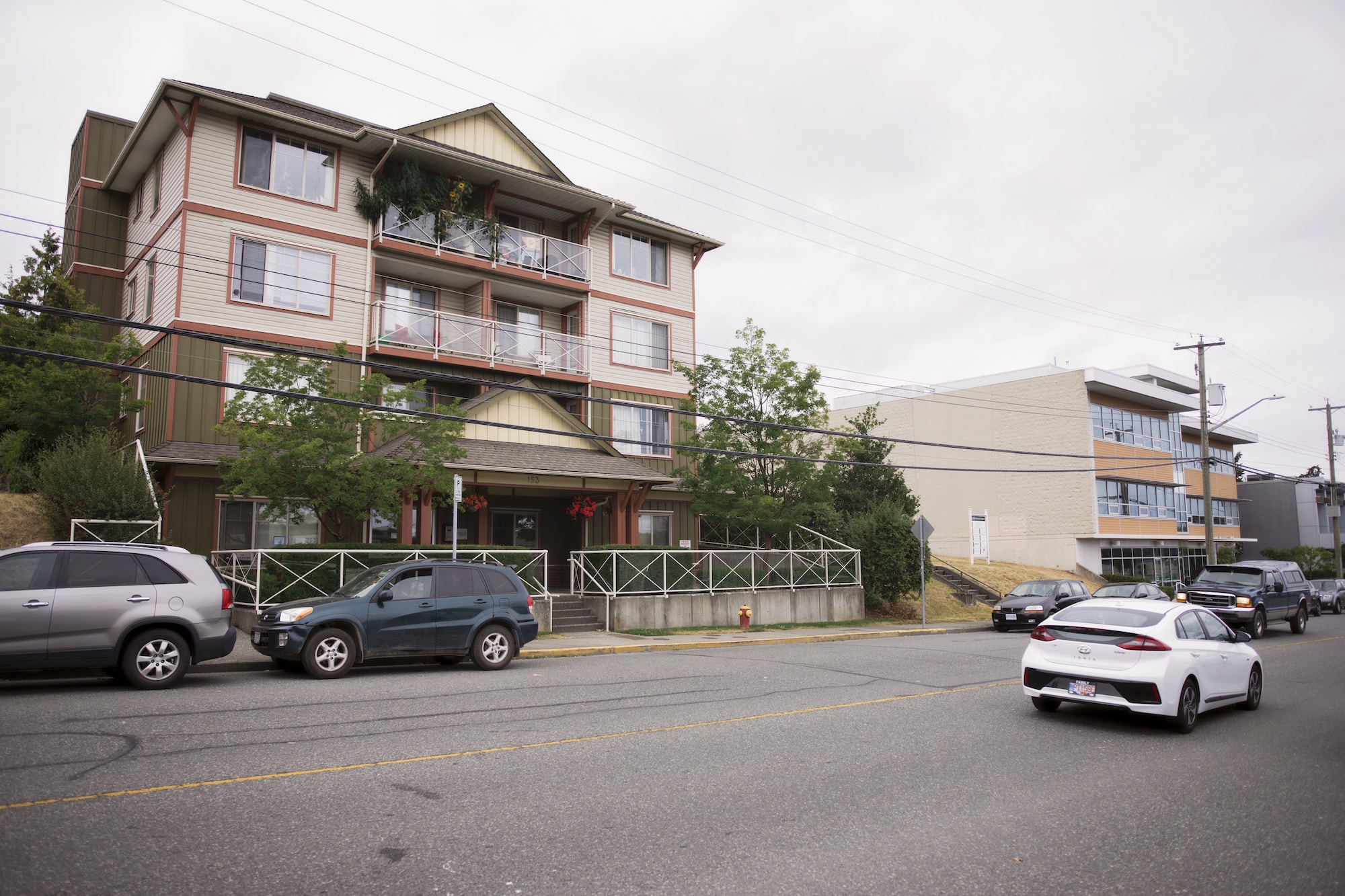
Part of the heat mapping project looked at communities around the world where they found having someone check in on people who are vulnerable and most at risk in the community saved lives during heat events.
“So that was one of the recommendations through a communications perspective to start to encourage neighbours to check on folks,” Wood said.
She also noted that last year, the city learned that an important connection to make was with public health nurses who do home visits and can speak with family and friends to make sure they’re checking in on loved ones.
Nanaimo resources
The city has a beat the heat page on its website that lists resources people can access and explains different coloured heat warnings.
While the Nanaimo Aquatic Centre is closed for annual maintenance, there are pools in Beban Park and Bowen Park where people can cool off.
The outdoor Kin Pool in Bowen Park offers lane swimming from noon to 1 p.m. and a public swim from 1 p.m. to 3 p.m. Monday through Friday.
There are also splash pads and waterparks for kids at Departure Bay Centennial, Deverill Square, Harewood Centennial and Mansfield Parks
During the summer, lifeguards are on duty at Westwood Lake for swimming.
A misting station is also set up in Maffeo Sutton Park and Harewood Centennial Park near the artificial turf fields.
There are also air conditioned lobbies in city recreation centres that people can use during operating hours.
Comox Valley resources
Comox Valley Emergency Management supports regional risk planning and coordination for heat emergencies in collaboration with the City of Courtenay, Town of Comox, Village of Cumberland and K’ómoks First Nation.
Cari McIntyre, manager of Comox Valley Emergency Management, told The Discourse that the various levels of heat warnings from Environment and Climate Change Canada come with guidance for local authorities and other levels of government and partners. The health guidance comes from the BCCDC, with health professionals evaluating the warning levels and risks.
“Our role is to try and help navigate what the federal government is telling us in terms of the level of warning, what the province has guided us to do and what’s actually possible within the resources and spaces we have at our disposal within the Comox Valley at that time,” McIntyre said. “So we do pre-planning with our partners year round, and we do that for any hazard.”
Community preparedness can also go a long way when it comes to potential hazards, McIntyre said, suggesting that community members find a neighbour or friend to check in on — or ask someone to check in on them — in case of an emergency or extreme heat event. It can be as simple as putting a sign in your home or car window signalling that you’re OK or in need of help, or as thorough as home visits, depending on the person’s comfort level.
“I think that social resilience increases when we have more connections. And, you know, that doesn’t necessarily mean you need to be best friends with your neighbour but it’s good to have somebody who’s aware of your unique circumstances in a way that’s an informed consent approach,” McIntyre said.
A recent example on community resilience in the Comox Valley comes from the Beaufort Avenue neighbourhood in Comox, where residents are participating in an initiative called the Neighbourhood Emergency Preparedness Program.
The program, supported by Comox Valley Emergency Management and other community partners, gives residents tools and resources to support each other in case of emergency. It began in the Beaufort Avenue neighbourhood nearly a decade ago thanks to Cecelia Hund-Reid and her husband.
The Beaufort Avenue group hosts presentations and community potlucks to learn about emergency preparedness and build relationships and a neighbourhood plan. This work by the community also takes pressure off emergency services, McIntyre said.
“Neighbour‑to‑neighbour support is usually the most immediate help available after an emergency, regardless of its scale. Local efforts also help reduce pressure on emergency services, which must prioritize resources during a disaster,” McIntyre said in a news release.
“Creating neighbourhood connections and putting practical street-level or apartment-complex plans in place ahead of time will make a big difference for you, your loved ones and pets, and the person next door.”
Cooling spaces in the Comox Valley are activated whenever Environment Canada issues a Yellow Heat Warning. If it escalates to a Red Heat Warning, dedicated cooling centres with expanded hours open on top of these.
Local cooling spaces in the Comox Valley include:
- Courtenay Lewis Centre
- Comox Community Centre
- CVRD Sports Centre
- K’ómoks First Nation Health Centre
- Comox Library (Vancouver Island Regional Library)
- Courtenay Library (Vancouver Island Regional Library)
- Cumberland Library (Vancouver Island Regional Library)
- Village Park Water Park and Misting Station
- Rotary Splash Park, Comox Marina
- Rotary Water Park
- Courtenay Outdoor Pool
Public misting stations:
- 257 4th St., Courtenay
- The corner of 5th Street and England Avenue, Courtenay
- Corner of Port Augusta Street and Comox Avenue, Comox
- Comox Town Hall
- Comox Fire Hall
- Highland Park
- Anderton Park
- Filberg Park
- Aspen Park
- Village Park
- Comox Community Field sprinklers run from noon to 5 p.m. when temperatures exceed 26 C
Cowichan Valley resources
Emergency Management Cowichan is a division of the Cowichan Valley Regional District and brings together the Municipality of North Cowichan, City of Duncan and towns of Lake Cowichan and Ladysmith to prepare Cowichan Valley residents for various hazards and emergencies. Its website includes resources on what to do in the case of extreme weather.
April Diver, manager of emergency operations for Emergency Management Cowichan, told The Discourse in an interview that Cowichan Valley residents are encouraged to make sure they’re paying attention to the weather forecast to be prepared for potential extreme heat.
Residents are asked to sign up for CowichanAlert, the regional emergency notification system that announces cooling centre activations during extreme heat, at emcowichan.ca.
Diver said that in the event of an extreme heat event in the forecast, the alert system will notify residents who are signed up for it. A mobile phone is not necessary; alerts can be delivered by the app, email, text message or phone call and can be selected during sign up.
Diver said people can also prepare for extreme weather events by being aware of what’s available around them.
“It’s really about leveraging what’s already in your community and what you’re familiar with,” she said. “So we really encourage people to use the places that they’re used to using — grocery stores, libraries, coffee shops. If those are places they would usually frequent during the day, stay a little longer.”
Knowing who is around you is also important, Diver said. There may be vulnerable community members nearby who need someone to check in on them, or you may need someone to check in on you in the case of an emergency. Having a plan beforehand can help set up those lines of communication for when they’re needed.
Diver said guides from Prepared BC are in public spaces such as recreation centres and libraries to help educate the public about how to prepare for emergencies. She also said people can visit the Island Health website for more resources on heat safety.
For cooling spaces during an extreme heat event in North Cowichan, check the municipality’s heat events page.
A heat safety guide from the Town of Lake Cowichan, prepared by Our Cowichan Communities Health Network includes a list of cooling park spaces, indoor cool spaces and pools, including:
- Vancouver Island Regional Library locations
- Cowichan Community Centre
- Cowichan Public Art Gallery (outdoor space only)
- Cowichan Lake Recreation Centre
- Cowichan Aquatic Centre
- Frank Jameson Community Centre
- Fuller Lake Arena
- Kerry Park Recreation Centre
- Shawnigan Lake Community Centre
Drinking Water can be accessed at:
- Duncan City Hall’s bottle filling station
- Cowichan Community Center
General resources:
The BC Centre for Disease Control has an information page on preparing for heat events.
24/7 HealthLink BC for assistance with heat-illness symptoms and advice: call 811 (or healthlinkbc.ca). If it’s urgent, call 911.
Emergency Info BC has a provincial live map of public cooling spaces during a declared heat event.
– With files from Mick Sweetman.
What did you think of this story?
Your feedback after we publish a story helps ensure we're always improving our reporting to better serve you
Author

Related Articles
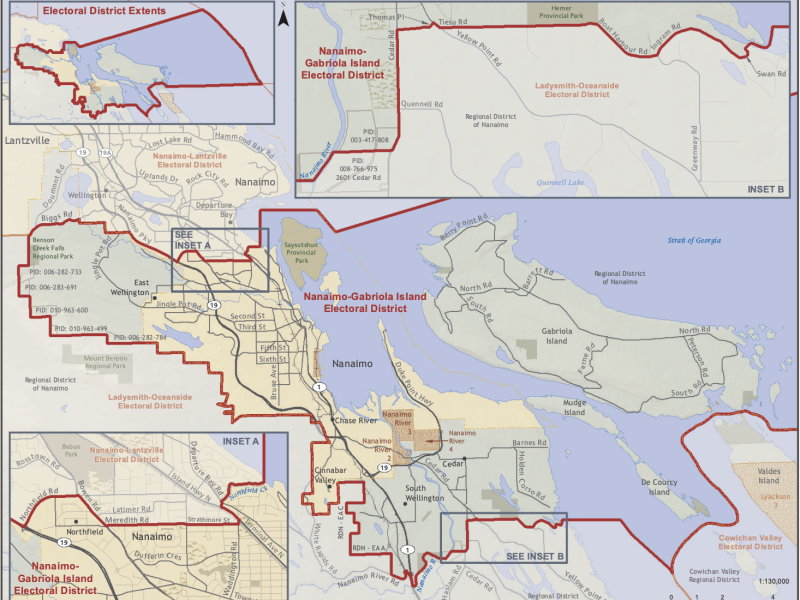
Nanaimo’s guide to the 2026 B.C. election
What riding am I in? Who are the candidates? When do I vote? B.C. election basics for Nanaimo voters.

Nanaimo mayoral candidates address the homelessness crisis
Homelessness is a key election issue but what can the City of Nanaimo do about it?
How Nanaimo candidates would pay for rising infrastructure costs
City of Nanaimo’s 2026 candidates share how they’d manage the budget to cover rising infrastructure and repair costs without overburdening taxpayers.