
In photos: Quw’utsun Sta’lo’ Skweyul celebrates the unifying power of a heritage river
Community members reflected on the river’s role in bringing people together for stewardship and knowledge sharing.
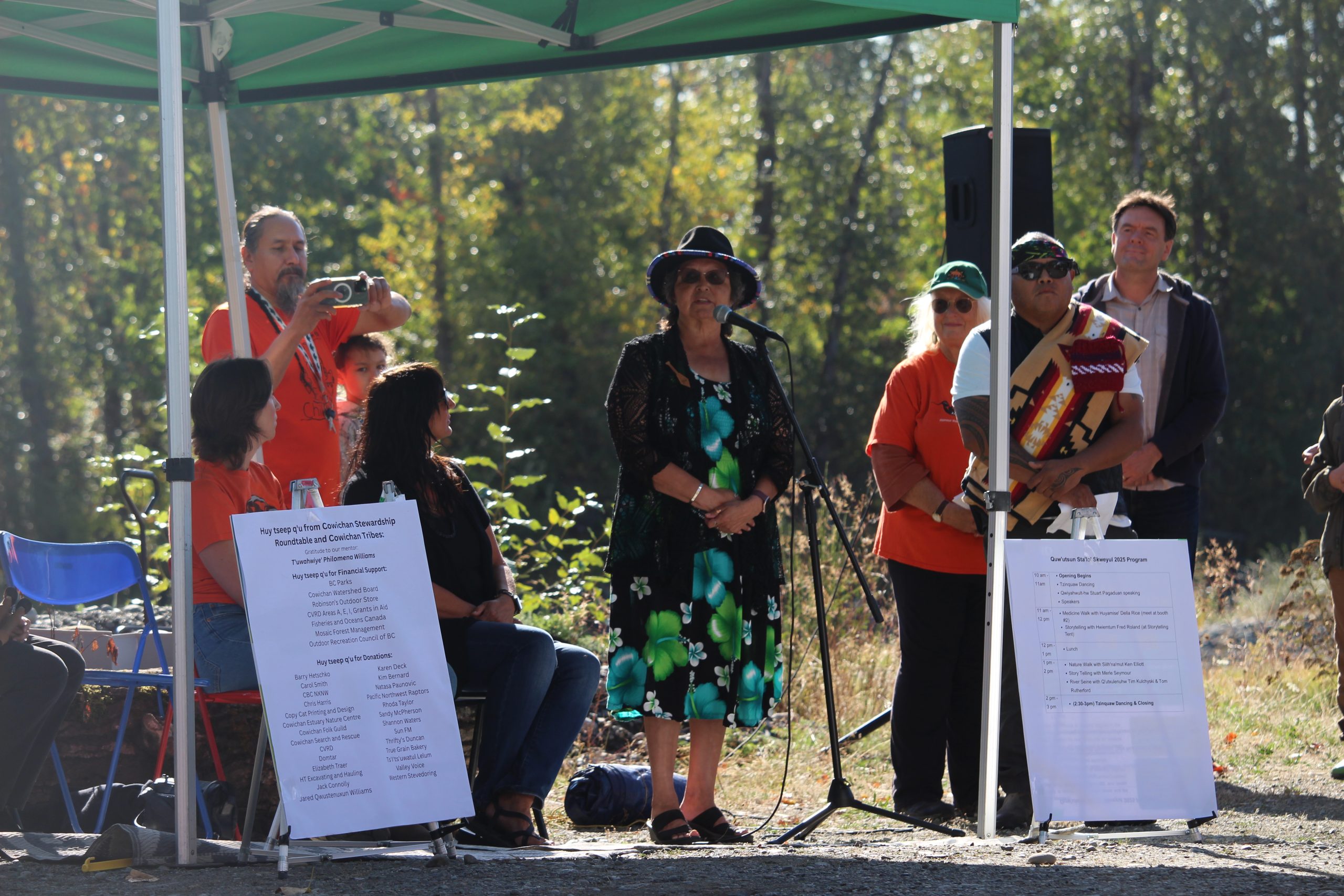
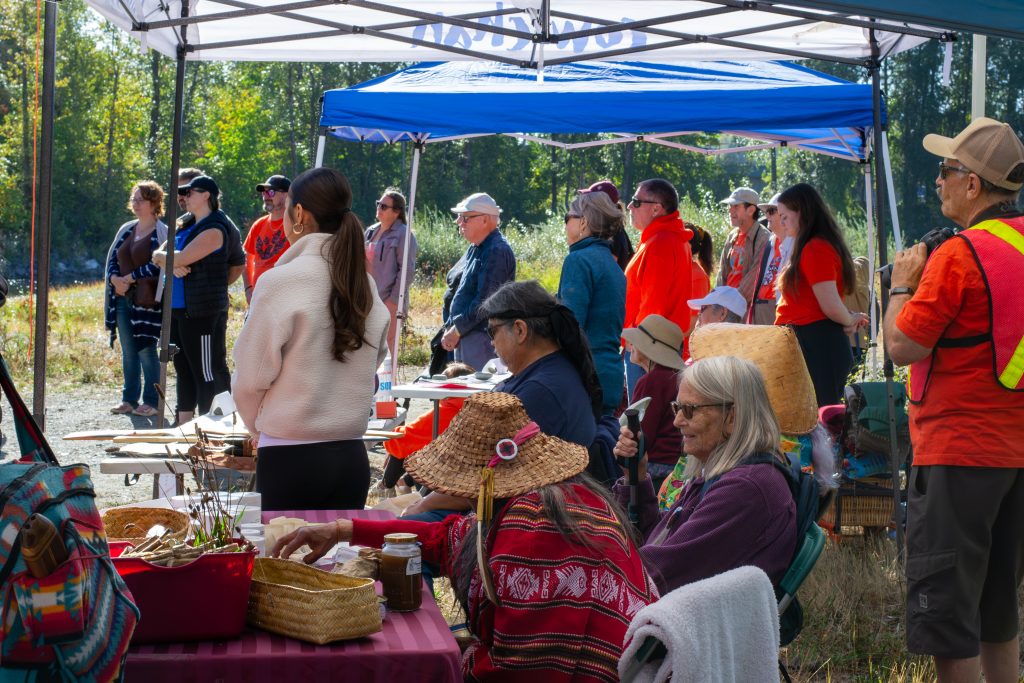
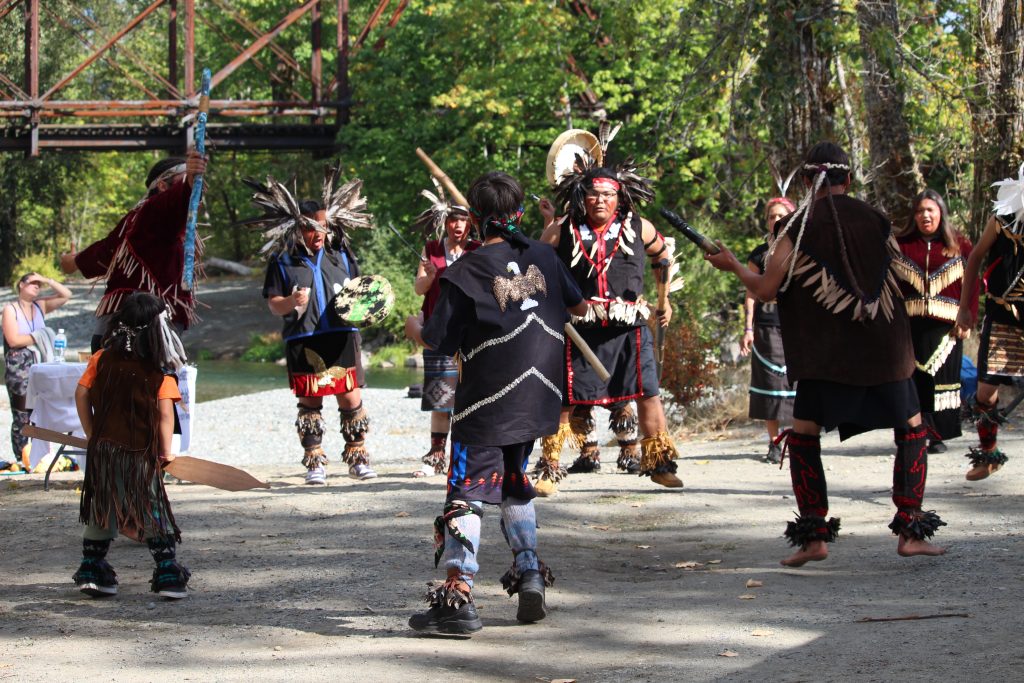
The banks of the Quw’utsun Sta’lo’ (Cowichan River) bustled with activity on Sept. 21 as community members gathered to celebrate the storied watershed and share knowledge about its stewardship for future generations.
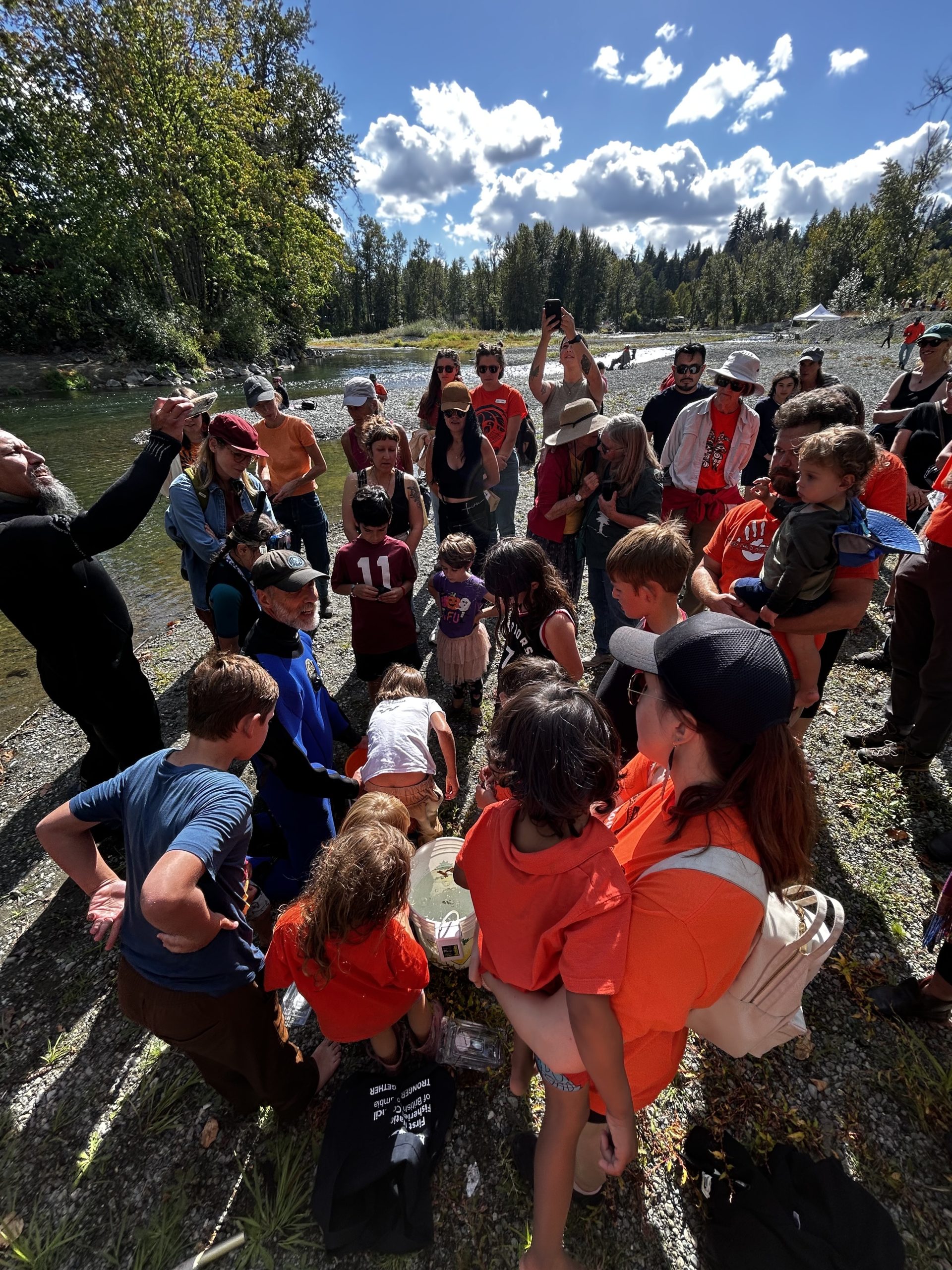
They were there for Quw’utsun Sta’lo’ Skweyul (Cowichan River Day), an annual event where dozens of community groups and Quw’utsun Elders and Knowledge Keepers educate visitors about the river and how to protect it.
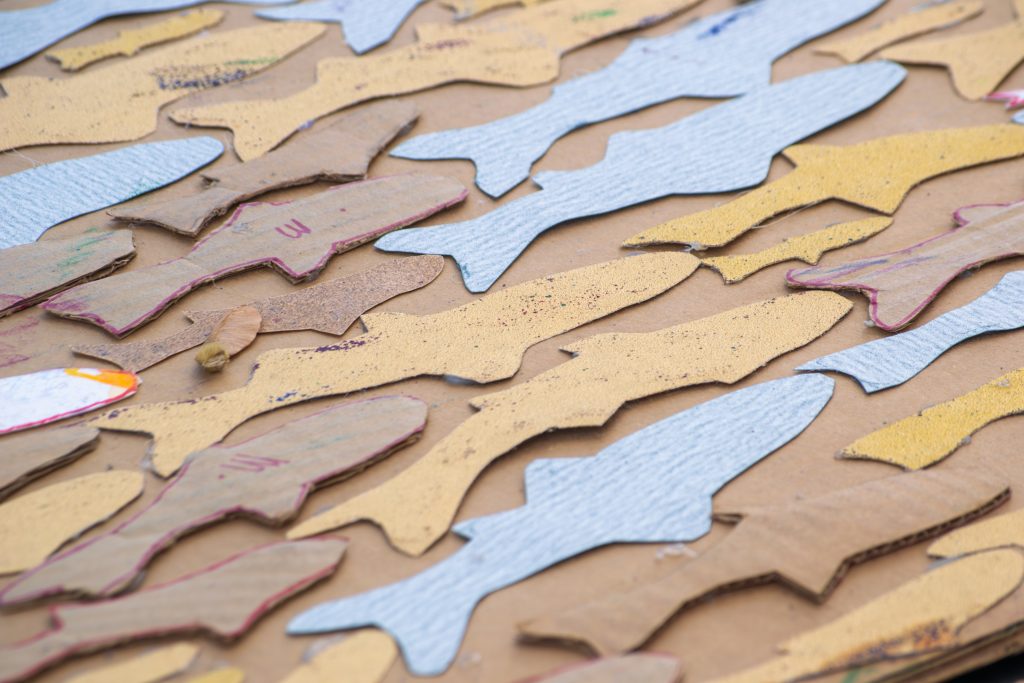
Many of the activities were interactive, ranging from arts and crafts and a live salmon catching demonstration to nature and traditional medicine walks.
In keeping with Quw’utsun tradition, Qwiyahwult-hw (Stuart Pagaduan) opened the day with a call for witnesses.
Cowichan Tribes community member, biologist and natural resource consultant Tim Kulchyski explained the significance of the practice of witnessing, which is central to the Quw’utsun tradition of knowledge sharing and storytelling.
“So many of you have been to previous events. We now have little ones that aren’t so little anymore and they will also remember, they will recall these events. And for future generations, they will be able to talk about how this all started and how this all came to be,” he said.
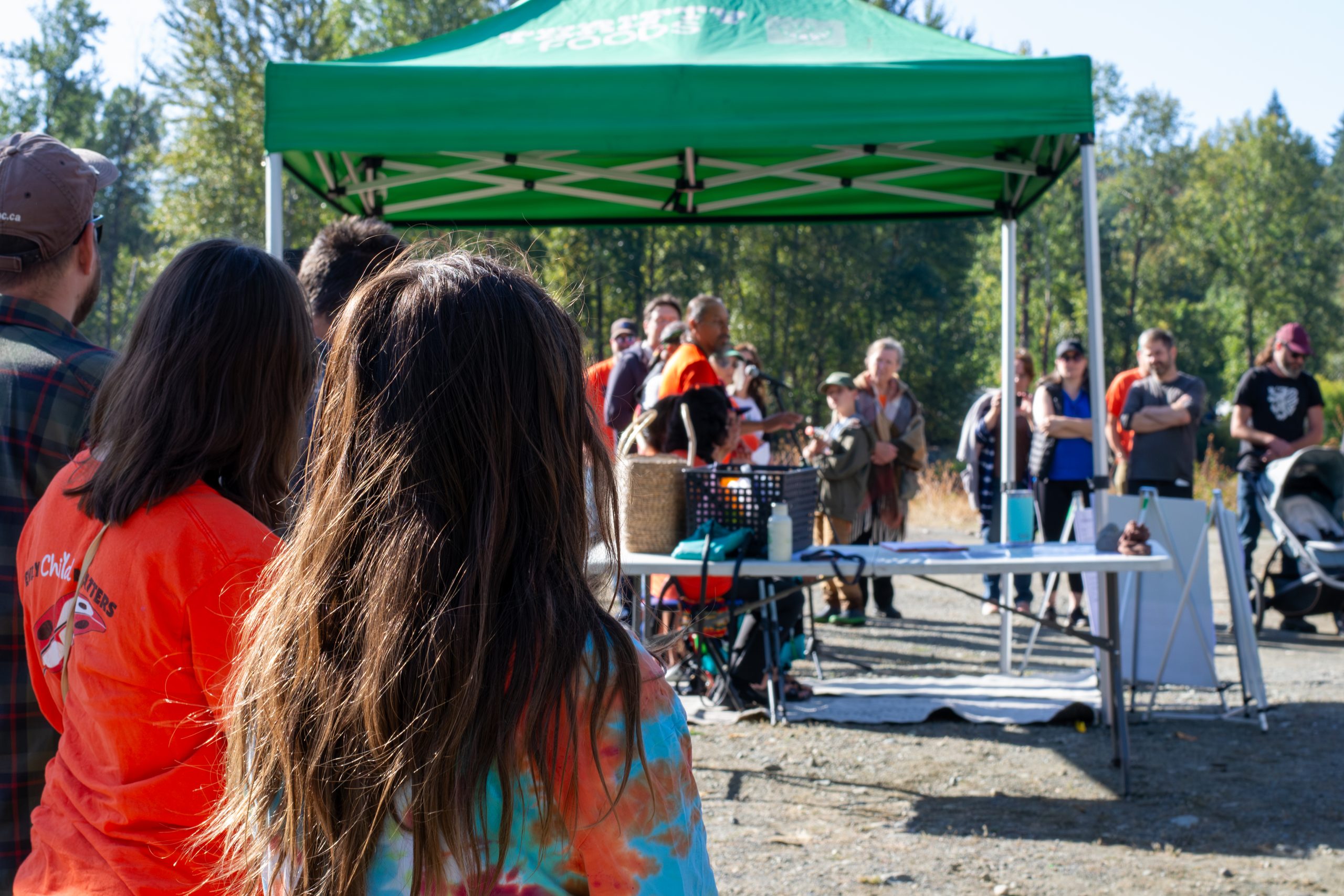
Chief Cindy Daniels emphasized the importance of witnesses in the oral history of the Quw’utsun Peoples.
“That’s how our history gets passed down. And the young ones that witness are really important in remembering these events — they’re going to be the organizers in the future,” she said.
A changing river
Children excitedly swam in the river throughout the day, cooling off under the bright afternoon sun. Meanwhile, people shared stories about how the river has changed over the years as a result of climate change and human activity. A common theme was just how low the water has become.
“People don’t believe us locals when they move to the Valley that we used to witness people jumping off the top of that Black Bridge into the Cowichan River,” Daniels said. “That’s how deep our river used to be.”
Duncan Mayor Michelle Staples recalled jumping off the black bridge in her youth and said the river was so deep she didn’t touch the bottom.
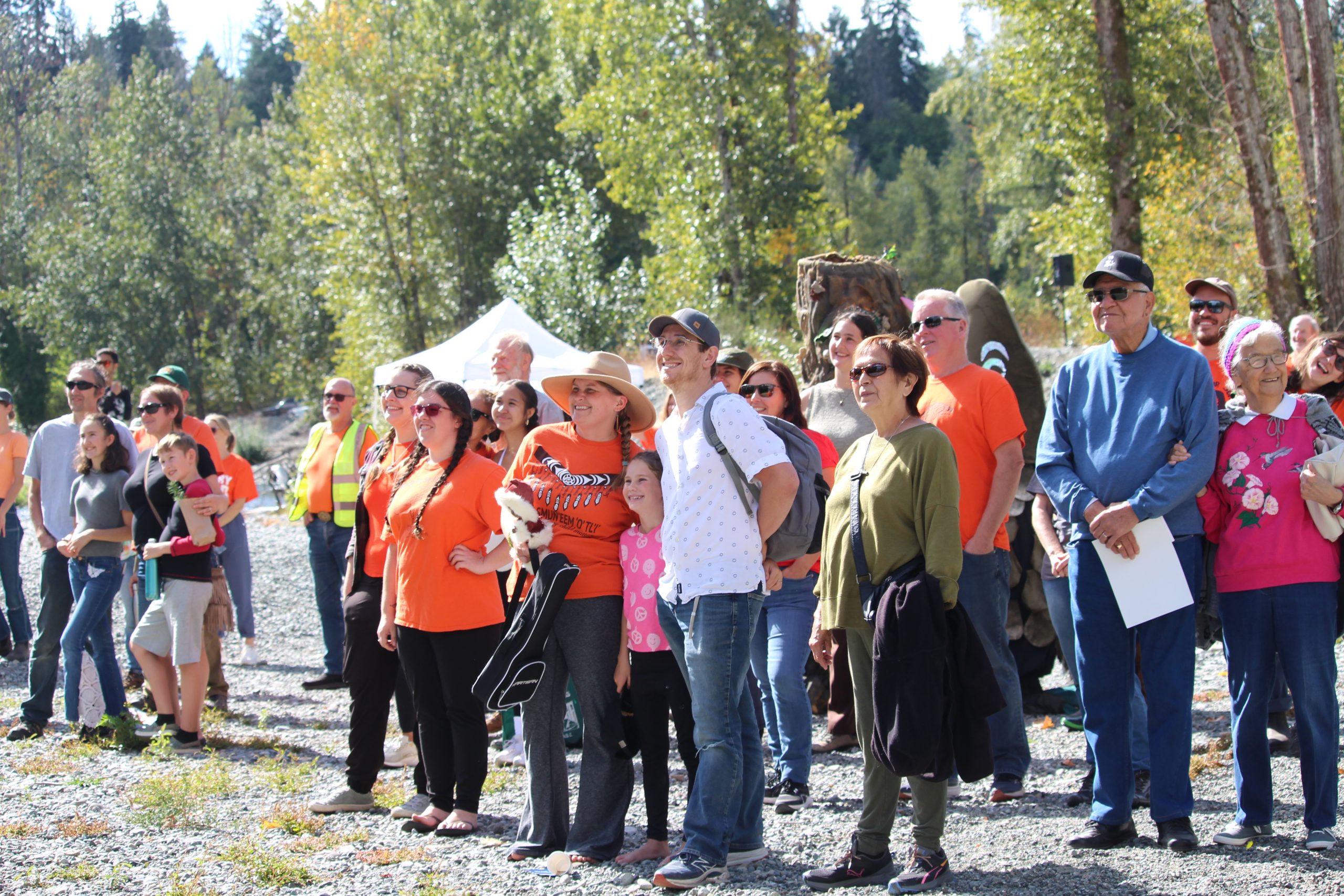
“We are here to celebrate the river, to celebrate community, to appreciate what we have — but for our Elders, it’s kind of also a lament,” Kulchyski said. He described this year in particular as “absolutely brutal” for the river and salmon due to the heat and lack of rain. But he said the fish are still here and coming back strong.
“That’s part of what you’re witnessing today,” he said.
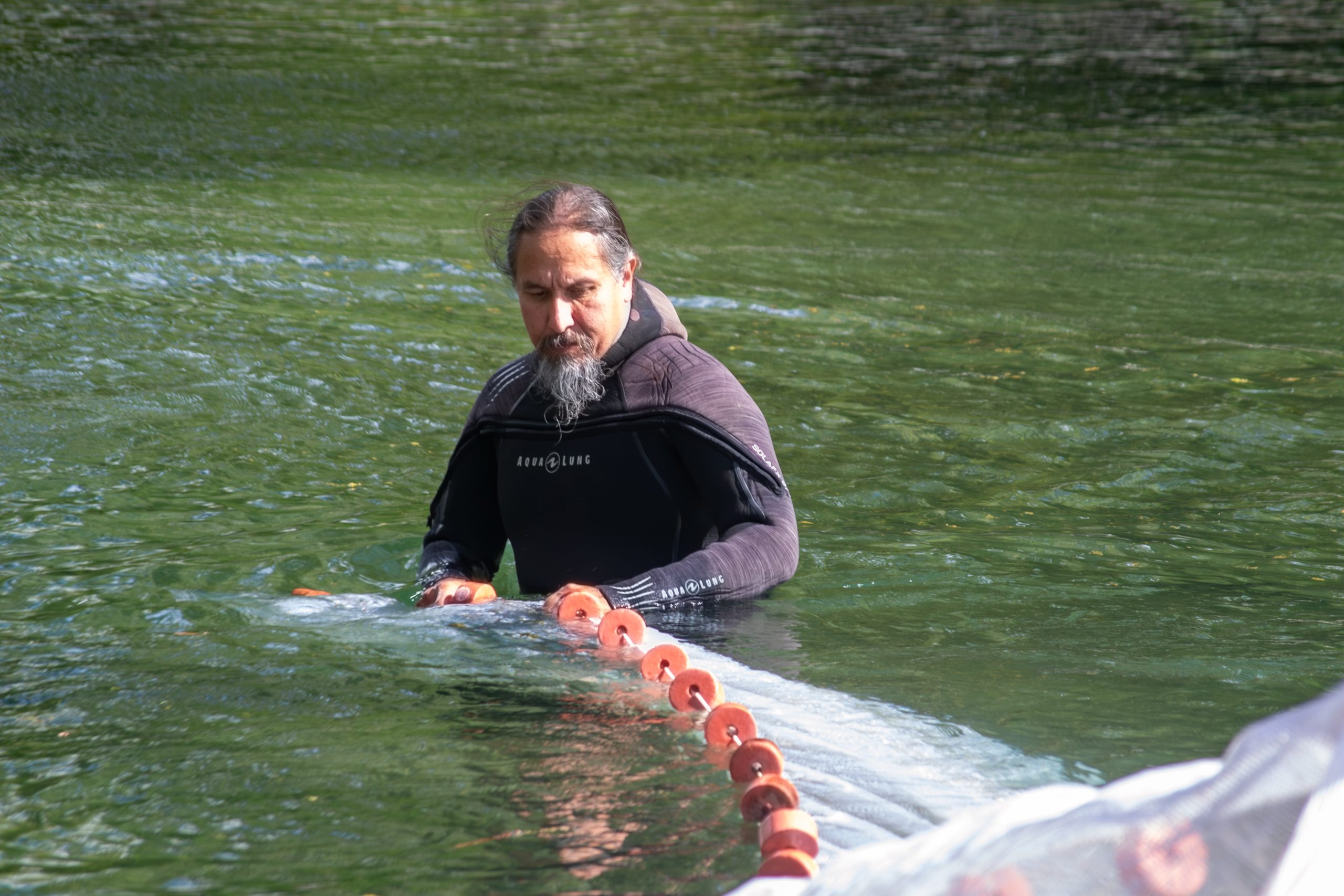
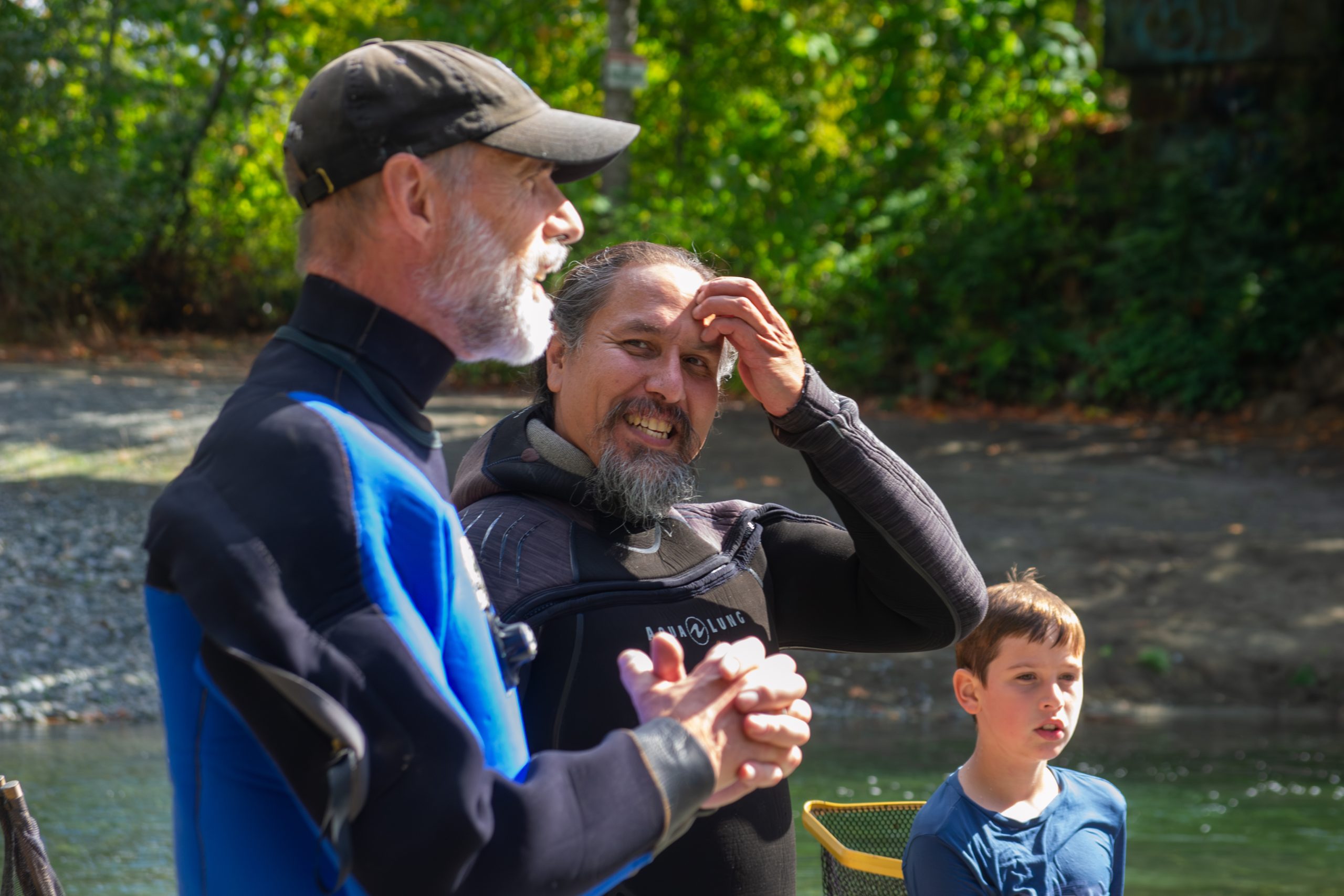
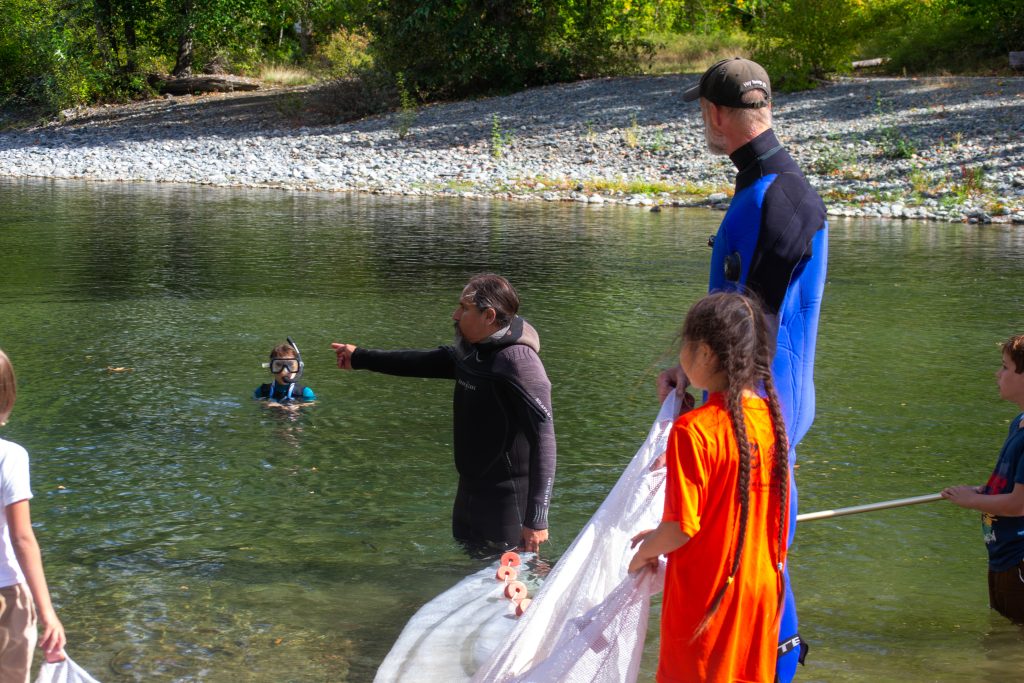
Kulchyski, who is natural resource consultant for Cowichan Tribes, joined fellow biologist Tom Rutherford to give visitors a live demonstration of catching fish with a seine net. The two waded into the shallow river, spreading the net through the water before pulling it in.
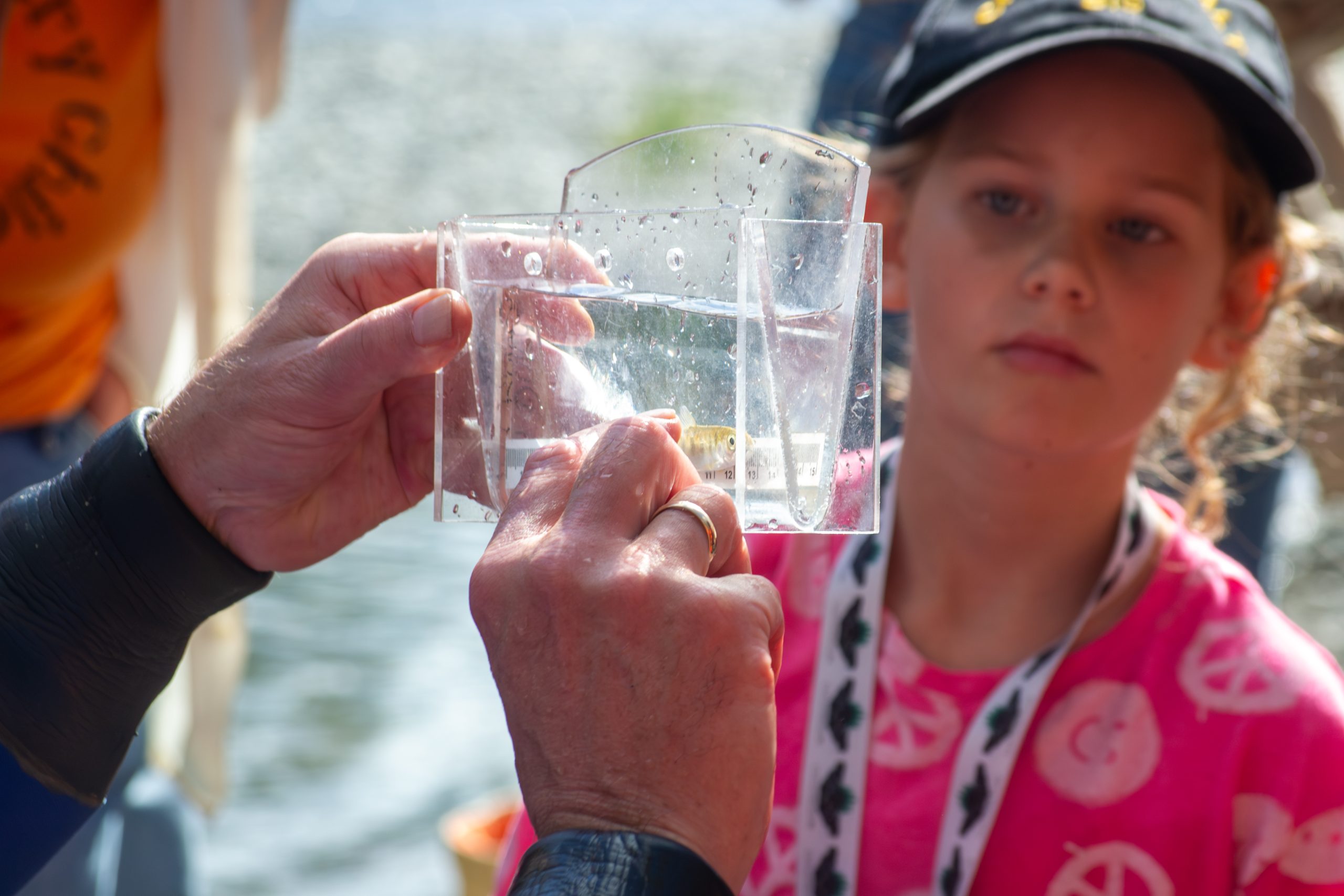
Using special containers, participants had a chance to examine the young salmon up close. Salmon are particularly vulnerable to rising water temperatures, Rutherford explained, as they are used to cold water at less than 16 C. As temperatures rise above 20 C, they start to display physiological and behavioral changes.
“The temperatures have been really bad, 24 C, even a little higher throughout the whole system. That’s really bad for fish. At 25 to 26 C, fish will start to die in the river. We’ve lost a few fish this year, but we’ve skirted that edge,” Kulchyski said.
Collaboration is key for the health of the river
The good news, Rutherford added, is that people here have learned to work together for the health of the watershed. Cowichan Tribes, the Cowichan Valley Regional District, Cowichan Watershed Board and the provincial and federal governments have collaborated to install monitoring gear throughout the river.
“This has been called the best-monitored river in Canada,” he said. “We meet every Monday morning to look at the data to pull the levers we can pull to try to do the best for the river.”
Staples also noted how the river has brought people together over the years.
“When I first started to do this type of work, we were called two Cowichans because of the river that separated the City of Duncan from Cowichan Tribes,” Staples said. “And now it’s the thing that connects us — and it should have always been that body that connected us, that spirit that connected us. But everyone standing here today proves that’s happened.”
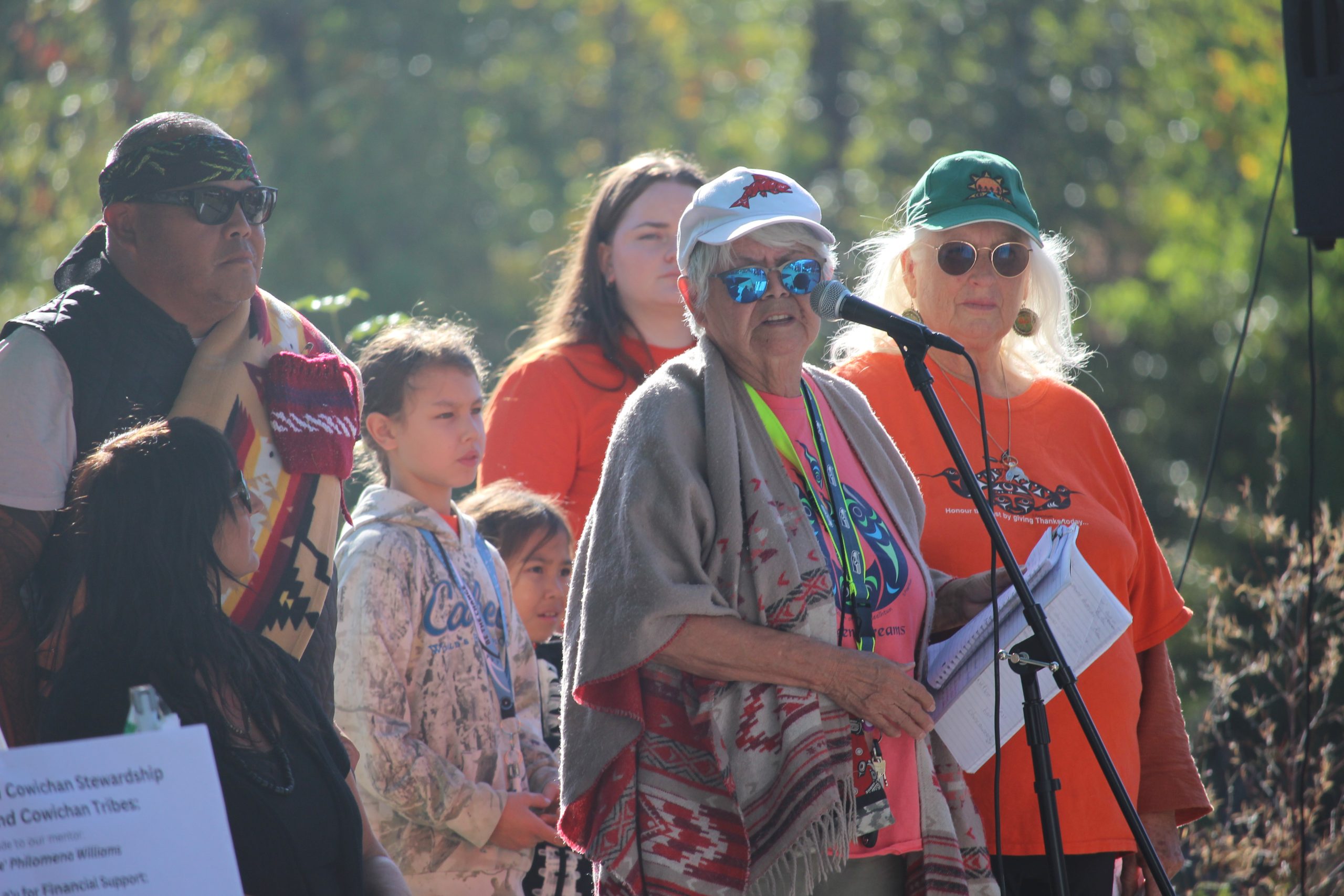
Quw’utsun Elder T’awahwiye (Philomena Williams) also spoke to a crowd of visitors at the opening of the day. She offered words of encouragement to continue the good work that has been taking place for the river and environment.
“We need to reignite the passion for living on this Earth, bring back the space to what it was like before,” T’awahwiye said. “It can happen with each and every one of you. You’re the seeds. You’re planting that love, you’re planting that knowledge, and it is going to spread.”
What did you think of this story?
Your feedback after we publish a story helps ensure we're always improving our reporting to better serve you
Author
Related Articles
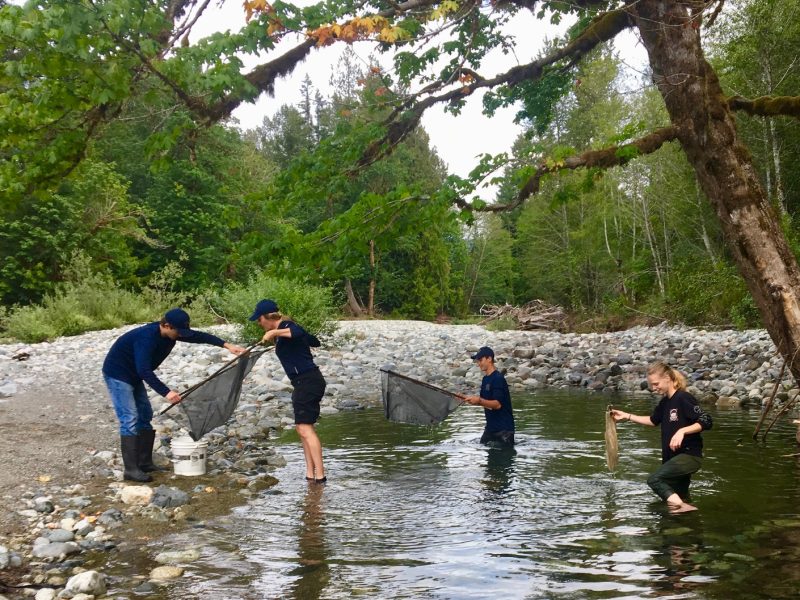
What to do and who to call when juvenile salmon are in danger
Officials say Cowichan Valley residents should call experts to move salmon in isolated pools because of risks associated with relocation.
How is The Discourse’s journalism funded?
And what does it cost to produce The Discourse’s in-depth, independent journalism?
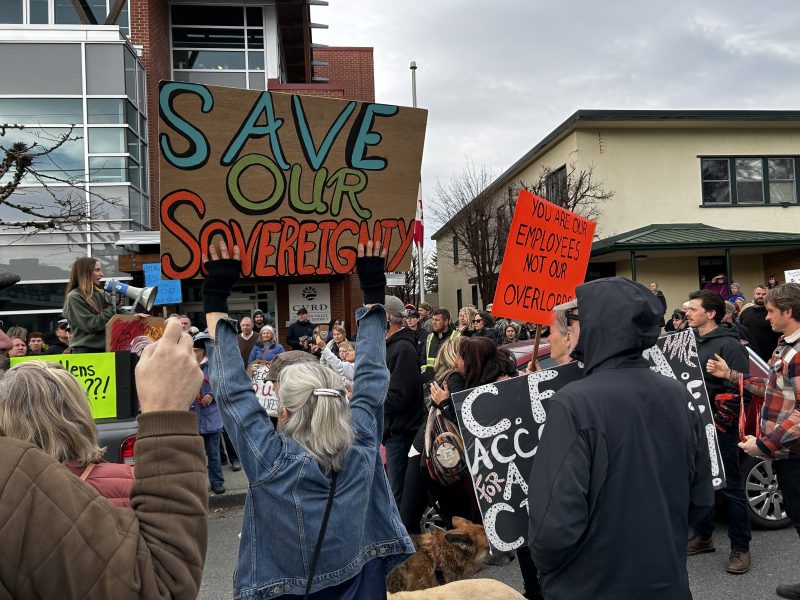
Behind the backlash to the Cowichan Valley’s comprehensive zoning bylaw
The campaign against Bylaw 4710 was fuelled, in part, by misinformation and an organized group of advocates. What could this mean for the future of local politics?