
Reporter’s Notebook: The Cowichan women’s shelter that a community built
The tumultuous ride to establish what’s now the Cedar Branches Women’s Shelter appears to finally be over.

I’m crossing my fingers that this will be the last story I write about struggles to establish a local women’s shelter. That’s because after an often-precarious five-year journey, the newly named Cedar Branches Women’s Shelter has moved into a permanent location to provide temporary shelter for women who would otherwise be sleeping on the streets of Duncan.
It felt incredible a month ago to be sitting inside the beautifully renovated building located at 1081 Canada Ave. with shelter manager Adria Borghesan and Jan Bate, executive director of Cowichan Women Against Violence Society (CWAV), which operates the shelter. The shelter had opened four days earlier, and they still seemed in awe that their dream of a permanent home for the women’s shelter had become a reality.
I’ve been reporting on the women’s shelter since its initial setup as an overnight shelter and I’ve seen Borghesan, Bate and their staff try to stay positive as leases ran out, sleeping tents blew down and desperate location searches came up empty. As we reminisced about the shelter’s various incarnations, it felt symbolic that none of its three previous locations even exist any more, having been either demolished or dismantled.
The shaky status of the women’s shelter had taken a toll on everyone involved. I’ve spoken with several of the shelter’s clients since 2020 and they’ve all conveyed not only how needed the shelter is, but also how stressful it is when the shelter’s future is in doubt.
Their stories came to mind when Borghesan told me what the first client welcomed into the new shelter said to her after getting a tour of the facility: “Wow, I’m really safe again, aren’t I?”
First iteration of shelter ‘basically a cement box’
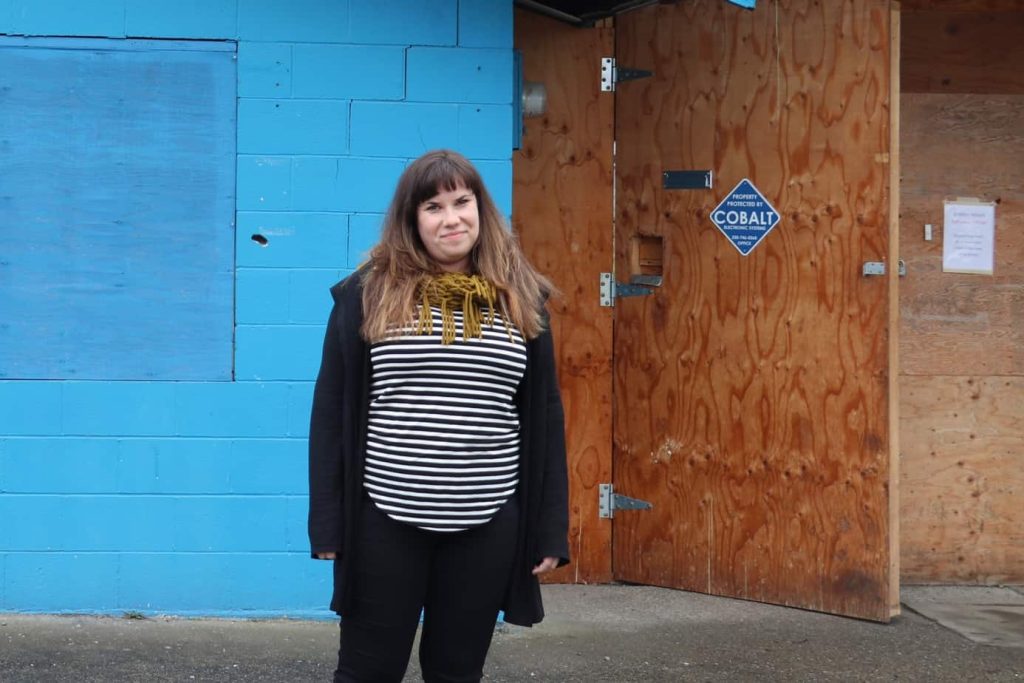
I first visited the women’s shelter in January 2020 for a story I was writing about where unhoused people in Cowichan come from. It was a little more than a year after it opened at an old concessions stand near the Vancouver Island University (VIU) campus on land owned by the Cowichan Valley School District.
At the time, it was an overnight drop-in shelter, meaning the women had to leave every morning and couldn’t come back until evening. If they went out in the middle of the night, their bed might not be available when they came back. The shelter was essentially one large room with 15 beds that sheltered as many as 27 women per night (but only 15 at a time).
The building was, of course, empty on the afternoon Borghesan showed me around, but I could sense the clients’ presence and the loving support provided by staff in the way the room was set up and the beds were made.
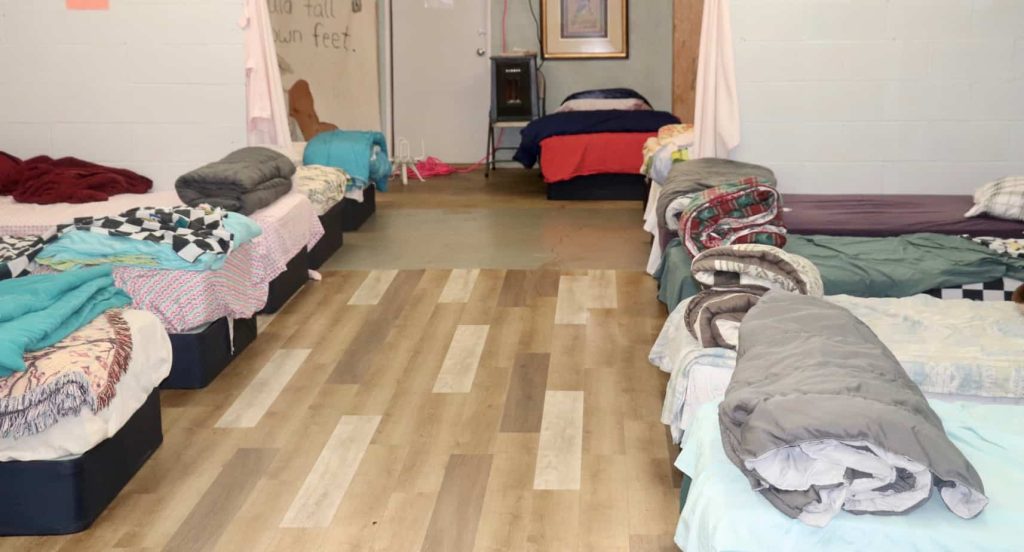
This first location was a bit surreal, especially when I remembered getting food from the concession stand when it served the old baseball fields. The only building in the vicinity — right next door — housed a StrongStart early learning program and the isolated, treeless location felt quite exposed. It also seemed very unfortunate that shelter clients didn’t have a safe place to be during the day, although they could store their belongings in rubber totes at the shelter.
A month or so later, when the COVID-19 pandemic erupted, it highlighted the vulnerability of the most vulnerable in our society, including the women who frequented the overnight shelter. During a phone call, Borghesan explained to me how they had no ability to quarantine anyone with COVID symptoms because the shelter was “basically just a cement box” with no windows or ventilation system.
As a result, the shelter initially tried for a couple weeks reducing its capacity to seven women, the same seven each night, before determining in late March 2020 it needed to close altogether. This meant the women had to go back to sleeping on pavement or in the bush.
This phase seemed to last a very long time, with people living on the street more visible than ever while the rest of us were hunkering down in the warmth and safety of home bubbles. The old concessions stand wasn’t perfect, but at least it was something.
The women’s shelter reemerges in a parking lot
A month later in late April, the women’s shelter reemerged in the overflow parking lot at the Cowichan Community Centre, the first of several tenting sites created by the COVID-19 Cowichan Task Force for Vulnerable Populations.
Shelter staff wanted the tenting site to be located in the field outside the concessions stand, where staff would be cooking meals for clients inside the old shelter. However, the school district voted down this option due to concerns about the difficulty of supporting any problems that might arise on school district property.
I visited the tenting site as it was being set up, and while shelter staff were relieved to be able to offer something, they noted the parking lot was a less-than-ideal location, with their clients “a little like sitting ducks” as Borghesan put it. It felt telling that a central parking lot was the best option to shelter unhoused women, though I appreciated how the COVID task force prioritized the women’s shelter.
Unfortunately, the next day, just hours before the site was to open, heavy winds damaged three tents and two large canopies. I came back to take a look, and seeing the wrecked tents emphasized how vulnerable the shelter’s clients were to the elements.
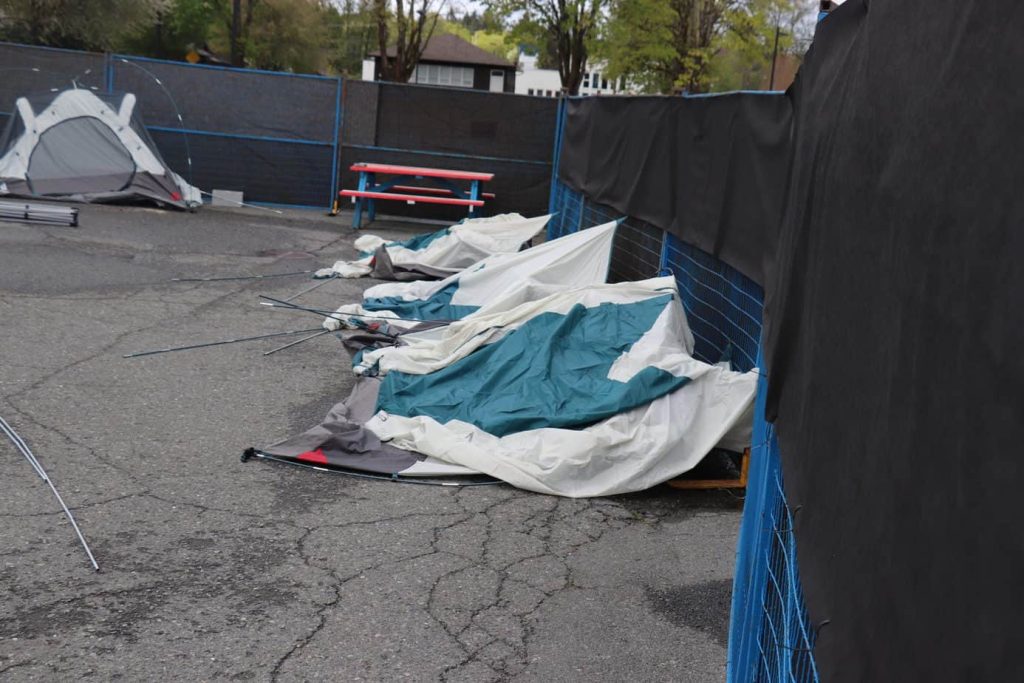
The tenting site was quickly reinforced with the help of volunteers and was able to open two days later. It took a little while for the tents to be filled, but eventually a couple more tents were added to the site due to demand.
I walked past the area several times over the next few months and like other pandemic measures it eventually stopped seeming strange to have people living in a parking lot, though it always felt sad, especially when the weather was challenging. It made me also feel for the staff, who were transporting meals to the site, taking women individually for showers and generally trying to make their clients feel safe because after all, the point of a women-only shelter is not just shelter, but security.
Each time I was there, I wondered what the rest of the population thought when they saw the site and understood what it was for. I hoped that it inspired compassion and a feeling that we must do better, but I imagine there was also a lot of judgement and annoyance. When I later spoke to a couple of the women staying at the tent site, they complained of “looky-loos.”
One upside to the tenting site was the ability for the women to be there 24-7 and keep their tent for as many nights as needed. Borghesan told me it gave clients freedom and dignity, which resulted in improved behaviours.
Insecurity of the shelter’s future adds to stress for women without secure housing
In October 2020, with cold weather coming and the CVRD needing the parking lot back, the shelter returned to the concessions building, this time with partitions for eight private sleep cubicles for COVID safety as well as the ability to remain open 24-7. It meant no drop-in admittance and continued reduced capacity, but everyone seemed relieved to be heading indoors.
I visited the tent site as it was being dismantled and a couple of clients were going through their belongings to see what they wanted to keep. One of the women told me how cold the tents were at night and “like a sauna” during the day, and how much she was looking forward to no longer being in such a high-traffic location.

However, the shelter’s return to the old concessions stand was limited. After several short-term extensions, the shelter’s lease with the school district was finally up in August 2021 because construction was about to begin there on the new Cowichan Secondary School.
The situation was desperate. CWAV explored more than 40 leads but couldn’t find anything suitable.
When I visited the shelter that summer, it was troubling to see how stressed out everyone was. Staff didn’t know if their jobs were about to end, and clients worried about being forced back onto the street, not to mention the more than 25 women on a waiting list for a shelter bed.
Fortunately, just days before the lease was up, CWAV secured a suitable temporary location. However, there was a gap in service for more than a month because it took a little while to transform the cavernous building at the old VIU campus on Cowichan Way into a women’s shelter.
When the shelter opened, there were 12 beds but no drop-in. The beds quickly filled up, which meant that women were being turned away on a daily basis, shelter staff told me.
When I visited the site, I saw how they had to make do without a kitchen stove and with makeshift showers. Once again, I was impressed by the resilience of staff and the clients I interviewed.
In fact, that’s one of the things I’ve learned over the past few years of speaking with people without secure housing; it takes a lot of creativity, fortitude and adaptability to survive without many of the comforts the rest of us usually take for granted. The same goes for many of their service providers.
The shelter had been renamed Charlotte’s Place after staff member Charlotte Racette, who according to Bate, “personifies the kind of support that women should have who go to that shelter.”
The community steps up
All along, the goal of the women’s shelter has been to find a place with a long-term lease or ideally, something they could own.
BC Housing funds the women’s shelter’s annual operating budget of more than $800,000, but doesn’t provide capital funding. In late 2021, CWAV received a $344,274 grant for capital purchases through United Way British Columbia and the Government of Canada’s Reaching Home program. The catch was that the money had to be used during a set period, and the amount granted was clearly not enough money to buy a building.
This meant that CWAV had to raise a lot more money as well as find a suitable building, two tall tasks. It took a lot of outreach and there were times when it seemed like they might lose the grant, but thanks in large part to an anonymous donor who contributed $600,000 and $100,000 donations from both the Providence Village Housing Society and the Maunders McNeil Foundation, enough money was raised to buy a very suitable stand-alone building for $1.2 million.
Finally, the women’s shelter had a permanent home in an ideal location that is close to other services but no immediate residential neighbours. It was such good news, and everyone was beaming in July 2022 when I went to take a photo of CWAV staff, board members and supporters outside the building at 1081 Canada Ave.

Final stopgap measures during renovations on the new women’s shelter
Renovations on the three-story building took longer than anticipated, which was a problem because the shelter’s lease at the old VIU building was up in August 2023, with no possibility of an additional extension as the building was slated to be demolished. As a result, the shelter had to close for a couple of months.
Fortunately, CWAV made an interim arrangement with Lookout Housing and Health Society to use a couple of the rooms at the Sq’umul’ Shelh Lelum’ supportive housing facility on Paddle Road. “It was amazing how Lookout saved us,” Borghesan says.
Six of the 12 women who had been staying at the shelter moved into the rooms and CWAV staff provided services to them. Some of the women opted not to go there because they were uncomfortable with it being a co-ed building, Borghesan explains. She adds that the loss of their shelter beds prompted a couple of their other clients to seek treatment for their substance use issues.
In late November 2023, with renovations completed, staff began gradually bringing women into the new shelter, one at a time. When I visited, a few days after opening, two women had moved in and were both asleep in their rooms while I was given a tour of the new space.
As of this week, nine women have taken up beds at the shelter. According to Borghesan, the gradual move-in is working well for the women.
“I think it feels careful and intentional for them — giving people the chance to feel us out and get used to our community we’re creating, and seeing how the current women are helping to orient and support new folks coming in.”
New shelter offers additional services for clients

To herald the new permanent location, CWAV wanted a new name for the shelter. Borghesan convened the CWAV Indigenous Women’s Council to come up with a name and she says it didn’t take them long to come up with Cedar Branches.
It’s a perfect metaphor, as branches are stronger together and can serve as shelter, Borghesan explains. “It seemed so fitting for who we are and what we’re doing,” she says.
The new site has enabled the shelter to increase its capacity to 20 to 24 women, including five drop-in beds. Borghesan says drop-in will begin once the shelter’s longer-term beds are filled up.
There are eight rooms on the first floor that can house nine women along with bathrooms, showers and a small kitchen that clients can use. On the second floor, there are two rooms that can house six women, one room with beds for five drop-in clients, as well as bathrooms, showers, a lounge, program space, a large kitchen where staff prepares meals and a wellness room. The third floor is primarily office and meeting space.
Island Health has provided funding for nurse practitioner Heather Taylor to be at Cedar Branches once a week to treat clients in the wellness room. There is also a 32-hours-a-week health navigator on site who helps clients with follow up and appointments with counsellors and other health providers. That position is funded by the Canadian Association of Community Health Centres and is a partnership between CWAV and Cowichan Women’s Health Collective.
“Already with our current women I see huge benefits of them having accessible and trauma-informed health services within the building,” Borghesan says.
The entire space is quite lovely. While staff at other shelters have cautioned Borghesan against having new furniture and appliances because the items will inevitably get trashed, she believes that the opposite will happen, that giving clients a beautiful space will inspire them to take good care of it.
“They deserve a beautiful, comfortable, safe space,” Borghesan says. “It’s good for their confidence; they’ll feel like they mean something and can be trusted.”
Bate adds. “I’m sure any of the women coming here will feel that strength and pride of home here that they’ve never had before [at the previous shelter locations].”
As another sign of trust, Borghesan says that the women don’t have to agree to a long set of rules and consequences when they first arrive, as is the norm at most shelters. Instead, clients will only have to agree to no smoking or flames inside and no violence or threats, and there are no set consequences for behaviour violations.
“I’m trying to create an environment of safety for all, really wanting people to be successful versus consequences,” she says.
A community success story amid a tragic situation
Cedar Branches really is a community success story, considering all the people over the past five years who donated money and suggested possible site locations; elected officials and funders who have made the women’s shelter a priority and shelter staff who, according to Borghesan, have “hung on through thick and through thin.”
Renovation funding for the new shelter came from multiple sources, including the United Way’s Reaching Home Designated Communities, Providence Village Housing Society, Maunders McNeil Foundation, All One Foundation, Power to Give Foundation, Royal LePage Shelter Foundation, Nicola Wealth Foundation, Walsh Foundation and local Franciscan Nuns. In addition, monthly local donors participating in CWAV’s 101 Community Heroes campaign helped support the building purchase, renovations and on-going expenses, Bate says.
And yet, as I rejoice for the women who now have a warm, secure place to be 24-7, it feels important to note the overall story of the unhoused and underhoused in the Cowichan region remains tragic, as it is in many other places.
Last January, I wrote a story in response to the street deaths of two local residents, one of whom had a long history with CWAV and the women’s shelter. Borghesan, who had requested The Discourse not use the woman’s name for privacy reasons, told me how “brilliant and incredible” the woman was and how she managed to change some of the shelter’s policies for the better.
But as Duncan Mayor Michelle Staples told me at the time, the woman who died was among the many people “falling through the cracks” in available services. More recently, the difficulty in finding a location for an extreme weather shelter for this winter is indicative of the overall challenges facing people without secure housing.
I never expected to write so many stories about the local women’s shelter, but its plight is emblematic of the symptoms of a twinned housing and opioid crisis. I am grateful The Discourse supports reporting on this as well as on the underlying causes, and I hope there will be more positive stories to tell in the near future.
Past stories that feature the Cowichan women’s shelter
Where do the homeless people in Cowichan come from?
COVID-19 closures leave some homeless people out in the cold
Tent site for women opens in Duncan area
Inside newly reopened shelter, women get a space of their own
‘Like a family’: After a long search, Cowichan women’s shelter finds a new home
Against the odds, Cowichan Valley women’s shelter finds a permanent home
Community leaders call for urgent support to shelter unhoused people after recent deaths
What did you think of this story?
Your feedback after we publish a story helps ensure we're always improving our reporting to better serve you
Author

Related Articles
What to do and who to call when juvenile salmon are in danger
Officials say Cowichan Valley residents should call experts to move salmon in isolated pools because of risks associated with relocation.
How is The Discourse’s journalism funded?
And what does it cost to produce The Discourse’s in-depth, independent journalism?
Behind the backlash to the Cowichan Valley’s comprehensive zoning bylaw
The campaign against Bylaw 4710 was fuelled, in part, by misinformation and an organized group of advocates. What could this mean for the future of local politics?