
Nanaimo city council recording ban violates civil liberties, experts say
Civil liberty and journalism experts are concerned about the impact of a ban on recording at Nanaimo city council meetings on charter rights.
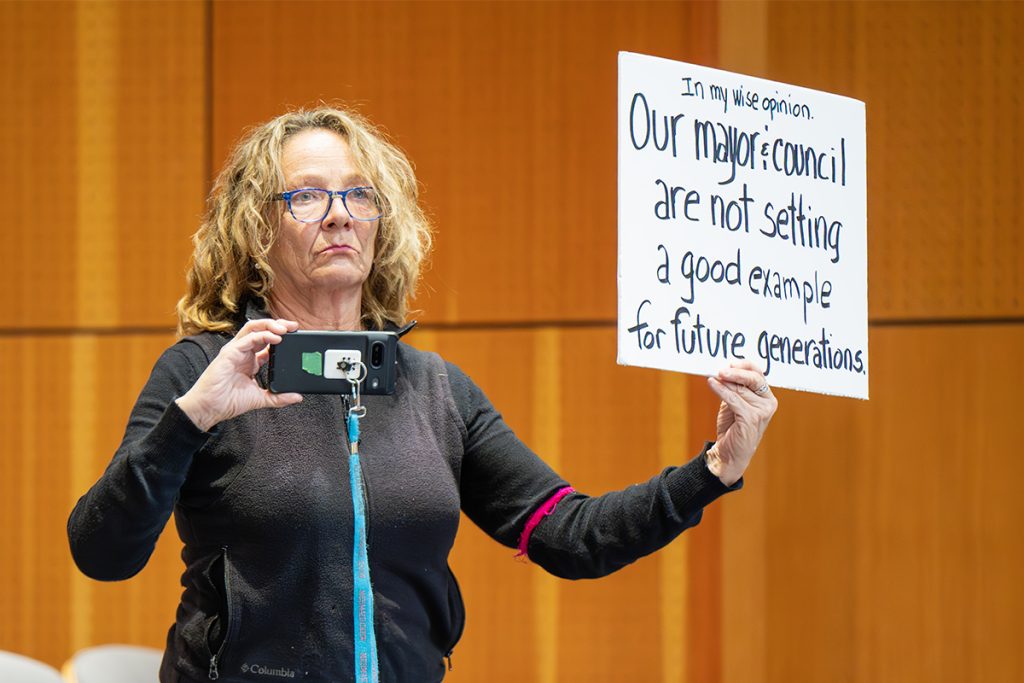
On Monday, Nanaimo city council voted 7-2 in favour of bylaw changes that ban photography, audio and video recording of city meetings and regulates how signs can be displayed inside the meeting by members of the public.
According to Mayor Leonard Krog, the motivation behind these changes was “several disruptions” of council meetings in the past year and behavior that is “disturbing to members of council, but more importantly, disturbing and intimidating to staff.”
Nanaimo city council has been grappling with how to best handle a small but vocal group of citizens who have regularly attended city council meetings with disparaging signs and used electronic devices to record council and staff at the meetings.
In one instance last year, RCMP arrested a man named Alan Clarke who had signed up to speak as a delegate on bylaw and code of conduct issues but launched into verbal attack on the mayor, refusing to step down after his allotted five minutes.
During that disruption, the video feed to the city’s livestream was cut after the mayor called a recess of the meeting and the only footage available of Clarke’s arrest was filmed by people in the audience.
In December, a judge at the BC Supreme Court ordered Dean Leon Propp to stop publishing “defamatory statements” that accused a City of Nanaimo manager of being a pedophile.
In the case, the plaintiffs said Propp recorded video of city councillors and staff at a public meeting and it was posted to social media with comments that the employee was a “pedo” and a similar video was posted saying the employee had displayed a “pedophile flag” while employed at the school district.
In recent posts to social media Propp continues to allege the City of Nanaimo protects and employs “pedophiles,” linking sexual abuse of children with the LGBTQ2S+ community. In a post on Wednesday, Propp shared a graphic image stating that “pedophiles” should be shot multiple times.
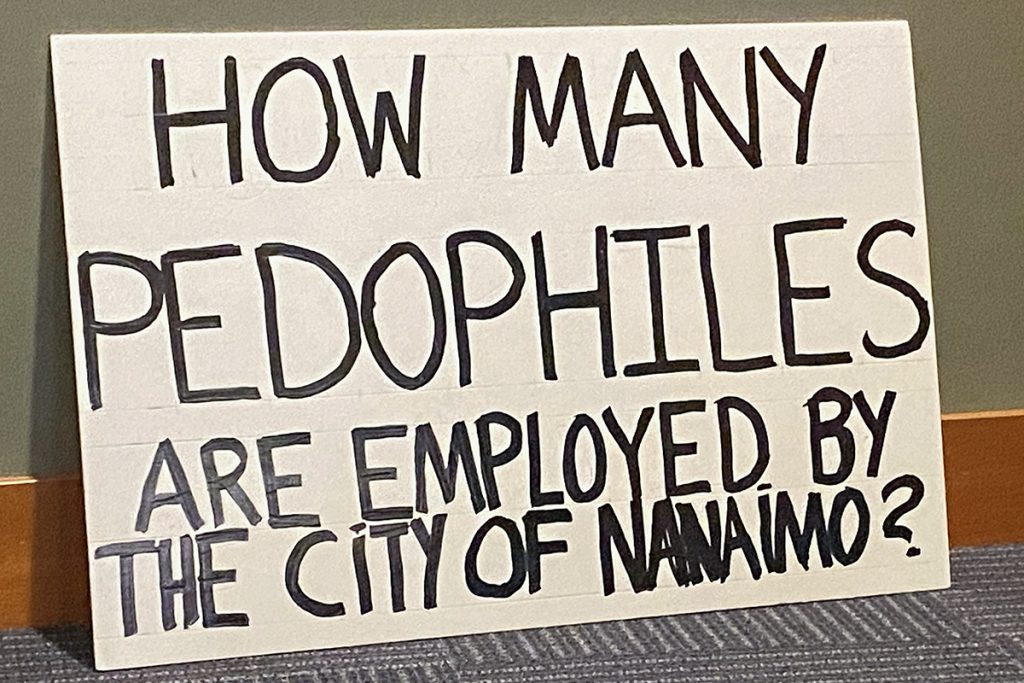
Propp was at Monday’s city council meeting livestreaming it to Facebook. Beside him was a sign reading “How many pedophiles are employed by the city of Nanaimo?”
During the meeting, deputy corporate officer Karen Robertson gave an example of a time she was discussing a legal matter with another staff member and a video recording was “zoomed right in to try and capture the conversation” and posted to social media.
Krog said he doesn’t want to “shut down” legitimate debate or people’s right to freedom of speech, but that staff have a right to privacy.
“We are not going to spend every day going through this room asking everyone who works for the city of Nanaimo, ‘would you mind being filmed by somebody who already has a court injunction registered against them?’”
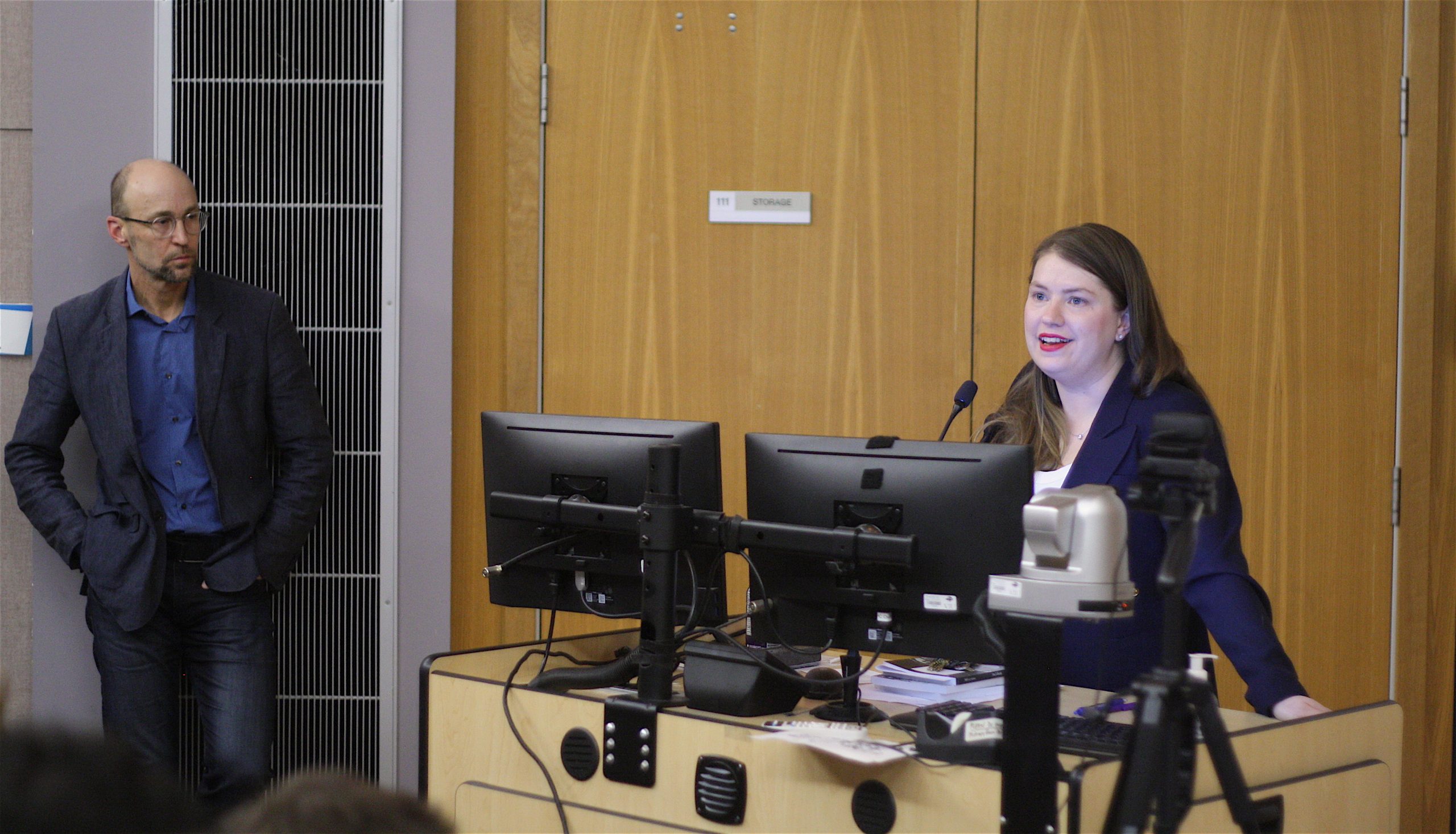
Councillor Hilary Eastmure, a former journalist, raised concerns that the blanket banning of photography and video recording in council meetings would violate Charter-protected freedoms of the press.
“People have a Charter protected right to photography and videography and recording sound in a public space. As we heard from our legal advice tonight, this is considered a public space. So I don’t believe that we have a legal standing to be able to prevent that.”
The bylaw changes include the provision that the chair of the meeting could choose to allow photography or video recording for parts of the meeting.
Shelia Gurrie, director of legislative services for the City of Nanaimo, said that awards presentations are an example of the type of event that the chair may choose to allow photography or video recording.
Anaïs Bussières McNicoll, director of fundamental freedoms program at the Canadian Civil Liberties Association, reviewed the wording of the bylaw and told The Discourse that the ban “has the effect of limiting freedom of expression and freedom of the press. The real question is whether this limit is or is not reasonable.”
“They chose to adopt a blanket ban on video recording and a broad ban on audio recording without providing for an exception for journalists. They could have been more targeted by carving out an exception for journalists, and also by being more specific in which situations recording would be banned. We understand that what they want to get to is when recordings are disturbing how the meeting is unfolding.”
By limiting how residents and journalists may gather information during a public meeting, the bylaw infringes on section 2b of the Canadian Charter of Rights and Freedoms, said McNicoll, and the legal test will be if the limits are reasonable.
“I think the limits could have been more carefully crafted in order to target the problematic conduct.”
Journalist association says there should be exemptions for reporters
Brent Jolly, president of the Canadian Association of Journalists, told The Discourse that he is mindful of the challenges city councils can face.
“But the outright banning of recording devices is a very blunt instrument to do that and does raise concerns around the ability of citizens’ freedom of expression under Section 2b of the Charter of Rights.”
Jolly agreed there should be a carve-out for journalists in the rule about recording devices, such as exists in a similar bylaw for the town of Grimsby in Southern Ontario. In that bylaw, journalists can be exempted if they submit a written request 24 hours before the start of the meeting and the city clerk approves the request.
“I don’t think it’s fair that people are being subjected to harassment and being defamed or having ridiculous accusations thrown their way… that’s not acceptable,” he said. “But I do think the example in Grimsby shows that you can’t just prevent everybody from doing what they need to do because the Charter says journalism is a public trust and it’s protected by our laws.”
Under the Nanaimo bylaw changes, the chair of the meeting can approve photography and videography but there is no mechanism for reporters to request permission in advance of the meeting or have a standing accreditation that would allow them to take photos or record videos.
Shelia Gurrie, director of legislative services for the City of Nanaimo, said in an email to The Discourse that accreditation for journalists would be “tricky as we have those in attendance who will use recording devices to intimidate and then say they are independent journalists.”
Jolly pointed to the 2021 federal leaders debate as one model that could guide an accreditation process.
In that process, journalists who were members of the Parliamentary Press Gallery, Canadian Association of Journalists or the Fédération professionnelle des journalistes du Québec or whose publications were members of the National News Media Council or the Conseil de presse du Québec were automatically granted access while other journalists were able to apply for accreditation under the rules of the debate commission.
Charter rights at risk, say two city councillors and civil liberties expert
Councillor Eastmure argued in the meeting against the recording ban, but her motion to remove that item from the proposed bylaw was defeated 7-2 with councillor Sheryl Armstrong also voting to remove it
“There’s absolutely nothing in our criminal law that makes it illegal to take photos or videos in a public place,” Eastmure told council. “You can’t be a nuisance, you can’t damage property, you can’t obstruct police, and you can’t use that material to defame people, but you have a Charter right to take photos or record video.”
Councillor Armstrong, a former career RCMP officer before being elected, said she agreed with councillor Eastmure and that “we’re on shaky ground.”
“The courts have said that when there is already surveillance present in a room, which we have now, there is no expectation of privacy and the only way it would be determined otherwise would be if it was used for a criminal offense such as voyeurism.”
McNicoll agrees that the expectation of privacy in council meetings is lowered due to the fact that the city itself broadcasts the meeting and archives the videos on the city website.
“It’s not about whether or not these people have a right to dignity, of course they do, and they shouldn’t be harassed, they shouldn’t be intimidated,” she said. “But when we’re talking about privacy, your expectation of privacy is extremely lowered if you are engaged in a public meeting where the city itself is live-streaming the meeting.”
During the meeting, legal counsel for the city, Sara Dubinsky, cited a Supreme Court of Canada case that found people have a right to control how their image is used, even if it is captured in a public place.
The case referenced was about a teenage girl being photographed in public without her knowledge and the use of that image in an arts magazine.
“I fail to see how this decision directly applies to the facts at hand here,” McNicoll told The Discourse when asked to comment on this legal argument.
“This is a decision about the teenager’s right to her image and her privacy, and the context is very different. This was a young teenager who was just living her life and was photographed without her knowledge or consent,” she said. “I believe that the findings of this decision can not apply without nuances to elected officials such as city councillors who sit in public meetings.”
During the meeting Councillor Paul Manly, a former Member of Parliament, said that council was “completely within our rights” to ban electronic devices as is done in the federal Parliament, the BC Legislature and the court system.
“It’s unfortunate that people have taken their constitutional rights and abused them in ways that are kind of abhorrent,” he said.
McNicoll noted that the Supreme Court of Canada is live-streaming its hearings and the ban on recordings at the trial level are to ensure the accused’s right to a fair trial.
“It’s a different beast than a public city council meeting and city council’s very decision to broadcast their meeting is definitely evident that, at least in their perception, there is no harm in recording these meetings, otherwise they wouldn’t be doing that,” she said.
New rules on protest signs also included in bylaw
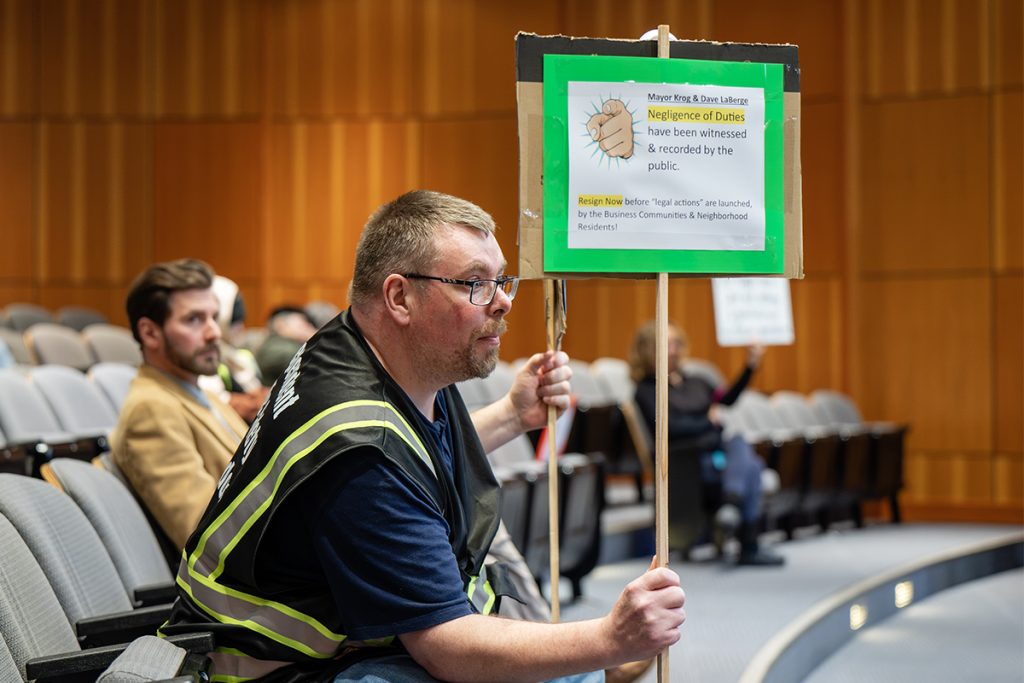
The bylaw changes also added regulations around the display of protest signs in city council meetings.
Under the new rules, signs must not cause a disturbance or interrupt the business of the city, block anyone’s view, block audio or video equipment used by the city, block doorways, hallways or aisle, be made of sharp or pointed materials that could cause injury, or depict “explicit graphic violence.” Signs can also not be left unattended or be affixed to any walls, fixtures, furniture or equipment.
Krog pointed to a sign at Monday’s council meeting that read “How many pedophiles are employed at the City of Nanaimo?” as one example of a sign that could fall under the new rules.
“I find it incredibly offensive, and if the public is surprised by the reaction of council in defence of its workers and others who try to come here to exercise what amounts to local democracy, so be it. I am very happy with the changes,” he told The Discourse. “I think unfortunately, they are overdue.”
McNicoll said that as long as speech is non-violent, it is protected under the Charter and while the sign Krog referenced is offensive speech, it may not be considered explicit violence.
She also is concerned about the rule that states signs can’t disturb or interrupt city meetings.
“The prohibition is quite large because at first glance it seems to prohibit people entering a meeting and interrupting it for a minute or two to express their opinion. We have to remember that when people protest peacefully, which is a protected Charter right in Canada, it is going to cause some level of disruption.”
McNicoll said the city council has to balance that right with its ability to operate in an orderly way within reasonable decorum.
“If it’s applied anytime anybody raises their voice and disturbs the meeting for a minute — that could be seen as an overreach.”
Another section of the bylaw was changed to allow council to reduce the time for delegations from five minutes to three if there are multiple delegations for the same agenda item.
“It’s time some people started to act like adults,” Krog told The Discourse. “If they all acted like adults, we wouldn’t have to engage in this kind of bylaw.”
The bylaw passed 7-2 with councillors Eastmure and Armstrong voting against it. The bylaw will not come into force until it is formally adopted by council in a future meeting.
What did you think of this story?
Your feedback after we publish a story helps ensure we're always improving our reporting to better serve you
Author

Related Articles
Nanaimo mayoral candidates address the homelessness crisis
Homelessness is a key election issue but what can the City of Nanaimo do about it?

How Nanaimo candidates would pay for rising infrastructure costs
City of Nanaimo’s 2026 candidates share how they’d manage the budget to cover rising infrastructure and repair costs without overburdening taxpayers.

Nanaimo candidates on how the city can cut emissions
City of Nanaimo’s 2026 candidates share two actions within city jurisdiction they’d prioritize to reduce emissions, and how they’d know if they were working.