
Nanaimo Foodshare gears up for growing season
Education programs for young and old on the farm at Five Acres Community Park contributes to local food security as grocery prices rise.
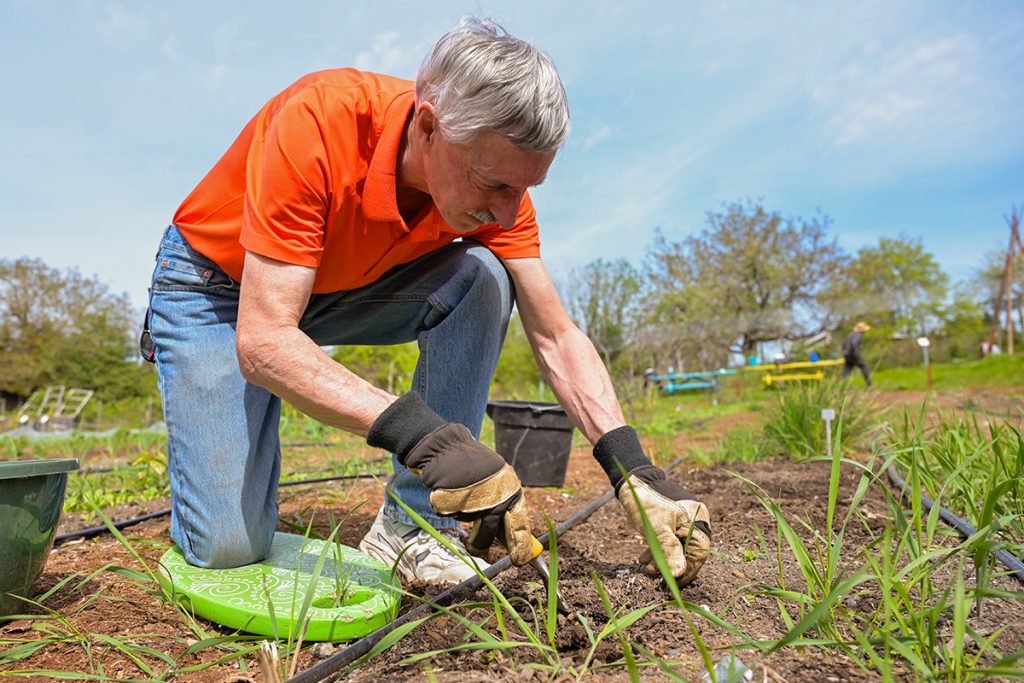
It was a warm sunny Friday at Five Acres Community Park in south Nanaimo as volunteers were busy weeding and planting in the rows of vegetables in the large community garden run by Nanaimo Foodshare.
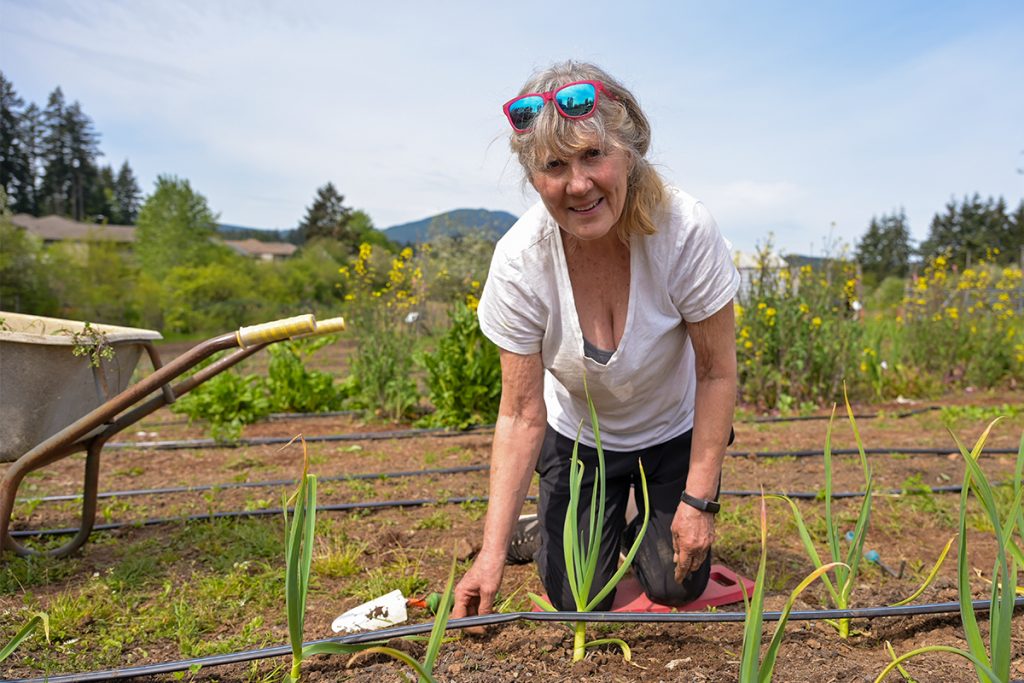
Lily Wood was on her knees working in a row of garlic that is growing; her hands dirty as she works her way down the row.
“I like to get my hands in the soil,” she said. “I don’t want gloves on, because if you wear gloves, what’s happening is you’re not feeling the soil. You’re not feeling nature.”
Wood moved to Nanaimo last year from California where she was involved in a community organic garden and was looking for something similar in Nanaimo. It’s her first time volunteering with Nanaimo Foodshare, an organization that has been working to improve food security and create healthy food systems for low-income residents in Nanaimo for nearly two decades. She is one of many volunteers who are offering their time and skills to grow food and educate youth and other community members.
“What happens is you become part of this great community, you talk to people and build relationships, and it’s fun to just get out here,” she told The Discourse.
Almost a quarter of British Columbians experience food insecurity
Food insecurity is when people don’t have “physical, social and economic access to sufficient, safe and nutritious food that meets their dietary needs and food preferences for an active and healthy life,” according to the United Nations.
According to Statistics Canada, 23.2 per cent of people in B.C. were food insecure in 2024, with 17.4 per cent experiencing moderate to severe food insecurity. The percentage of people experiencing insecurity dropped by 1.2 percentage points between 2023 and 2024.
The most impacted were people living in single-parent families with 40.4 per cent of them being categorized as food insecure and 32.4 per cent experiencing moderate or severe food insecurity.
Seniors aged 65 and older who were not living with other family members also experienced higher rates of food insecurity at 27.2 percent, with 20.7 per cent experiencing moderate or severe food insecurity.
A Food Banks BC report published in December found that there are a record number of people using food banks in the province, with a 79 per cent increase between 2019 and 2025. On Vancouver Island, children make up 27 per cent of food bank clients.
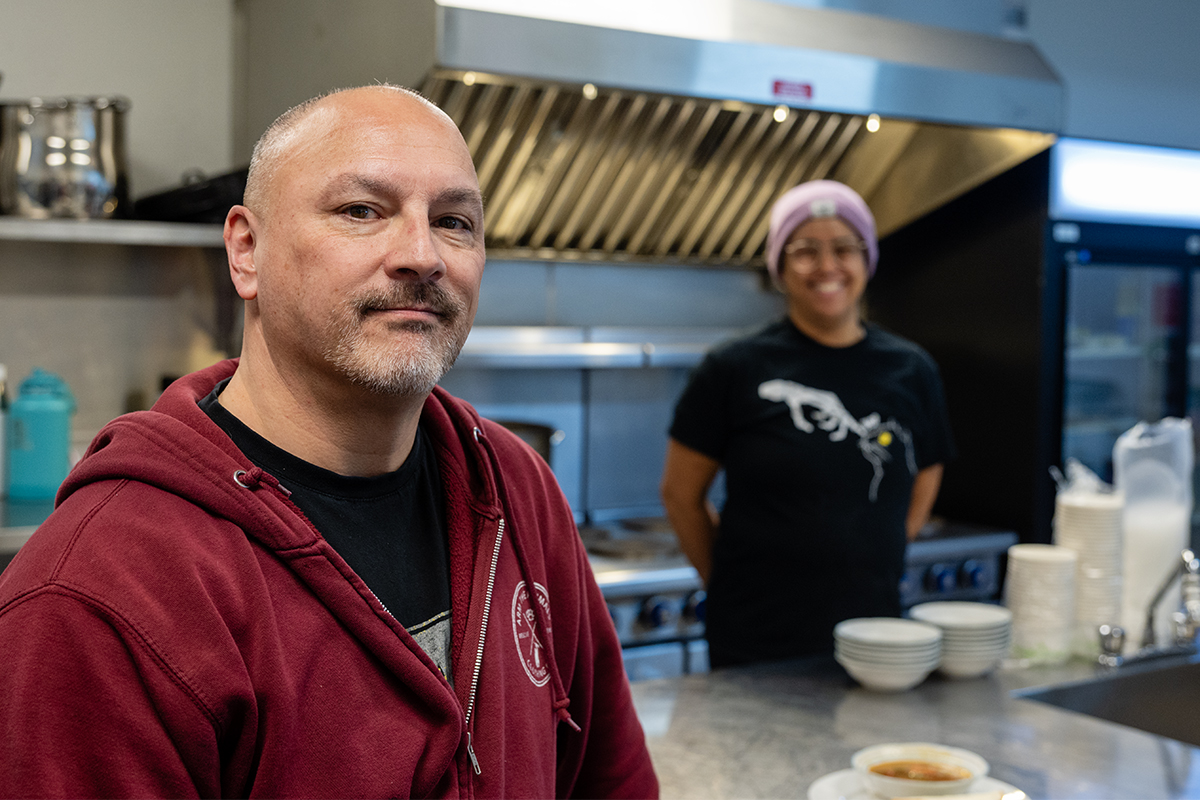
With summer around the corner, Nanaimo Foodshare is gearing up for a busy season of programming including camps for local children to learn about growing and cooking healthy food. The organization also grows food for the Good Food Box program that provides people with affordable fruit and vegetables as well as weekly community meals at St. Andrews United Church.
Nanaimo Foodshare delivered 25,500 Good Food Boxes, served 30,393 meals and provided $64,314 worth of coupons to local farmers’ markets between 2024 and 2025 according to its annual report. Volunteers donated more than 9,000 hours of their time to help Nanaimo Foodshare deliver its programs.
Education at the core of Foodshare’s vision
Nanaimo Foodshare runs a range of education and employment programs for children, youth and seniors and has operated on the land that is now Five Acres Community Park since 2015.
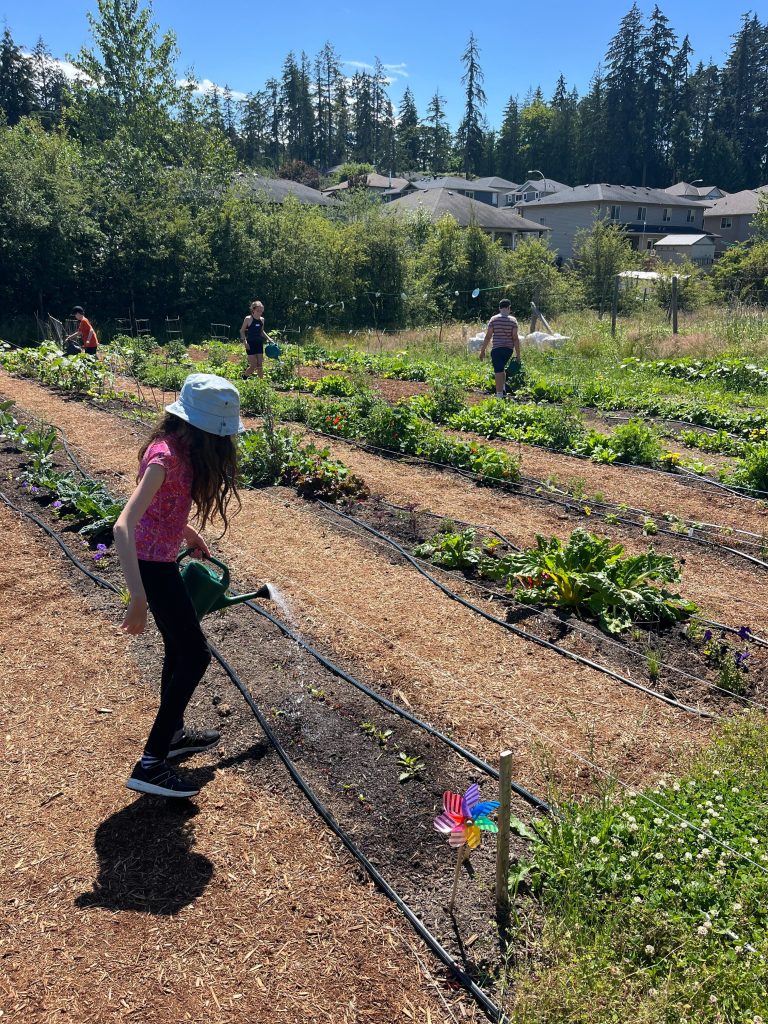
The property is one of Harewood’s last remaining parcels of historical farmland. The five-acre parcel was purchased by the city for $1.38 million in 2019 after a sustained community campaign to protect the farm’s use as an educational site and source of local food. The story of the farm’s past and present was documented in a film produced and co-directed by Paul Manly and Laurie MacMillan, funded by a 2018 Telus Storyhive grant.
A proposal to build public housing on the property was rejected by city council who instead voted for future improvements to the park. In 2023, Foodshare cut its partnership with the non-profit farming co-op, Growing Opportunities, which now operates at Westwood Farm.
Jennie Wharton, manager of Nanaimo Foodshare’s education program and Five Acres Community Park, said that during the school year the organization runs Let’s Eat cooking classes for kids through the City of Nanaimo’s parks and recreation department.

The organization also runs field trips for children from local elementary schools to the farm at Five Acres where kids learn about soil and planting seedlings as well as exploring the wetland at the back of the property.
There are also week-long Farm to Fork cooking day camps over the summer where kids can learn to cook the food grown in the garden.
Elle Craig is a student in Vancouver Island University’s child and youth worker program who works with the kids in Foodshare’s education department.
“You can see the kids when they learn something new, it’s so cool,” she said. “Especially something that’s going to be with them for the rest of their lives.”
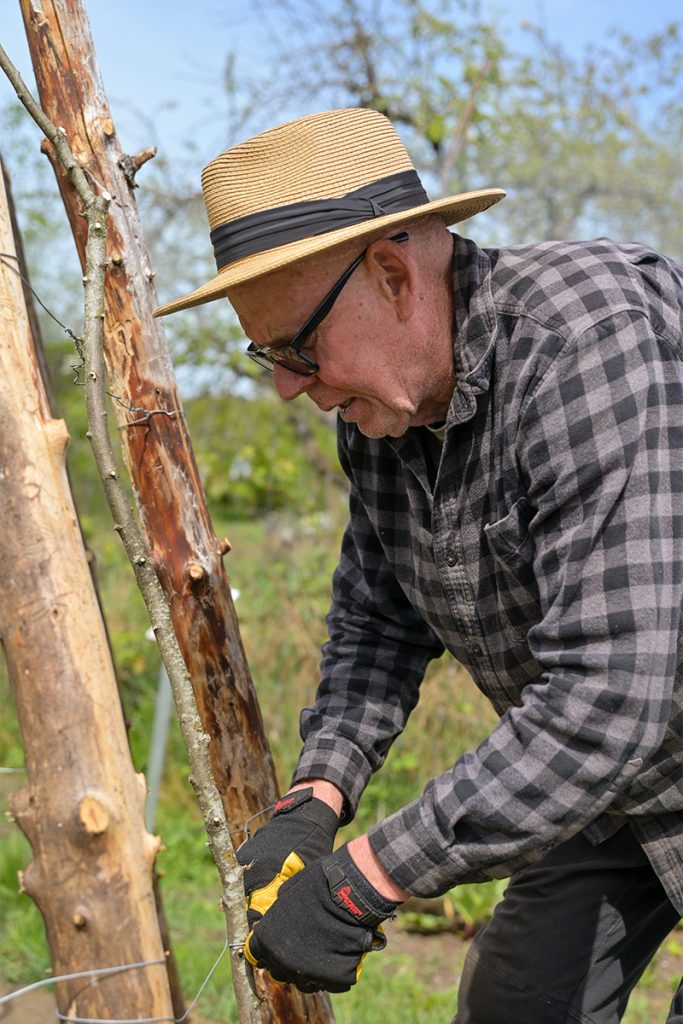
At the farm, Peter Clark, a retired contract gardner, was busy building a tipi-style beanpole on a recent Friday, complete with an entrance for the kids so they can go inside it.
By the end of the season, Clark said the scarlett runner beans will tower above the beanpole and they plan on leaving the beans this season until they dry on the vine so they can be harvested as soup beans.
It’s Clark’s third year volunteering with Foodshare on the farm and he got involved after retirement.
“I was bored,” he said. “I needed something to do.”
Community partnerships help bring healthy food to lower-income housing
Foodshare also shares land with local community organizations such as AVI Health and Community Services and Nanaimo Community Kitchens.
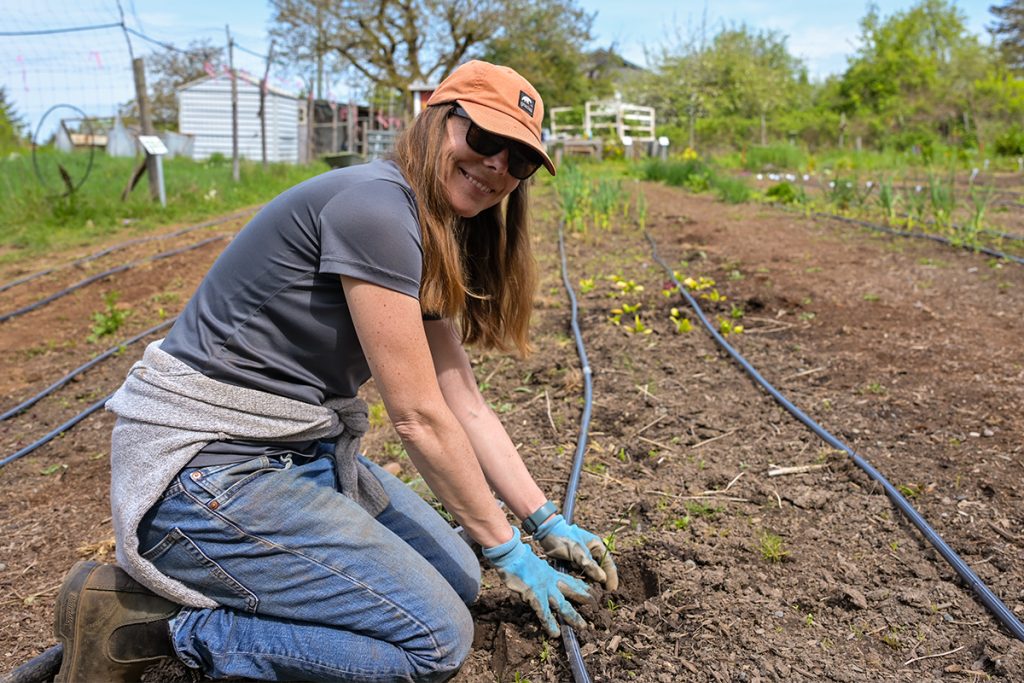
Heidi Sinclair, executive director of Nanaimo Community Kitchens, was at the Five Acres farm planting vegetables for the cooking classes that her organization runs in social housing buildings across the city.
“Good food starts with healthy soil, and this farm has really beautiful soil,” she said. “We’re able to grow garlic, squash, tomatoes, lettuce, chard, chives and parsley and that saves money for our grocery store bill.”
Nanaimo Community Kitchens runs a program called “cooking out of the box” at the Ballenas social housing building on Wallace Street where residents can use the communal kitchen and learn how to cook with healthy fruits and vegetables.
Nanaimo Community Kitchens also brings volunteers to help with the four rows of produce at the farm and teach people about healthy soil and how to garden, as well as how to prepare and preserve the food that is grown in its cultivate and cook program.
How to get involved
If people are interested in volunteering with Foodshare, or just learning more about the farm and the programs it runs, they can attend a weekly drop-in at Five Acres Community Park every Friday between 10 a.m. and 2 p.m.
People can also sign up to volunteer on the Foodshare website.
“I think it’s important that we have our own food supply,” said Doug Cahill who was volunteering on the farm. “Just look around the world.”
With files from Julie Chadwick.
What did you think of this story?
Your feedback after we publish a story helps ensure we're always improving our reporting to better serve you
Author

Related Articles

Nanaimo Jazz Festival celebrates 10 years with more than a dozen shows in September
Local and international artists to perform on multiple stages in the city at this year’s Nanaimo Jazz Festival.
Snuneymuxw Elder C’tasi:a shares traditional plant knowledge in new book
‘Plant Teachings from my Auntie’ by Snuneymuxw Elder C’tasi:a and ethnobotanist Nancy Turner delves into traditional plants and plant medicine.
How is The Discourse’s journalism funded?
And what does it cost to produce The Discourse’s in-depth, independent journalism?