
Nanaimo mayoral candidates address the homelessness crisis
Homelessness is a key election issue but what can the City of Nanaimo do about it?
One of the most important issues identified by The Discourse Nanaimo’s readers in a survey about the municipal elections was that of homelessness.
The most recent point in time count, conducted on Dec. 3, 2025, found 577 people were experiencing homelessness, which it noted should be considered a “conservartive minimum.”
Homelessness has been an ongoing issue for the City of Nanaimo and has seen the city respond in a number of ways, from hiring Community Safety Officers to patrol the city’s downtown core to providing funding for a now-closed daytime drop in centre and advocating to the province to build more supportive housing for the unhoused.
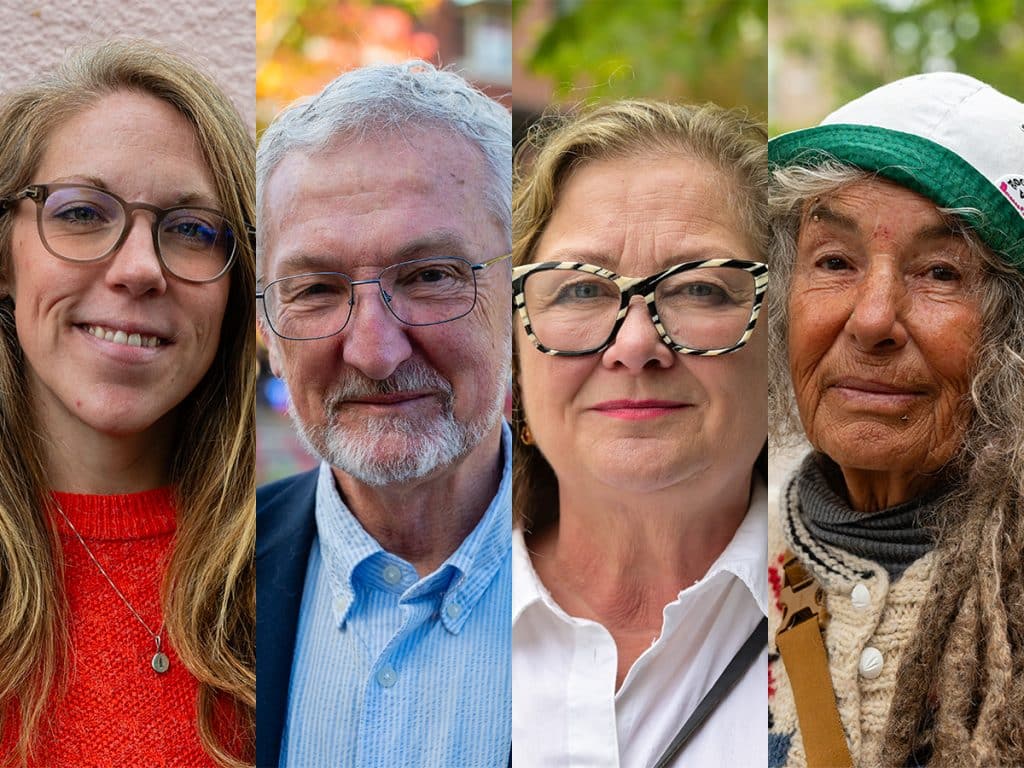
We sat down with Nanaimo’s four mayoral candidates to explore the issue.
How Nanaimo mayoral candidates want to address homelessness
Leonard Krog, who has been mayor for two terms and is a former NDP MLA, said the city can address homelessness by being a strong advocate to the provincial government
He pointed to the Cornerstone supportive housing building on the corner of Fitzwilliam and Prideaux streets that was built on city land and now is supportive housing built by BC Housing.
Krog said the City of Nanaimo is not in a position to directly provide housing and that the city has hit all of its provincial housing targets except for affordable or supportive housing.
“There is no aspect of being mayor that is more frustrating for me, because I’ve said it over and over again,” Krog told The Discourse.
At the same time, he is wary about downloading the responsibility of housing from the province onto the city.
“Municipal governments are neither designed to, nor have the resources to solve the housing crisis,” he said. “Particularly where the housing required is supportive housing or facilities where people are given the level of health care that their particular situation demands or needs.”
Mayoral candidate Sarah Lovegrove, a registered nurse and harm reduction advocate, said the City of Nanaimo needs to start thinking about affordable and supportive housing as “essential infrastructure” and needs to work with other levels of government for funding.
Lovegrove said people who are homeless and facing precarious housing situations in the city are from all socioeconomic groups, including seniors who are being priced out of their homes or renovicted from rental properties and students who aren’t able to afford housing.
Lovegrove would like to see the city revise its health and housing action plan which was last revised in 2020.
“Since that time, the housing market has drastically changed,” Lovegrove said. “The illicit drugs available to people have rapidly altered and we’re looking at an entirely different landscape of homelessness in 2026.”
Anne Marie Dryden, who is running for mayor on the REAL Nanaimo slate, said homelessness is the “first thing that we need to address right out of the gate.”
Dryden said she is working with Brian Gordon, who is a retired RCMP officer and running for city councillor with REAL Nanaimo. She said as small amounts of drugs “are no longer decriminalized … we actually have some recourse there and we need to help these poor people get into recovery programs and get on their feet.”
Dryden said she would reallocate city funds to improve communication between the “homeless and drug addicted population and the city.”
“If we can clean the city up and get the homelessness under control that will benefit tourism and small business and bring more revenues into the city,” Dryden said.
She also said she’s not opposed to increasing the $38.9 million RCMP budget and that “investing in cleaning up our streets is the most important thing we have to do right now to make the city a better place.”
Candidate Brunie Brunie’s main platform plank on homelessness is to set up a sanctioned campsite in the city where people who are unhoused can live.
“There’s nothing wrong with a really good campsite with army tents, so everything’s clean and organized,” she told The Discourse. “There can be a garden where they’re growing food. People can come and do different work around the city, cleaning the downtown. There will probably be some problems here and there, but we have to start somewhere.”
Building more housing
Lovegrove said while Nanaimo has received support from the province around building supportive housing, more can be done such as accelerating pre-zoning, reducing permit wait times and offering city-owned land for housing projects.
She points to agencies in Toronto exploring social housing for people awaiting long-term care beds and the use of low-cost tiny homes in Ontario to create small communities of people in need of transitional housing.
This year, Nanaimo city council gave $75,000 to the Nanaimo Prosperity Corporation for a pilot project to develop a plan that would see private developers build affordable housing in the city.
During that discussion, city staff said if council wanted to explore the issue of the municipality providing housing, another option would be the creation of a municipal housing authority, such as what’s been done in Victoria with the Capital Region Housing Corporation.
Lovegrove said the idea is one worth exploring, but is cautious of the tax burden it could mean for city homeowners.
A municipal housing authority isn’t on the agenda for Dryden, who said she is “generally not in favour of the government going into competition with private industry.”
She said she would look at if it was feasible and talk with other municipalities about their experiences, but only if private builders can’t deliver the type of housing that residents need.
Dryden said she’s been talking with builders in Nanaimo who have told her that the permitting for townhouses can take up to two years and the city needs to speed that process up.
She would like to see the city’s boundary expanded in order to spur development in areas that can be added to the municipal tax base. She also said parcels of land along South Forks Road and Nanaimo River Road could be sold off and used to build subdivisions in those areas.
The BC Public Lands Map shows a wooded area that is just under one hectare in that location that is owned by “local government” — most likely the Regional District of Nanaimo as the parcel does not show up on the map when the City of Nanaimo is selected.
The parcel is currently designated for resource use in the Arrowsmith Benson-Cranberry Bright Official Community Plan.
Dryden is critical of the recent increases to Development Cost Charges in Nanaimo and thinks they should be competitive with other municipalities. Asked how she would keep taxes affordable while adding city infrastructure and services to a sprawling city, Dryden said people in Nanaimo don’t want “invisible walls closing in on them and forcing them into multi-storey matchbox apartments.”
“We have a lot of land. We live in Canada. We shouldn’t be following an EU-driven dictate and we should be able to have space,” she said.
Brunie said the provincial and federal governments have the responsibility for housing but the city has to initiate it. She said the city already gets “lots of funding” for homelessness.
“There’s a whole industry of people working for homelessness,” she said. “They give them toques in the winter and wool socks. Well, dicky do da. That’s just not good enough.”
Brunie said the city has to work with the province and federal government to provide housing.
She proposes building dormitory-style buildings with individual rooms and shared washrooms and laundry facilities as an affordable solution to the housing crisis.
“We might even have shared showers,” she said.
She estimates that a room in such a place would be under $600 a month to rent.
Street disorder, substance use and brain injuries
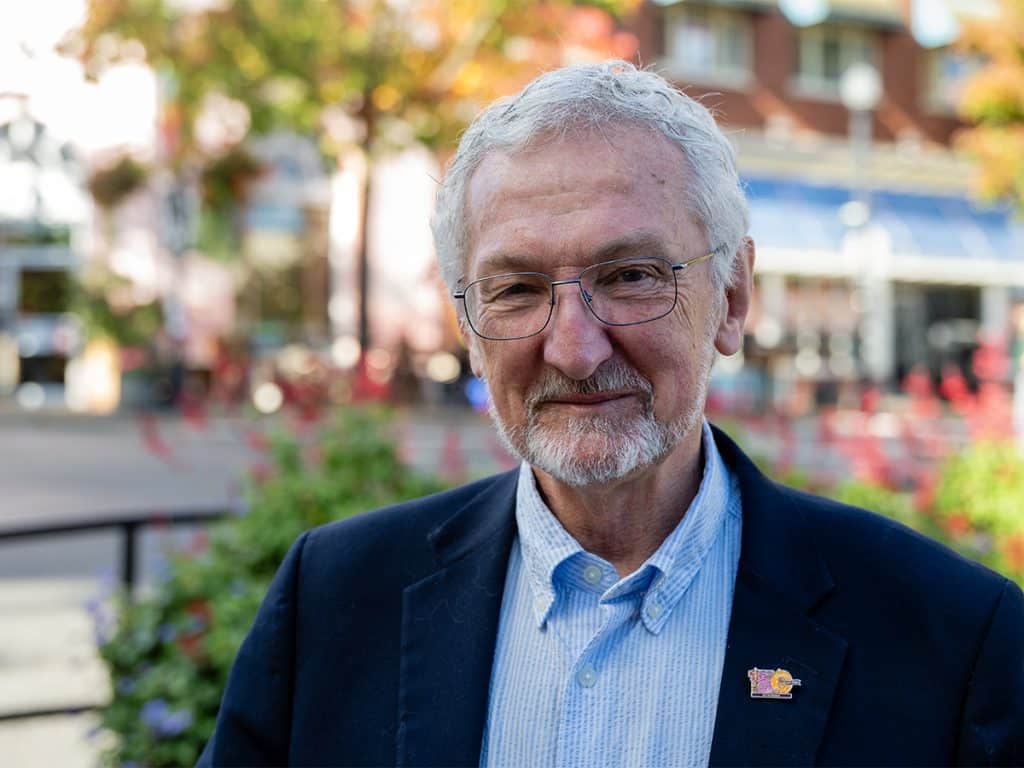
Krog said he hears about the impact of homelessness from residents and business owners.
“The issue we still hear about most at City Hall is the street disorder, which covers the whole range of things,” he said. “It’s still the issue we hear most about at City Hall. It’s the one that has the most negative impact. It’s the one that’s the most challenging to deal with.”
Krog said people who act criminally should be dealt with in the criminal justice system if they have the capacity to understand what they are doing is wrong, and if people don’t have that capacity then they should be in a care facility until they can control their behavior.
Lovegrove said there are people in the community who need “more robust wraparound care in terms of support and housing and regular day-to-day health care.”
She said evidence shows that involuntary treatment works less than four per cent of the time and people can’t be forced into substance use treatment that is not effective in the long term.
“Holding people involuntarily actually increases experiences of trauma, mental health and often worsens substance use,” Lovegrove said. “And when we release them people are far more likely to experience fatal overdoses as a result of opioid naivety upon release.”
Lovegrove said people who are a threat to themselves or others can already be held under the current Mental Health Act, and more voluntary treatment beds are needed in Nanaimo.
Referencing a recent BC Supreme Court decision that found blanket forced psychiatric treatment unconstitutional, Lovegrove said she was unsure why Krog would still be advocating for that approach.
“I find it interesting and puzzling coming from a legal professional who is advocating for an intervention that has been identified as unconstitutional by the Supreme Court,” she said.
Dryden said the city could fundraise to bring more recovery programs to the city, much like the Rotary Club raised funds for a baseball clubhouse.
“Once you make a decision that you want something to happen, then you just go ahead and make it happen,” she said.
Brunie proposes setting up gardens at city sanctioned campsites as a way that people can recover.
“One of the best things for you when you work addiction is to put your hands in the soil,” she said.
But she acknowledges that some people need more help.
“There are some people that are now subhuman,” she said. “I don’t know how we can leave them on the street … these people somehow need to be housed in a separate place and looked after.”
Brunie said people have been “saturated with pharmaceutical drugs” by doctors working in addiction medicine and used as test subjects because pharmaceutical companies “need people to test their drugs on.”
Asked if she was referring to the province’s prescribed alternatives program, Brunie said she didn’t know what the program is called but it involves an in-patient treatment where people are given drugs to help people get off illegal drugs.
She said the problem is that people are then turned back onto the streets with lowered tolerances and they overdose from street drugs and die.
Community Safety Officers
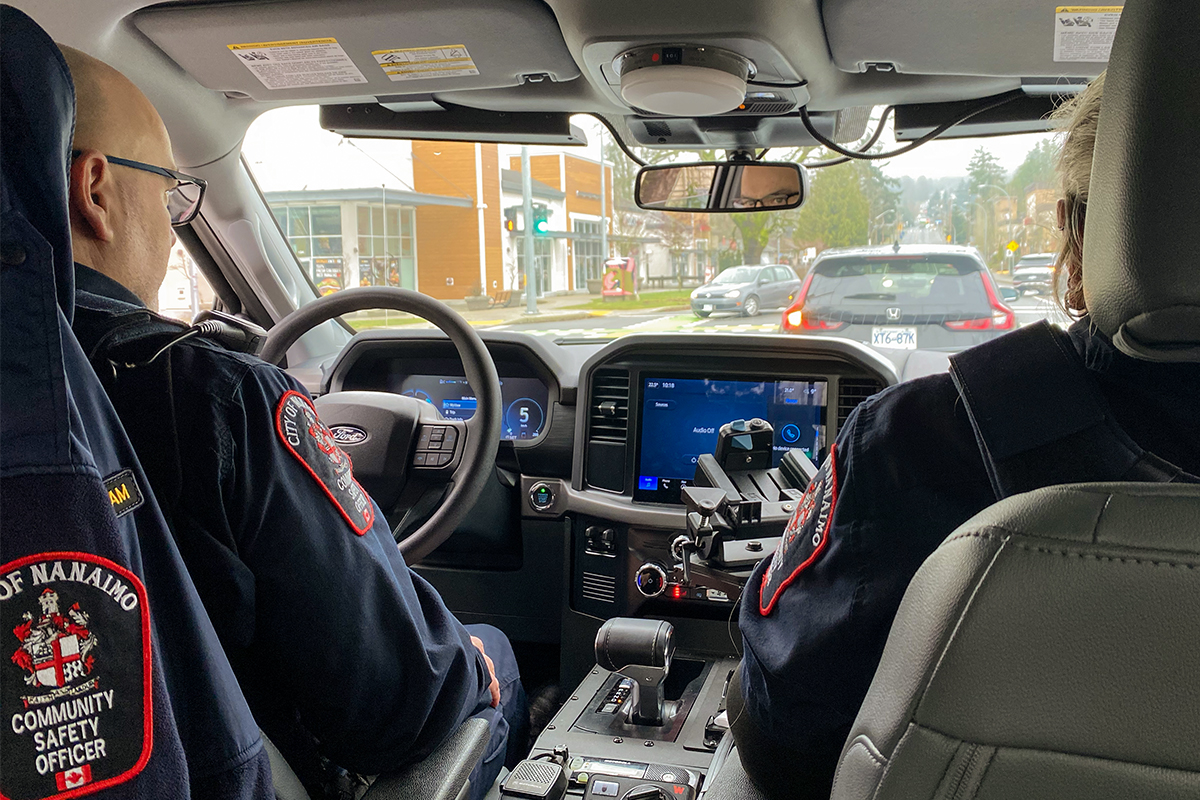
Krog said the city’s Community Safety Officer program downtown has saved a significant number of lives from overdoses.
He said the city could use more community safety officers to expand further outside of the downtown but even if 100 more officers were hired, it would not put a roof over anyone’s head or get them into a detox centre that “doesn’t exist, because we need more detox beds.”
“It’s not going to solve the problem, but we will spend the money in the meantime to try and ameliorate the impacts of the crisis,” he said.
Lovegrove said while community safety officers have administered “endless amounts of naloxone that have saved people’s lives,” the program is expensive and operating in a way that is not informed by evidence.
“Utilizing uniformed officers as a response to mental health calls and substance use crises is not best practice within research, within evidence, or within the field of social response to these crises,” she said.
Lovegrove said she would like to see some of the money spent on the Community Safety Officer program used to fund places where people can sleep at night and stay during the day. She would also like to look at the potential of incorporating peer workers and social workers and “remove the barriers of uniformed officers.”
Dryden said the community safety officers are providing a good service but more needs to be done. She said she’s not opposed to expanding the program and that the city “has to do whatever it takes to get this problem under control, because it’s affecting the running of small businesses, especially in the downtown area.”
“The City of Nanaimo has deteriorated to the extent that we have over 200 encampments in the bush of homeless people camping out instead of having somewhere to live,” she said. “We have to do everything in our power to fix it.”
**Editor’s note: The Discourse was unable to verify the exact number of encampments in the city. We have reached out to the City of Nanaimo for confirmation and will update the story if a response is received.
“Why are we building more bike lanes, roundabouts and putting bollards up all over the place that people don’t like or want instead of spending that money on getting the homeless housed and cared for and in treatment?” Dryden said.
Brunie likes the idea of unarmed officers and said she has talked with the community safety officers downtown.
“I’ve even slept outside at the square just to see what’s happening,” she said. “And I personally haven’t seen any disorder.”
Brunie said the biggest threat to public safety downtown is cars and she would like to make Commercial Street from Terminal Avenue to the Diana Krall Plaza a pedestrian-only zone.
Dry versus wet housing
Krog said the residents of the Newcastle neighbourhood “suffered a great deal for a long time due to the temporary modular housing installed in the neighbourhood following the discontent city encampment in 2018.
He said the modular housing on Terminal Avenue became “a centre for the crime, open drug dealing and vandalism that set the neighbourhood ablaze.”
He said the province ensuring that the new housing being built there by BC Housing will be substance free is a win for the city.
Lovegrove is a proponent of a housing-first approach and doesn’t think treatment should determine if someone can access supportive housing. However, she said some people in recovery need housing that is safe for them that doesn’t make them more vulnerable to relapsing.
Lovegrove said the shortage of treatment beds on Vancouver Island is also a challenge to the dry housing model and is concerned about what will happen to people if they relapse while living in dry housing.
“Are people going to experience one relapse and lose access to their housing?” she said. “Because in that case we’re going to see a fluctuation of people in and out of that housing and no stability offered in the process.”
Lovegrove said she is also concerned about some of the people who are currently living in the modular housing at 250 Terminal Ave. who won’t be able to access the new housing that is built on that site.
“I understand that BC Housing and the provincial government have made promises to transition folks in that way, but that’s not what we’re seeing on the front lines right now,” she said.
Dryden stressed the need for the city to help get people who are homeless “off the streets and into recovery and then into dry housing.”
She said she would like all supportive housing in Nanaimo to be dry, but acknowledged there may need to be some “wet housing as a buffer.”
“My take on the Terminal Avenue property is that we have asked point blank: is it going to be dry housing? And we get a bit of a dodgy answer, so it doesn’t look like it’s actually going to be all dry housing.”
Dryden said she doesn’t think the city should be “taking money from the province when there are lots of strings attached that are counterproductive,” such as the low-barrier housing that allows substance use by BC Housing.
She said she has taken “over a dozen people” into her home who have been through a local recovery program.
“I was taking a big chance, but the people who came through my doors did great, and most of them, all but one that I know of, are still clean and sober today,” she said. “That’s a pretty good indication that it’s important to get people coming out of recovery into a safe environment.”
A city-run campsite?
Candidate Brunie Brunie is proposing that the city help set up a supervised campsite on city land using large army-style canvas tents that would include a tent residents can cook food in as well as showers.
She suggested locating the campsite on an unused school property near the end of Bowen Park, something that would need the approval of the Nanaimo-Ladysmith School District.
Brunie doesn’t think the campsite would need to be staffed by city workers and it could be run by the people who live there, but the city could provide garbage pick up and oversee the operations of the camp. She would like to see security at the site and outreach workers could access it and provide services to people in need.
“I talk with people who are homeless all the time, and they’re good people,” Brunie said. “The economy is not booming, there are no jobs.”
She called the current approach that the city is taking to the homeless crisis “really, really cruel.”
“It’s almost next to genocide,” Brunie said.
Krog said he would support the idea but asked where it would be. He points to the city’s experience with the tent city in 2018 at the port of Nanaimo.
“We had a tent city, and we know what that turned into a centre for human trafficking,” Krog said. “It turned into a centre for theft and incredible vandalism in the area. The community nearly lost Port Place as a functioning mall, and it’s the only major grocery store in the area.”
Dryden said she thinks the city needs to do better than a campsite.
“That is not sufficient. We have to do better. We have to find more dry housing. We have to help these people, but it’s not time for enabling,” she said. “It is time for compassionate, tough love. We have to watch for windows of opportunity to get them when they’re open to going into recovery.”
For Dryden, the problem isn’t a lack of resources, but political will.
“We have the means, but our current administration lacks the will. Our group, REAL Nanaimo, have the will and we will find the means to get these people off the streets and turn Nanaimo back into the safe, clean city it once was.”
Lovegrove also said she disagrees with the idea that a supervised campsite is something that the city should pursue.
“I think our community’s most vulnerable deserve leadership that aspires to dignified housing with four walls and a roof, at the very least,” she told The Discourse. “Encampments have been a survival response enacted by people living unhoused to keep one another alive for years, but encampments are not a long-term solution.”
She would like to see people experiencing homelessness get the housing and supports that they need.
“Everyone deserves safe and secure housing, within environments that allow them to shift out of survival mode and supports them to move toward a state of safety in which they can begin to thrive.”
Should the city fund a daytime drop in centre?
Krog said The Hub drop in was successful in getting people off the street and into housing but the impact on the neighbourhood was controversial.
“Look, all we saw was public safety in the toilet, fear and loathing in the neighbourhood, vandalism, threats to children, trauma to children,” he said.
Krog said he is opposed to the city building a purpose-built building for a daytime drop in centre.
“Council has chosen on various occasions not to stick to its knitting, in my view, and enter into areas that are historically strictly provincial jurisdiction. Once you start down that road, the province will be happy to let you stay there, and you fund it,” he said.
Lovegrove said a daytime drop in for people experiencing homelessness is “absolutely essential” and that the service providers did a good job connecting people with resources, but never thought the building on Nichol Street was a good location.
“I don’t know if anyone in our community, anyone in the field of harm reduction and housing, ever agreed that it was a good spot,” she said. “The location was problematic and dangerous for people accessing the services.”
Lovegrove said she would support the city building a purpose-built drop in centre.
“This is an essential piece of infrastructure in our community given the number of people who are unhoused and needing access to these services,” she said. “Without it, our homelessness numbers are going to increase. The negative impacts of people who are experiencing housing precarity are going to become more complex and we can’t bridge people into housing and opportunities to become well again if they have zero resources.”
Lovegrove said she would look at redirecting funds from the Community Safety Officer program towards the operation of a daytime drop in centre.
In terms of capital funding for the project, Lovegrove said she’s not keen to increase property taxes but that people are paying for other costs such as police, first responders and hospital staff working with people who are “cycling in and out of these non-housing solutions.”
Dryden said a purpose-built drop in centre “sounds like a good plan” but “it all comes down to cost” and would rather look at using existing city facilities.
She said it’s understandable that landlords would be reluctant to rent to a service operating a daytime drop in centre.
“Its a bit of a wild card,” she told The Discourse. “You don’t know if you’re going to end up with damage or problems, and landlords don’t want to take on the task of rehabilitating people from addiction, but we have to do whatever it takes to get this problem fixed, because fixing this will fix a lot of things.”
Brunie supports the city funding a daytime drop in centre but points to her campsite proposal as being more cost effective than paying for a purpose-built building.
Zoning and overdose prevention sites
Under the provincial health emergency declared in 2016 to respond to the overdose crisis, the province has the power to supersede municipal authority.
Under its current zoning bylaw, the City of Nanaimo requires site-specific approval for any overdose prevention or supervised consumption site located in the city, however this is overridden by the provincial health emergency.
Krog said he has never been convinced that the current location of the only overdose prevention site on Albert Street was the best place for the service, and if the provincial health emergency were to end he wouldn’t commit to rezoning it so it could remain in compliance with the city bylaw.
“It’s like any rezoning, you have to approach it with an open mind,” he said. “If a politician makes a commitment to a rezoning before the public hearing process, I’d have to withdraw from the public hearing process.”
He said the best location for drug users would be close to where they are living but from the public’s perspective, it could be somewhere that is isolated from residential neighbourhoods, schools and healthcare facilities.
“That’s where the rubber hits the road,” Krog said. “It’s why we’re always, how should I say, relieved for the province, if you will, to make these decisions, which it certainly did here, and will continue to do so, because, as I say, you get back to the guts of it. Virtually nobody ever says, ‘Gee, welcome.’”
Lovegrove said the Overdose Prevention Site needs to stay where it is as Island Health is investing into the building to build a recovery and wellness centre, which she said will offer a spectrum of services for people who use substances.
“Moving that type of service further away or outside of the area where people are already existing would be an accessibility issue for people who use that service,” she said.
Lovegrove also said while she supports the location of the current site, there are people throughout the city who use substances and said a mobile overdose prevention site that could travel to different locations is a model worth exploring with Island Health.
Dryden said she likes the idea that there’s medical care for people who are using drugs at the overdose prevention site, but that it’s not enough.
Dryden said she would want to know how successful the service is with getting people into recovery and that she isn’t familiar enough with the location to have an informed opinion on rezoning it, should it come before council.
“But now that it’s come up, I’ll definitely go and visit them and find out,” she said.
Brunie said she thinks the current location for the Overdose Prevention Site is “all right” as it’s next to City Hall and the city’s service and resource centre and is not in a residential neighbourhood.

What did you think of this story?
Your feedback after we publish a story helps ensure we're always improving our reporting to better serve you
Author

Related Articles
How Nanaimo candidates would pay for rising infrastructure costs
City of Nanaimo’s 2026 candidates share how they’d manage the budget to cover rising infrastructure and repair costs without overburdening taxpayers.

Nanaimo candidates on how the city can cut emissions
City of Nanaimo’s 2026 candidates share two actions within city jurisdiction they’d prioritize to reduce emissions, and how they’d know if they were working.

Where Nanaimo candidates stand on development near Cable Bay Trail
City of Nanaimo’s 2026 candidates share their stance on development around Cable Bay Trail.