
How a coalition plans to house every person in the Cowichan Valley
Cowichan Coalition to End Homelessness’s new plan for housing and homelessness in the region builds on the success of the Village.

Earlier this year, the Cowichan Coalition to End Homelessness gathered its members, including the Cowichan Community Action Team, Lookout Housing and the Hiiye’yu Lelum Society, for the first time since the COVID-19 pandemic to learn more about who they are seeing without housing and what support they may need.
From these discussions, the coalition came out with a list of solutions presented to North Cowichan Council last week. The Cowichan Vision for Wellness calls for investment in land, buildings, and operations from all levels of government.
Cowichan Valley’s 2023 point-in-time count, which seeks to identify as many people experiencing homelessness as possible in 24 hours, found 223 people without housing, a figure known to underestimate actual numbers. Nearly half of the respondents identified as Indigenous.
The 2024 survey results, conducted on Nov. 14, are still being tallied, but the coalition expects the numbers to be available sometime in the new year.
Many more people experiencing homelessness are hidden. It’s estimated that about 40 to 70 people live in vehicles across the region, and 3,000 people are one paycheque away from homelessness, according to the coalition.
To support people in the community with the most urgent housing needs, the coalition’s focus is on expanding the Village model to seven new sites around the Cowichan Valley.
The coalition compiled a snapshot of the current options for shelter space and supportive housing in the Cowichan Valley, including the Village on Trunk Road, Squ’mul, the Warmland bunkhouse and the future White Road Development.
Supportive and transitional housing like this is part of phase one of the plan.
Two other phases cover medium and long-term solutions like rental subsidies, purchasing residences to support the growing number of homeless seniors, and building second-stage housing.
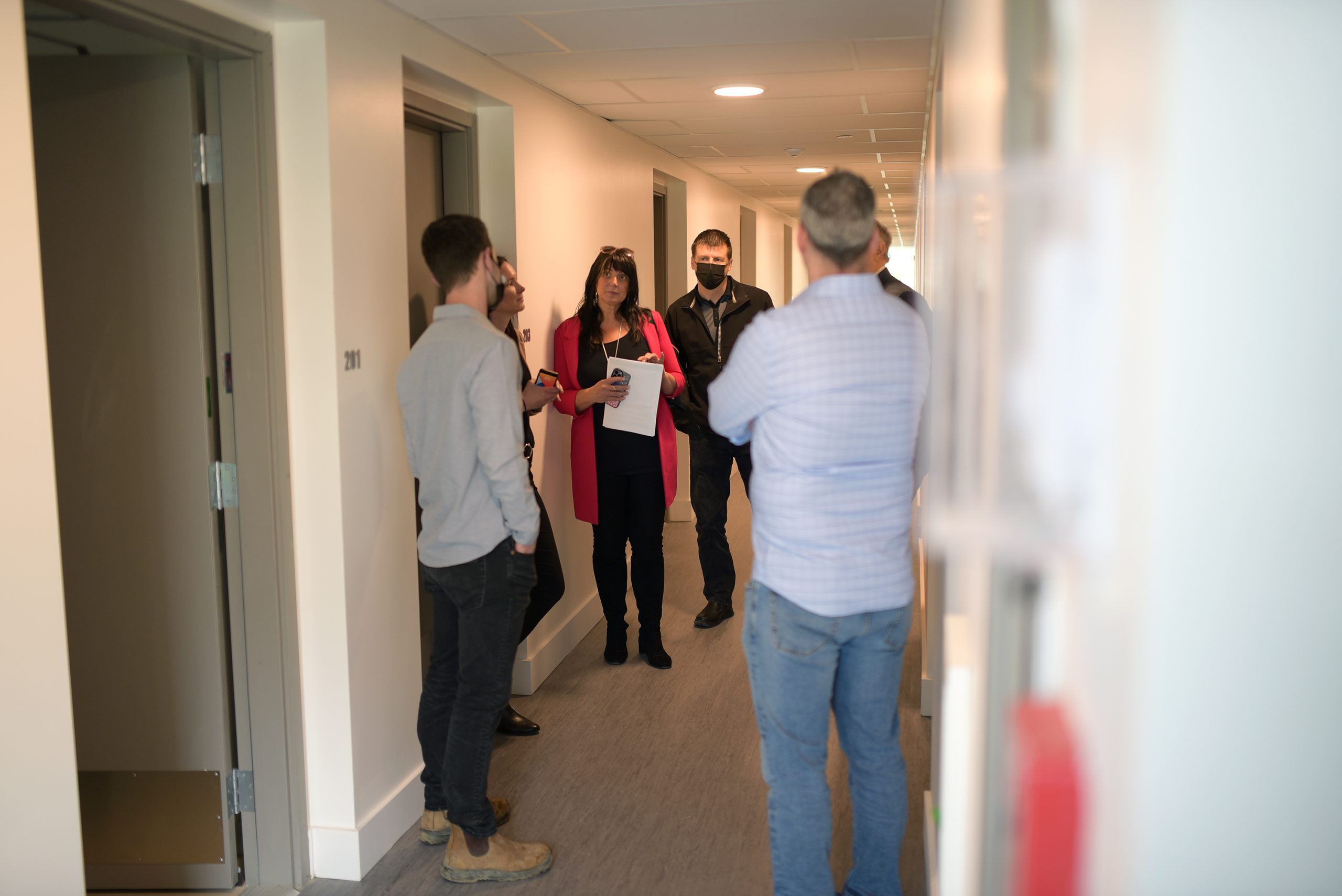
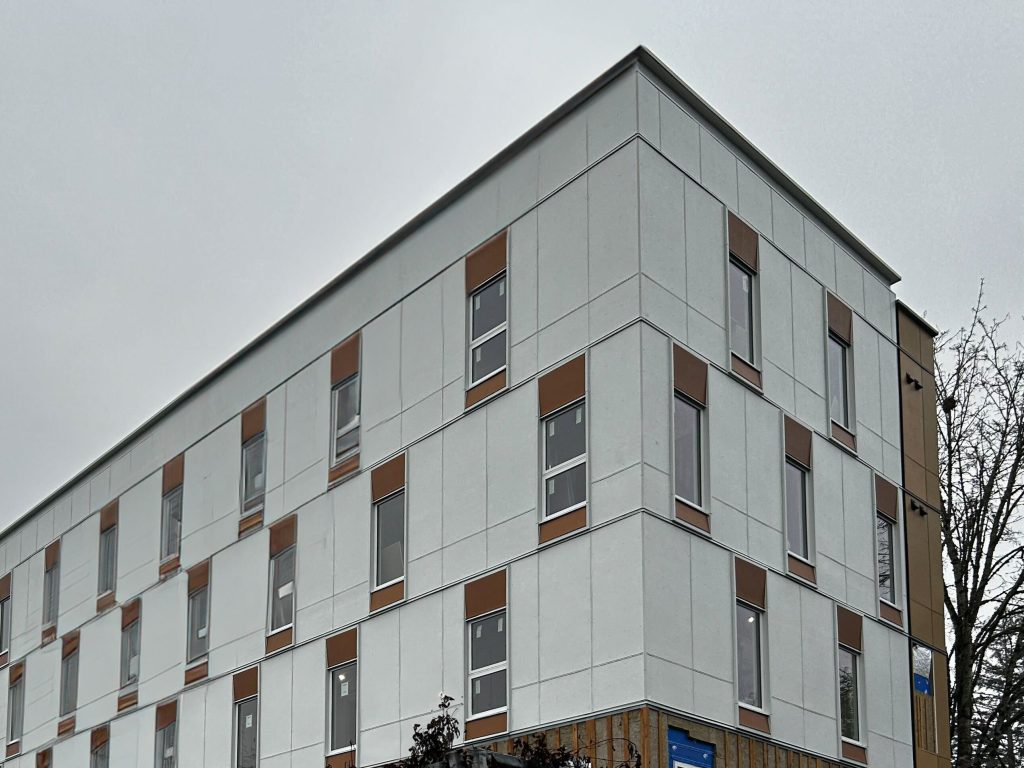
Cowichan Housing Association’s Dianne Hinton, with the coalition, says the number of available supportive housing units falls well below the 423 needed to house the valley’s unhoused population, according to a peer count by service providers in March and May of this year.
To remedy this shortage, the plan proposes acquiring or leasing new sites for Village-style transitional housing projects in the region and two sites for parking RVs. The Village’s success and ease of construction have made it a core part of the plan.
“What we thought was the Village was a housing model, but what we discovered was the Village is actually a recovery model,” says Erin Capella, mental health manager for Cowichan Tribes.
Capella says it covers the gaps in typical residential treatment programs that don’t include housing and remove people from the streets only to return them still unhoused and without the help they need.
The Village is also a culturally safe model for people with institutionalized trauma, like residential school survivors, who don’t feel safe in a “big box building.”
The 2023 point-in-time count conducted by the Cowichan Housing Association found that 43 per cent of respondents had a family connection to residential school.
Other solutions are “too institutional, it’s too enclosed, there’s a lot of people who just won’t go there,” says Capella. The Village keeps residents outside and connected to the land by its design, which consists of individual pods rather than a single building.
The Village’s future is secured at least until 2026 after the City of Duncan renewed its temporary use permit in October.
The plan also calls for hiring skilled workers to provide services and treatment for the additional shelter space, which is an ongoing challenge. There aren’t enough people trained to do the type of work needed for this plan. That conversation is continuing, says Staples, but she adds staff can come from unlikely backgrounds, pointing to the hiring of a former event manager at the Ramada to coordinate site logistics during the pandemic.

Housing support for seniors
Hinton says the next phase will cover support for the growing number of unhoused seniors.
A review of Canadian homelessness data indicated that 32 per cent of people using shelters in 2021 were over the age of 50, up from 13.5 per cent in 2005.
The Cowichan Valley’s 2023 point-in-time count found that 16 per cent of people experiencing homelessness were over 55 years old.
“If seniors have been living on the streets for a time, typical long-term care facilities may not meet their needs. They’re not ready for that sort of support,” she says. The coalition would look to open new spaces that are smaller and with staff specifically trained to work with seniors.
The coalition has included advocating for income support, rent subsidies, and even guaranteed basic income in this medium-term phase of the plan.
In the plan’s final phase, the coalition would like to see the creation of two new 50 to 70-unit supportive housing developments for residents who need long-term housing beyond what the Village can offer.
Second-stage housing, especially for women who are fleeing violence, also has a role to play in this phase, says Hinton.

Where did the Vision for Wellness Come from?
Work to shape what was presented to North Cowichan Council last week can be traced back to 2018 when groups were trying to answer the question of what it would take to house everyone experiencing homelessness at the time.
Duncan Mayor Michelle Staples remembers being invited to a presentation by a group of peers who asked for small spaces to keep them dry and access to basic facilities like water and washrooms. Much of the information from these sessions was used to inform the design of the Village.
From there, various service providers, like the Candian Mental Health Association and Cowichan Women Against Violence Society, created a framework that grouped people by what kind of housing and care they would need.
The majority they found needed to be sheltered and supported with a basic heated sleeping unit; the rest were a mix of people who needed complex care or rental support to pay for existing housing.
Staples says many people who put that initial information together are no longer with the coalition. Still, they laid the groundwork for those organizations to write a plan for the community.
The plan considered the cost of running the housing and looked at where the housing would be best located based on where people accessing it were from.
That plan was then presented to the Ministry of Mental Health and Addictions at a lunch attended by representatives from all over the valley and various levels of government. In all, about 60 people were in attendance. Ultimately, the province rejected the roughly $2.5 million per year plan.
“We got a nice rejection letter from the province, and three months later, we had a global pandemic.”
The COVID-19 pandemic turned the tables, but they had a plan, says Staples. BC Housing was now asking communities what they needed to help unhoused people. She asked John Horn, who worked at the Cowichan Housing Association, if he would co-chair the COVID-19 Cowichan Task Force for Vulnerable Populations.
“As crazy as it sounds, it was one of the best experiences of my political career because everyone from every level of government was forced by circumstance to work together, and we showed that it was possible.”
Every person had a place to live three months later, says Staples. “The whole pandemic, we learned a lot, and we were allowed to learn how to do things better.”
At the end of the pandemic, those same groups came together again to assess the current situation as funding dried up. The compounding realities of the rise in the cost of living, an increase in the number of people experiencing homelessness and a toxic drug crisis had changed the scope of the challenges, but the coalition had been here before. Taking a similar approach, Staples says they crafted another plan, the Vision for Wellness.

Different solutions to similar challenges
The Village’s success has inspired similar transition housing projects across Vancouver Island. A 40-unit supportive housing project in Campbell River, similar to the Village in Duncan, opened its doors last month. The program prioritizes people who have stayed in shelters and encampments over the previous two years.
Like the Village in Duncan, Homewood has wraparound services for residents to address complex health needs and receive community support referrals. Mayor Kermit Dahl says the successes seen in Duncan inspired Campbell River Council to advocate for a similar partnership, which will be the first of its kind in the city.
This year, the Union of BC Municipalities conference saw renewed calls on the province to adopt the Village housing model as part of its housing continuum and create a way to secure continued funding from BC Housing.
Everything in the plan hinges on financing from upper levels of government. Still, the coalition hopes that uniting the various service providers in the region will help them get their message across.
“The Village works. It’s being replicated all over Canada right now, and we’re still having to prove it to the province to get them to adopt it,” says Staples.
Port Alberni has its own version in the Wālyaqił Tiny Home Village, 20 temporary modular housing pods operated by the Port Alberni Friendship Centre.
The plan is not perfect, but Staples says the pursuit of perfection should not be used as an excuse to do nothing.
“Drop all the barriers and work together, and just like during the pandemic, we can see a significant difference within three months. We know it can be done because we’ve done it, but we need everybody to be willing to come to the table to do it.”
The coalition presented the plan to a group of Island Health professionals in population and public health. Hinton says there wasn’t any formal endorsement, but there was great discussion.
Next, they hope to meet with the provincial ministers of health and housing and the Federal Minister of Housing Infrastructure and Communities.
What did you think of this story?
Your feedback after we publish a story helps ensure we're always improving our reporting to better serve you
Author
Related Articles
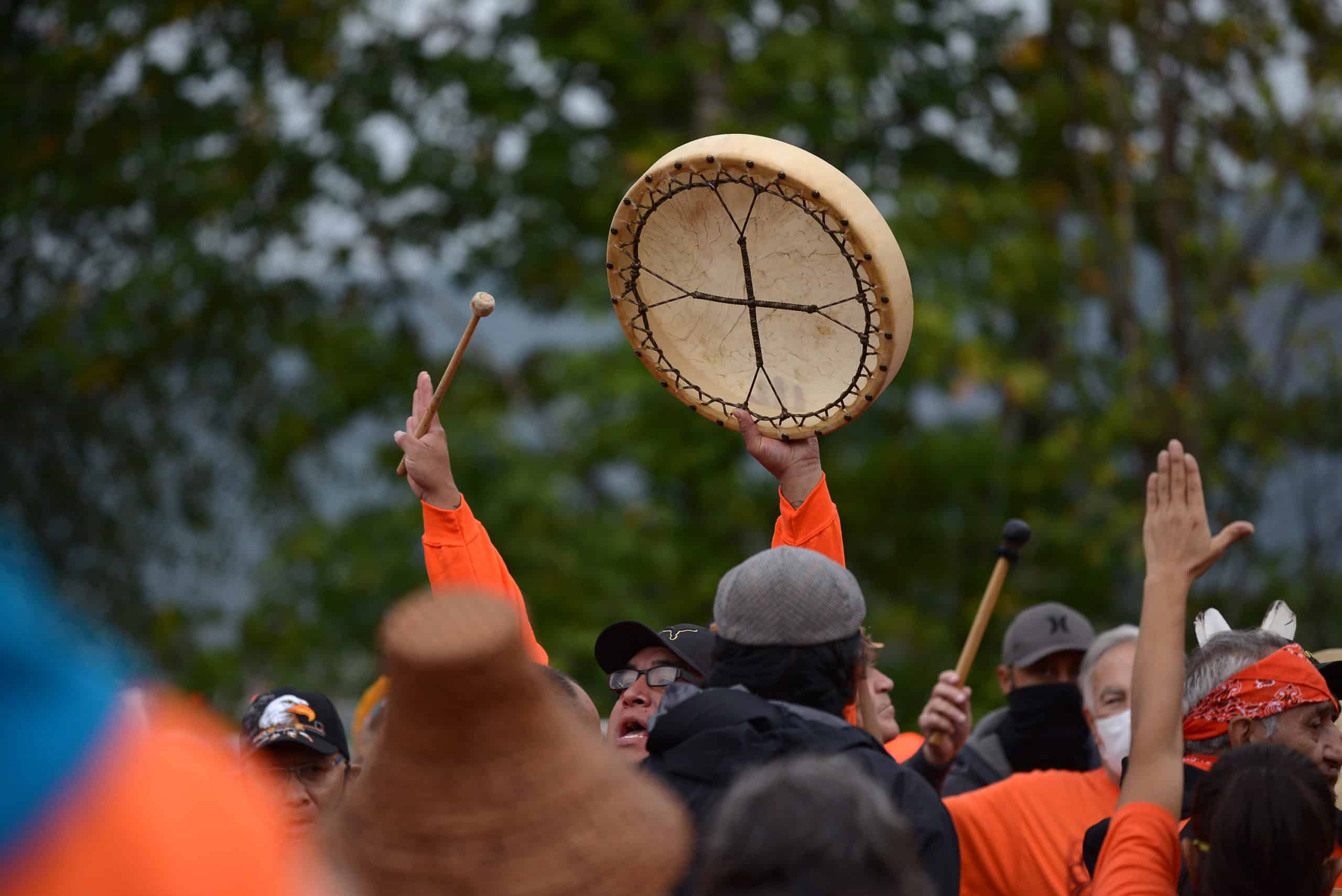
DRIPA debated in B.C. election on Vancouver Island
The Conservative party of B.C. is promising to repeal the Declaration on the Rights of Indigenous Peoples Act (DRIPA), while other parties argue that would set back relations with First Nations and create economic uncertainty.
Where Cowichan region MLA candidates stand on water, old growth and reconciliation
MLA candidates in the three ridings that cover the Cowichan region answered questions from Discourse readers ahead of the Oct. 24 B.C. election.
Cowichan Valley’s guide to the 2026 B.C. election
What riding am I in? Who are the candidates? When do I vote? The B.C. election basics for Cowichan Valley residents.