
In photos: Inside the project bringing back Indigenous plants and protecting a vital estuary
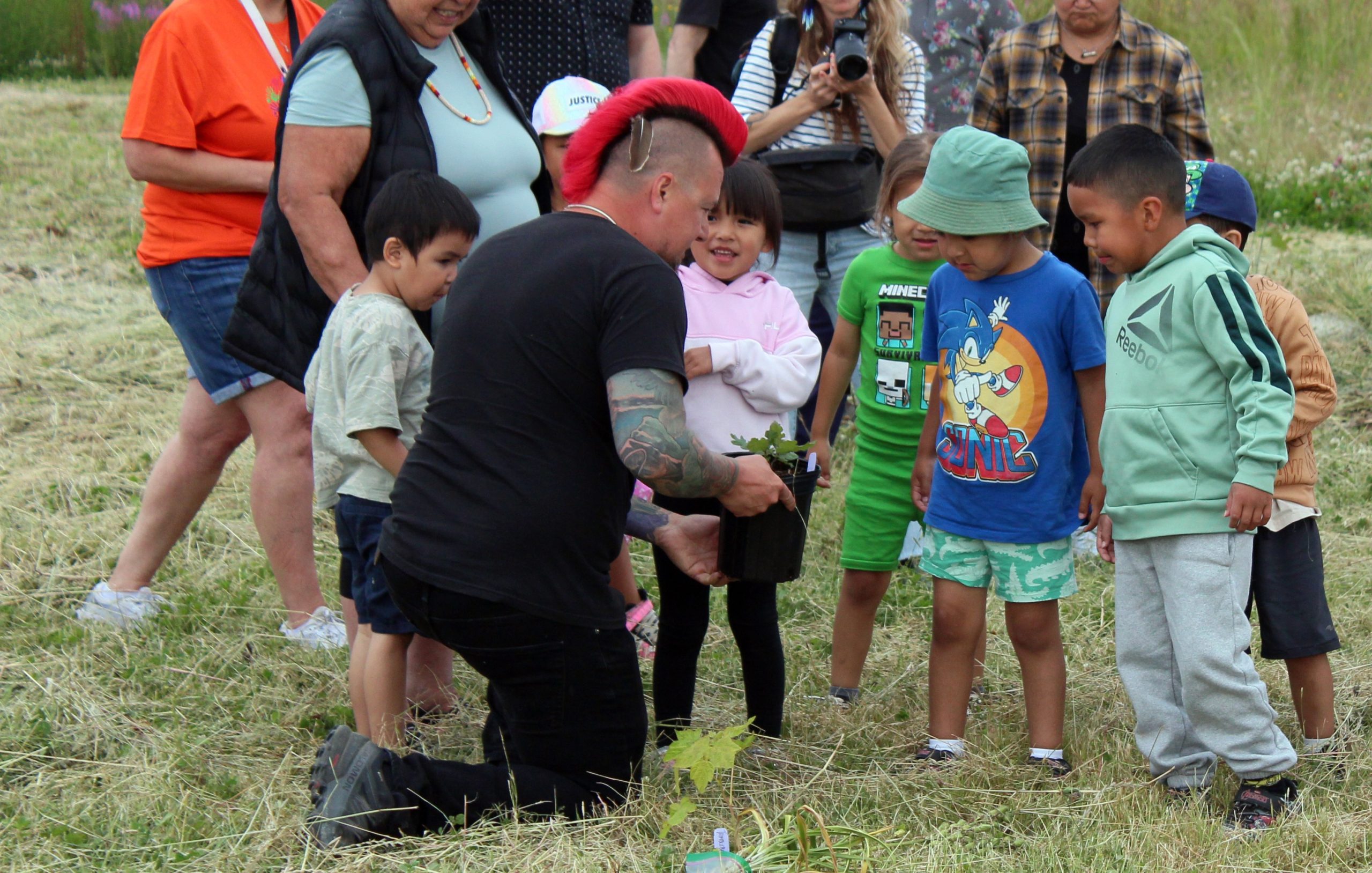
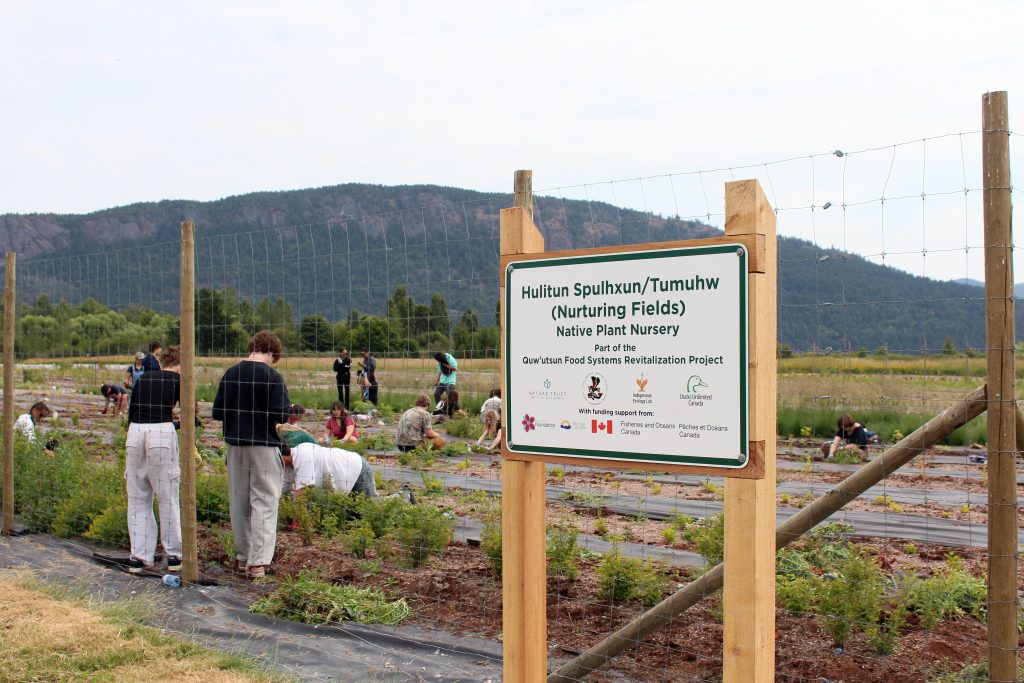
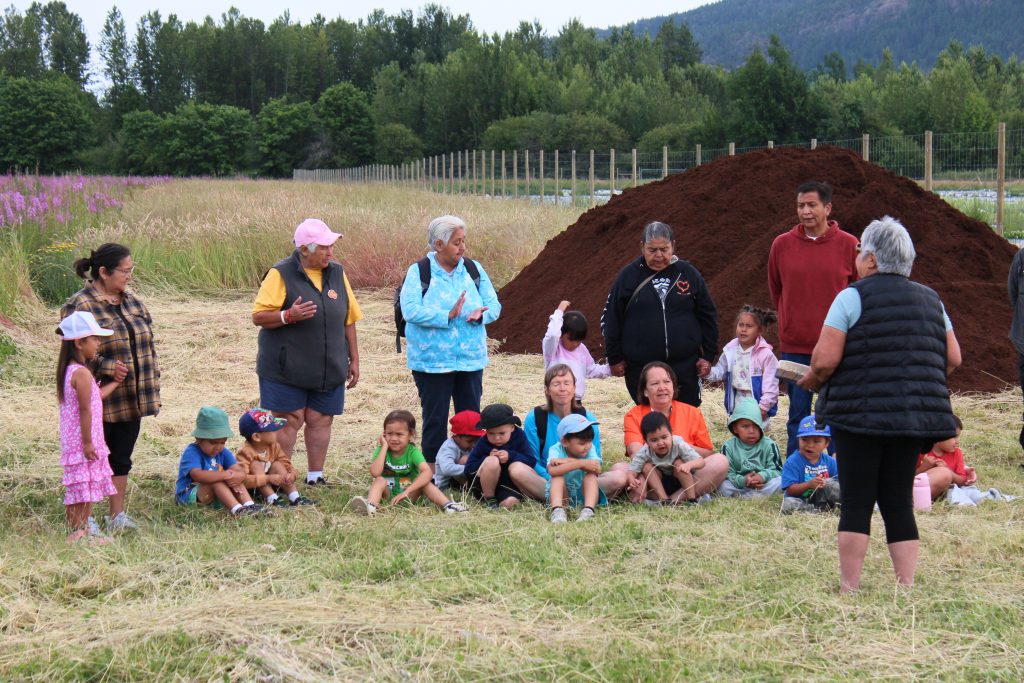
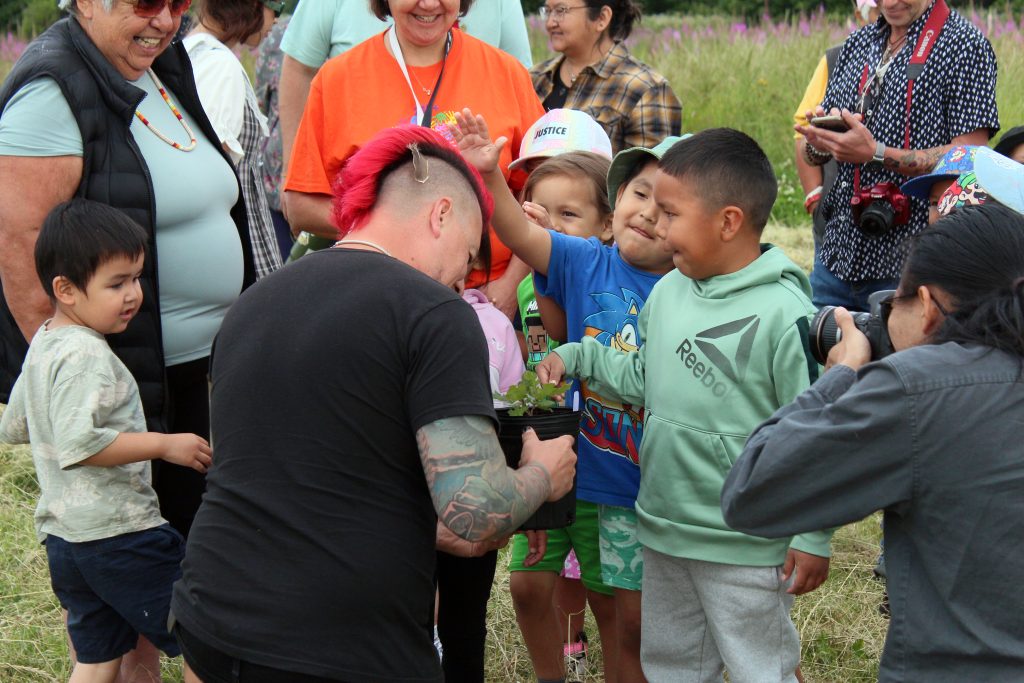
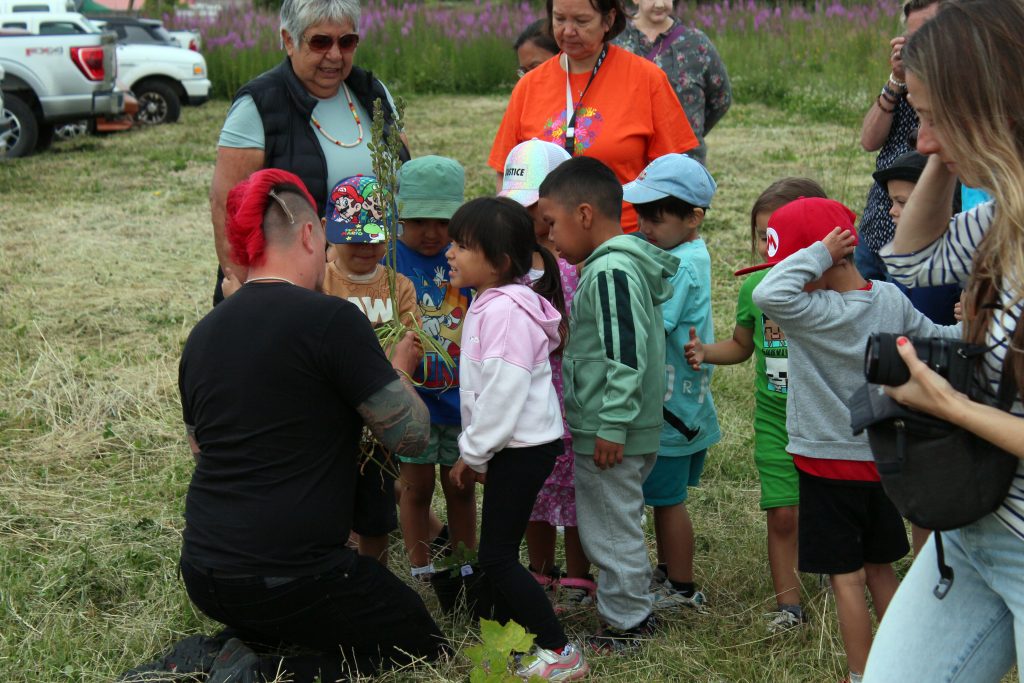
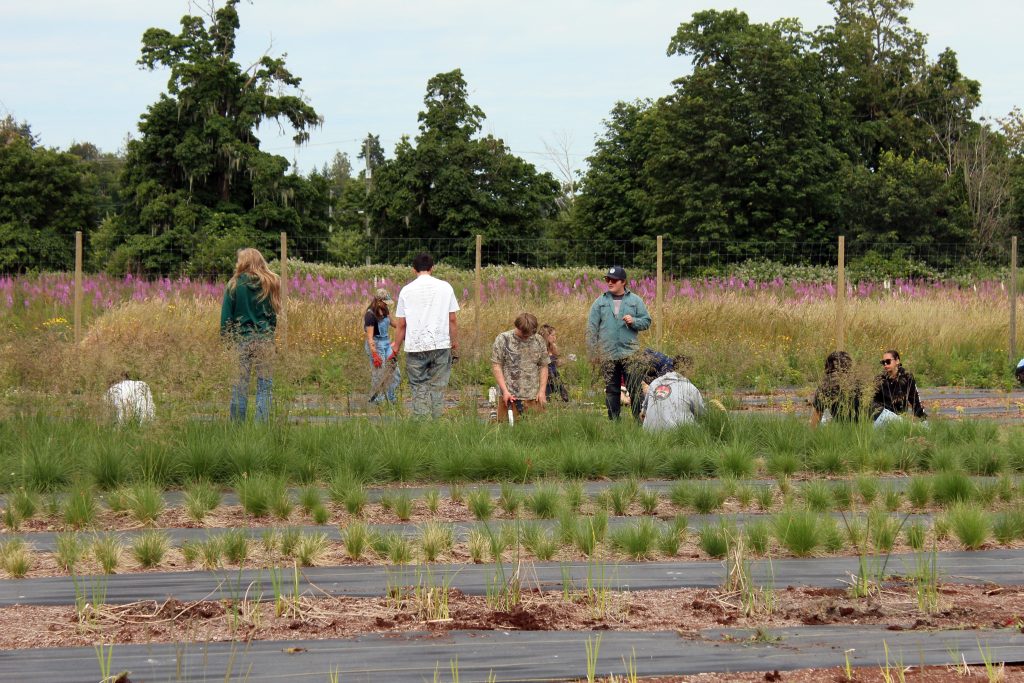
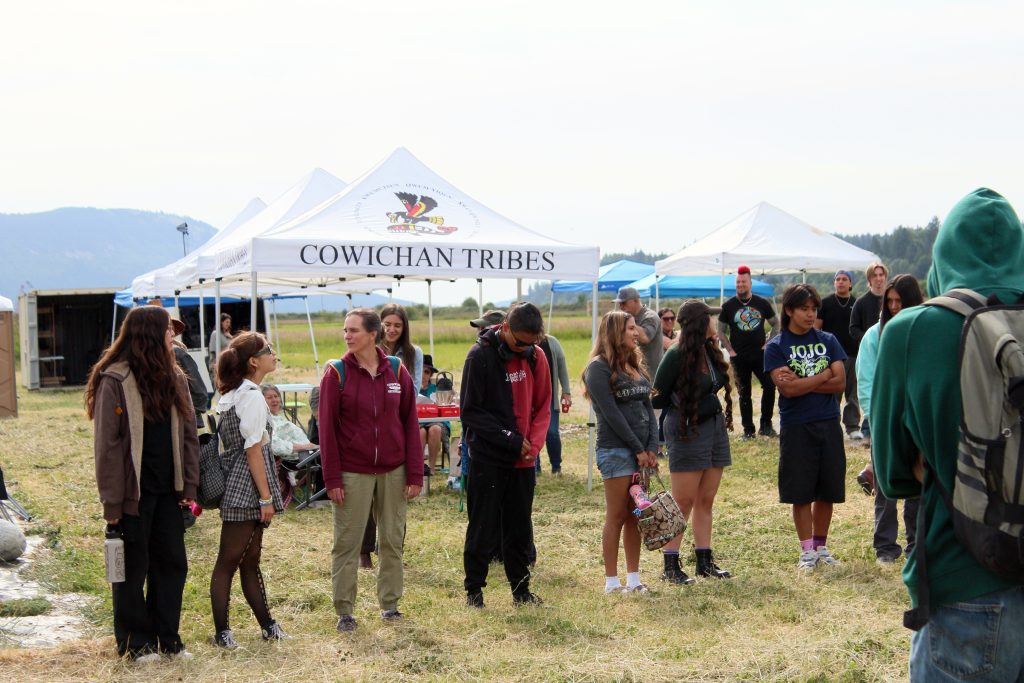
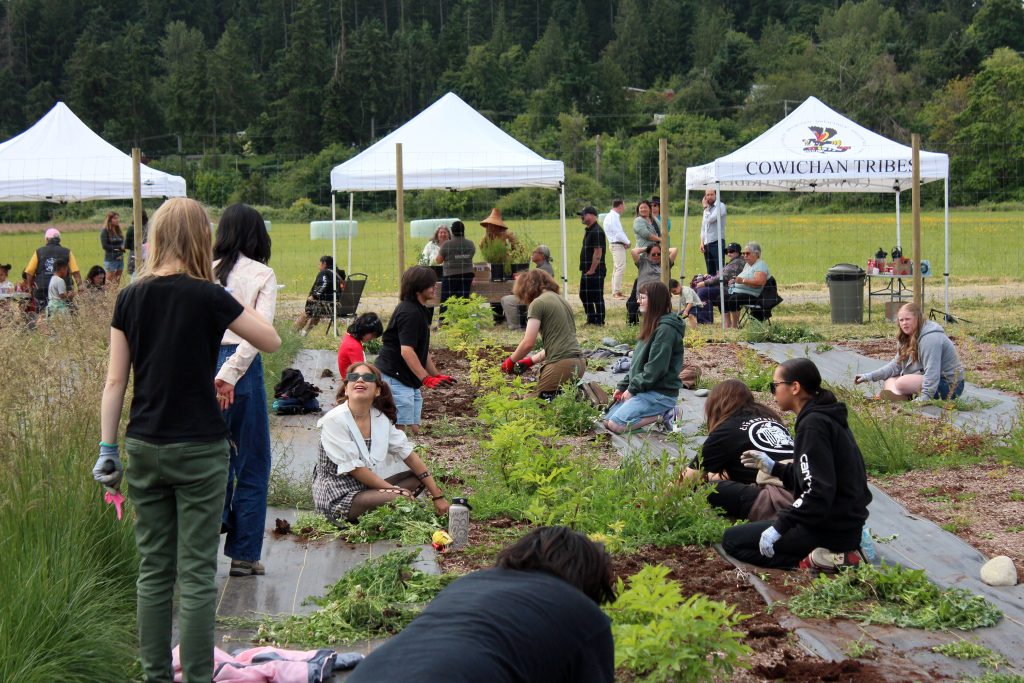
Students from Quw’utsun Secondary School and Le’lum’uy’lh Daycare Centre learn how to care for local plants at the Hulitun Spulhxun/Tumuhw native plant nursery.
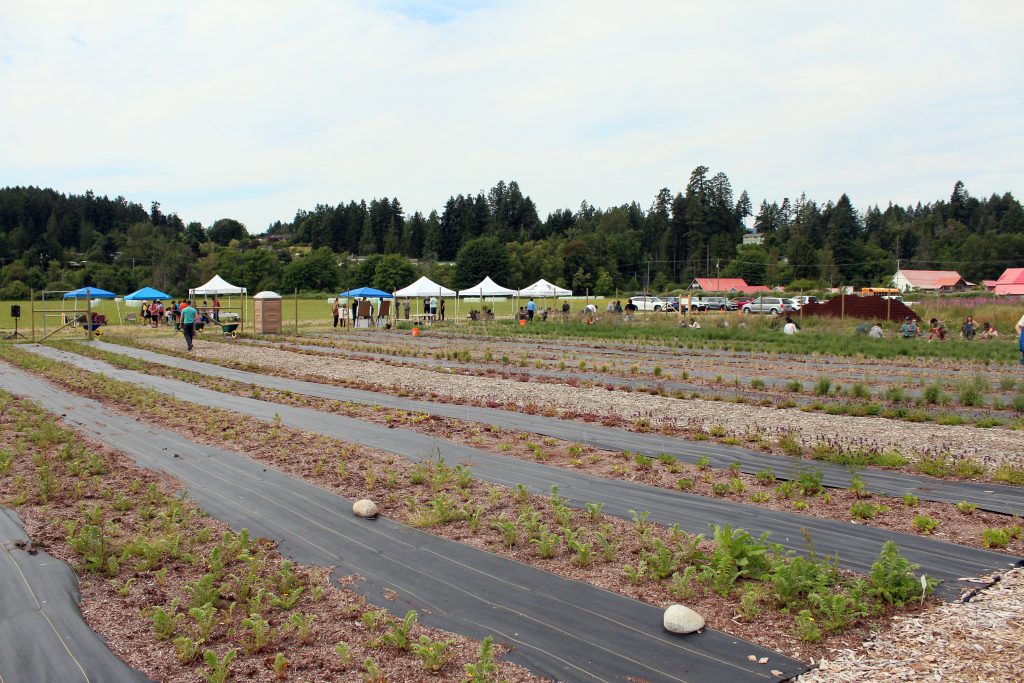
From Cowichan Bay Road, it may look like any other farm in the Cowichan Valley — a collection of two shipping containers and fences surrounding neat rows of dirt.
But inside the Hulitun Spulhxun/Tumuhw native plant nursery, a major transformation of the land is underway.
And it’s all powered by native plants and Indigenous knowledge.
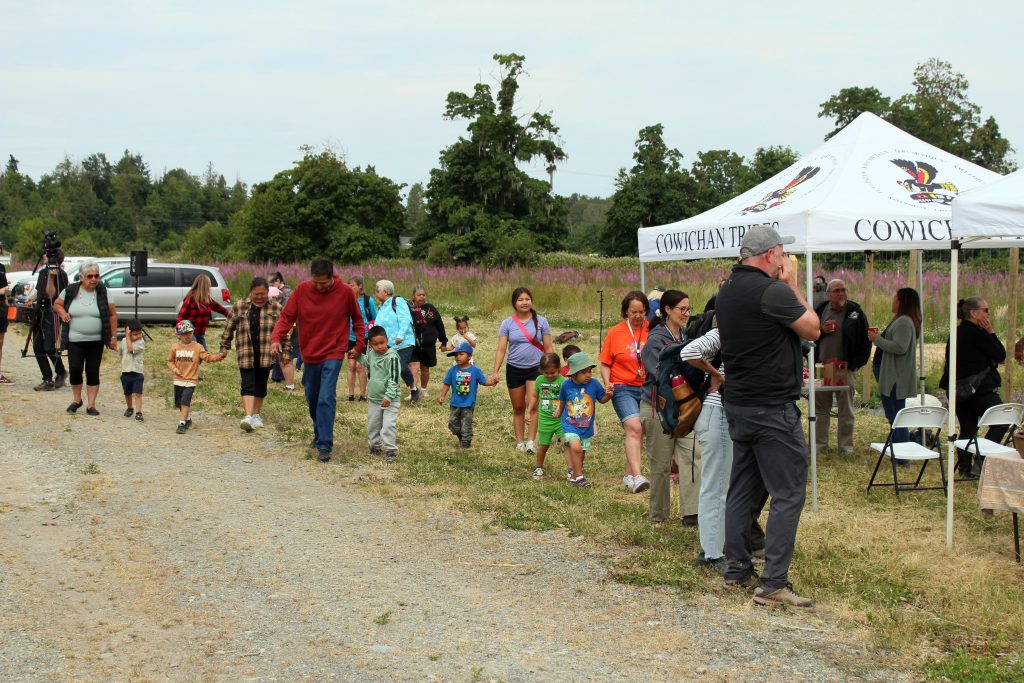
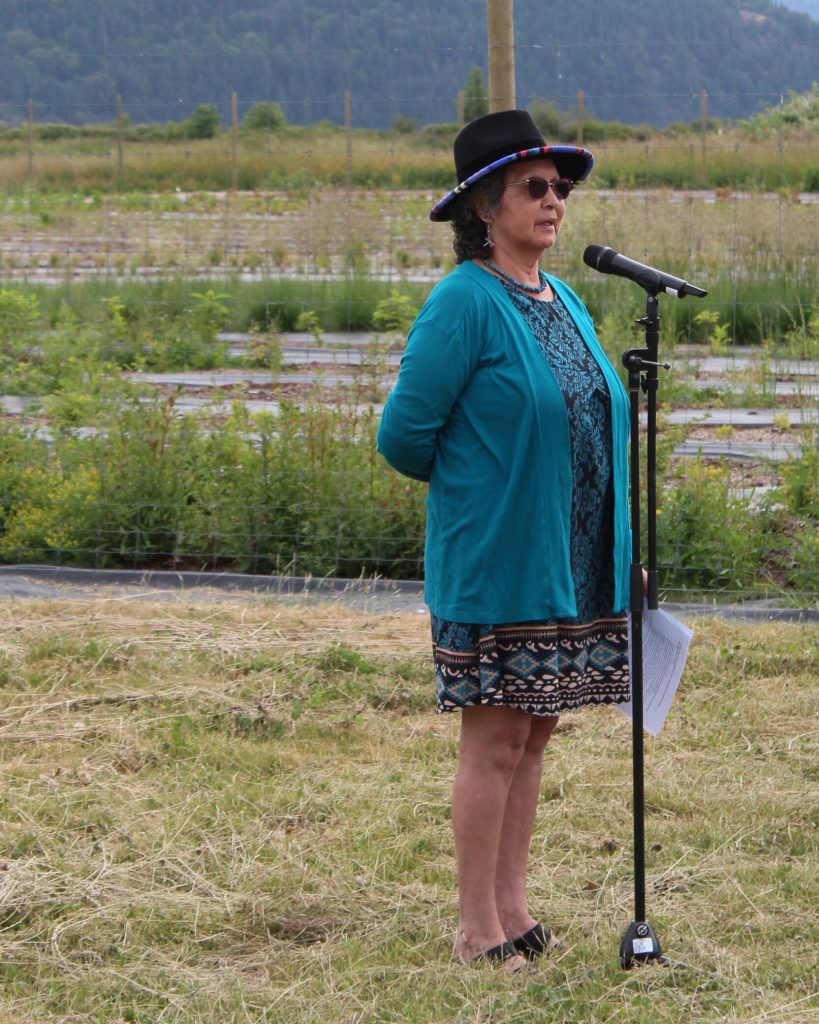
Last month, students from Quw’utsun Secondary School and youth from the Le’lum’uy’lh Daycare Centre joined Cowichan Tribes Chief Cindy Daniels and Elders for a morning of tending to plants at the nursery, part of an ongoing effort to revitalize agriculture in the estuary.
Jared Qwustenuxun Williams, a Salish food sovereignty advocate and cultural educator, thanked the students for helping heal and restore the estuary.
“Even just showing up is a huge healing to all of our ancestors who walk here with us, all of our younger relatives and our Elders that are here,” he told the group of children. “It’s a strong healing for them to see everybody.”
Qwustenuxun, a regular contributor to The Discourse, where he has documented his first-hand experience working in the nursery to help revive Indigenous agriculture, and also debunking misinformation surrounding the estuary project as a whole.
Estuary once fed 15,000 Quw’utsun people
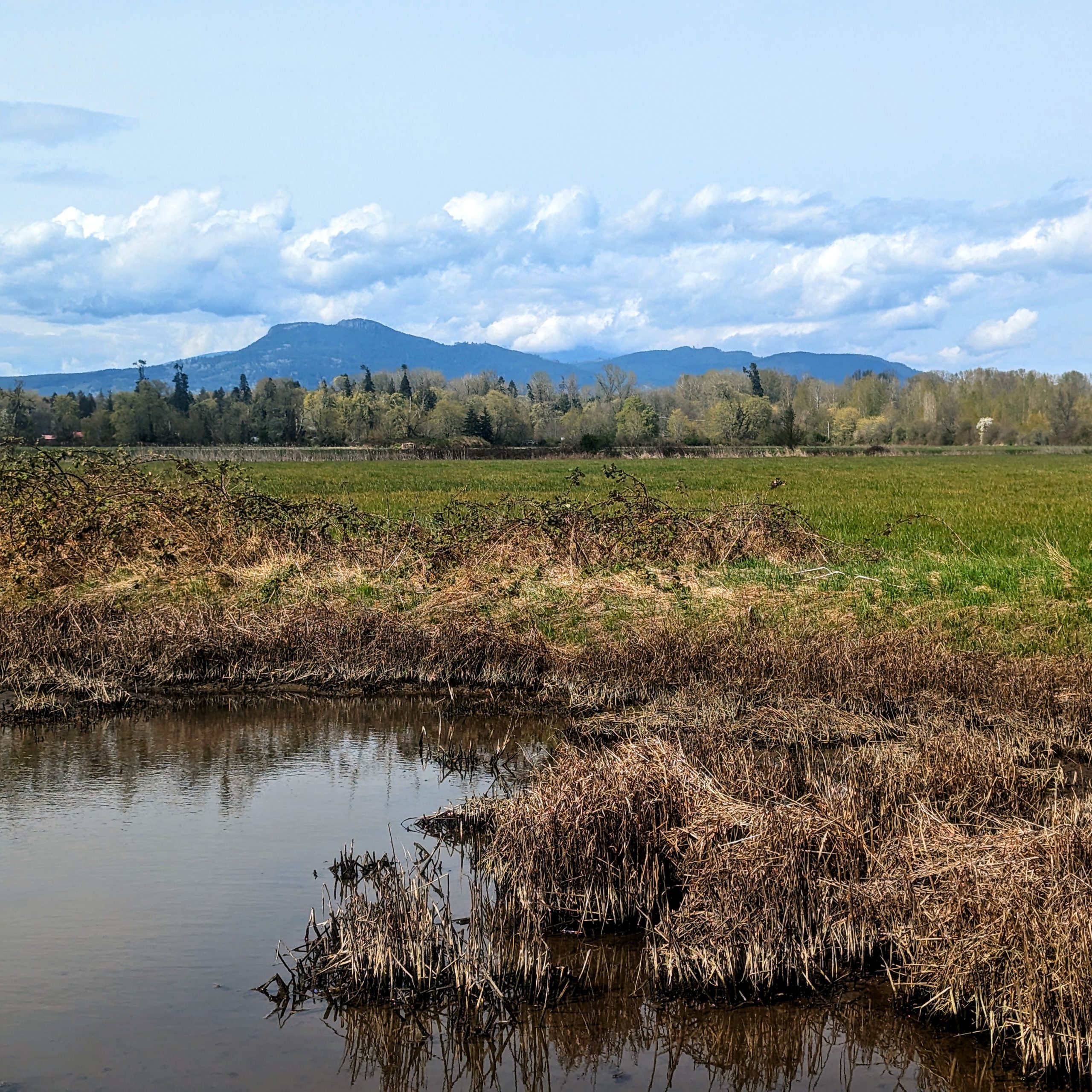
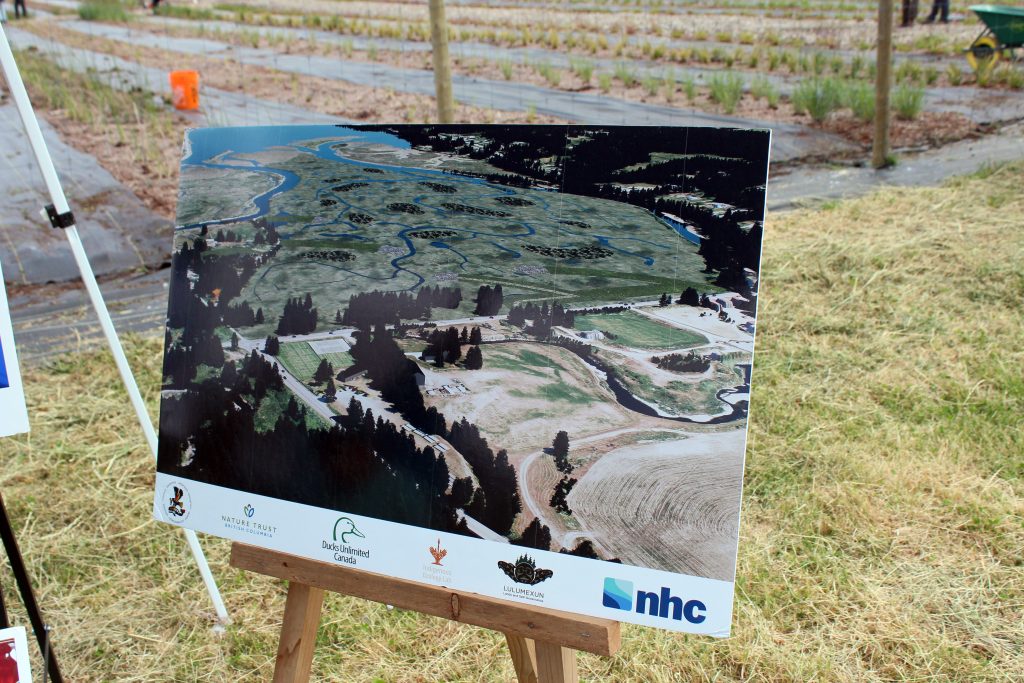
Hulitun Spulhxun/Tumuhw (Nurturing Fields) nursery is one piece of the larger, ongoing project by the Nature Trust of BC to restore the Quw’utsun/Xwulqw’selu (Cowichan/Koksilah) Estuary to its natural state — by removing human-made barriers, and reconnecting fresh water channels with tidal areas.
The estuary, one of the most productive intertidal zones on Vancouver Island, once supported agriculture that fed a population of 15,000 Quw’utsun people before the arrival of settlers.
Efforts to restore the estuary have been 40 years in the making, after beginning in 1985.
“How did we feed so many people? By working with and taking care of the abundance that had always existed here,” explained Cowichan Tribes councillor D’Arcy Joe Jr.
“Our restoration work here in the estuary is to ensure that we can thrive and sustain ourselves once again, particularly as we face the impact of climate change.”
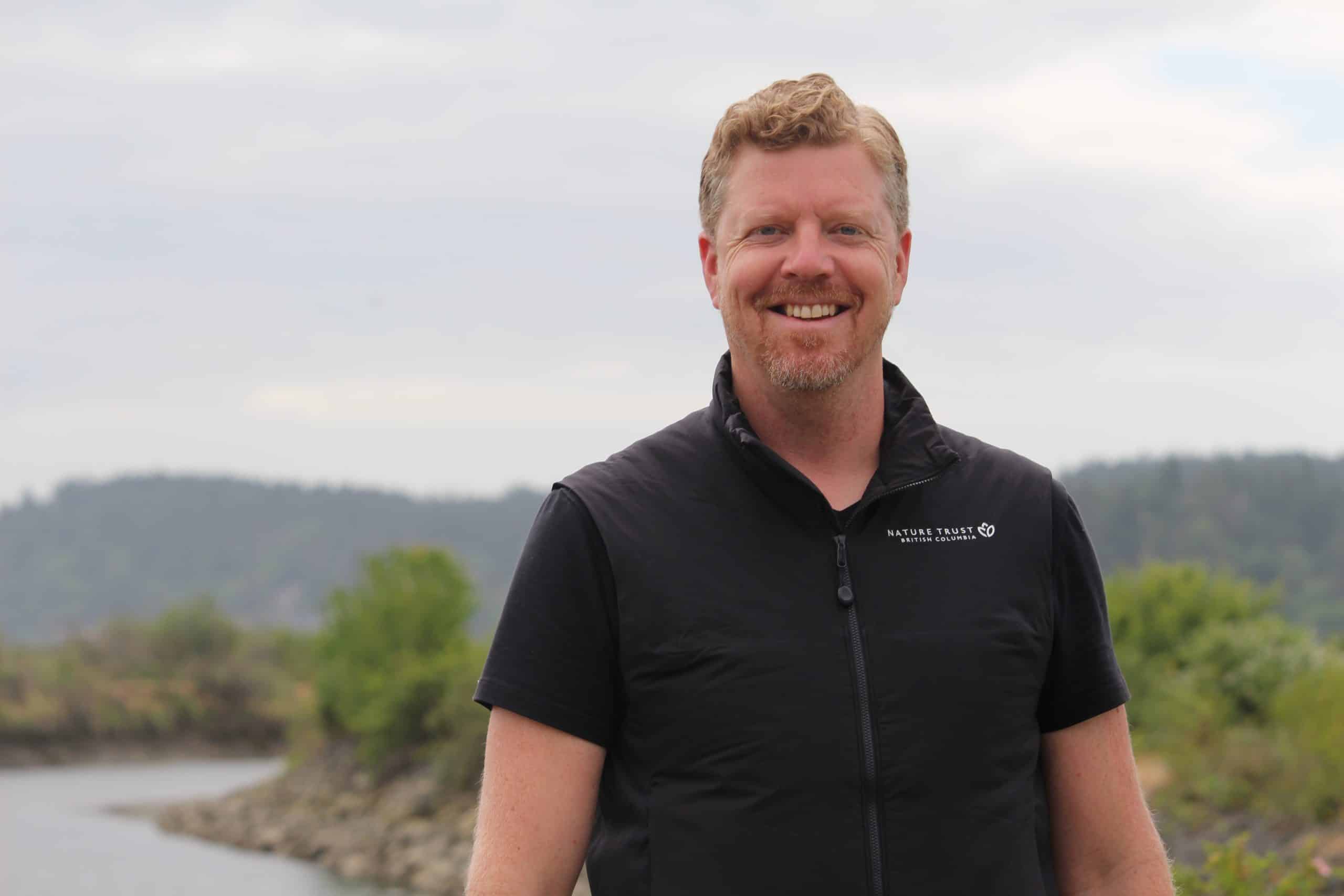
Last fall, the initiative saw 20,000 plants planted in the area, according to Tom Reid, West Coast conservation land manager with the Nature Trust.
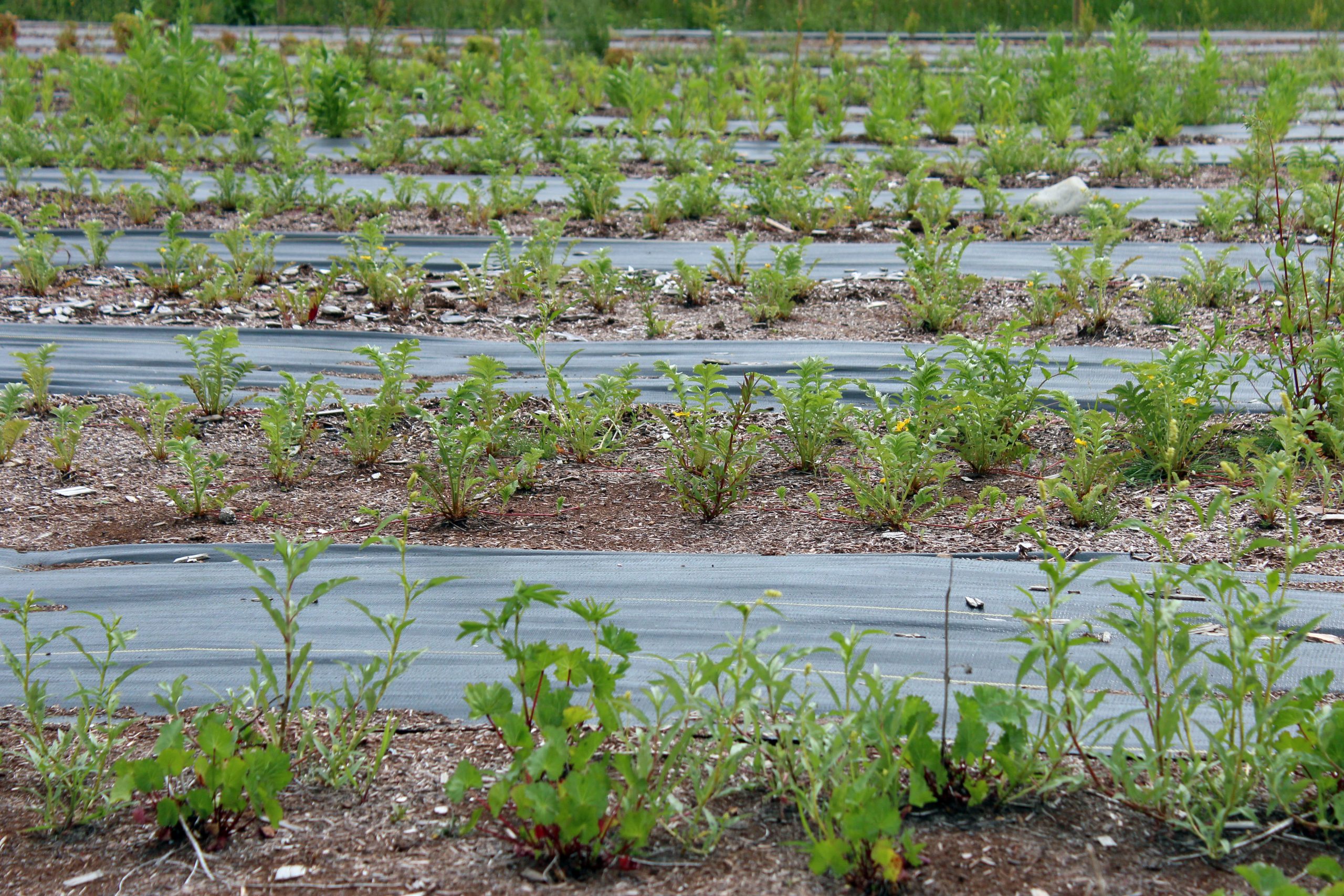
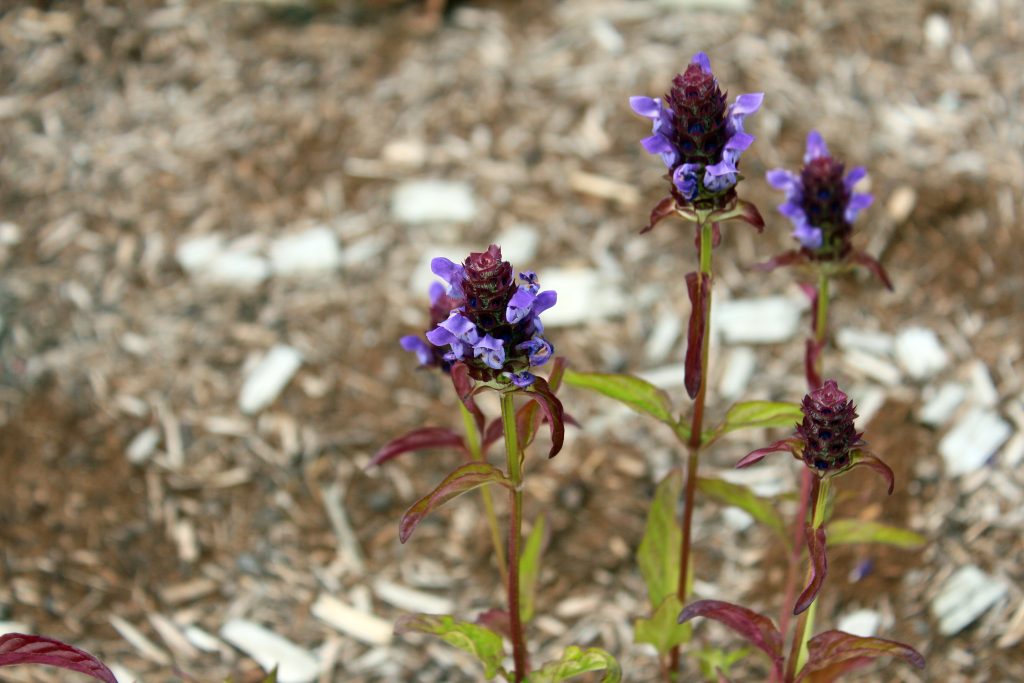
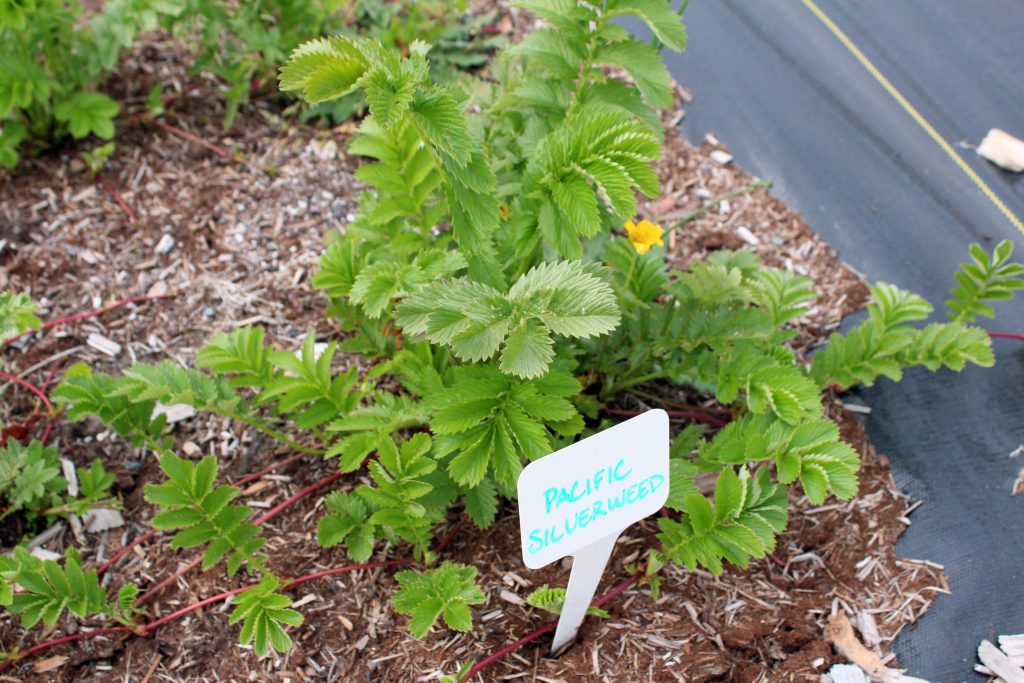
The results are clear when walking along the many rows of pacific silverweed, speenhw (camas) and tl’uliqw’ulhp (yarrow) in the 10-hectare nursery.
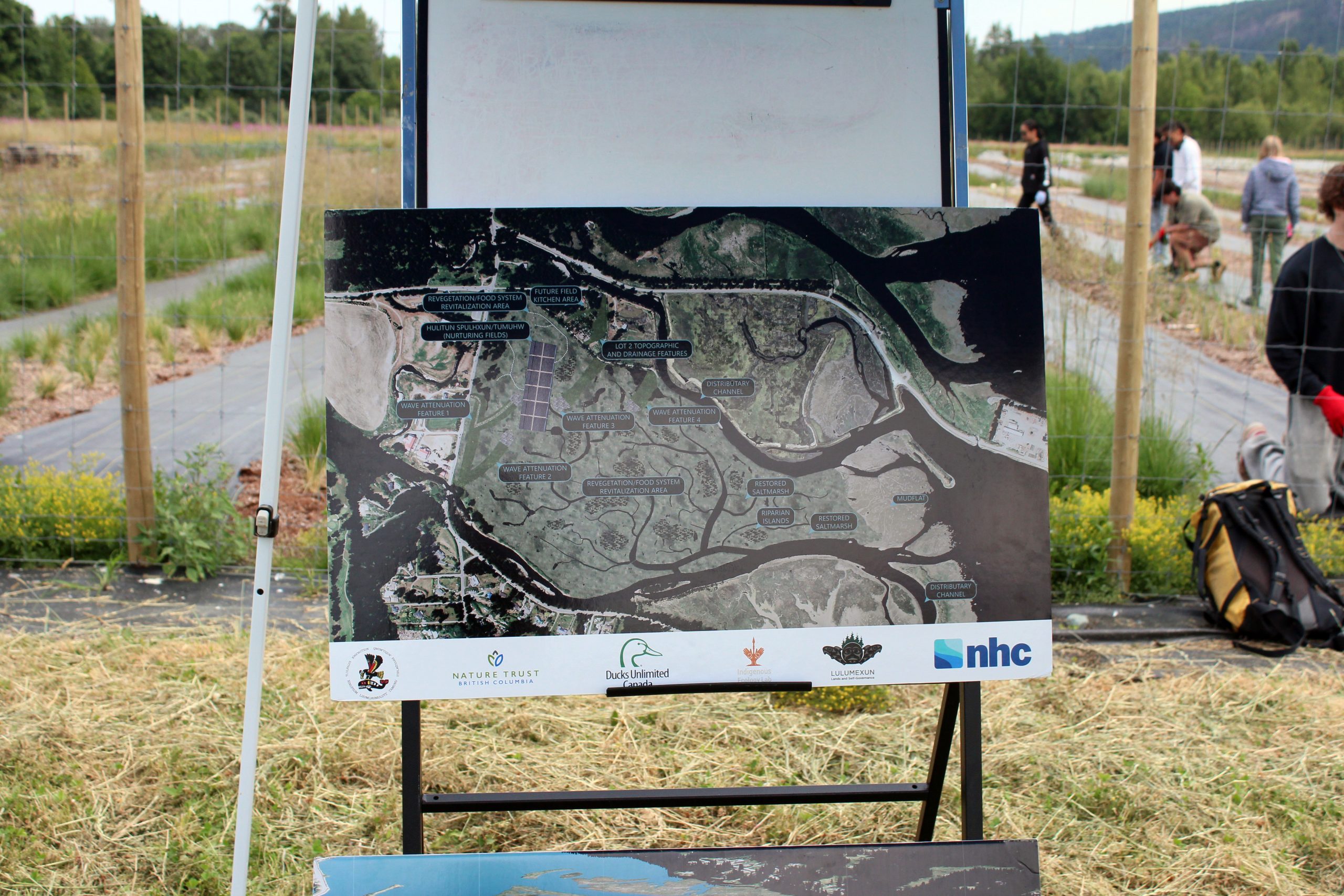
Plants grown in the nursery will also be transplanted directly into 40 hectares of restored riparian areas and wave-attenuation features in the estuary, which were built to protect properties around Cowichan Bay Road from flooding, Reid said.
“The nursery will probably be here for quite a long time,” he said, “because we estimated we’re going to need millions of plants.”
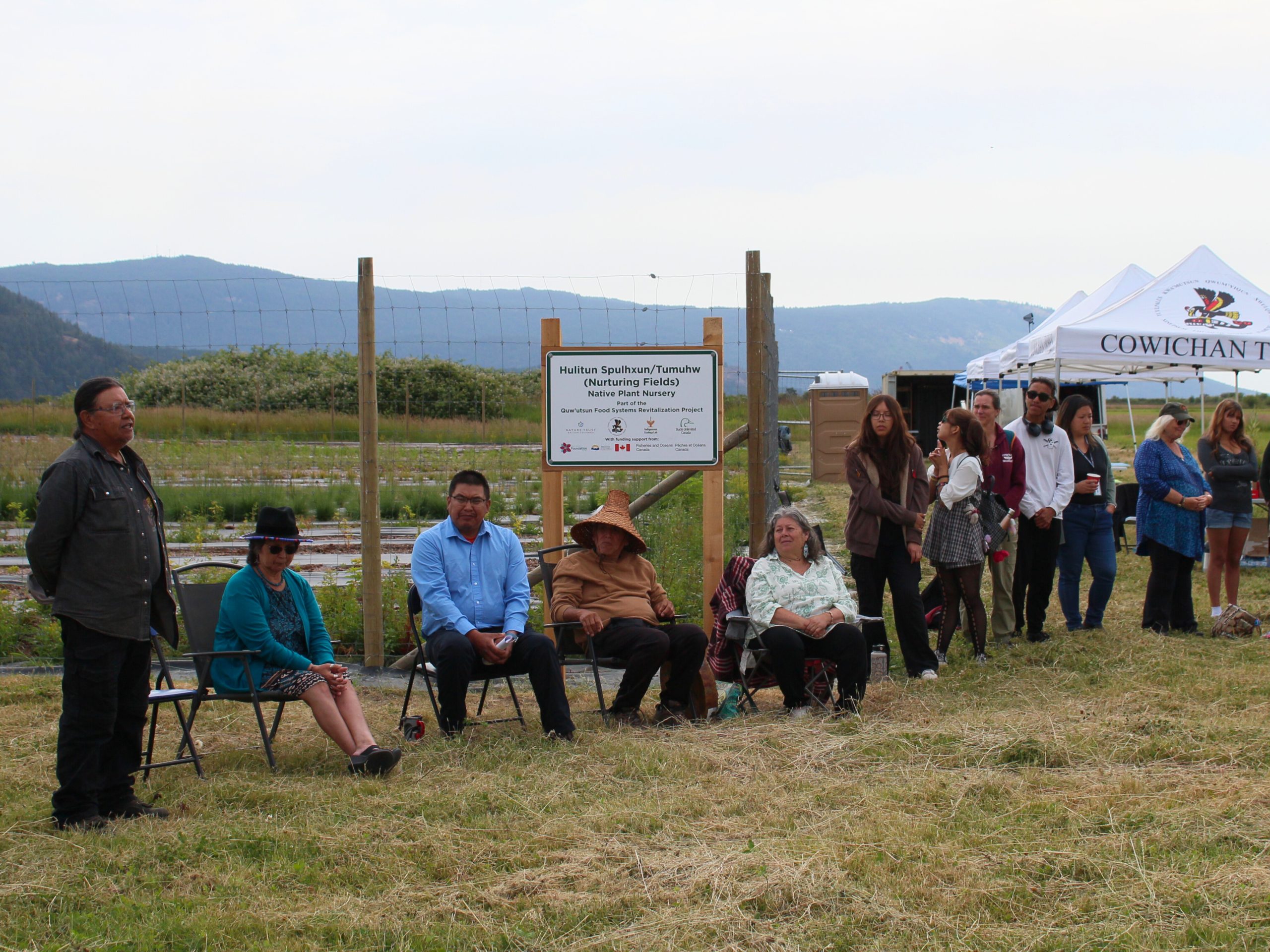
For Siil’na’mut (Ken Elliott), the nursery reflects a deep connection he had with his grandmother. She shared knowledge of how to care for these important plants. Her knowledge can now be passed on to a new generation of Quw’utsun youth.
“I was fortunate enough to be taught the process for harvesting for foods, for medicines,” he said. “This is very important, because what the elders were doing was sharing their honor and respect for those living beings.
“Sharing that love with the plants was real medicine for me — and real medicine for the plants.”
For more information on the Quw’utsun/Xwulqw’selu (Cowichan/Koksilah) Estuary Restoration and Food System Revitalization Project, visit the Nature Trust of BC’s website.
Here are more photos from the workshop, taken by The Discourse’s Eric Richards:
What did you think of this story?
Your feedback after we publish a story helps ensure we're always improving our reporting to better serve you
Author
Related Articles
Voting in the 2026 Cowichan Valley local elections? Here’s what you need to know
Where, when and how to cast your ballot in North Cowichan, Duncan, Ladysmith, Lake Cowichan and the Cowichan Valley Regional District for the 2026 local elections.

Cowichan Valley candidates on protecting the community from climate change
Candidates in Duncan, North Cowichan, Ladysmith and Lake Cowichan share the steps they’d take to protect the community from the impacts of climate change.
Here’s how Cowichan Valley’s municipal candidates will respond to the homelessness and mental health crises
Cowichan Valley’s 2026 candidates share how they’d respond to issues related to homelessness, mental health and addiction.