
Nanaimo mayor calls for more involuntary care
Mayor Leonard Krog says involuntary care is needed for people with brain injuries acquired from toxic drug use at a Vancouver forum organized by the Save Our Streets Coalition.
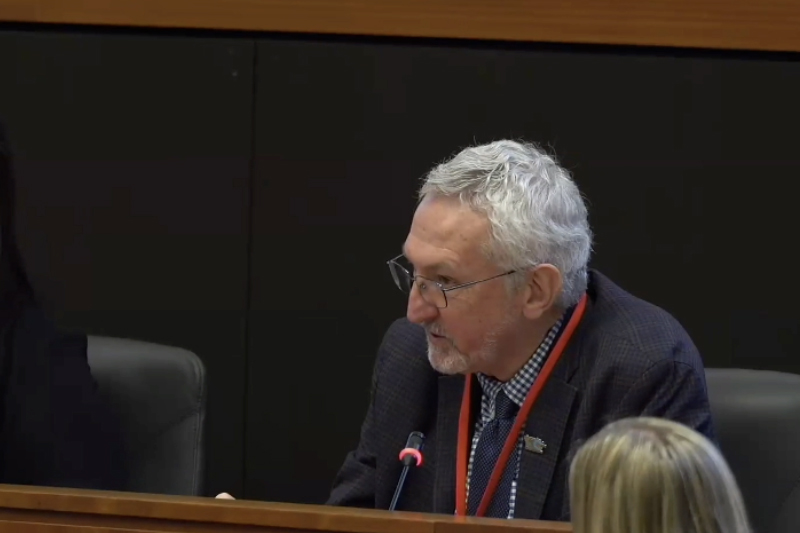
Nanaimo Mayor Leonard Krog said that shutting down the Riverview Mental Health Hospital in Coquitlam in 2012 was a “huge mistake” at a forum organized by the Save our Streets coalition on Thursday, Jan. 23.
“Nobody’s asking for a return to One Flew Over the Cuckoo’s Nest and nurse Ratchet,” he said. “But to pretend for a moment that there weren’t a number of people who needed to be in secure care for lengthy periods of time, and that somehow, if you put them back in community with supports that were never in place, that they were going to get better, is just silly.”
Krog used the forum — which was sponsored by Anthem Properties, the Pattison Food Group and London Drugs — to reiterate his call for “smaller, community based facilities for secure involuntary care, so that people aren’t separated from their families.”
The Save our Streets Coalition was formed in 2023 and consists of 120 community and business organizations across B.C., including London Drugs, Save on Foods, the Downtown Nanaimo Business Association, Victoria Crescent Association, Nanaimo Chamber of Commerce and the Nanaimo Area Public Safety Association.
Christina Cook, a lawyer at the BC First Nations Justice Council who also spoke at the forum, pushed back on the idea that involuntary care would be a “panacea” to solving the problem of social disorder and crime that Nanaimo is facing.
“It will be very difficult and very expensive in order to facilitate the required checks and balances that you’re going to need to ensure that people’s Charter rights are protected, that standards are implemented to ensure that it’s only in the most severe cases that you have the interplay between the justice and health systems,” she said. “I’m not sure that it’s going to provide an immediate or a timely solution that is required in a lot of our communities right now.”
Cook said instead of ramping up secure involuntary treatment she would like to see more resources given to programs that divert people from the justice system to getting treatment when they need it, “not at the end of their criminal justice process, at sentencing.”
“Work with people at the time that they’re in crisis, to help them with their housing issues, to help them with their health issues, their addiction issues,” she said.
Province moving towards involuntary care
The mayor says the province is “moving very slowly” towards its plan, announced in September, to open special facilities for people with addiction, mental illness and brain injuries at the Surrey Pretrial Services Centre and on the grounds of the Alouette Correctional Centre in Maple Ridge.
The province also said it is building 400 mental health beds in hospitals across B.C., 280 of which will be modernized beds and 140 of which will be new beds, which also increases the capacity for involuntary care under the Mental Health Act.
Krog said the City of Nanaimo is dealing with “two separate classes of criminals,” one of which is “extremely violent and dangerous” due to “severe mental health issues” as a result of addiction, brain injury and trauma.

The other problem that Krog sees is “repeat offenders that go into London Drugs downtown repeatedly [shoplifting to] feed an addiction, who don’t care about whether they’re picked up, charged or not charged.”
Krog said that because the crimes are small property offenses the courts and police release them soon after they are arrested and even if they are convicted and sentenced “they don’t spend enough time in jail to get into a program because the nature of the crime isn’t severe enough to warrant a lengthy sentence. They don’t get any better.”
“Taking someone’s liberty away is a really terrible thing to do,” Krog said, adding that it should be done “sparingly.”
“But there is no question there are more individuals in our streets now who require secure involuntary care who are not going to get better being sentenced to jail for six months or a year.”
Effectiveness of involuntary care questioned
As reported in The Wren, sister publication to The Discourse, involuntary treatment for substance use disorders has not been proven to work better than voluntary treatment, and some research shows the health outcomes are worse. It can also increase a person’s risk of overdose and death when they leave.
These concerns, among many others, have led to organizations like the Canadian Mental Health Association (CMHA) to warn against the expansion of involuntary treatment.
“The reality is that we are already relying heavily on involuntary care without really examining whether it is effective,” CHMA B.C. wrote in a statement during the B.C. election.
In an op-ed published in December by the Nanaimo News Bulletin, addictions medicine doctor Jess Wilder argued that “there is zero evidence from any high-quality study that involuntary care decreases rates of substance use, decreases harms or deaths from overdose, or reduces rates of homelessness or public drug use. In fact, the evidence shows definitely that the opposite of each of these is true.”
Dr. Wilder, who was unavailable for an interview, wrote that as Indigenous people are disproportionately affected by substance use, putting them in secure involuntary care would be “systemic racism” and create “another cycle of intergenerational trauma.”
Instead of involuntary care, Wilder said she would like to see more voluntary treatment beds open so her patients who want treatment don’t have to wait months to access one.
What did you think of this story?
Your feedback after we publish a story helps ensure we're always improving our reporting to better serve you
Author

Related Articles
Nanaimo mayoral candidates address the homelessness crisis
Homelessness is a key election issue but what can the City of Nanaimo do about it?

How Nanaimo candidates would pay for rising infrastructure costs
City of Nanaimo’s 2026 candidates share how they’d manage the budget to cover rising infrastructure and repair costs without overburdening taxpayers.

Nanaimo candidates on how the city can cut emissions
City of Nanaimo’s 2026 candidates share two actions within city jurisdiction they’d prioritize to reduce emissions, and how they’d know if they were working.