
History repeating itself: American health-care workers ‘kick the tires on Canada’ in the Comox Valley
For more than 50 years, political upheaval south of the border has benefitted the Comox Valley.
“Why did you leave the United States?”
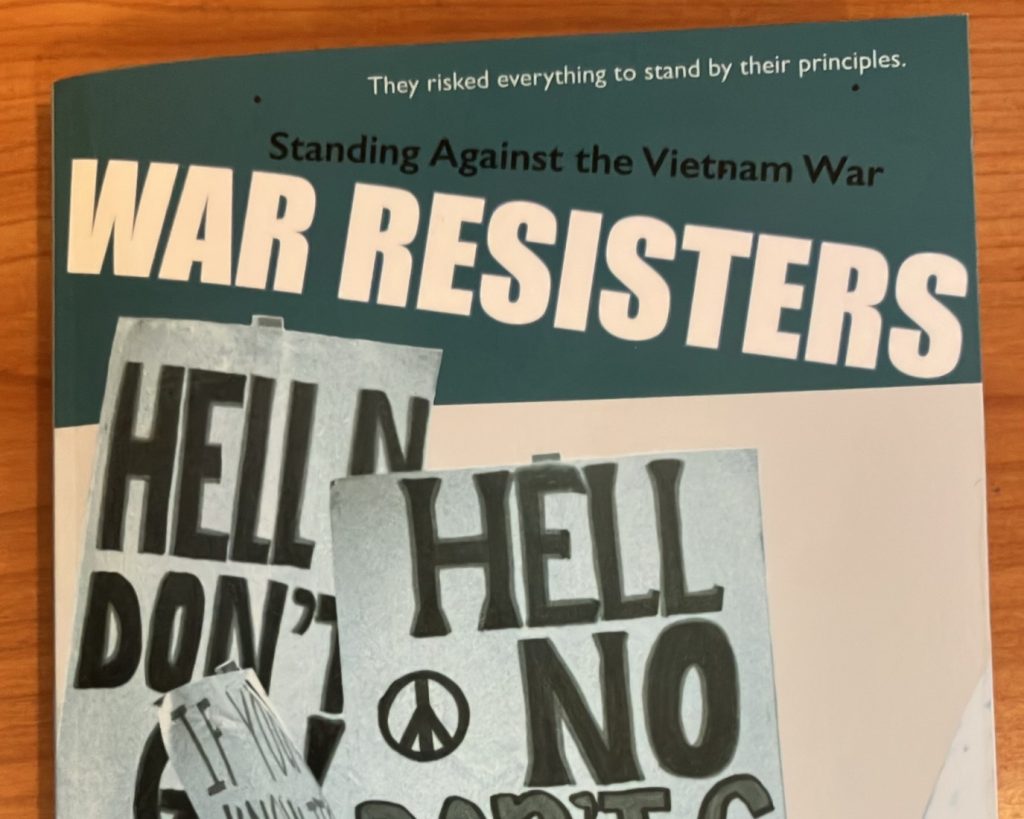
Joline Martin, the Courtenay-based author of War Resisters: Standing Against the Vietnam War — a collection of twelve personal stories about American war resisters on Vancouver Island — has thought long about this question since abandoning her country of birth half a century ago.
Her answer is frank and practiced.
“I left because I was disillusioned with the U.S., and I didn’t want to be a part of that country. They’re always killing people of colour,” Martin tells Discourse reporter Dave Flawse in an interview.
During the Vietnam War, educated and skilled American immigrants came to the Comox Valley and surrounding areas for similar reasons, often to preserve their lives. Today, the United States is seeing similar political upheaval, and those seeking a way out are also looking north.
According to the Medical Council of Canada, Canada is now seeing a new, though smaller, flood of educated American immigrants. This time it’s medical professionals.
A recent announcement from the province says more than 500 health professionals trained in the U.S. have accepted job offers in B.C. as of February 2026, with 141 planning on coming to Vancouver Island. They have come as part of a targeted campaign by the B.C. government — launched in March 2025 — to recruit trained health-care workers from south of the border.
“More doctors and health professionals from the United States are choosing B.C. because they can focus on patients in a strong public system that values their work,” Premier David Eby said in a news release.
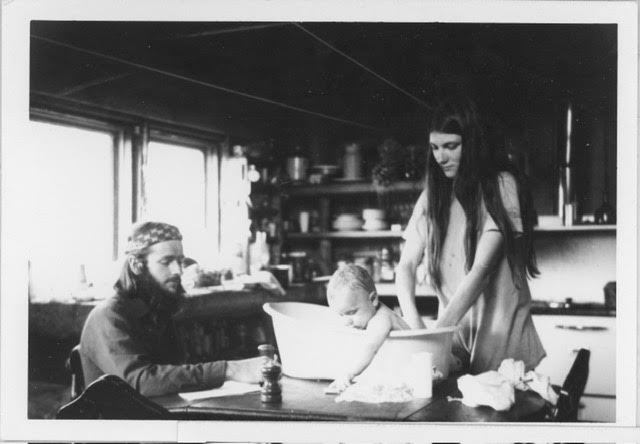
A war resister from 1969, and subject in Martin’s book named Valerie Straw, put her reasons for coming to Vancouver Island another way:
“We had a feeling of being rats leaving a sinking ship.”
The history of war resister immigration
Many factors led to Valerie and her partner, Greg, moving to Malcolm Island, B.C.
“The escalation of the Vietnam War, the pressure from the draft board, the assassinations of Bobby Kennedy and Martin Luther King, the election of Richard Nixon to the presidency. The list was endless,” Martin writes in War Resisters.
The term war resister replaces “the shame-laden labels ‘draft dodgers’ and ‘deserters,’” Martin writes, referring to the estimated “100,000 U.S. citizens [who] fled their country seeking a peaceful life in Canada.”
“There are so many war resisters [in the Comox Valley] it will blow your mind,” Martin tells The Discourse. Martin, who is relatively new to the community, knows at least 50 resisters and notes that they assimilated into society. “Even among ourselves we did not know who came.”
She only discovered these 50 or so people for herself while researching the book. Even the birthplace of a friend whom she’d known for decades went unmarked.
“I had no idea he was a war resister,” Martin says.
To legally immigrate to Canada, war resisters had to meet a point system. Most resisters had skills or were university educated, making it easy for them to meet the point system requirements, Martin writes.
When a pardon became available in the U.S. in 1977, many war resisters left Canada to go home. But a 1986 census showed that half stayed, “making it the largest and best-educated group this country has ever received,” Martin writes.
Another kind of resistance
Sarah, an American family doctor and obstetrician, had always talked with her partner about working outside of the United States one day.
“Then, after the shift in political tone over the last few years and the re-election of Trump, we said maybe now is the time to go,” Sarah says.
The Discourse is keeping her identity anonymous because she must still maintain a medical licence in the United States for two years to be licensed in Canada and doesn’t want to jeopardize her job.
In early 2025, she saw advertisements on LinkedIn and other online platforms targeting American health-care workers to work in Canada. The couple had previously travelled to Vancouver Island.
“We love Victoria,” Sarah explains to The Discourse.
In June 2025, Sarah toured practices across Vancouver Island, eventually finding one with like-minded people in the Comox Valley. She spoke with her partner and they decided to “pull the trigger” and move to the Island.
Since moving here in October 2025, Sarah has been taking advantage of supports from the Division of Family Practices, including continuing medical education and monthly meetings for new physicians to the area, she says.
Sarah is in contact with two American friends in the medical field who also plan to make the move to Canada. One is a pediatrician working in a small, remote town.
“There are a bunch of funding cuts to rural access hospitals. Her position may not even exist,” Sarah says.
She notes that Canadian health care differs from the one she left back home where “there are no federal guidelines for vaccines at this point. As a physician, I recommended people follow the old vaccine schedule that got them covered for things like measles,” Sarah says.
The new federal government mandates in the U.S. played a part in why she made the move to Canada, and the Vietnam War resisters similarly had fundamental moral and practical objections to their government’s policies back home.
‘Health care infusion’
A grassroots effort to attract doctors to Canada began by chance in 2025 when Tod Maffin famously invited Americans to spend time in Nanaimo.
Maffin was surprised when “a lot of health-care workers came as a way to, you know, kick the tires on Canada,” Maffin tells Discourse reporter Dave Flawse.
That’s when Maffin decided to begin the Healthcare Infusion, which, according to the initiative’s website, is “a volunteer-driven national movement connecting doctors, nurses and other health-care professionals with the Canadian communities that need them most.”
The movement has since spread.
“There are now more than 40 chapters in 40 communities around the country in almost every province and territory that are running one of these things,” Maffin says.
Maffin explains that websites from federal and provincial levels of government all provide adequate information to prospective immigrants, “but none of them really talk about how it all connects together.”
With the Healthcare Infusion, Maffin says he wanted to “add a sort of community piece to the puzzle as well,” where people can ask Canadians any questions they might have about life in the country.
A grassroots system also existed in the 1960s and 70s to bring in Americans and to aid their transition into Canadian society.
‘So you are having a war resister’
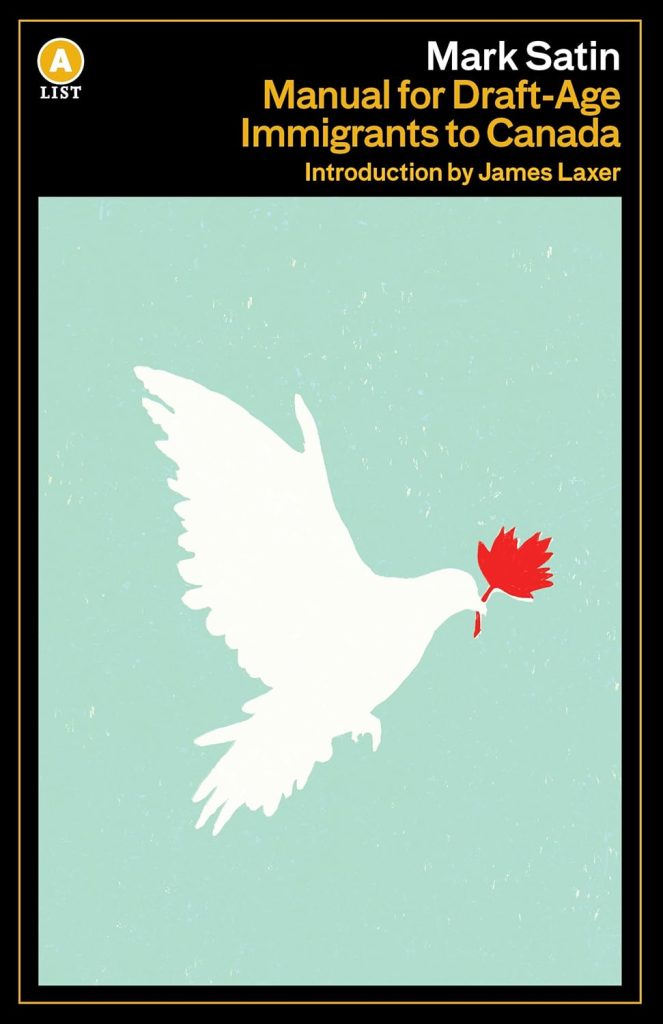
A popular underground book, Manual for Draft-Age Immigrants to Canada, was published in Toronto and sold 100,000 copies in America. The manual “played a vital role in resisters entering Canada,” Martin writes in War Resisters.
Once immigrants arrived, “around 75 different organizations aided Vietnam War resisters to enter and settle [in] Canada,” Martin writes.
In B.C., the Vancouver Committee to Aid American War Objectors was one group established in the late 1960s to meet “the heavy demand from war resisters entering the province,” Martin writes. The committee provided referrals for housing, employment, healthcare and networking while publishing pamphlets to aid recent immigrants.
Another organization published a similar pamphlet for Canadian host families offering temporary housing to immigrants. It was called So You Are Having a War Resister. Martin writes that some resisters stayed with families for weeks or months without cost.
‘To preserve social history’
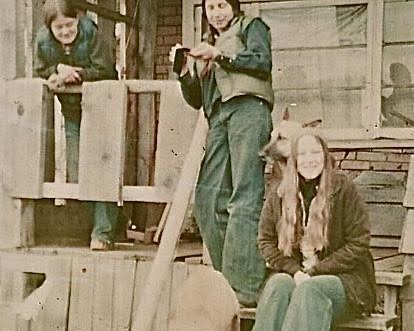
In 1972, when Martin graduated from university, she travelled from Illinois to live with friends on Haida Gwaii, planning to stay for 12 months. “I learned how to skin and butcher deer, clean and fillet fish, chop wood and kill a chicken,” she writes in the story collection Gumboot Girls: Adventure, Love & Survival on the North Coast of British Columbia.
“My year on Haida Gwaii turned into 35,” Martin writes. Eventually, she moved to the Comox Valley.
When asked why she wrote these stories about war resisters, Martin explains that when she began, the 50-year anniversary of the Vietnam war was coming up, “and 50 years gives you the long view. I wanted to capture the stories to preserve social history.”
A history that’s proving more important than ever.
When asked to comment on the parallels of American immigration between then and now, Sarah notes that, “History doesn’t repeat itself, but it sure does rhyme.”
What did you think of this story?
Your feedback after we publish a story helps ensure we're always improving our reporting to better serve you
Related Articles
Comox Valley, Nanaimo land trusts raising funds to support Deep Bay land conservation purchase
In a partnership with the Comox Valley and Nanaimo Area land trusts, BC Parks Foundation is fundraising to protect 50 hectares of pristine shoreline in Deep Bay and make it accessible to the public.

Community collaboration gives second chance to beloved dinghy in Comox
In a race against time to bring a public flower installation to life, Emily Yewchuk leans on support from Comox Valley’s Project Inclusion to make it a reality.
How is The Discourse’s journalism funded?
And what does it cost to produce The Discourse’s in-depth, independent journalism?