
What to do and who to call when juvenile salmon are in danger
Officials say Cowichan Valley residents should call experts to move salmon in isolated pools because of risks associated with relocation.
Cowichan Valley resident Linda Blatchford grew up in the region and has kept a close eye on changes in the environment around her. A former biology major who spends a lot of time outdoors, Blatchford said she has seen local rivers and their tributaries start drying up earlier in the season over the years.
Last month, on a hot July day, Blatchford was on a bike ride with her family when she discovered a small pool of water in the otherwise dry-looking Fairservice Creek. Her family continued on to their destination — Mile 77 Park — but on their way home made a point to stop at the creek again.
“I couldn’t physically climb down the bank myself because I’m a senior with a sore foot, but I did say to the kids, ‘Can you guys go down that bank and go through the bush and go and see if there’s any fish trapped in that little pool of water?’” Blatchford recounted to The Discourse. “They scooted down the bank and through the brush … and then they came back running and said, ‘there’s hundreds of fish in there!’”
Unsure of what to do, and with her family leaving town shortly after the discovery, Blatchford went back to the creek, butterfly nets in hand, to try and rescue the fish with her husband. But they quickly realized they were physically unable to reach the pool of water.
She then took to local Facebook pages to ask if anyone had the ability to help rescue the fish but she soon learned that this particular job requires a licence and expert hands to ensure the fish survive.
“People started to respond and said, ‘it’s totally illegal, you’ll get fined,’” Blatchford said.
She was then put in touch with someone from the Cowichan Lake Salmonid Enhancement Society who joined Blatchford on a bike ride to the pool location. That’s when Blatchford also received a text message from someone from the Cowichan Fish Hatchery, operated by Cowichan Tribes.
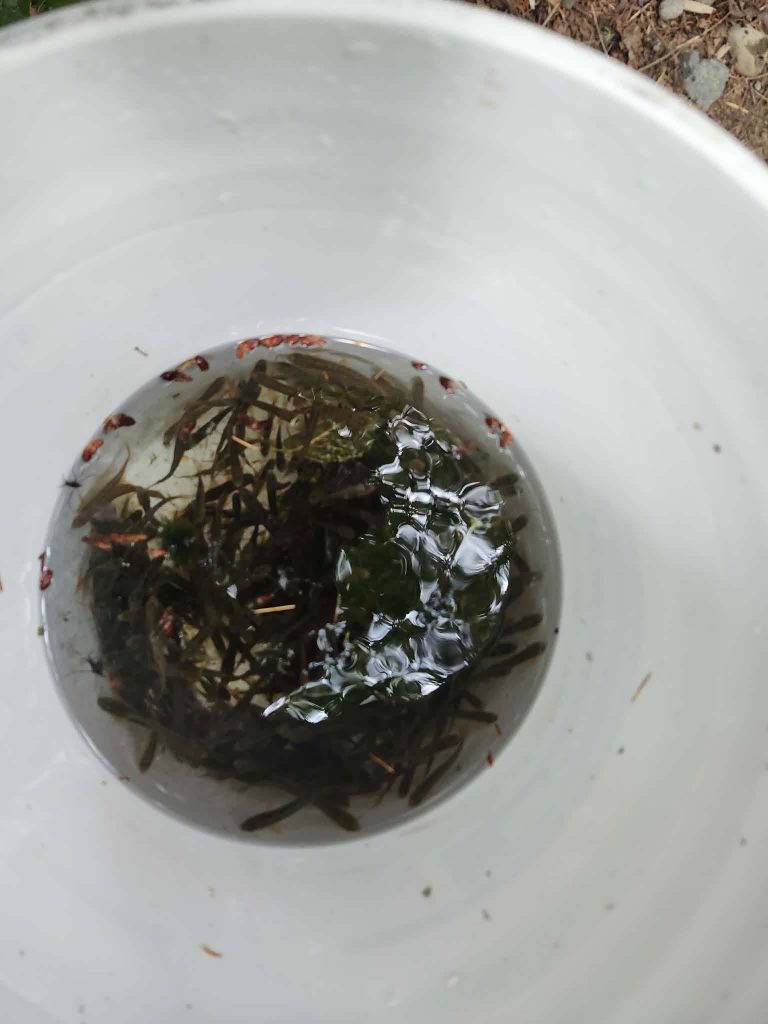
The message said they saved over 2,000 fish from that pool.
“I just cried,” Blatchford said. “All I could think about was how these little fish were going to slowly die and I couldn’t get that out of my head.”
Blatchford updated her Facebook posts, which had received significant attention from community members, and shared what she learned: that local officials and experts are asking the community to not relocate salmon fry in drying up pools because it poses a risk to the salmon and the habitat.
“These guys have the knowledge, education and the proper licensing to capture and release the little fish the right way,” her post reads.
What are the rules around juvenile salmon relocation, and why do they exist?
Fisheries and Oceans Canada has strict guidelines when it comes to emergency juvenile salmonid relocation. The guidelines are specifically for juvenile salmon that are at risk of dying and are stranded in isolated habitats with high temperatures.
“The physical handling of fish must only be considered as a last resort by salmon experts and only undertaken with proper permitting/approvals in place,” the guidelines say.
Relocating juvenile salmonids requires a specific licence from Fisheries and Oceans Canada and typically requires a different licence from the province as well.
In order to relocate fish, a stream assessment needs to be conducted by experts and qualified professionals. According to the guidelines, other considerations such as the weather forecast, timing of relocation and release locations also need to be taken into account.
The guidelines include information on the proper equipment that should be used in salmon relocation, how the equipment should be used and proper handling techniques. Since fish are susceptible to temperature changes, proper temperature acclimation is also required if there is a water temperature difference of 3 C or more between the transport container and release location.
Tom Rutherford, a director with the Cowichan Watershed Board and biologist, said fish that are in warm, isolated pools are already stressed and physically handling those fish can lead to more stress.
“You’re responsible for their lives,” Rutherford said.
He noted that there are legitimate concerns when people without the proper training and licensing try to relocate fish on their own. The fish could be shocked by a temperature change between their environments and die, or they could introduce pathogens to whatever new system they’re moved into.
“Another thing is sometimes when the water is low and the creeks are low, where there is water is full of fish. But wetted habitats have a carrying capacity,” Rutherford said. “So there’s a chance you’re shuffling the deck chairs on the Titanic. You’re actually putting strain on fish that are already there.”
Salmon relocation techniques developed over years
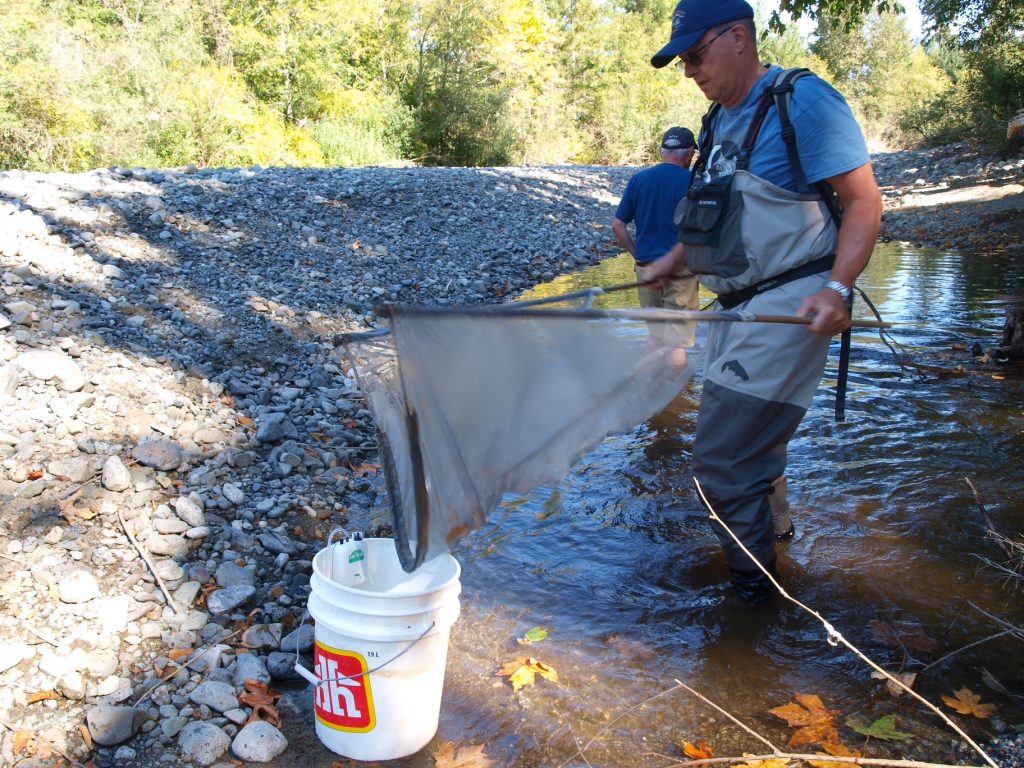
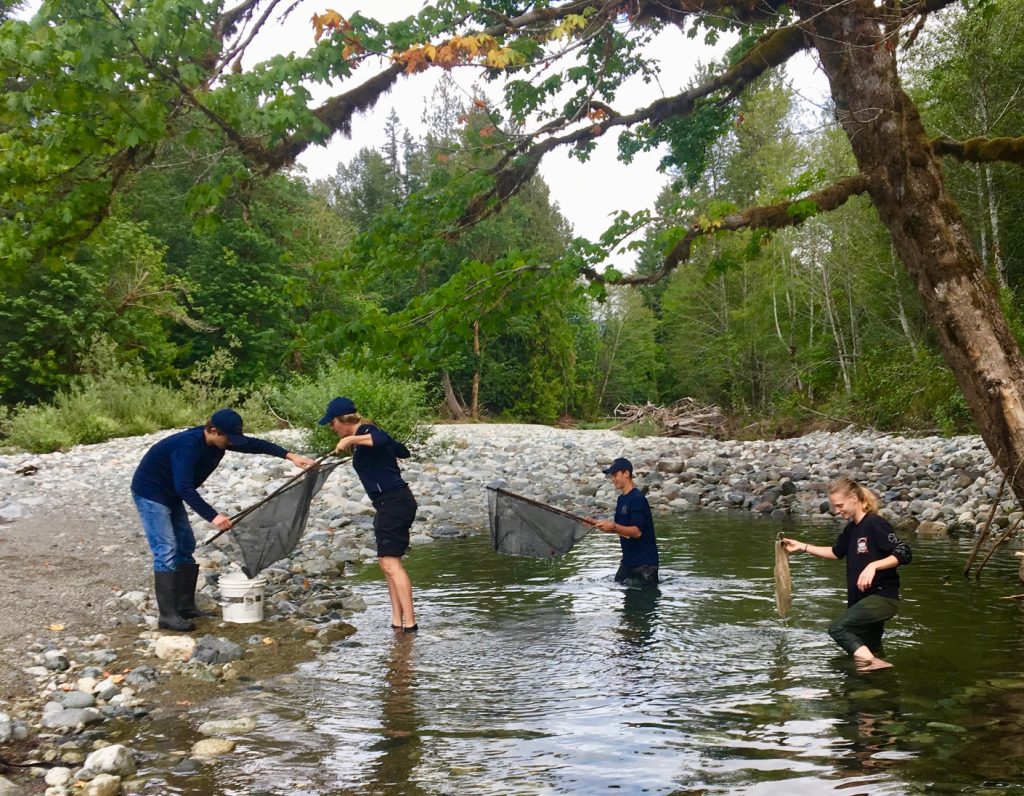
Parker Jefferson, co-chair of the Cowichan Stewardship Roundtable, has been volunteering with the Cowichan Lake Salmonid Enhancement Society and participating in juvenile salmon relocation for many years. He said most of the relocation takes place in the tributaries that flow into Cowichan Lake due to the large amounts of sediment that have been deposited in the tributaries.
“The rivers keep running, but they’re basically running underground because there’s so much gravel in there, and that’s why the pools drop quickly,” Jefferson said.
The sediment accumulation is linked to erosion from clear cutting in the watershed, he said, and its impacts on the tributaries, river and salmon are compounded by climate change-related concerns such as drought and warm weather.
“All of that has led to the necessity to monitor the tributaries and go in there as water levels drop to move some of the fish,” Jefferson said.
Over the years, Jefferson said volunteers, professionals and experts in the region have honed in on proper techniques to relocate salmon safely.
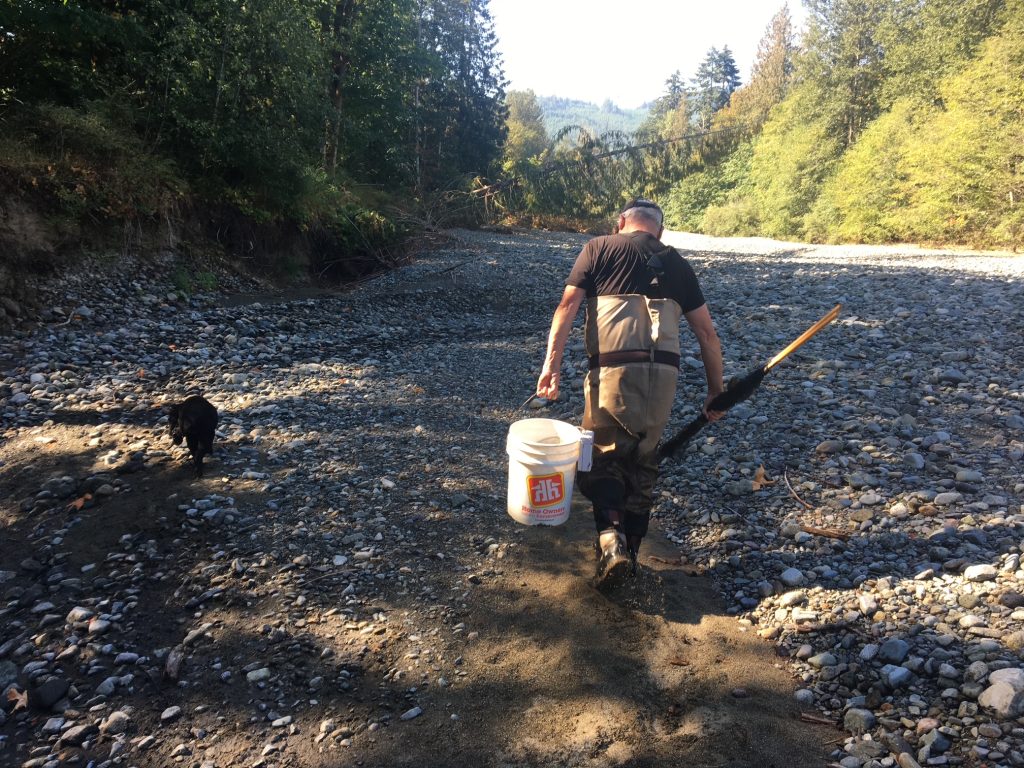
They haul five-gallon pails filled with fish, water and “aquarium bubblers” to oxygenate the water across dry river beds to their cars, and then drive the pails of fish to the lake.
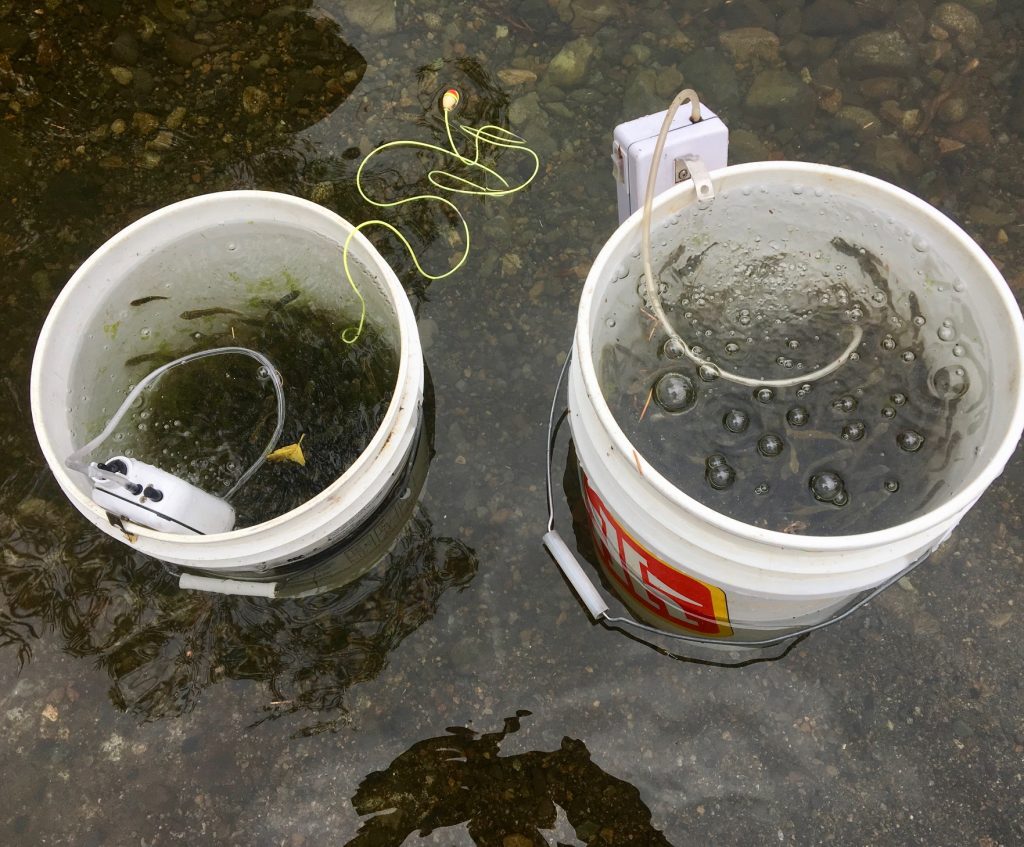
Once they reach the lake, the temperature of the water in the pail is slowly brought up to match the lake temperature by mixing lake water into the pail so the fish aren’t shocked when released.
Jefferson said he helped develop capture nets to be used during juvenile salmon relocation by finding the proper material for them. There are also specific techniques used to get as many salmon fry out of the pool as possible.
After being on the river for so many years, Jefferson said those participating in salmon fry relocation have learned where the danger spots are and they’ve developed a schedule for when to check those spots.
“We’ve pretty much refined the techniques, and we feel like we’re doing a really good job to keep these fish going,” Jefferson said.
The best-monitored river in Canada
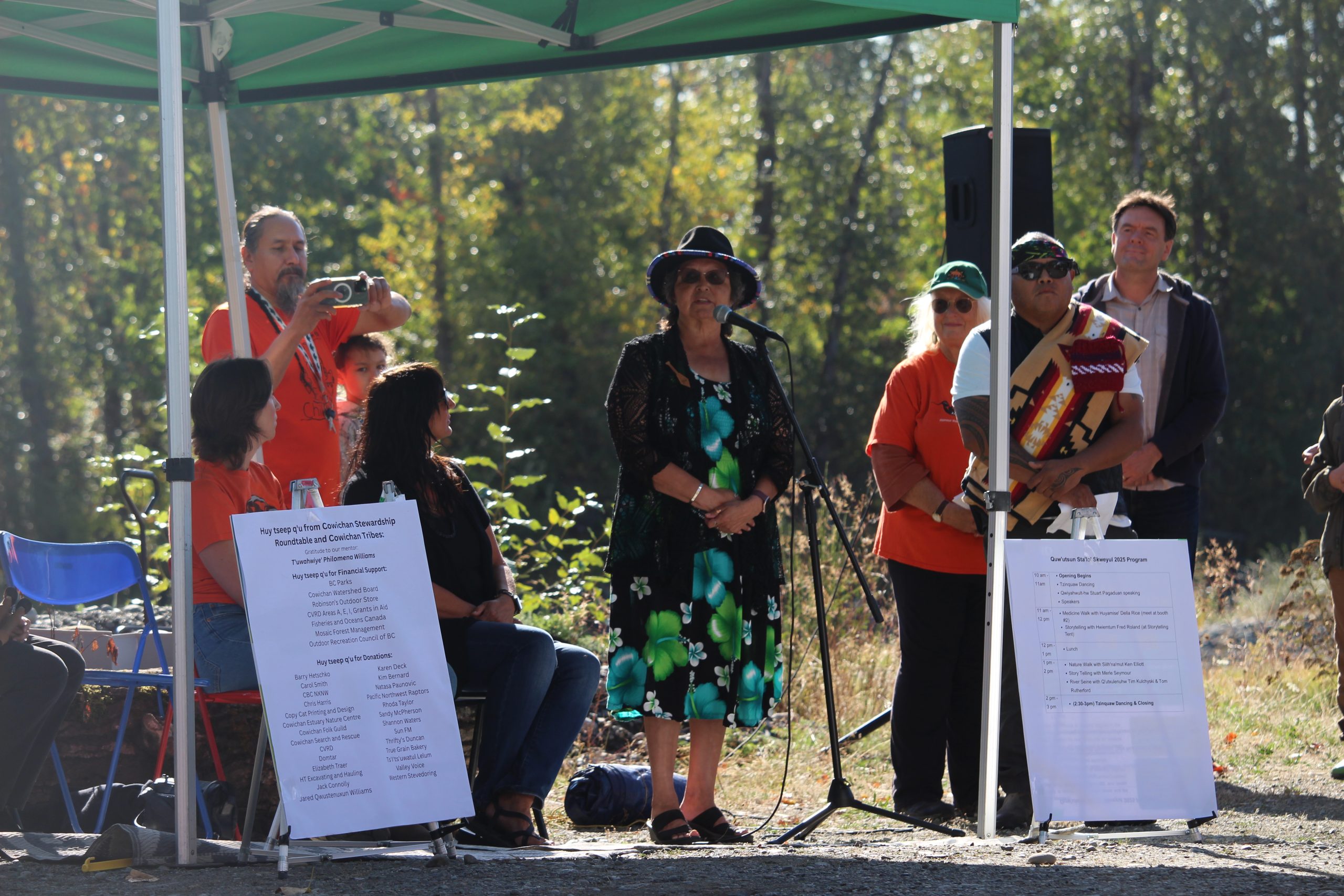
Due to recent collaborative work between regional, provincial and federal partners (including Cowichan Tribes, local governments and the Cowichan Watershed Board), Rutherford said the Quw’utsun Sta’lo (Cowichan River) has become the best-monitored river in the country. These various partners have pooled resources and expertise to put together a plan to monitor the river in order to see any potential hazards to the fish before they occur.
This collaboration is in response to the major fish kill that took place in 2023 in the river, in which at least 84,000 fish died due to environmental factors such as warm temperatures, algal growth and poor water quality.
There are now six continuous monitoring stations in the river that generate data around the clock. A team of experts meets weekly to look at the data and make decisions on things such as how water access is provided to people for angling and other activities, how wastewater is managed and more.
This year, there are also river swimmers that have been added to this monitoring response who swim six transects of the river and record the presence, absence and behavior of all life phases of salmon and trout.
“So we kind of know what’s going on. I can tell you that the majority of the river this year so far is doing well … things are hanging in there,” Rutherford said.
“The only challenge we have is right down at the bottom end in the lower river, where we’re seeing a lot of nutrients so we have these big algae blooms … it’s something to watch.”
How to support local watersheds
The number one thing a person can do if they see fish in distress or stranded in a pool of water is to call the 24/7 Observe, Record and Report (ORR) line at 1-800-465-4336.
Rutherford said when someone calls the line, a local Fisheries and Oceans community advisor is contacted who can then mobilize trained individuals to relocate the salmon.
For those who are able-bodied and interested in participating in salmon relocation, Jefferson said they can contact Bob Crandall and the Cowichan Lake Salmonid Enhancement Society, which has a permit from Fisheries and Oceans Canada and can train people to join the operations with proper equipment. Anyone who would like to participate can text Crandall at 250-715-7074 with their name, phone number and email address.
During critical drought conditions in the summer, staying out of the rivers and tributaries also ensures that salmon aren’t stressed and survive.
Cowichan Tribes’ Lulumexun department recently shared in a Facebook post that drought conditions in the Xwulqw’selu Sta’lo’ (Koksilah River) watershed are reaching “severe levels.” The post said “increasingly low flows and warm water creating dangerous conditions for salmon and other aquatic life.”
The deeper pools that people swim in are “critical refuge” for fish as other parts of the river become too warm and dry, but swimming can also disturb and stress out the fish. In order to support the river, Lulumexun is asking people to avoid swimming in the river until flows improve.
People are also asked to conserve water at home, especially when watering plants outdoors.
Other ways to support local watersheds include attending a Cowichan Stewardship Roundtable meeting to connect with the various organizations that are working to support the watershed.
Attending events, such as the upcoming Lower Cowichan River Cleanup on Aug. 23, is another way to connect with community members and work in stewardship of the river.
For Blatchford, seeing the way people stepped up to save juvenile salmon fry was a “good news story.”
“It shows how everyone can work together, and the critters we live with and humans can coexist and be helpful to each other.”
What did you think of this story?
Your feedback after we publish a story helps ensure we're always improving our reporting to better serve you
Author

Related Articles

How is The Discourse’s journalism funded?
And what does it cost to produce The Discourse’s in-depth, independent journalism?
Behind the backlash to the Cowichan Valley’s comprehensive zoning bylaw
The campaign against Bylaw 4710 was fuelled, in part, by misinformation and an organized group of advocates. What could this mean for the future of local politics?
What to do and where to go during extreme heat events in Nanaimo, the Comox Valley and the Cowichan Valley
A guide to prepare for extreme heat events on Vancouver Island