
‘They don’t think we know what we’re doing’: Plan to remove portion of dike at Cowichan estuary rejected by land commission
Advocates for the Cowichan Estuary Restoration Project call on province to align policies with reconciliation.
Editor’s note: This story features Jared Qwustenuxun Williams, a regular contributor to The Discourse. Qwustenuxun is also a Salish food sovereignty advocate and cultural educator. He has been working with Cowichan Tribes and the Nature Trust of B.C. to advise on Indigenous agricultural history in the Cowichan Estuary and, as such, has been interviewed as a source for this story. You can find Qwustenuxun’s previous writings for The Discourse — including about the Cowichan Estuary Restoration Project — here.
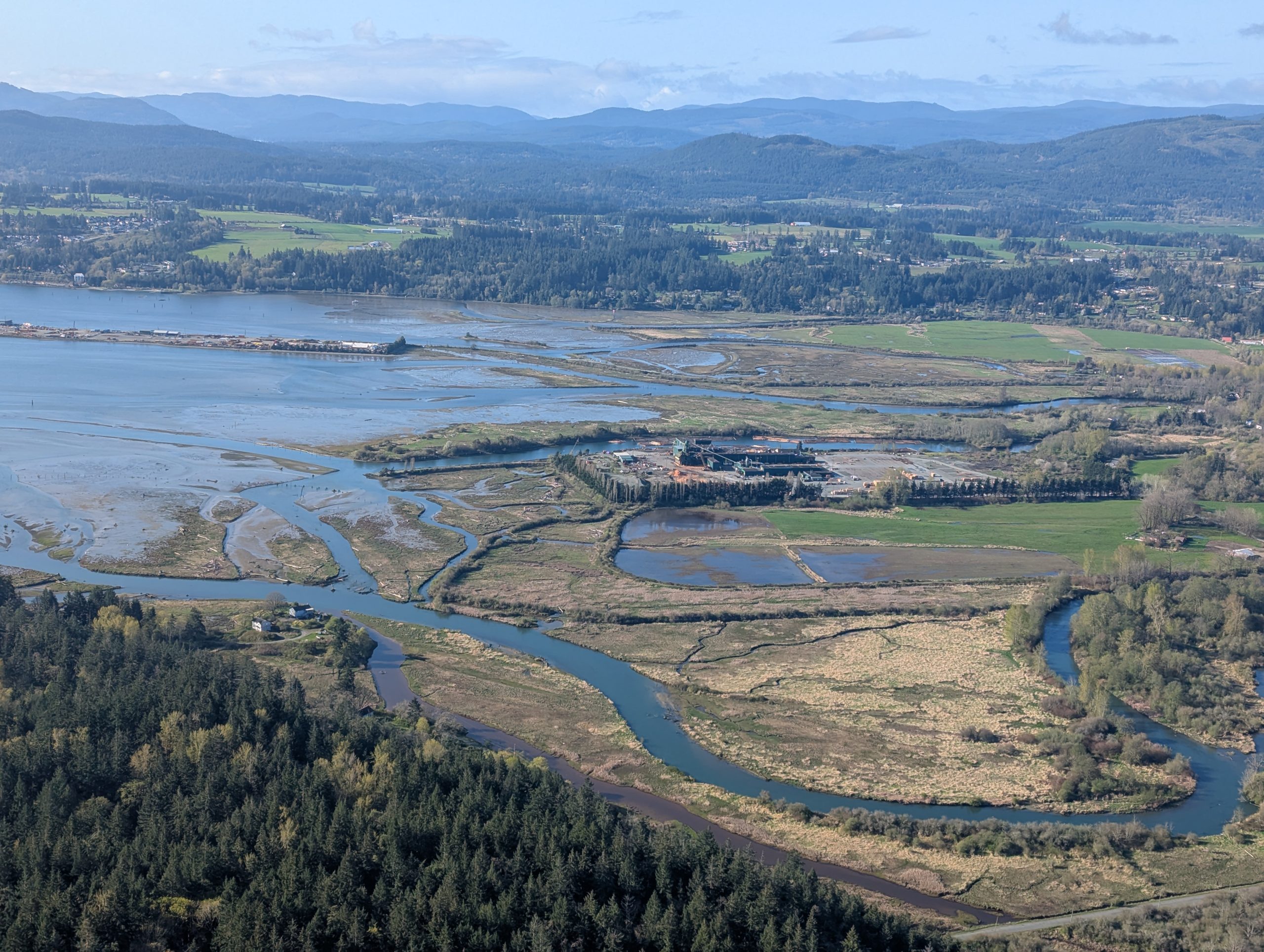
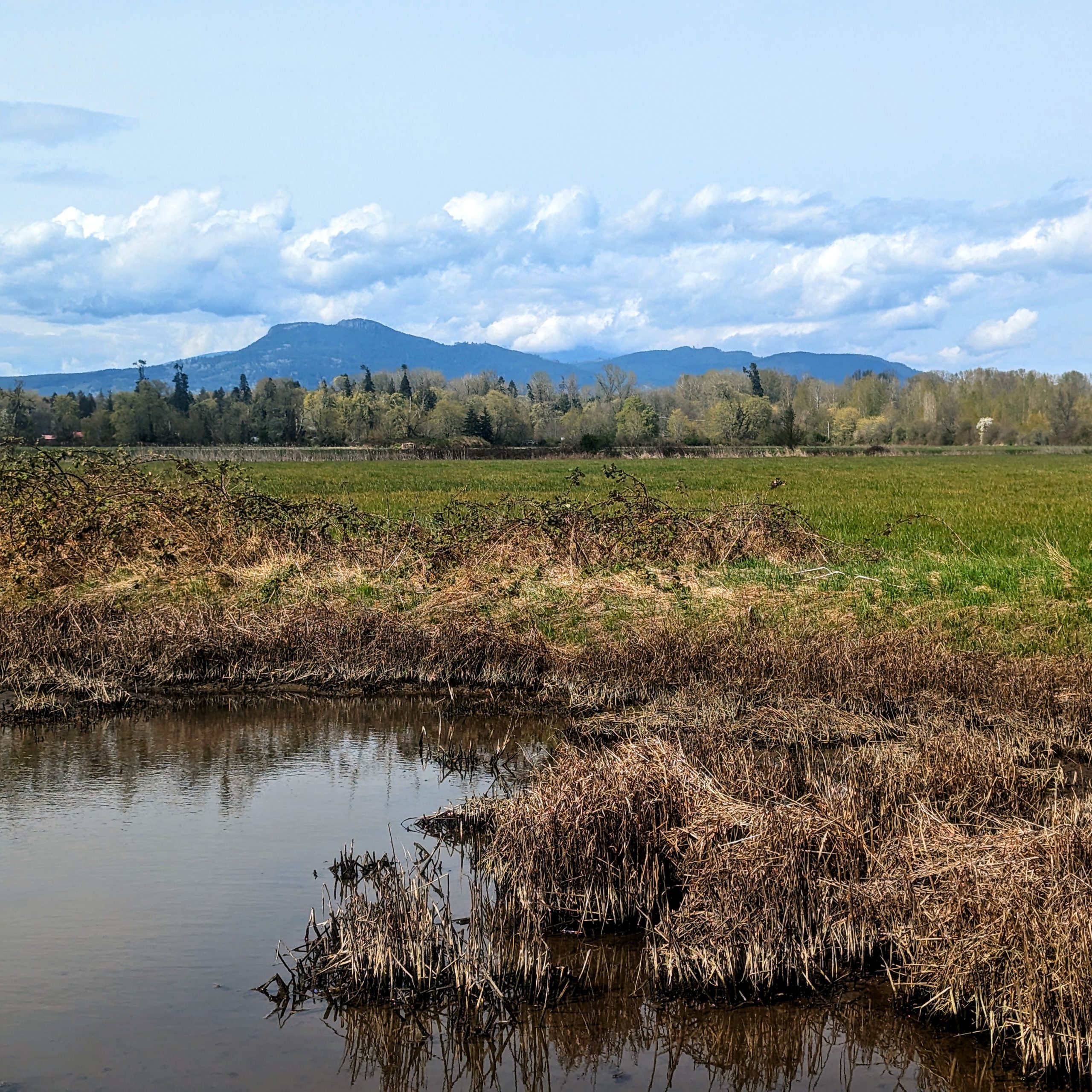
The Dinsdale dike bordering the Cowichan estuary in Cowichan Bay is the last barrier keeping ocean tides from reclaiming Hwkw’akw’la’hwum — land now known as Dinsdale Farm. For years, Cowichan Tribes, the Nature Trust of BC and Ducks Unlimited have been working to remove it as part of a broader restoration and food system revitalization project that could save a rare estuary environment that supports wildlife, traditional food systems and the people who rely on these things.
But a key section of the dike runs through the Agricultural Land Reserve and last month, the province’s Agricultural Land Commission rejected a proposal to remove about 450 metres of it — or about one quarter of the dike — and said the project could impact the variety of crops that can grow there.
Coast Salish food educator Jared Qwustenuxun Williams is part of a project working to bring back traditional Indigenous agriculture practices to the estuary. He told The Discourse he believes the Agricultural Land Commission’s decision is rooted in a misunderstanding of what Indigenous agriculture is and what benefits it can bring to the community and the environment.
“They don’t think we know what we’re doing, and as I’ve heard from others, a lot of people in agriculture feel that moving towards Indigenous agriculture is like a step in the wrong direction,” he said. “They feel that Indigenous agriculture practices are inferior to modern day Western agriculture practices.”
He said the commission should include Elders on its board, have an Indigenous liaison and bring more Indigenous voices into its decision making process.
The Agricultural Land Commission’s chief executive officer Kim Grout declined to comment directly on the decision but confirmed that Chad Stump, a member of the ʔEsdilagh First Nation near Williams Lake, is the only Indigenous commissioner.
“I understand where they’re coming from. I feel respect for the work they have to do, but I really hope that they use this opportunity to reflect on not only what they know, but maybe what they do not know — and how they could fill those gaps so that other nations and other projects don’t have these kinds of problems,” Qwustenuxun said.
Meanwhile, Jennifer Grenz, an Indigenous scholar, farmer and head of the Indigenous Ecology Lab at UBC who is involved in work at the Cowichan estuary, is calling on the provincial government to follow through with its commitment to reconciliation in an open letter to Premier David Eby and agriculture Minister Lana Popham.
In the letter, Grenz asserts that since the Declaration on the Rights of Indigenous Peoples Act was passed in 2019, little has been done to align B.C. laws and legislation with it.
She wrote that the commission’s decision is the perfect example of this lag in legislative changes.
“Until the minister reforms the outdated laws and regulations that guide the ALC, these colonial barriers will continue to block Indigenous food sovereignty and necessary climate-resilient land use changes. We are not alone in this experience — other Indigenous communities across the province have told us the ALC has been a barrier for them as well,” the letter reads.
A long-term vision for the estuary
According to previous Discourse reporting, research conducted by the Nature Trust of BC revealed that estuary environments in B.C. — including the Cowichan estuary — are threatened by climate change and sea-level rise. If the dike at Dinsdale Farm isn’t removed, the marshland that currently sits in front of it, and is part of that unique estuary ecosystem, will be permanently inundated with water, wiping out habitat that is crucial for wildlife including salmon, birds and fish that are significant to commercial operations and recreationists.

Removing the dike would allow for estuarine habitat — which currently makes up less than three per cent of B.C.’s coastline — to be restored by creating more space for saltwater and freshwater to mix as sea levels rise and ocean water moves inland. It would also create opportunities to grow traditional Indigenous foods that were once abundant there.
The Enhancing Estuary Resilience in Coastal BC project, which the Cowichan Estuary Restoration Project is a part of, has been endorsed by the United Nations Education, Scientific and Cultural Organization and is an official contribution to the UN Decade of Ocean Science for Sustainable Development 2021-2030.
Being recognized as an official contribution means the project is recognized as a part of a global effort to advance ocean science and sustainable management of the ocean.
“There are few projects around the world that have been recognized by this. Yet, even when the UN points to this work as a global example of integrating science and cultural knowledge and heritage, we are battling antiquated regulations and policies that are trying to stop it,” Grenz said.
Dinsdale Farm has been used to produce corn and forage crops since the Nature Trust of B.C. and Ducks Unlimited Canada bought the property in 1990. The commission ruled that restoring the estuary could reduce the variety of crops that might be grown in the Dinsdale Farm area, a decision advocates say highlights the need for more education around traditional food systems and more Indigenous representation on the board.
While the Nature Trust of BC and Ducks Unlimited Canada are the owners of the property, Cowichan Tribes has been a full partner on the project since 2018 and the groups are working towards a formal management agreement to support the Quw’utsun Peoples as long-term rights holders and stewards of the land.
Work can still proceed on nearly 75 per cent of the dike because it is outside of the Agricultural Land Reserve and has been conditionally approved by the province’s deputy inspector of dikes. But unless the Agricultural Land Commission revisits its decision, a 450-metre stretch of it will remain in place.
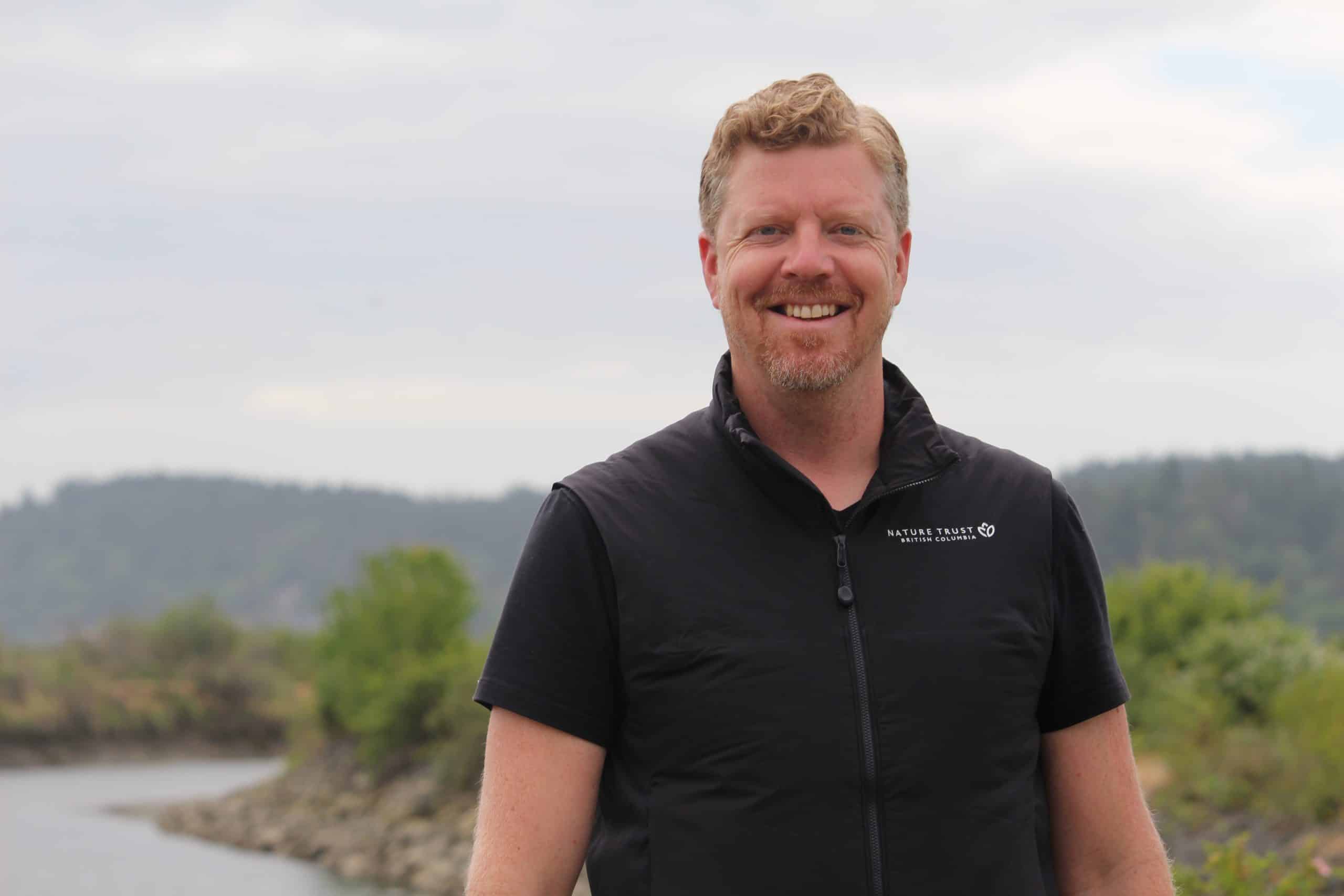
As part of the planned work, the Nature Trust says it will build four wave attenuation features to decrease the intensity of waves, a drainage swale — which is a gently sloped channel — and a culvert system to protect surrounding properties from flooding.
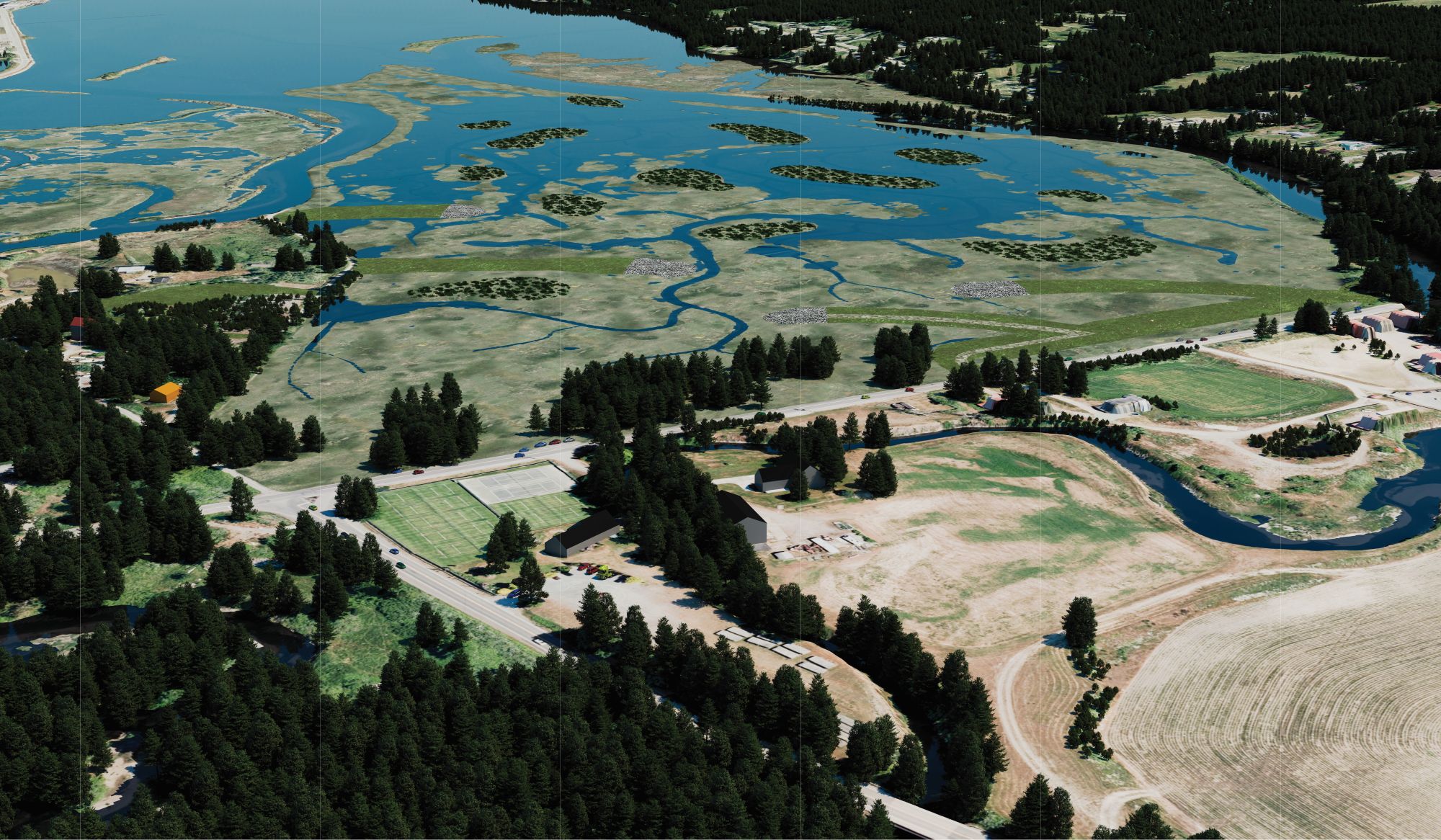
Tom Reid, western land manager for the Nature Trust, said the Agricultural Land Commission’s decision was disappointing but the trust remains committed to the project.
The trust is still working to decide what the next course of action will be. Land owners are allowed to request the commission reconsider a decision within one year of when the decision was issued but in the meantime, work on the project will continue.
“For over 50 years, Cowichan Tribes has been working to restore the Cowichan Estuary to support our long-standing responsibilities of stewarding critical habitat for juvenile salmon, shellfish, and our traditional food and medicinal plants,” wrote Cowichan Tribes Chief Cindy Daniels in a letter of support for the project.
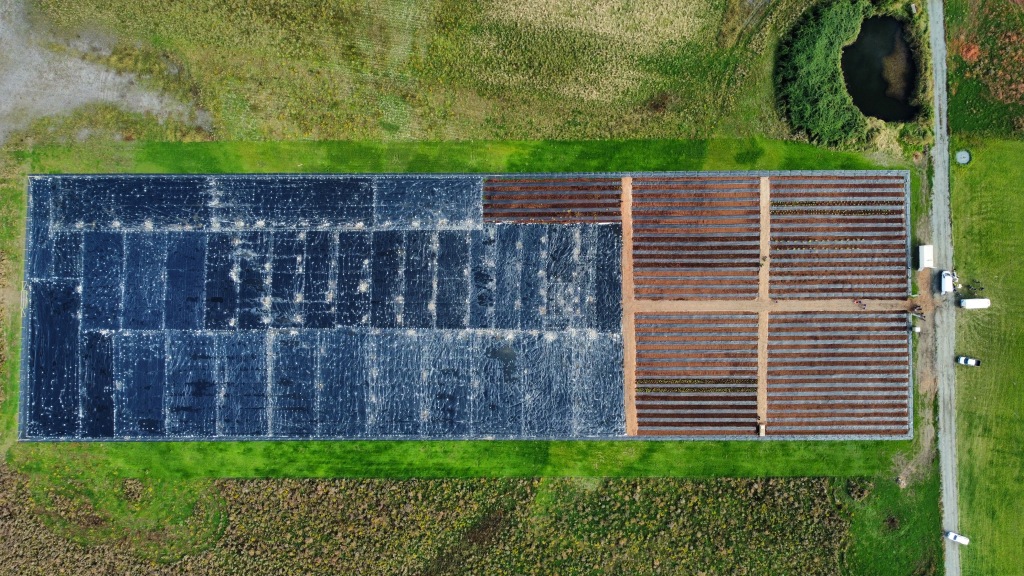
Part of the land at Dinsdale Farm is now home to the Hulitun Spulhxun/Tumuhw native plant nursery, which is working to revive the estuary’s traditional food system. Historically, and for many generations, the estuary and surrounding lands produced Indigenous foods and medicinal plants including camas bulbs, silverweed roots, Sqewth (wapato) and Stl’eleqw’ (chocolate lily) and also served as a traditional harvesting ground for shellfish.
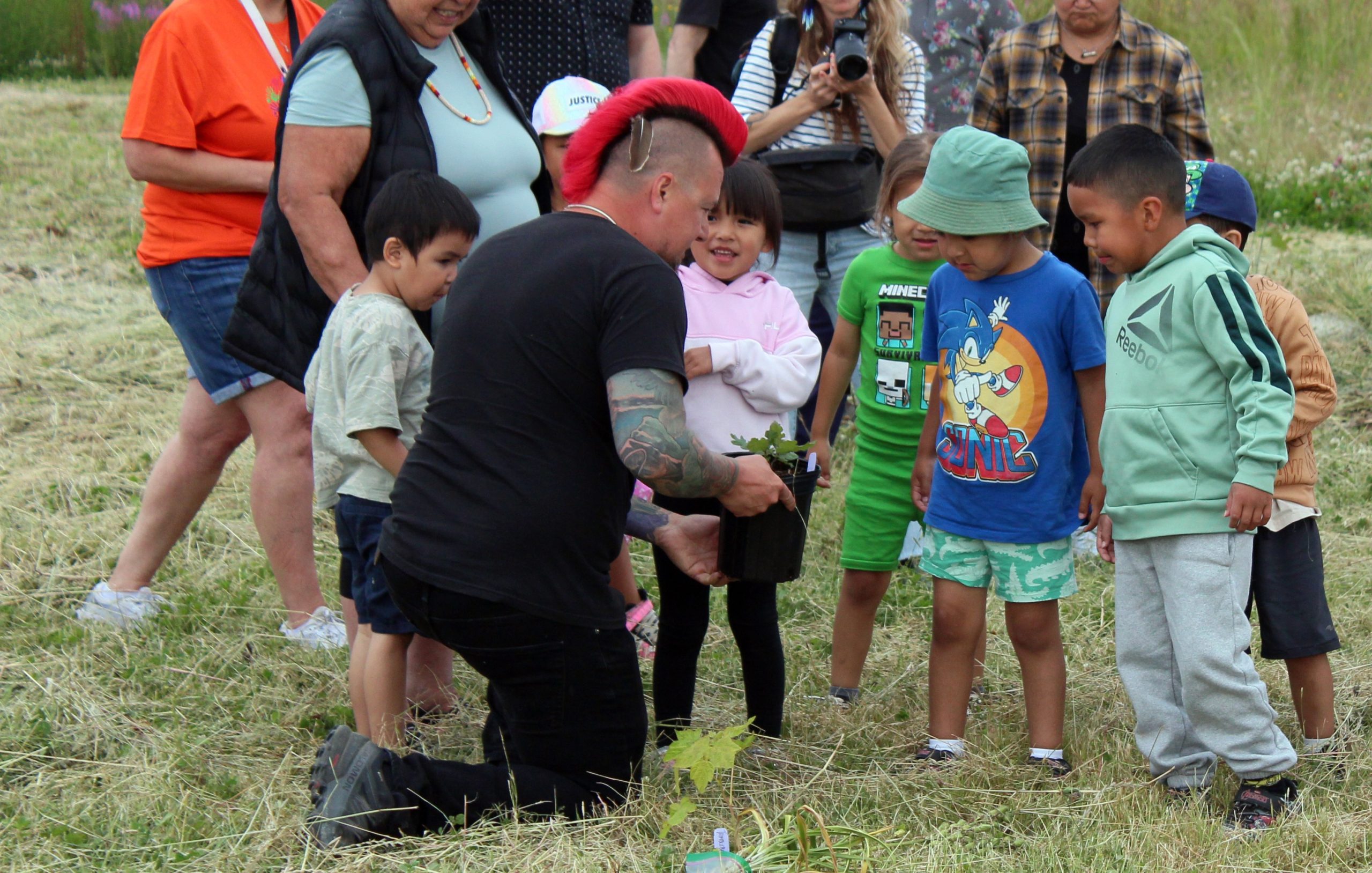
“We have pretty exciting stuff happening with Cowichan Tribes this coming fall at the nursery,” Reid said. “We’re going to be expanding that site, another acre, and a few thousand more plants are coming.”
Qwustenuxun contrasted short-term Western government planning models with Indigenous approaches, saying First Nations communities think in terms of at least three generations, which he called “a little plan.”
“We don’t look at it like, how will this help us? We’re looking at it like, how will this help our grandchildren?” he said.
A question of history and diversity
The Agricultural Land Commission cited its mandate to protect and enhance the integrity of B.C.’s Agricultural Land Reserve (ALR) as the reasoning behind its decision regarding the dike removal. It argued the proposal to remove the dike would narrow the range of crops that could be grown on the land behind it.
“The commission’s role is to preserve land in the ALR for long term agricultural uses. In doing so, the commission considers that maintaining the widest variety of agricultural opportunities is paramount to encourage and allow for future agricultural use,” the decision reads.
But Reid said the Nature Trust and Cowichan Estuary Restoration Project partners feel it does support food production.
“It’s just a different food production system,” Reid said.
Grenz told The Discourse that the Agricultural Land Commission’s decision ignores historical land-use of the estuary by the Quw’utsun People, citing records from the late 1800’s.
“Before it was diked, the government’s own surveyors labeled this area Cowichan gardens,” she said. The current presence of camas growing in continuous hectares across the estuary also points to its use as a food system for the Quw’utsun people, she added.
“For them to have no experience in it yet to use words like ‘the land is more productive for a wider variety of crops in its current state’ only shows their ignorance,” Qwustenuxun said. “They don’t even know what the other alternative crops are.”
The Agricultural Land Commission Act says “appointments must be made using a merit-based process to select individuals who are knowledgeable in matters relating to agriculture, land use planning, local government or First Nation government.”
The application made to the Agricultural Land Commission to remove the dike also noted the land could continue to support other salt tolerant crops without protection from the dike, including oats, rye, asparagus, sugar beet, millet and quinoa.
The report outlining the commission’s decision noted there was some discussion about other Indigenous plants beyond camas production but went on to say “any plans with respect to those other plants did not appear to be especially well formulated.”
“They ignored every other food, other than camas,” Qwustenuxun said. “It’s infuriating. We supplied them with so many documents about what used to live there, how it would live and what we would eat from it and just a mountain of information that obviously they didn’t even read.”
Agricultural Land Commission chief executive officer Kim Grout said she was unable to comment on any submissions made to the commission in relation to the decision.
Beyond providing an environment for traditional food and medicine plants to grow, restoring the estuary would provide a much-needed habitat for juvenile salmon, which Qwustenuxun said would hopefully increase the number of salmon returning to spawn in the Quw’utsun Sta’lo and Xwulqw’selu Sta’lo (Cowichan and Koksilah rivers). In the coming years, he hopes members of his nation will also be able to return to shellfish harvesting as the health of the estuary improves.
“The argument in the decision says that removing this small section of dike will degrade agricultural land, but degrade it for who, whose agriculture?” Grenz said.
Who does the Agriculture Land Commission serve?
A document on the Agricultural Land Commission website says it was formed in 1973 to establish and administer B.C.’s Agriculture Land Reserve. Creating a specific land designation for agriculture was driven by B.C.’s unique geography that made farmland scarce and growing public concerns about food security in B.C.
The commission’s mandate is set by Section 6 of the province’s Agriculture Land Commission Act which says the commission must protect agricultural lands, encourage farming on those lands and encourage local governments and First Nations to accommodate the use of that land for farming.
Qwustenuxun questioned whether the agency has the expertise or cultural understanding to make decisions that impact First Nations food sovereignty and land-use, noting that right now, it appears to him the commission lacks staff with knowledge in Indigenous languages and history, or who have direct experience working with First Nations.
“An agency like that should look at this opportunity and ask themselves, ‘are we well equipped to actually make these choices?’” he said.
The decision noted the commission has no authority over the dike removal outside of the Agricultural Land Reserve, but compliance and enforcement officials could investigate if those activities are found to affect the Agricultural Land Reserve.
Grenz said decisions will sometimes mention enforcement and compliance, but since commissioners don’t play a role in enforcement, she interpreted it as their way of “trying not to comment or draw conclusions on anything beyond their purview.”
“There’s a threat in that decision about sending enforcement if we commence other works that are out of their mandate. It is not commissioners that handle enforcement, that is a mechanism of the government,” she said.
Grenz added she had concerns about how the ALC was handling the decision, starting from a site visit where a commissioner asked the team how Cowichan Tribes knew there was farming happening historically in the estuary.
Qwustenuxun said in a Facebook post that he was made aware of similar comments made by a commissioner during the same site visit.
Agricultural Land Commission chief executive officer Kim Grout said in a statement to The Discourse that the commission has not received any complaints related to the visit.
Grout said commissioners are given the opportunity to engage in yearly training with groups involved with Indigenous agriculture through the province’s Ministry of Agriculture.
“Many of them [commissioners] either co-ranch, farm or live in communities with our Indigenous neighbors so they’re very open to training. And as a tribunal, we definitely work to provide them those opportunities,” she said.
The Land Keepers Leadership Society, an advocacy group that has been in opposition to the estuary restoration project since its inception, sent documents to the commission during the decision process. These included a submission from the society against the project, multiple affidavits from society members, letters from land owners who said they would be affected by the project and a preliminary hydrogeological assessment paid for by the Land Keepers Leadership Society.
The affidavits and letters held testimony that people were concerned about potential flood risks to surrounding properties and the impact displaced waterfowl would have on farms in the area. The hydrogeological assessment claimed that removing the dike would result in the loss of agricultural capability of the land, saltwater intrusion into fresh and ground water resources and that flood protection measures would be needed to protect properties to the north on Lochmanetz Road.
Reid said the Nature Trust has hired an independent hydrogeological firm to assess the project’s impact on salt water intrusion into wells. He said the final report, which has been submitted to the province, showed the project will not “have any significant impacts to local aquifers and groundwater resources.” Reid was unable to share the report with The Discourse but said he expects it to be available to the public soon on the Nature Trust’s story map website.
The Discourse reached out for an interview with the Land Keepers but they could not be reached for comment by the time of publishing this article.
“Our legislation is drafted by government and I know the ministry has an interest in aligning what’s set out in the statute with the Declaration on the Rights of Indigenous Peoples Act, but that’s out of our hands, because, of course, as a tribunal, we don’t draft our legislation. That is the Ministry of Agriculture,” Grout said.
Grenz also noted that even though the Agricultural Land Commission operates independently from the Ministry of Agriculture and Food, Minister Lana Popham could still make changes to the legislation that governs how the commission operates.
“The ALC operates under the Agricultural Land Commission Act, and that is her responsibility. It’s her job to ensure that all the legislation aligns with the Declaration on the Rights of Indigenous Peoples Act. So she could do something here,” she said.
At the time of publication, Grenz has not heard back from the premier or Popham.
With files from Jared Qwustenuxun Williams and Shalu Mehta.
What did you think of this story?
Your feedback after we publish a story helps ensure we're always improving our reporting to better serve you
Author
Related Articles

Cowichan Valley local election candidates on natural disaster preparedness
In the summer months, the threat of wildfire is becoming more frequent. In the winter, there’s flooding. What do the candidates suggest doing to prepare?
Voting in the 2026 Cowichan Valley local elections? Here’s what you need to know
Where, when and how to cast your ballot in North Cowichan, Duncan, Ladysmith, Lake Cowichan and the Cowichan Valley Regional District for the 2026 local elections.

Cowichan Valley candidates on protecting the community from climate change
Candidates in Duncan, North Cowichan, Ladysmith and Lake Cowichan share the steps they’d take to protect the community from the impacts of climate change.