
What are Nanaimo election candidates saying about the climate emergency?
All-candidates forum puts climate questions to Nanaimo election candidates.
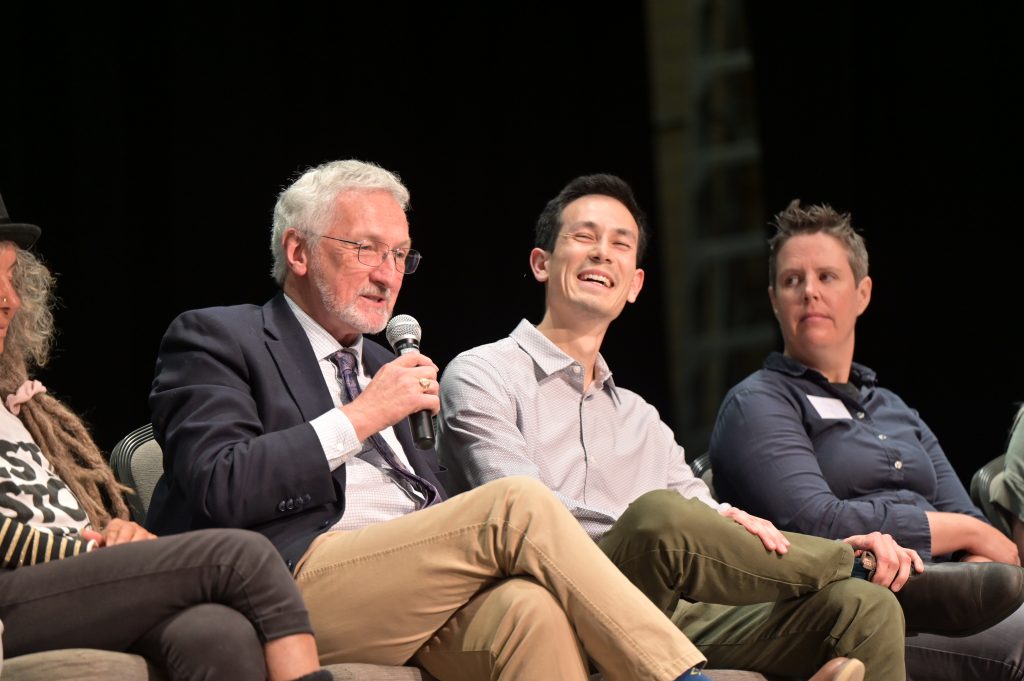
On Tuesday, Sept. 23, more than a dozen candidates for Nanaimo city council debated what the city can do to help address the impacts of climate change.
Organized by the non-partisan advocacy group Nanaimo Climate Action Hub, the forum was held in the Beban Park Social Centre and was centred around the “climate emergency.”
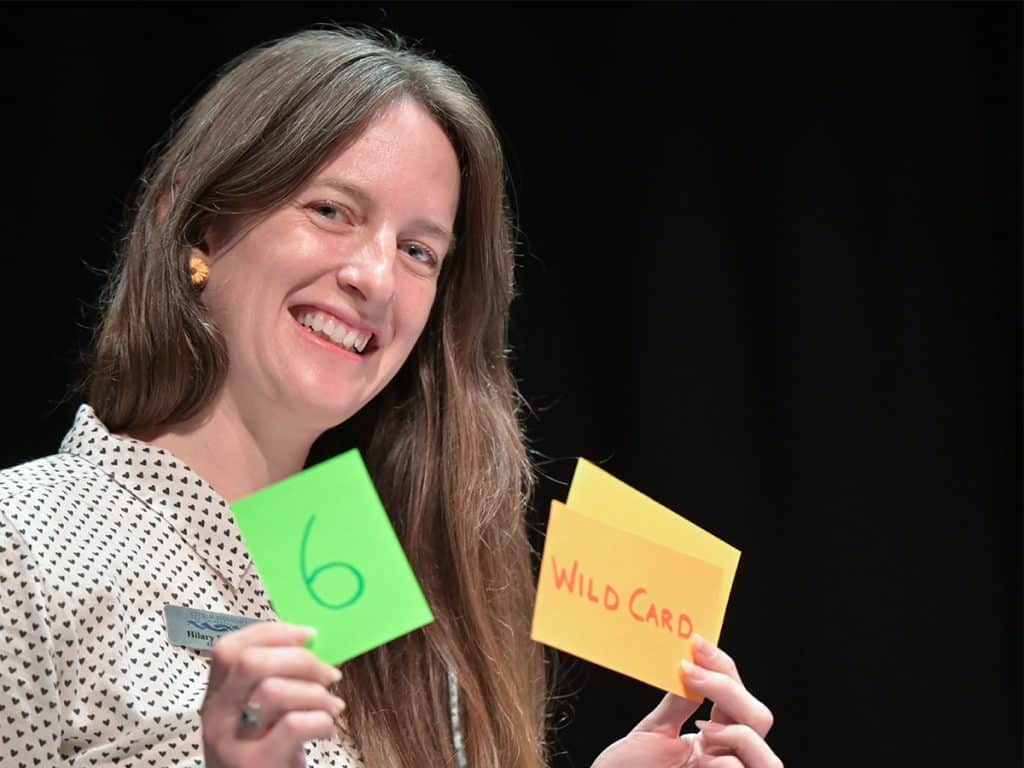
The forum was organized into short opening statements followed by curated questions given to specific candidates and “wildcard” responses where candidates had three cards they could hold up if they wanted to also answer the question.
Kevin Lindsay, executive director of the Nanaimo Climate Action Hub, told The Discourse that the forum was organized to put the question of climate change front and centre for candidates.
“Local climate action is the most impactful kind of climate action. The decisions that are made here really affect carbon emissions,” Lindsay told The Discourse.
“You know best what is going on in your own town and the kind of resilience you need to build for the effects of climate change.”
The organization has also put together a climate voting record tool that looks at how the mayor and incumbent councillors voted on climate-related issues between 2022 and 2026.
“It provides a little bit of a tool that gives people some guidance in terms of looking at the incumbents,” Lindsay said.
There are 40 candidates registered as running for the position of city councillor and four candidates for mayor in Nanaimo.
Nanaimo mayoral candidates
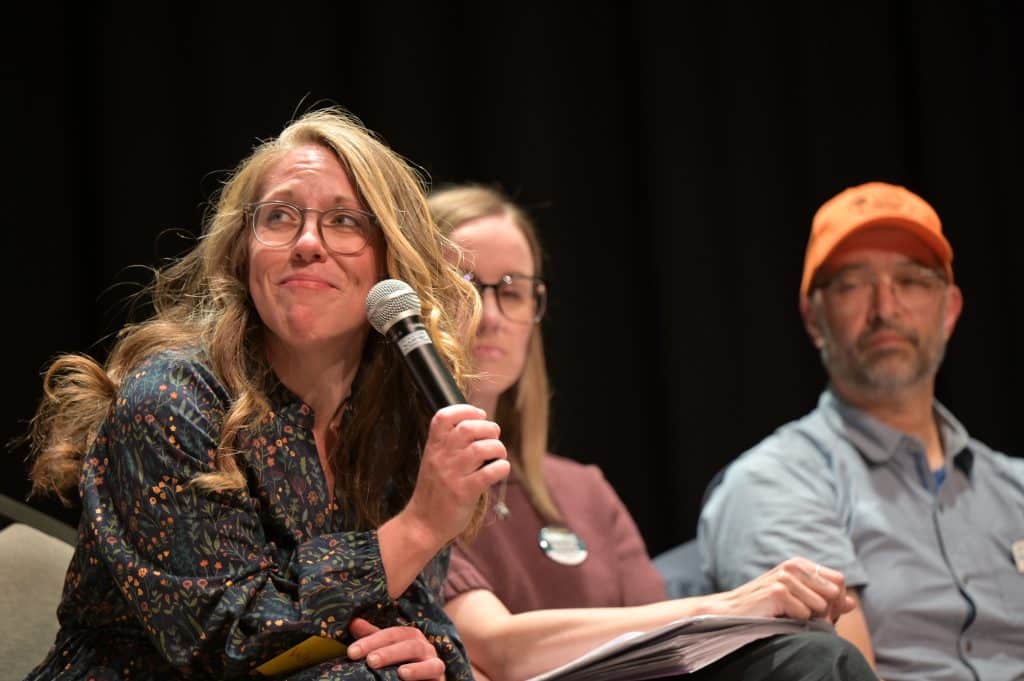
Leonard Krog, who has been mayor for two terms and is a former NDP MLA, said Nanaimo city council has “been one of the most progressive you have ever seen,” and has been working to address the climate emergency.
“If you want to look at the scorecard and environmental voting in this council, even the lowest one is a pretty good score and way better than it’s been in the past,” he told the audience.
Krog credited the sitting city council members for developing the current city plan which embeds climate measures in all aspects of local planning. He called it the “biggest community input in any plan in this community’s history.”
He said he appreciates that people want more to be done but that Nanaimo is doing much better on the climate file than other communities and that residents should be grateful to city council for moving ahead.
Sarah Lovegrove, a nursing professor at Vancouver Island University, said that as mayor she would commit to developing an “inclusive climate disaster preparedness plan” if elected.
“We’ve seen over the last several years our city council responding reactively to extreme weather, and we should be prepared for it,” she said. “We know winter is coming. We know climate change is happening, and people who are living on low income and on our streets do not have the opportunity to hide away from that. Should a flood or a fire happen within our communities, there’s no response plan for those folks right now.”
Lovegrove said that as a professor she’s heard the concerns of young people who are facing an uncertain and unsustainable future and that harm from climate change, extreme weather and natural disasters are a reality.
“But I believe in the power of hope,” she said. “And if my training has taught me anything, it is that sustaining life is worth every heroic measure we can try.”
Mayoral candidate Brunie Brunie, the self described “84-year-old supernatural energizer bunny that just keeps going,” said she feels a responsibility to “save the trees.”
“Trees are the most powerful weapon against climate change,” she said. “The trees that hold the planet together, the trees that hold the moisture that feeds all many green things. We must not kill the trees.”
If elected, Brunie said she would enact a bylaw to prevent the cutting of trees, seek investments for “high-tech super greenhouses” and require developers to include rooftop gardens on new buildings.
Anne Marie Dryden, a financial advisor who is running for mayor as part of the REAL Nanaimo slate, did not participate in the forum.
In an interview with her after the event she told The Discourse she owns an off-grid house that is solely powered by solar power and supports recycling and composting.
Dryden said building homes that are environmentally friendly is “a very good idea” but that the road construction by the city is making things worse.
“I think we need to be very careful how much we are tearing up roads and only do what’s necessary. Not a lot of vanity projects,” she said.
She said Nanaimo already has “a lot of bike lanes” and would try to “redirect” funds earmarked for active transportation to help find homes for people who are unhoused and get people struggling with addiction into recovery.
Dryden said she originally had a scheduling conflict on Tuesdays that prevented her registering for the forum when it was announced, but wanted to participate. She said that by the time she rearranged her schedule — a couple of weeks ago — the organizers had already capped the number of candidates.
Lindsay said Dryden never contacted event organizers about wanting to participate in the forum. He said Jeff Annesley was the only candidate from the REAL Nanaimo slate to contact them.
Data centres a hot topic at forum
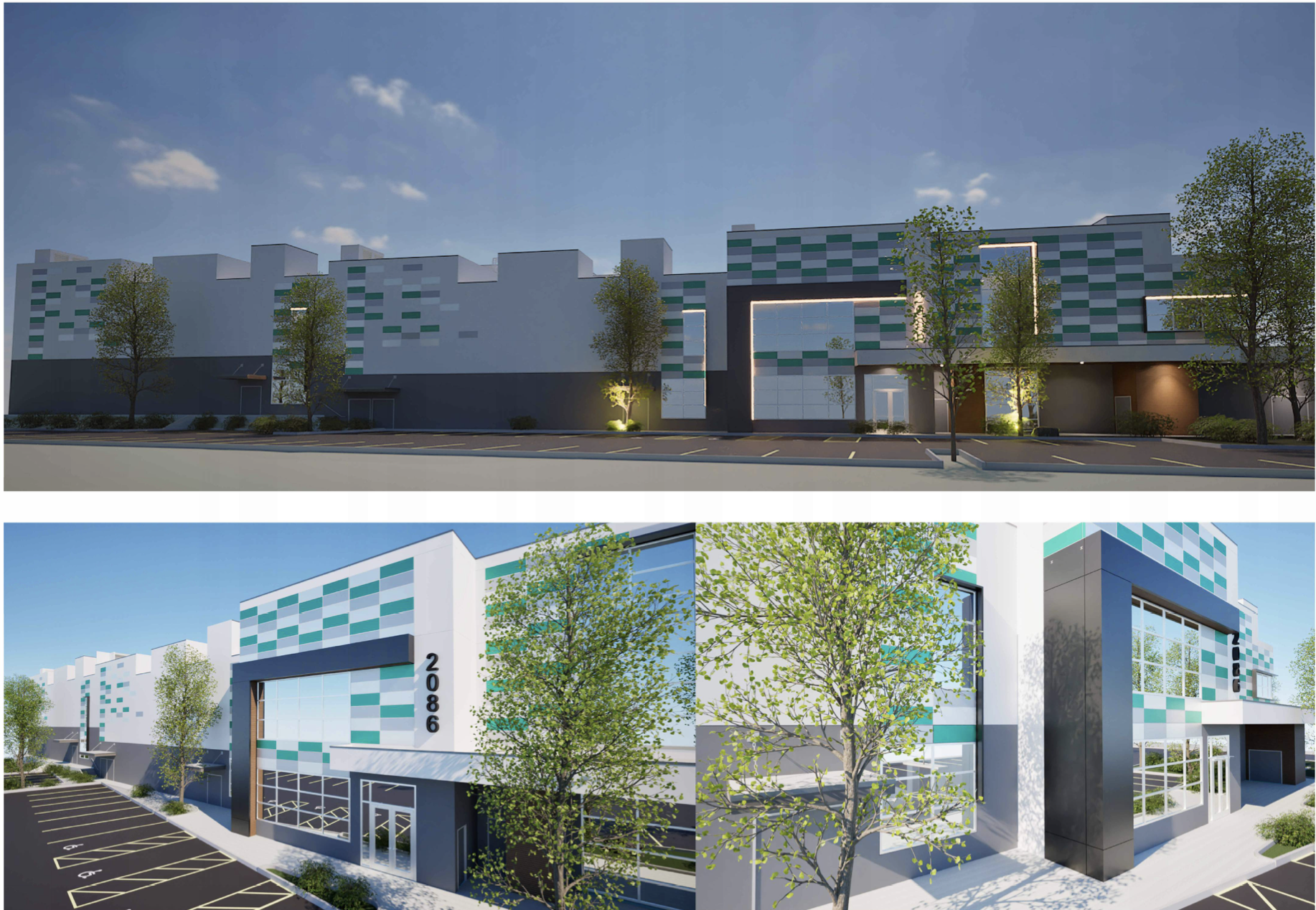
One recurring topic at the event was the question of the proposed colocation storage data centre on East Wellington Road and how the city can regulate any proposals for data centres in the future.
Incumbent city councillor Hilary Eastmure said she has already made a motion that would require rezoning applications for data centres to include projected water usage in the initial rezoning application.
“If we ever get another rezoning application, we’ll have to know how much water it uses upfront,” she said. “That’s why I voted against the last one.”
Eastmure also said the $60,000 fine if the proposed data centre goes over its water usage limit is not high enough.
“I think that is a very small amount of money for a corporation that is going to be making a very large amount of money on this,” she said.
Eastmure said she would like to see city council have more direct control over the development permit process instead of the delegated authority process that allows city staff to make decisions.
“I saw them putting a fence through the middle of a wetland when I was on the design advisory panel, and that’s not aligned with our policies,” Eastmure said. “But somehow they were doing it, and I hope that is not going to be part of the building permit, and I’m going to be watching closely for that.”
Jackie Bolen, who is running for city councillor, said she would “never vote in favour of a data centre.”
“Humans have existed for thousands of years without companies tracking our every move,” she said.
City council watcher Jeff Annesley, who is running for council under the REAL Nanaimo banner, told the crowd that he opposes the data centre.
Rod Moreno said he was “alarmed” by the data centre and claimed that the infrasound emitted by it is not able to be accurately measured. He proposed changing the zoning bylaw to trigger a public hearing on its construction.
“This data centre is literally 2,400 meters from my house and the daycare that my wife runs,” he said. “This can affect us all. Infrasound causes neurological problems. It causes all kinds of health problems.”
Nanaimo mayor Leonard Krog told the audience the city already has protections in place for the data centre’s water use and that it won’t use more water than a car wash or an average sized apartment building. He said the city also secured covenants protecting wetlands on the property and that senior levels of government are starting to understand the impact of data centres.
“It’s a positive step,” he said. “Everybody’s become more acquainted with things than we did two or three years ago. It’s a good news story in some respects that we’re moving ahead.”
Councillor candidate Meg Fyfe Watkins said one of her priorities would be to ensure the city holds corporations accountable for their water use.
“I know that we have bylaws that do regulate water use, but they’re not strong enough for corporations at this time,” she said. “We as individuals are really feeling the pinch of water restrictions and corporations are still able to use water at a much higher capacity.”
Saving Cable Bay while addressing industrial land shortage
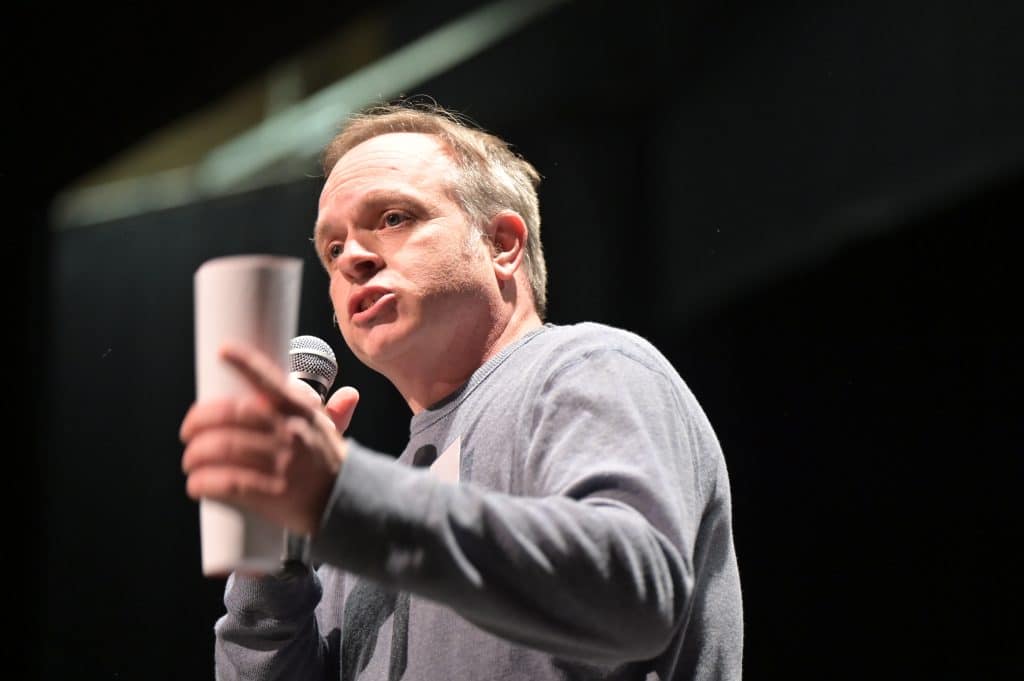
Another proposed development near Cable Bay Trail in south Nanaimo was also a heated point of discussion at the forum.
Annesley said he supports Harmac and that the company provides over 300 good-paying jobs in the community.
He said Harmac pays a “huge amount of property taxes” to the city, as do the people who work there. Annesley said he understands that Harmac needs to diversify its operations if it is to survive as a company, but claimed that the proposal for greenhouses on the land will use temporary foreign workers.
“These need to be Canadian jobs,” he said. “That’s 15 minutes from downtown. You need to provide Canadian jobs, not temporary foreign worker jobs.”
The application for rezoning that went to a public hearing included housing for “temporary farm workers.”
Annesley said he also wanted to see a setback to the proposed development that is greater than 100 metres.
Incumbent city councillor Sheryl Armstrong said she would like to hold a special governance and priorities committee meeting that would bring together environmental advocates, First Nations, industry and government to collaborate on how to develop industrial lands to bring green-based businesses to the community.
“Right now we’re not seeing that,” she said. “Right now we’re seeing traditional-based businesses. When you do talk about Cable Bay, one of the things that they were looking at doing is bringing in greenhouses for food security. So how do we balance that with nature?”
Marnie Boers said she would like to see the rezoning come back to council to build more trust with the community and have a transparent discussion.
“I was really encouraged to see how many people came up to all the meetings to show how supportive they are of keeping this as a cultural place, an environmental space, a recreation space,” she said. “It obviously is a very important biodiverse ecosystem, and also we can see orcas from the shore. I don’t want to lose those spaces. Once we lose it, it’s gone. So if it were to come back, I would protect it.”
Incumbent councillor Ben Geselbracht said he voted against the Cable Bay rezoning proposals because environmental protections weren’t in place when it came back to council.
“During the public hearing, we heard very clearly from the community that this is a very special place,” he said. “It’s a gift. You can go walk down and watch the orcas, and thousands of people visit this area.”
Geselbracht said he made a motion for a larger buffer to protect more mature forest and limit heavy emitting industry but acknowledged the shortage of industrial land in the city. He said that it needs to be the right type of industry in the right place.
“I will vote against this again if it comes back without the proper environmental protections and protected land,” he said.
Geselbracht said the land to the east of Cable Bay trail also needs to be protected as parkland.
Jackie Bolen pledged to vote against rezoning agricultural land for industrial use and said there is no amount of a buffer that would be acceptable to her.
“Jobs come and go, companies come and go, old trees and Garry oak ecosystems do not,” she said.
Marnie Boers said she would support councillor Paul Manly’s zoning bylaw amendment to limit emission heavy industry.
“We don’t want to just open it up to any kind of development that could be toxic or have some health impacts to our communities,” she said.
Paul Chapman said the rezoning near Cable Bay was “stopped in its tracks” when Snuneymuxw Elders spoke out against the proposal. He said the city has a similar opportunity to protect natural spaces such as Harewood Plains and look at Indigenous protected conservation areas or a co-management model between the city and Snuneymuxw.
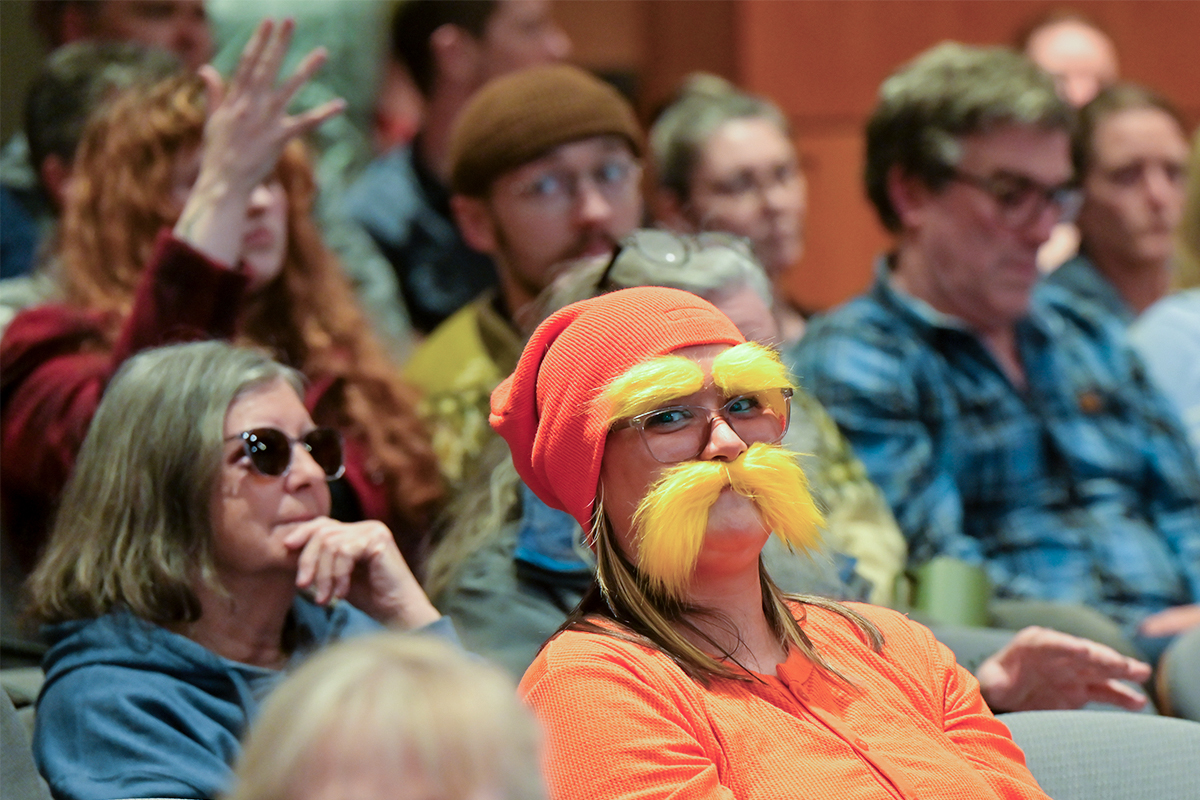
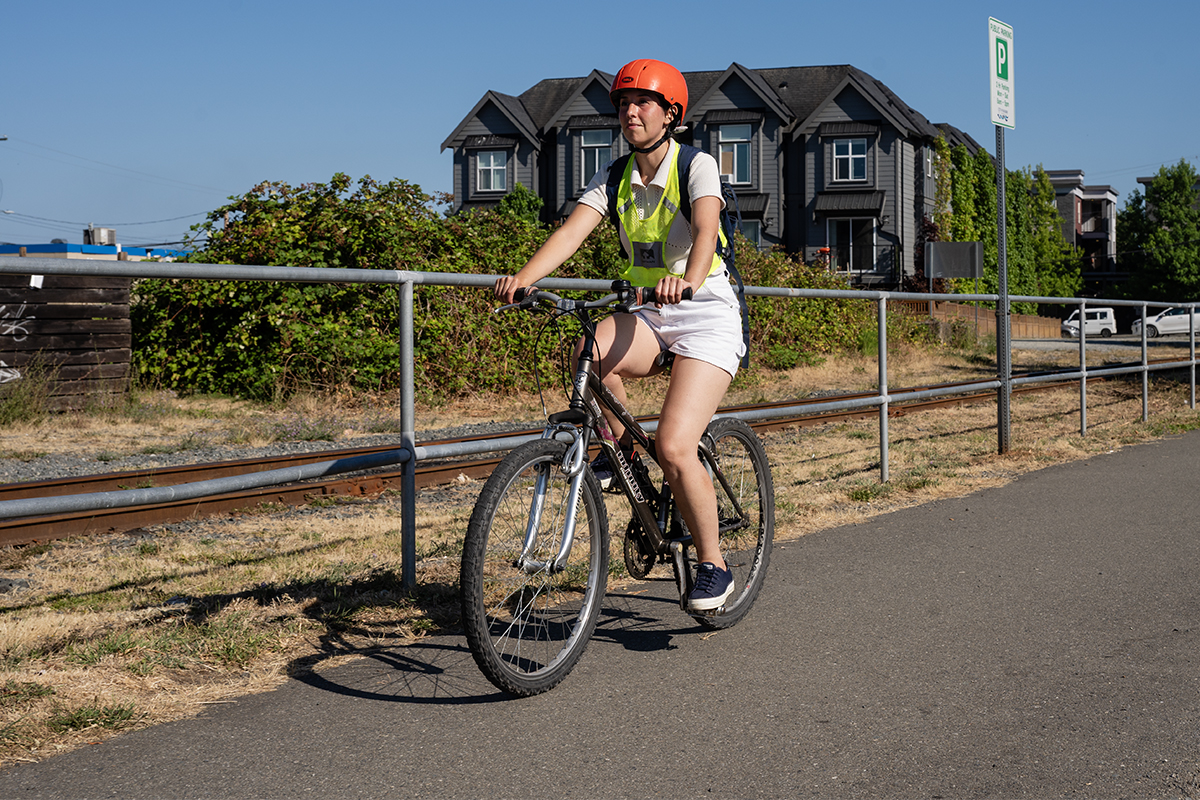
Active transportation and bike lanes
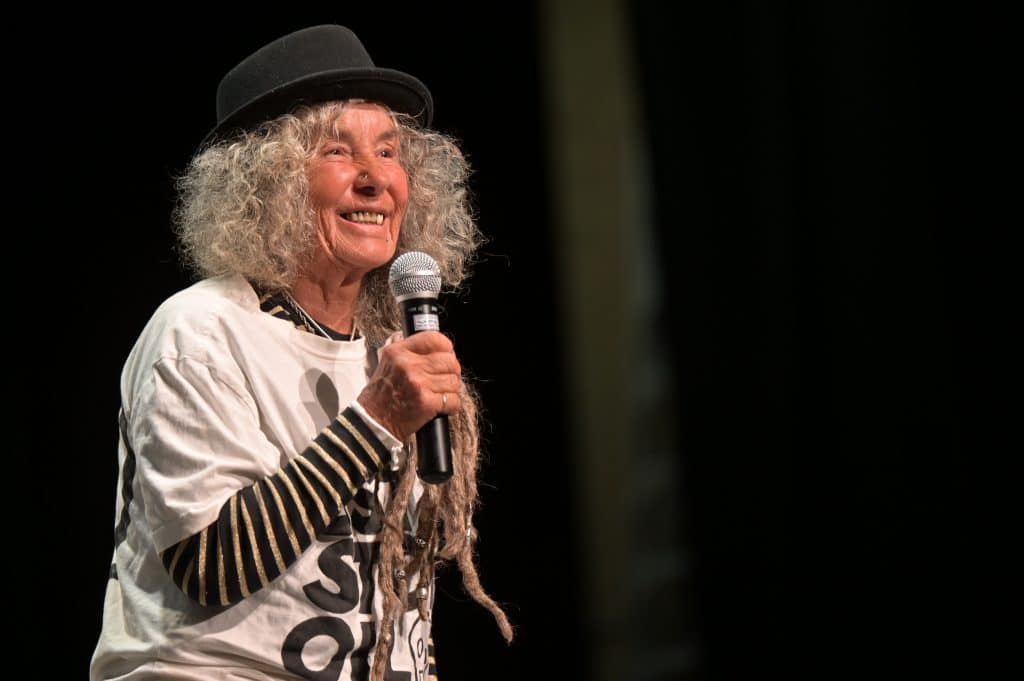
Hilary Eastmure called active transportation a “critically important” issue for Nanaimo and said there is an increased frustration from drivers in the city. She said the unallocated pedestrian budget could be better managed and suggested that hiring crossing guards for certain intersections may be a more cost effective solution than “building a quarter-of-a-million dollar crosswalk.”
“There’s ways to get nimble about this and be creative, and I really think that people should be able to walk safely in their neighbourhood,” she said.
Brunie Brunie said she would like to see the city upgrade sidewalks to increase accessibility for seniors using mobility scooters.
“The sidewalks are in terrible conditions,” she said. “You probably don’t notice them because you’re driving by in your car, but they really need to be upgraded.”
Andrea Coutu, a former crossing guard, said she would like the city to adopt a “balanced prosperity scorecard” that would look at pedestrian infrastructure through a climate justice lens.
Richard Harlow, who is vision impaired and uses a cane, said he has been hit by cars multiple times.
“Crosswalks that are not accessible are dangerous,” he said.
Harlow said he would like the city to categorize which intersections are the worst and work on making them accessible.
“An accessible crosswalk, an accessible sidewalk, is a safer sidewalk for our community,” he said. “That’s what we need. That’s what we want.”
Matthew Miller and Leonard Krog both proposed building more places for cyclists to securely lock their bikes.
“Let’s be sensible,” Krog said. “At the end of the trip, when you’re hoping to buy your groceries and your bike can’t be parked somewhere safely, you’re not going to do it.”
Climate preparedness
Sarah Lovegrove said that as a former emergency room nurse she has learned how to prepare for the impact of extreme climate. She said Nanaimo lost people during the 2021 heat dome and that there are worsening health outcomes as temperatures rise and change rapidly.
Lovegrove said she would seek to implement a “right to cool bylaw” that ensures there are places people can go during times of extreme heat as well as continuing to ensure residents have access to affordable, energy efficient heat pumps.
Andrea Coutu said “the climate emergency is already here” and that the city needs to prepare for extreme weather events.
“We need climate risk built in to how we plan with intergovernmental organizations, infrastructure, land use, transportation, vulnerable population supports and economic development,” she said.
Paul Manly said he was proud of voting to increase taxes to hire 40 additional firefighters in the city over the past four years “to ensure that we had the protection that this community needs in the case of a wildfire.”
“We see wildfire, wilderness, urban interface fires move very quickly, and we need the resources, the human resources, and the equipment to be able to fight those fires,” he said.
Matthew Miller recalled the heavy rain that cut the supply line to the South Island in 2021.
He proposed restoring the Island Railway as well as expanding Nanaimo’s deep water port.
“Restoring the Island E&N rail is something that we can plan for now as a current council, so that the next generation can benefit from not having just one access north – south on the Island because we must have a second one,” he said.
What did you think of this story?
Your feedback after we publish a story helps ensure we're always improving our reporting to better serve you
Author

Related Articles
DRIPA debated in B.C. election on Vancouver Island
The Conservative party of B.C. is promising to repeal the Declaration on the Rights of Indigenous Peoples Act (DRIPA), while other parties argue that would set back relations with First Nations and create economic uncertainty.
Where Nanaimo’s MLA candidates stand on addictions care, family doctors and Island rail
Candidates in Nanaimo-Gabriola and Nanaimo-Lantzville answered three questions from Discourse readers ahead of the Oct. 24 B.C. election.
Nanaimo’s guide to the 2026 B.C. election
What riding am I in? Who are the candidates? When do I vote? B.C. election basics for Nanaimo voters.